
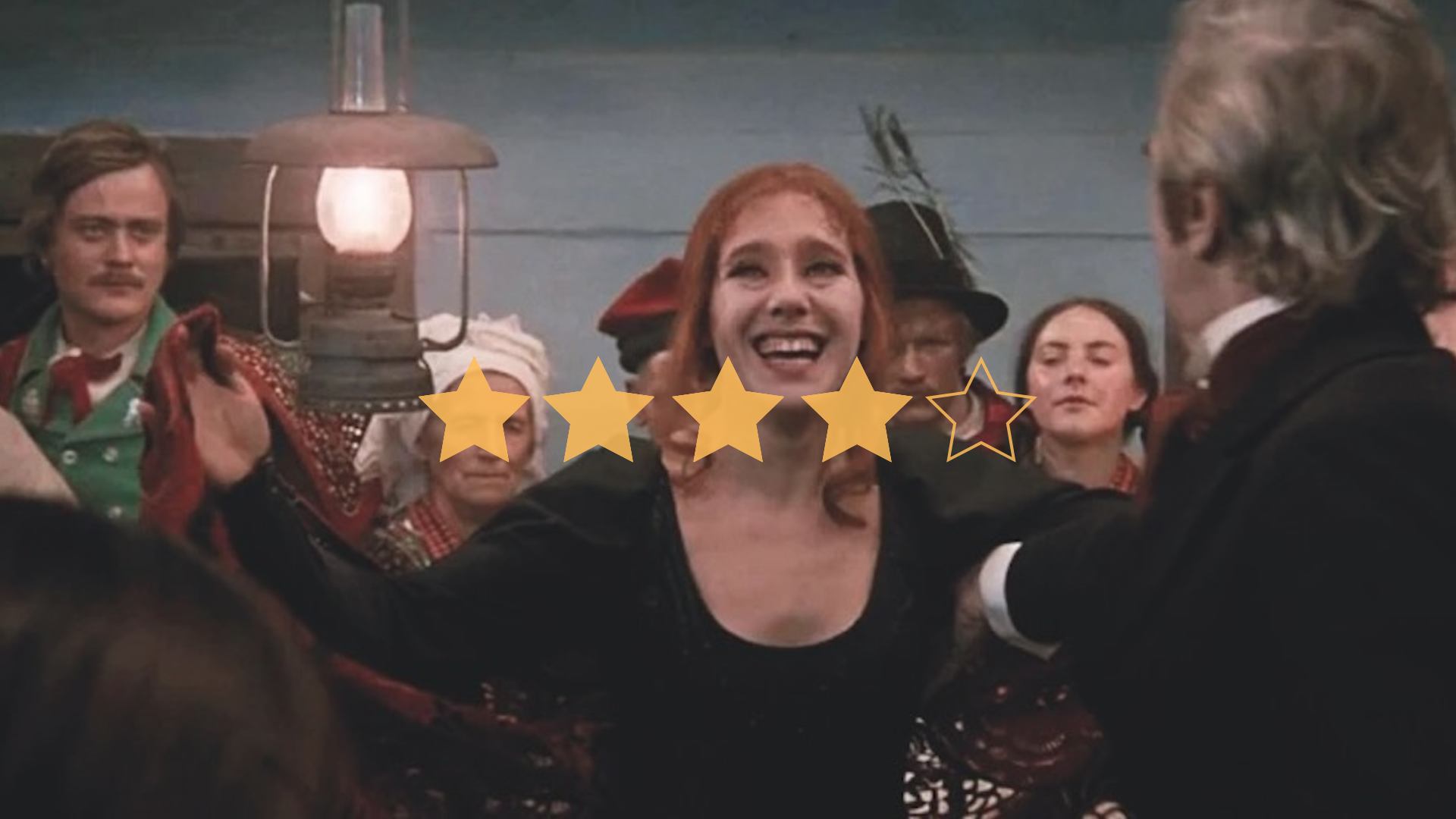
A riotous wedding celebration that doubles as a devastating autopsy of a nation in paralysis, Andrzej Wajda’s adaptation of a 1901 beloved classic is as politically urgent as it is visually intoxicating.
★★★★☆
There’s nothing quite like a sombre wedding in cinema. Lars von Trier’s Melancholia (2011) is a benchmark of sorts, with Kirsten Dunst’s depressed protagonist struggling through her own wedding reception in a Swedish castle before cheating on her husband on the lawn. Later, the world ends. Theo Angelopoulos’s The Beekeeper (1986) has a similarly inauspicious opening—Alanis Morissette said rain on your wedding day was ironic, but it’s even more ironic when that wedding is in sunny Greece—and Thomas Vinterberg’s Festen (1998), while not strictly set at a wedding, has the suffocating, ceremonial quality of one: a family gathering that collapses into something unbearable.
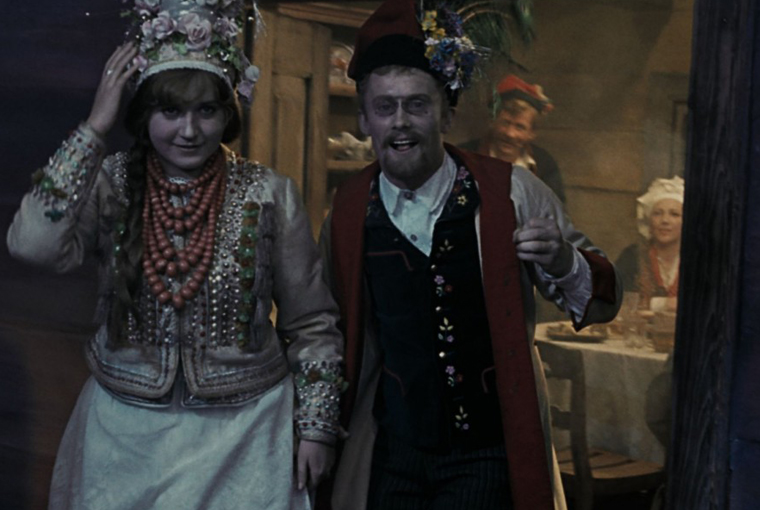
The solemn atmosphere of Andrzej Wajda’s The Wedding, his 1972 adaptation of Stanisław Wyspiański’s landmark 1901 play, achieves something similarly uncanny by different means. The film depicts a wedding celebration in a rural Polish village at the turn of the twentieth century, where a poet from the urban intelligentsia marries a peasant woman. Supposedly, their class-blurring union follows a fashionable trend of the era, the gathering bringing together intellectuals, artists and peasants under one roof. It serves as an impactful allegory for Poland itself, showcasing all its different denizens, and as the night deepens (the film’s course is across a single night into the morning, bringing to mind stalwart theatrical pieces like Long Day’s Journey Into Night and Who’s Afraid Of Virginia Woolf?), it takes on a surreal, dreamlike quality, with various ghostly and symbolic figures appearing to the guests.
Context, as with Wajda’s Everything For Sale (1969)—also screened as part of London’s Kinoteka Polish Film Festival—is crucial. Wyspiański was himself a member of the Young Poland movement, a cultural and artistic wave that flourished from roughly the 1890s to 1918. Where an earlier generation of Polish thinkers had argued that the best path to national survival—Poland had been carved up between its neighbours and wiped off the map since the 1790s—was through hard-headed practicality and scientific progress, the Young Poland artists rejected this in favour of mysticism, folk tradition and grand romantic visions of the nation’s destiny. Wyspiański was both a product of this world and one of its sharpest internal critics, suspicious of its tendency toward beautiful gestures over genuine action. It’s a tension that Wajda, making this film in Communist Poland in 1972, found urgently relevant to his own moment—and which he could explore safely only by working under the cover of a beloved and officially respectable literary classic.
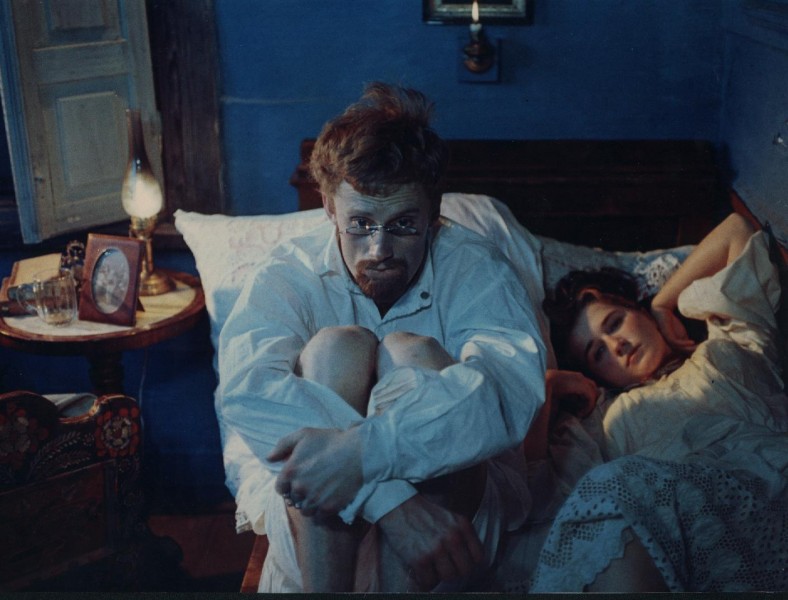
There’s a pervasive sense of dread throughout The Wedding that works effectively to get this point across. Wajda makes extensive use of extreme close-ups and handheld camerawork that put you uncomfortably close to the action, overwhelmed by the drama and the faces. The confined setting functions as a pressure cooker, with almost all the action taking place within the farmhouse and its immediate surroundings. Twenty minutes in, you feel exhausted, the claustrophobia and repetition of the endless dancing amplifying the idea of a nation caught in a pattern of hope, paralysis and failure. There’s a stark contrast with the bright lights of the festivities and the Gothic atmosphere outside too, with creepy straw figures and ghostly visions steeped in fog. It’s a great juxtaposition: horror and festivity feeding off each other, indistinguishable at the edges.
Ultimately, The Wedding is a state-of-the-nation film, its core message that the people most responsible for Poland’s ‘failure’ are the ones who love Poland most loudly. The intellectuals and artists at the wedding keep Polish identity alive through poetry and romanticism, but all that feeling never converts into action. By the time dawn breaks at the film’s climax, the dust settling on the raucous festivities, you feel as if an exorcism has taken place, though not an effective one. “The concept of the nation is being extinguished,” one character laments at this point. The final image of the remaining guests moving in a slow, hypnotic, directionless dance, unable to stop and unable to go anywhere, needs no explanation. It does the work of a thousand words of political commentary without risking the censor’s pen. A nation going in circles, enchanted by its own mythology, waiting for a morning that keeps failing to arrive.
The Verdict
Part folk horror, part national elegy, part blistering political satire, The Wedding defies easy categorisation. A landmark of Polish cinema that can be just as haunting to audiences today as it did in the 1970s.
Kinoteka Polish Film Festival runs from 4 February to 29 March.
Support the Indiependent
We’re trying to raise £200 a month to help cover our operational costs. This includes our ‘Writer of the Month’ awards, where we recognise the amazing work produced by our contributor team. If you’ve enjoyed reading our site, we’d really appreciate it if you could donate to The Indiependent. Whether you can give £1 or £10, you’d be making a huge difference to our small team.