
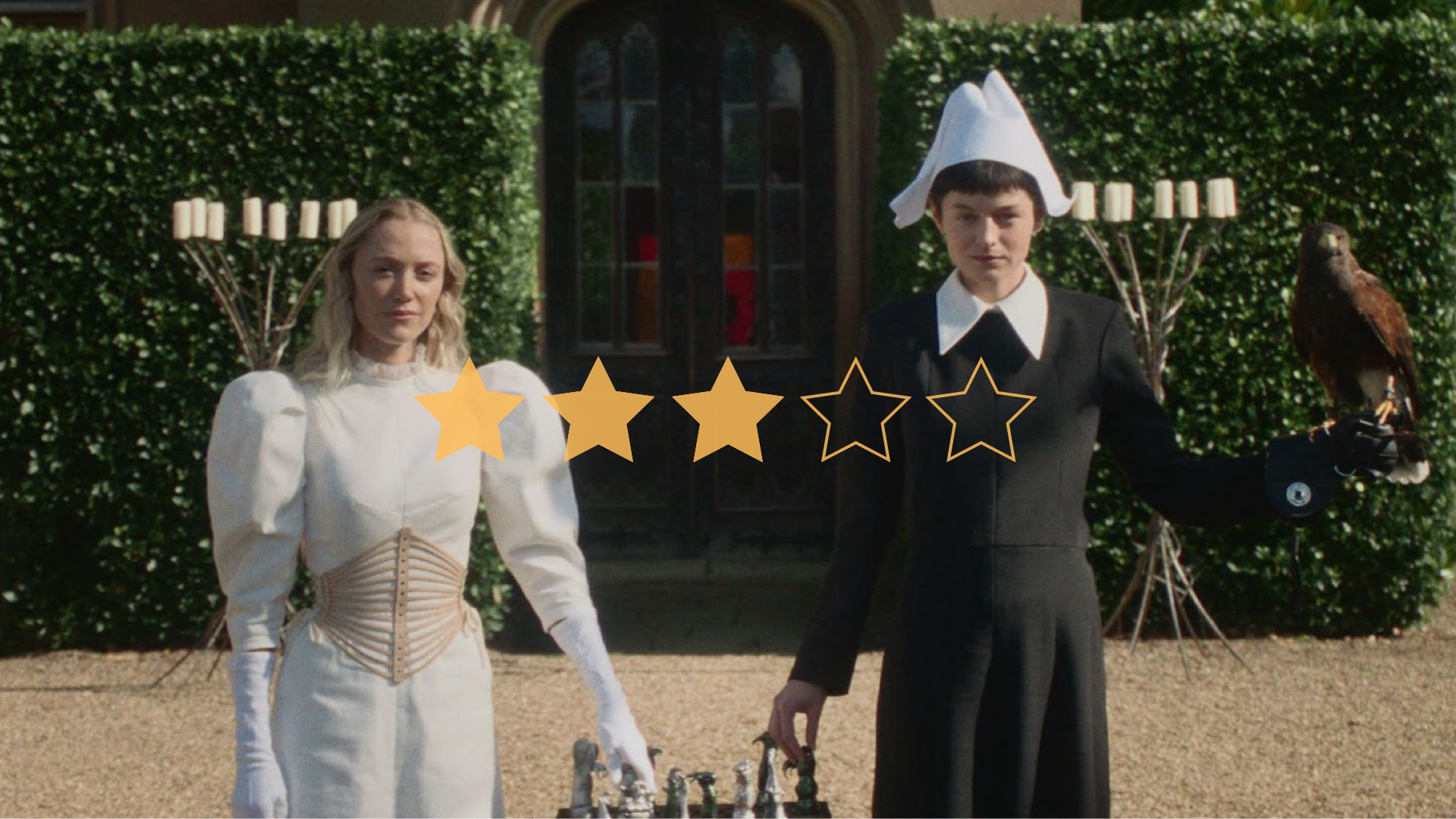
In 100 Nights of Hero, Julia Jackman brings viewers on an audacious, otherworldly journey, but the worldbuilding and thematic development leave something to be desired.
★★★☆☆
100 Nights of Hero feels far-removed from One Thousand and One Nights, the collection of Middle Eastern folktales upon which it is loosely inspired by. In many ways, this is inevitable, considering its extra degree of separation—Julia Jackman’s film is based on the graphic novel The One Hundred Nights of Hero, which in turn is based on the original folktales. But where 100 Nights of Hero does strike similarities is in its grand depiction of and reverence for storytelling. Across its swift 91-minute runtime, the film takes great pride in portraying the potential power of stories, which are a source of not only enjoyment but inspiration for change too. Of course, 100 Nights of Hero won’t stand the test of time in the same way that One Thousand and One Nights has and it won’t move mountains or build bridges with what is a surface-level plot, but it is undoubtedly an alluring, beautiful, and emboldened film.
In a dystopic fairytale world where the patriarchy rules with brutality, Cherry (Maika Monroe) is recently and unhappily married to despicable royalty, Jerome (Amir El-Masry). Such is the abusive nature of this world that Jerome leaves Cherry alone for 100 days to test her fidelity, making a crude deal with his friend Manfred (Nicholas Galitzine). Monroe is effective as the meek wife, a woman accustomed to being quiet and told what to do, although the actor does not fully capture her growth that we see blossom by the end of the 100 nights. Star-of-the-show is Emma Corrin, who plays Cherry’s loyal maid Hero, and from whom comes the film’s fantastical tales.
The worldbuilding of 100 Nights of Hero is a mixed bag. Xenia Patricia’s cinematography is ripe and colourful, and Oliver Coates’ fun original score is a modernised concoction of whimsy and fantasy that somehow slots neatly into this world. It lifts the most empowering moments of the film up to higher levels. However, the actual lore and details of the setting feel flimsy. There are three moons and people praise a God-like figure called Bird Man (Richard E. Grant), but aside from those snippets, the world is generic. The sets in particular feel bland and could be from any era, be it past, present, future, fictional, or real. More substance and background to the world would have gone a long way.
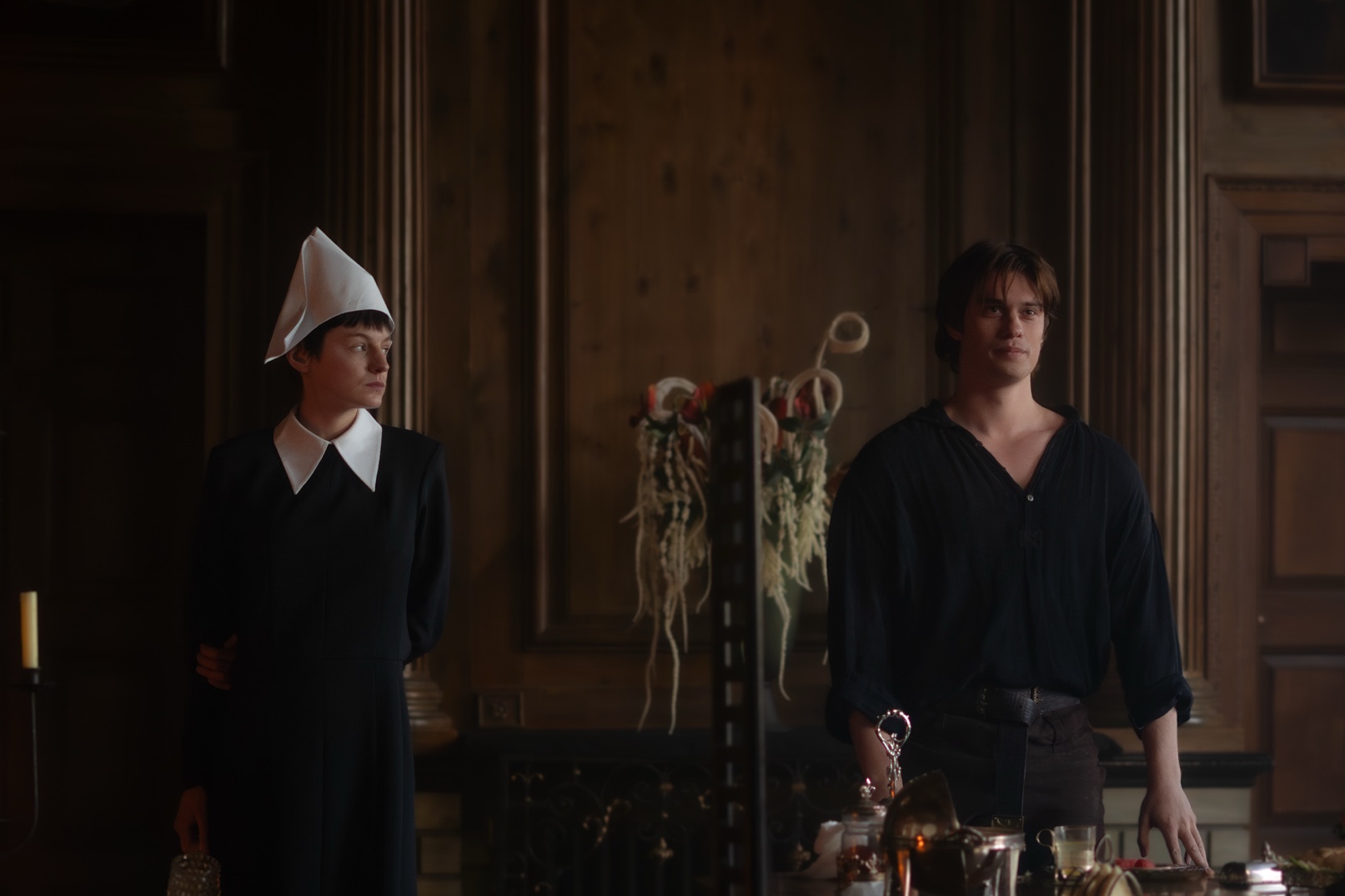
In a bid to distract Manfred from his endeavours, Hero tells the story of three young women of the past whose bravery has lived long in their legacy. 100 Nights of Hero is otherworldly in setting, but grounded in reality. Jackman’s screenplay is effective in exploring two intertwining tales of female empowerment, but on the whole it is underwhelming, never deep enough into its thematic potential. Jackman’s handling of Manfred is interesting; his attitudes change somewhat, but it is too little too late. Quite rightly, he is continually painted as a coward.
Ultimately, the film is too simplistic, despite its indisputably positive messages. Such a high degree of style can’t paper over some searing issues with the film’s substance, or rather lack of it. Aside from the lack of detailed worldbuilding, the screenplay follows standard dramatic beats too neatly. 100 Nights of Hero has an undeniably moving and climactic ending, but it still feels formulaic in its construction, as does what precedes it. For a film centred around the power of storytelling, the thinly constructed screenplay does little to bolster this intriguing and ripe premise.
The Verdict
100 Nights of Hero has as many underdeveloped ideas as it does original flourishes, if not more. There is a lot to love within many of the film’s production elements, but ultimately, there are too many aspects of 100 Nights of Hero that feel undercooked.
Words by William Stottor
100 Nights of Hero is in UK cinemas from 6th February 2026.
Support the Indiependent
We’re trying to raise £200 a month to help cover our operational costs. This includes our ‘Writer of the Month’ awards, where we recognise the amazing work produced by our contributor team. If you’ve enjoyed reading our site, we’d really appreciate it if you could donate to The Indiependent. Whether you can give £1 or £10, you’d be making a huge difference to our small team.