
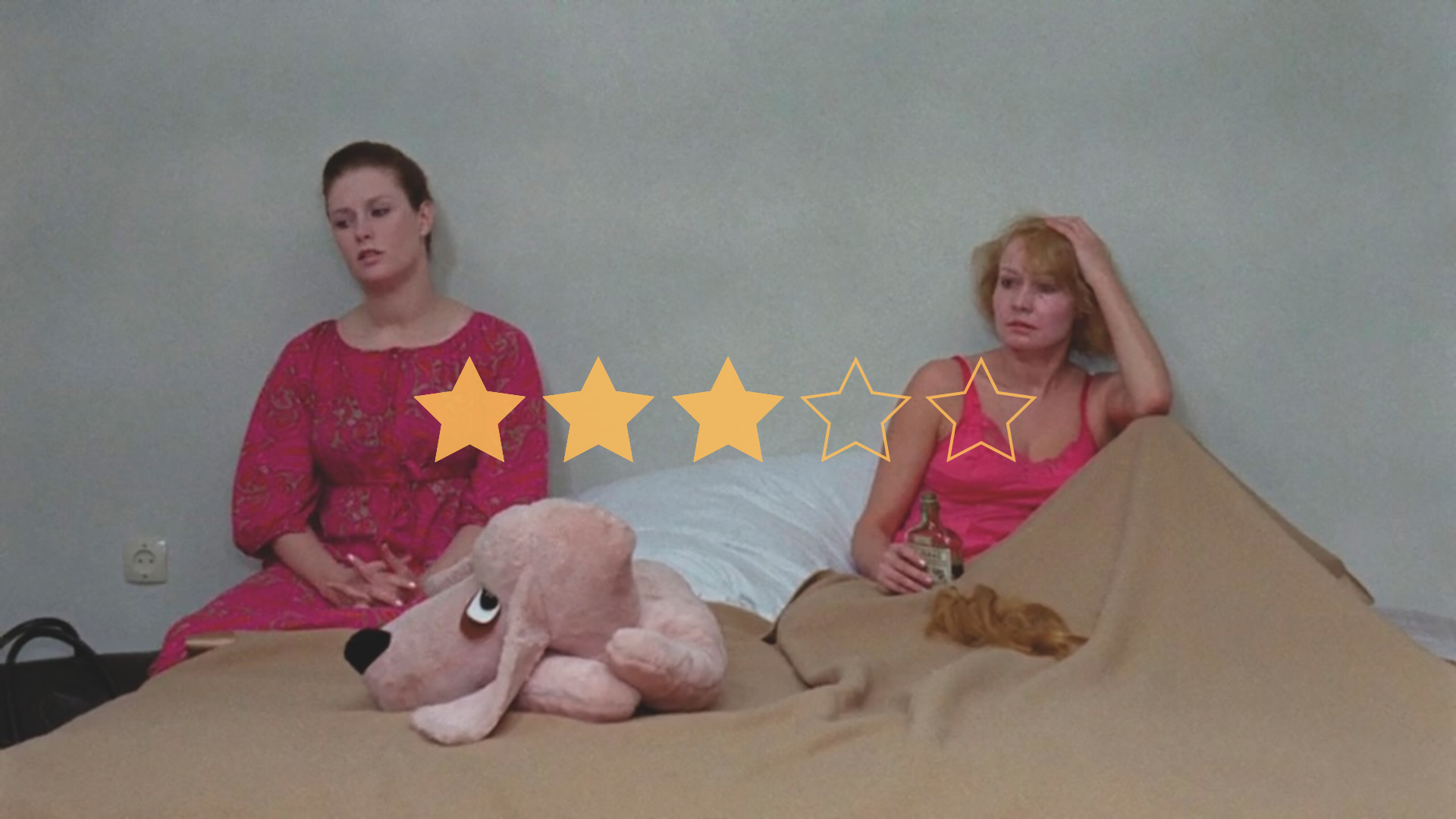
Without context, Everything For Sale can be confusing, but with it, legendary director Andrzej Wadja delivers a moving, meta-fictional tribute to a lost icon of Polish cinema.
★★★☆☆
Stop if things get confusing. Everything For Sale (1969) is about the making of a film called Everything for Sale, where legendary Polish film director Andrzej Wadja plays a director called Andrzej, and actors Beata Tyszkiewicz, Elżbieta Czyżewska and Daniel Olbrychski play actors Beata, Elżbieta and Daniel. Beata and Elżbieta are Andrzej’s wife and mistress respectively. Unnerved by the disappearance of the leading actor from their film’s set, the cast and crew embark on a journey to search for him. When it ultimately transpires that their absent colleague is definitely dead, their grip on reality begins to fray, and from thereon, we’re never quite sure whether what we’re watching is part of the film or the film-within-a-film. A metafictional hall of mirrors for the New Wave era.
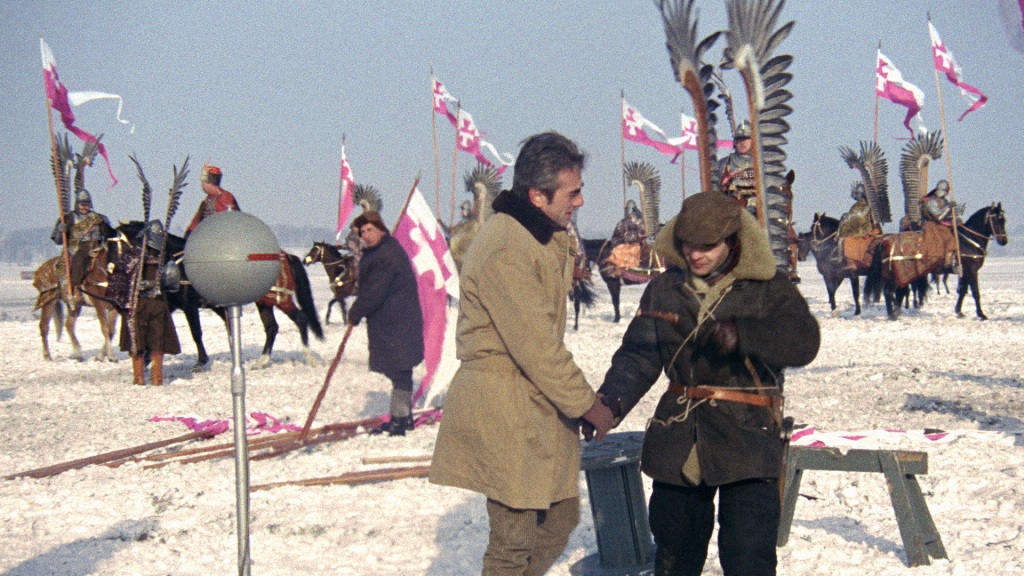
It’s easy to see why Kinoteka, the Polish Film Festival showcasing Poland’s best cinematic achievements across London, chose this as one of its openers. Wajda is one of Polish cinema’s titans—director of forty-some features, an Honorary Oscar, the Palme d’Or and countless other awards. It also shines a light on what he did best—chronicling his country’s political and social evolutions—while simultaneously serving as a pastiche of Polish cinema and the industry at large. Not bad, all in all, for 99 minutes.
To understand what Everything For Sale is trying to do, context is crucial. In January 1967, Zbigniew Cybulski, actor and long-time Wadja collaborator, died at a railway station on his way home from a film set. He tried to board a moving train, slipped, fell beneath it, and was killed. Cybulski was something of a rebel figure, a “bright young thing” akin to James Dean and one of Poland’s most beloved film personalities of the 1960s. His death marked a turning point in Polish cinema, and this film serves as an elegy. The missing actor, though never named, is clearly intended to be a stand-in.
The film continuously blurs the boundaries between reality and illusion in a way that can feel jarring but is obviously intentional. It’s very much in keeping with the New Wave conventions of the time, with its non-linear storytelling and meta-commentary, but it’s important to remember this was an era when cinema of all kinds was interrogating its own purpose as an art -form in a post-war landscape. What were films for? Were they to be pure escapism, all roses and sunshine like the Hollywood films of the 50s, where everyone was very pretty and happily ever after was a given? Films about films were de rigeur, Fellini’s 8½ (1963) the obvious gold standard, but there’s Godard’s Contempt (1963) too, which laid bare the clash between art and commerce. A handful of American films were taking similar approaches, such as Whatever Happened To Baby Jane? (1962), which cast two real stars as brutalised former child actors, Jerry Lewis’s satire The Patsy (1964) or Mel Brooks’ The Producers (1967). Cinema having established itself as a prime money-printing machine, directors were keen to lampoon it in various forms.
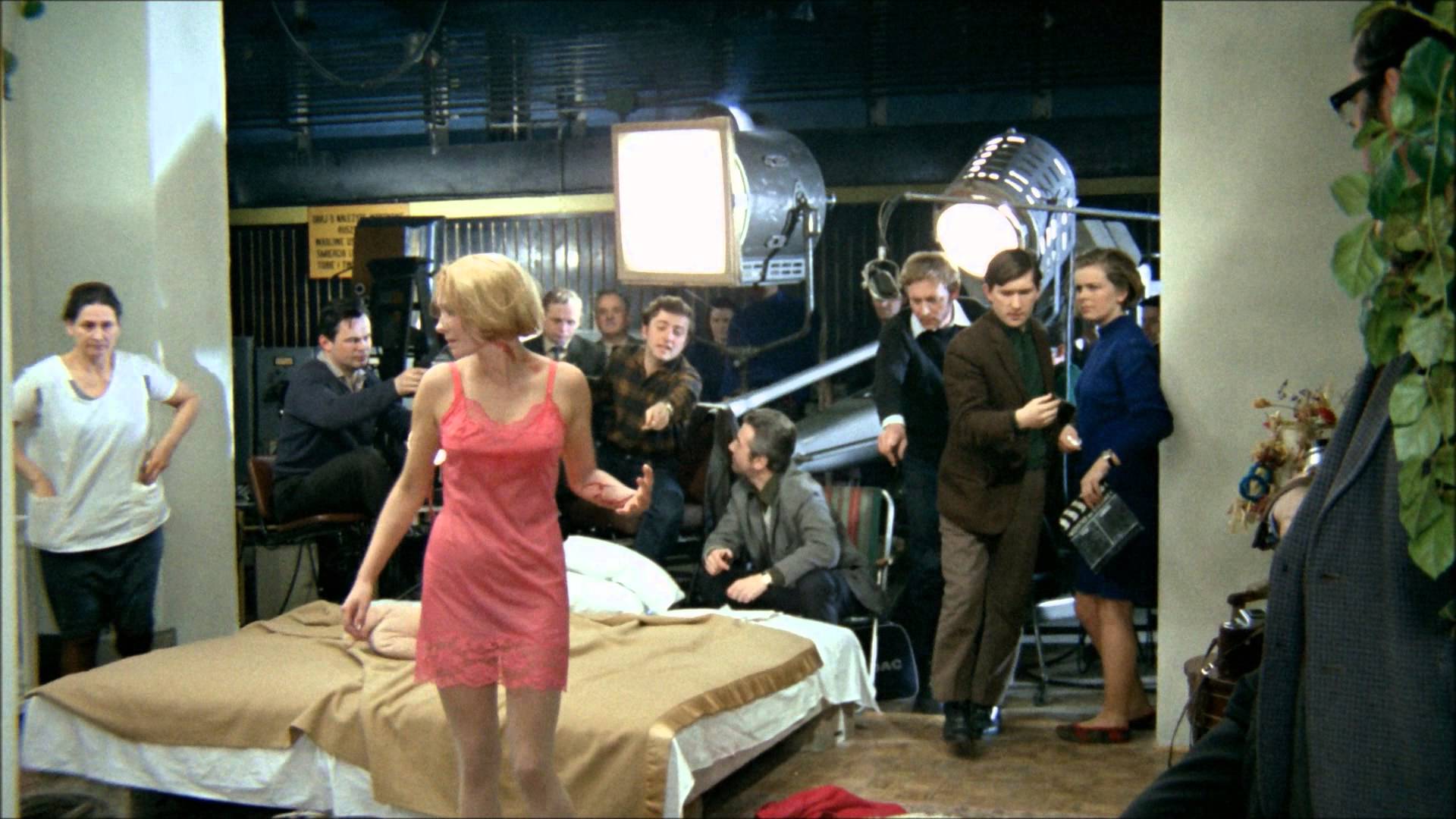
In Everything For Sale, the lampooning is more solemn, given the context of the cast and crew’s real-life grief. Scathing criticisms of hypocrisy within the industry arise throughout, from the lavish parties the cast and crew attend to their shallow attitudes to their work. Horses gallop through fields in recurring images that harken back to Eadweard Muybridge’s 1878 zoetrope, The Horse in Motion—a reminder of cinema’s origins, and how far the form has strayed. There’s even something of Mulholland Drive about the whole affair: two women at the centre, the self-referential movie set backdrop, and the disorienting pivot at the midway point to being predominantly about Daniel. Characters speak as though detached from their own words, grief rendering them ghostly. There’s also a scene with an out-of-control carousel, with adults riding it and bickering like children—that feels like a metaphor for the industry’s infantile corruption. Perhaps literally everything is for sale in the world of moviemaking: decency, integrity, art itself. The ‘60s were witnessing the full commercialisation of cinema, and for Wadja, Cybulski’s death would have added salt to that particular wound.
The Verdict
Coming to Everything For Sale without its backstory will likely leave you a bit cold and confused. It’s a movie built to divide audiences, especially contemporary ones, but as a historical artefact—a document of filmmaking in a very specific state of crisis—it remains a classic. A fitting way to kickstart the fest.
Words by James Morton
Kinoteka Polish Film Festival runs from 4 February to 29 March.
Support the Indiependent
We’re trying to raise £200 a month to help cover our operational costs. This includes our ‘Writer of the Month’ awards, where we recognise the amazing work produced by our contributor team. If you’ve enjoyed reading our site, we’d really appreciate it if you could donate to The Indiependent. Whether you can give £1 or £10, you’d be making a huge difference to our small team.