
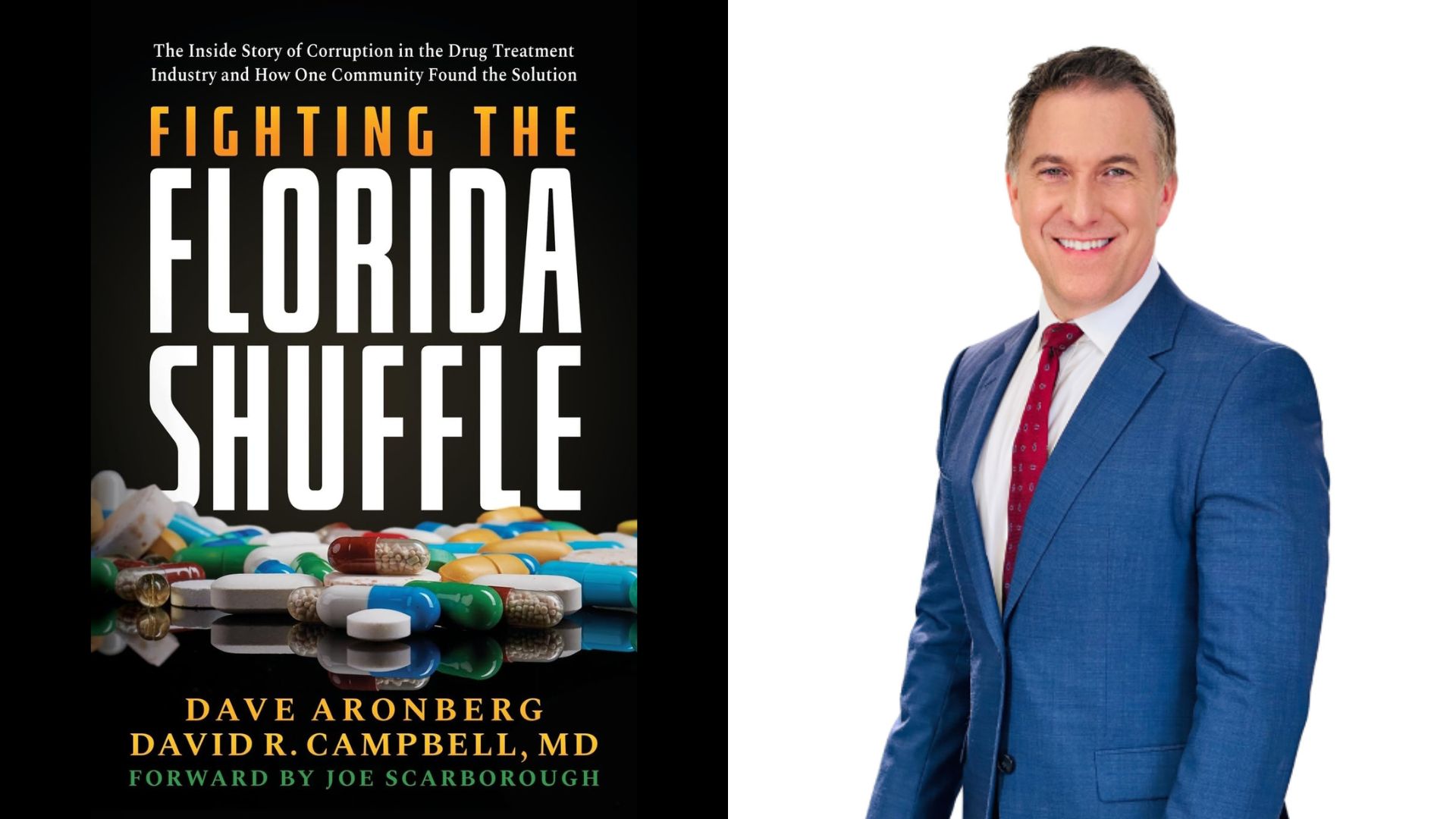
“All These Lives Are Worth Saving”: Dave Aronberg On Writing A Book About The Story Congress Ignored
The first thing Dave Aronberg wants to dismantle is the idea that the people at the centre of Florida’s drug crisis somehow brought it on themselves. Addiction, he insists, is not a morality play. “It is a brain disease, not a moral failing,” he tells me. “Those in the throes of addiction often got there because they started taking a drug that was prescribed to them by a doctor.” Yet he is quick to follow that statement up with a line that sits at the heart of his new book: “Regardless of how one’s dependency issues started, we need to overcome the stigma of addiction because all these lives are worth saving.”
It is a quietly radical starting point in a state that has long been caricatured as a sun-bleached circus of bad decisions. For years, the “Florida Man” meme, the rehab-in-paradise brochures and the grisly overdose headlines have flattened a public health crisis into lurid spectacle. Aronberg, managing partner at his own law firm, ex-State Attorney for Palm Beach County (2013-25) and new author, has spent years dealing with the painful reality of these headlines. His new book, Fighting the Florida Shuffle, he says, is an attempt not just to document what has gone wrong, but to force the people who helped create this system to look at it.
Ask him what patterns he sees in drug crimes and relapses in Florida and he doesn’t start with cartel routes or street-level dealing. He starts with insurance. “Too many relapses occur because of the flaws of the ‘Florida Model’ of treatment,” he says, adding that “the current Florida Model of treatment was not invented by medical professionals but by insurance actuaries.”
If you’ve never encountered the Florida Model before, it can sound benign enough: 28-day stays in glossy residential rehabs, intensive therapy programmes, a quick, decisive break from using. In reality, Aronberg says, it has produced a revolving door. Insured patients are flown in for a few weeks of high-billing treatment, discharged to loosely supervised “sober homes”, relapse, and are cycled back into another reimbursable stay. “Short-term intensive treatment” sounds like urgency, like action. In Aronberg’s account, though, it is a business model that has become so entrenched that it has acquired its own grim nickname: the Florida Shuffle.
The consequences are not limited to relapse rates and balance sheets. “The money that incentivises the Florida Shuffle has degraded communities,” he says. “Flop houses masquerading as sober homes pop up in the middle of residential neighborhoods with little or no oversight.” These are not the regulated, supportive environments that most people imagine when they hear the phrase “sober home”. In practice, many are overcrowded rentals run to maximise occupancy, not recovery. For neighbours, they appear as a constant stream of ambulances and police cars. For families, they are the hidden reality behind brochures promising seamless, faultless standards of care.
The story, as he tells it, is not only of greedy operators but also the legal and financial framework around them. “Well-intentioned federal laws have cost taxpayers, communities and families immeasurable costs,” he argues. Protections designed to stop people in recovery being evicted or excluded have, in some cases, been repurposed as a shield against local regulation. Bad actors invoke these protections to fend off local scrutiny, even as they cram paying residents into crowded, unsafe houses and offer little in the way of actual rehabilitation. Combine that with insurance policies that reward short, intensive treatment, and the conditions are set for exploitation.
At points, his frustration tips into something closer to exasperation. As a prosecutor, he has gone after the worst of the operators in court. As a public official, he has tried to regulate the treatment industry at county and state level. And as the scale of the problem became clearer, he went to the next logical place: Washington. “I testified twice before Congress to get them to fix the problem,” he says. “But Congress did nothing.”
That silence is part of what pushed him to write his book, Fighting the Florida Shuffle. “I want our policymakers in Washington, DC, to face the problem that they unwittingly created through well-intended laws meant to help people in recovery, but are actually doing them harm,” he says. The book, in that sense, is a kind of raised voice. “This book is my way of trying to get Congress’ attention on a crisis that demands action but has been largely ignored.”
There is, in that choice, a faint echo of an older belief in what books can do – that longform reporting, unfashionably detailed and stubbornly human, might cut through where hearings and op‑eds have not. Aronberg is not naive about the noise of electoral politics, but he retains a lawyer’s faith in evidence and a storyteller’s faith in narrative. If people understood how the system was actually operating, he suggests, would they still tolerate it?
The intended audience, though, is wider than Washington or even Florida itself. Aronberg is explicit about wanting readers with no personal connection to Florida or addiction to see the larger story: how stigma, profit and policy design have turned a health crisis into an industry. The book’s title foregrounds Florida, but he frames it as a warning. “Unfortunately, as we cleaned up the drug treatment and sober home industries here in Florida, the problem spread to other communities around the country,” he says, “especially in warm weather destinations that are unaware of the Florida Shuffle and what can be done to fight it.”
The model, in other words, travels. So does his response. “My book provides a roadmap for communities to fight back even while Congress sleeps,” he says. Roadmap is a deliberately practical word. It implies that there are things local officials and residents can do: zoning rules to tighten licensing regimes to enforce, data to collect and share. It also carries an implicit warning. You are on the same road, he is saying. You can keep driving and hope not to end up where we did, or you can look at our map and turn off sooner.
But for all of the policy details, the underlying idea that keeps surfacing in conversation with Aronberg is one of a cultural shift. Do we, as a society, actually believe that people with addiction have “lives worth saving”? The language of brain disease and medical treatment suggests that, thankfully, we do. Yet the reality of the Florida Shuffle suggests otherwise. Stigma remains the quiet enabler of bad policy: if the public sees people in recovery as the designers of their own misfortune, then their exploitation is easier to ignore.
It’s a bluntly brutal approximation of societal attitudes, and it’s one that poses extremely uncomfortable questions. But Aronberg insists that it is only by tackling the underlying stigma that shapes our policies, industries and neglect, that we can aim to reform our treatment systems.
In the meantime, the Florida Shuffle will keep turning: another insurance cycle, another relapse, another tragedy.
Interview conducted by Sophia McHardy
Want more Books content from The Indiependent? Click here
Support The Indiependent
We’re trying to raise £200 a month to help cover our operational costs. This includes our ‘Writer of the Month’ awards, where we recognise the amazing work produced by our contributor team. If you’ve enjoyed reading our site, we’d really appreciate it if you could donate to The Indiependent. Whether you can give £1 or £10, you’d be making a huge difference to our small team.