
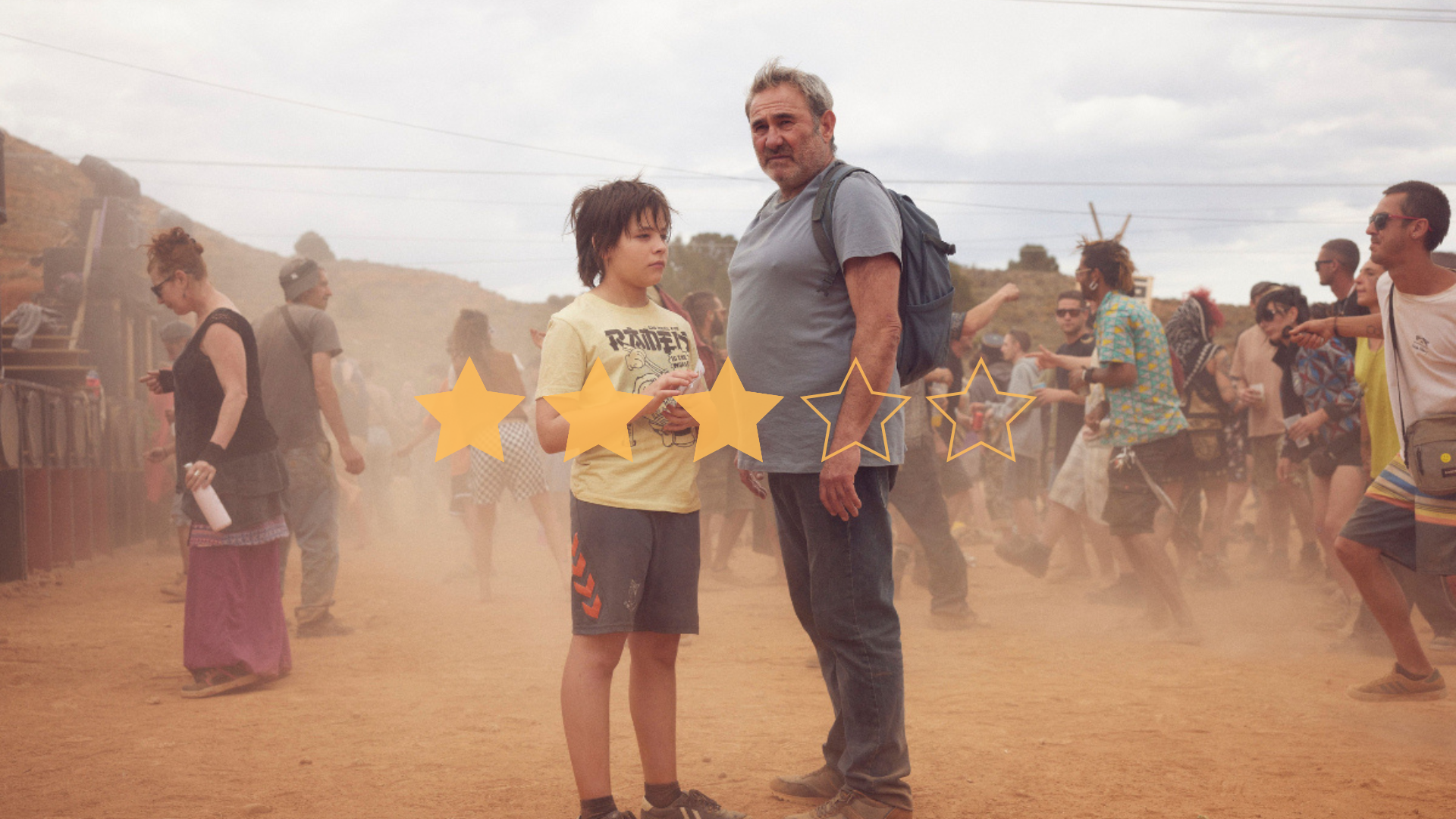
Director Oliver Laxe takes the audience into the belly of the illegal hardcore rave scene in Morocco’s Sahara. The film, much like the desert’s rocky, harsh climate, is unforgiving with its characters and, by default, is careless with its audience.
★★★☆☆
Sirat’s narratives centre on Luis (Sergio Lopez), a father looking for his missing daughter, who he suspects is at a desert rave. Along with his son Esteban (Bruno Nunez), he asks around with little luck before stumbling upon a group of ravers—Steff (Stefania Gadda), Josh (Joshua Liam Herderson), Bigui (Richard Bigui Bellamy), Tonin (Tonin Janiver), and Jade (Jade Oukid)—who, like them, are Spanish speakers. When the event is shut down by Morocco’s military, the ravers evade the army convoy trucks to head off to another party location. Luis follows, hoping his daughter will be there—but the group warns him that his small silver minivan may not withstand the rough terrain ahead. They begrudgingly permit him to follow along, and from there, a life-altering road trip from hell ensues.

The standout features of this film are undeniably the cinematography and sound design. There are absolutely breathtaking shots of burnt orange cliffs and vast white desert floors filled with dust, a bleached sun beating down mercilessly on the world. Most interestingly, cinematographer Mauro Herce captures the dance sequences through static shots, a departure from movement-heavy cinematography generally used to capture dance cultures. Television shows like Euphoria create nightlife scenes through vivid colours and intricate camera movements; in Laxe’s feature, the camera only pans from one character to another, making audiences hone in on the way ravers are dancing, overcome by the music, surrendering themselves to the sound as it hits the airwaves. This is a spiritual experience, he suggests. These raves exist as a form of transportation to a higher plane of being.
The soundtrack by Kangding Ray can only be described as otherworldly. The electronic musician crafts a soundscape that makes every image pulsate with energy. Pivotal scenes where the camera focuses on road markings match the tempo of the music in such a satisfactory manner that one can only marvel at what an audio-visual feat this film is.
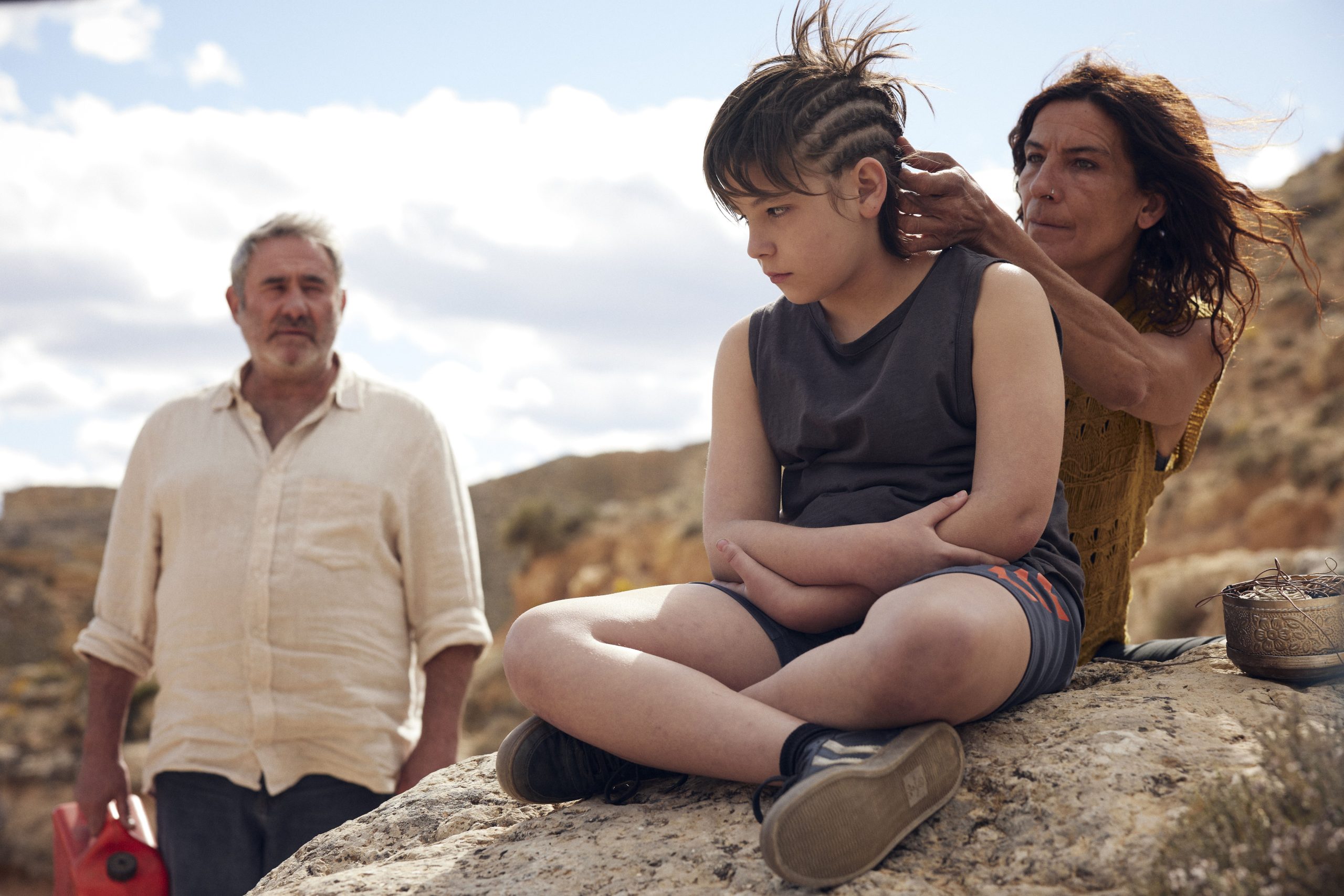
The performances within the film are steeped in naturalism; the characters Steff, Bigui, Tonin, Jade and Josh are also based on real-life counterparts. This brings the ravers to life, and facilitates deeply humanistic performances. Lopez gives a truly heartbreaking performance of Luis as a guarded father going through insurmountable loss, while Nunez’s Esteban is also excellent—his portrayal of a kind-hearted child allows audiences to become emotionally invested in his character arc.
By the midway point of its run time, the film takes a colossal shift in tone and narrative direction. What at first seems to be a piece of slow cinema about found family and letting go becomes a piece about struggling with insurmountable and unpredictable grief, trauma, and exhaustion.
The script prioritises shock-value events over satisfactory emotional breakthroughs, tense and anxiety-inducing sequences overshadowing the message of hope that the film is attempting to convey. A peaceful first act becomes a devastating second act, which metamorphoses into an absolutely anxiety-inducing third act that concludes with a rushed resolution—audiences aren’t given a moment of rest from the intensity. Rather than leaving the cinematic experience exhausted and relieved, Sirat’s lasting emotional impact is draining and glib.
The Verdict
Sirat is bold and daring, but cannot tackle large themes of grief, loss and sudden suffering with grace. Though an amazing audiovisual experience, it’s debilitated by its structure.
Words by Ayomide Asani
Support the Indiependent
We’re trying to raise £200 a month to help cover our operational costs. This includes our ‘Writer of the Month’ awards, where we recognise the amazing work produced by our contributor team. If you’ve enjoyed reading our site, we’d really appreciate it if you could donate to The Indiependent. Whether you can give £1 or £10, you’d be making a huge difference to our small team.