
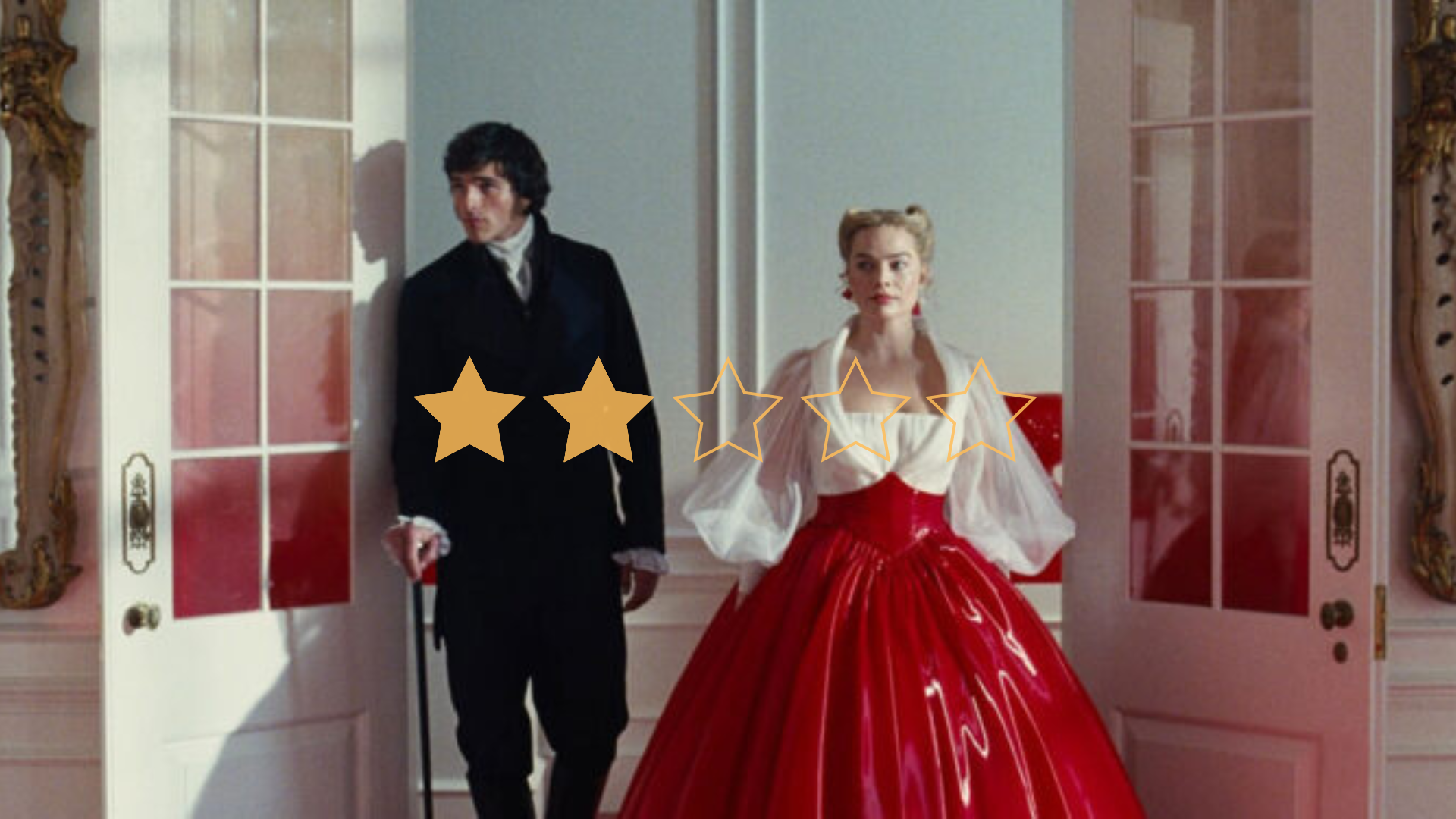
Emerald Fennell’s “Wuthering Heights”, which roared into theatres last week, is less a faithful retelling of Emily Brontë’s 1847 masterpiece and more of a neon-drenched, high-fashion autopsy of toxic obsession.
★★☆☆☆
Set against the untamed backdrop of the Yorkshire moors, “Wuthering Heights” is a daring retelling of a traditional story of compulsive love and retribution. The film follows the intertwined lives of Catherine Earnshaw (Margot Robbie) and the brooding, enigmatic Heathcliff (Jacob Elordi). As children raised together at the isolated Earnshaw estate, their bond transcends friendship, evolving into a haunting and destructive passion that threatens to consume everyone in their orbit. The story navigates the complexities of class, jealousy, abuse, and the relentless pull of the past, as Cathy finds herself torn between her social obligations and the raw, untamed connection she shares with the man she claims is her own soul.

From the jarring opening hanging scene, it is clear that Fennell has no intention of playing by the rules of the period drama. The film immediately establishes a sensory-heavy, almost ASMR-like atmosphere, where the rustle of silk and the crunch of the moors are amplified by a thumping, anxious score from Charli XCX. While it maintains a certain gothic soul, the aesthetic is purely ‘Fennell-core’, swapping damp Yorkshire grey for a diabolical palette of deep reds and shimmering silvers that culminate in a drawing room made entirely of crystal and a bright red living room floor.
Visually, the film is picturesque but undeniably weird. The costumes are a fever dream of historical inaccuracy that somehow fit the movie’s internal logic, featuring everything from Russian hats and tiny red sunglasses to a golden earring for Heathcliff after his return. The production design is packed with unsettling symbolism, but for every brilliant visual choice there is a head-scratching moment designed for pure shock value. The egg yolk prank played by Cathy on Heathcliff, and Heathcliff’s eventual egg prank revenge on Cathy upon his return, feel like bizarre additions designed to trend on social media rather than serve the narrative. The inclusion of hyper-erotic elements inaccurate to the setting and the time period add a layer of modern psychosexual drama that feels light years away from the source material.
The performances of Robbie and Elordi are magnetic, even if they struggle to find their footing in the Yorkshire moors. Robbie’s Cathy is a force of nature, though the complete lack of a Northern accent makes her feel more like a modern socialite than a wild child of the heights. Elordi’s Heathcliff captures the agonising pain of the character effectively, though his attempt at a Northern accent is unnerving to the ear. A standout performance comes from Owen Cooper (known for his role in the Academy-award-winning Netflix series Adolescence), who plays a young Heathcliff. Cooper brings a raw intensity to the character that the film occasionally loses as it transitions into the adult years.
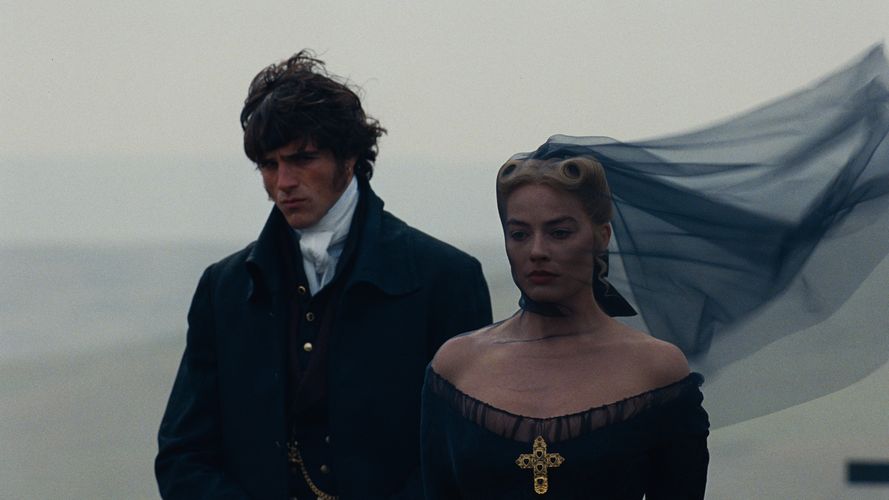
As an adaptation, the film takes massive, often frustrating liberties. The decision to skip Lockwood might have helped in streamlining the plot, but it loses the book’s nested narration. On the other hand, turning Nelly Dean into an outright villain is a radical departure that changes the fundamental DNA of the story. Interestingly, the film subverts expectations by making Linton mixed-race, while portraying Heathcliff as a white person, who’s traditionally described as dark-skinned in the source material—a choice that complicates the social dynamics of Thrushcross Grange in unexpected ways. The narrative leans heavily into misunderstandings as plot devices and turns the central conflict into an explicit cheating scandal, with Cathy being unfaithful to Linton and the film teasing a pregnancy that never seems to physically manifest. While the “haunt me then” quote is included, it feels a bit forced within this new context, as if the film is checking off a Brontë bucket list while simultaneously rewriting the characters’ souls.
Ultimately, Fennell’s “Wuthering Heights” follows the disappointing tradition of previous adaptations by completely omitting the second half of the book. By ending at Cathy’s death and ignoring the cycle of generational trauma involving the younger Catherine and Hareton, the movie settles for being a high-octane love story rather than the sprawling, dark epic Brontë intended.
The Verdict
“Wuthering Heights” is a brilliant standalone work of art—a sensory feast filled with hypnotic color themes and the biggest strawberry ever seen on screen—but as a comparison to the novel, it remains a beautiful, red-tinted shadow of the original. Neither “the greatest love story of all time” as it was advertised nor an exploration of the source material’s toxic, vengeful nature, all that is left is a glossy, romanticized tragedy.
Words by C. Sharmishtha
Support The Indiependent
We’re trying to raise £200 a month to help cover our operational costs. This includes our ‘Writer of the Month’ awards, where we recognise the amazing work produced by our contributor team. If you’ve enjoyed reading our site, we’d really appreciate it if you could donate to The Indiependent. Whether you can give £1 or £10, you’d be making a huge difference to our small team.