
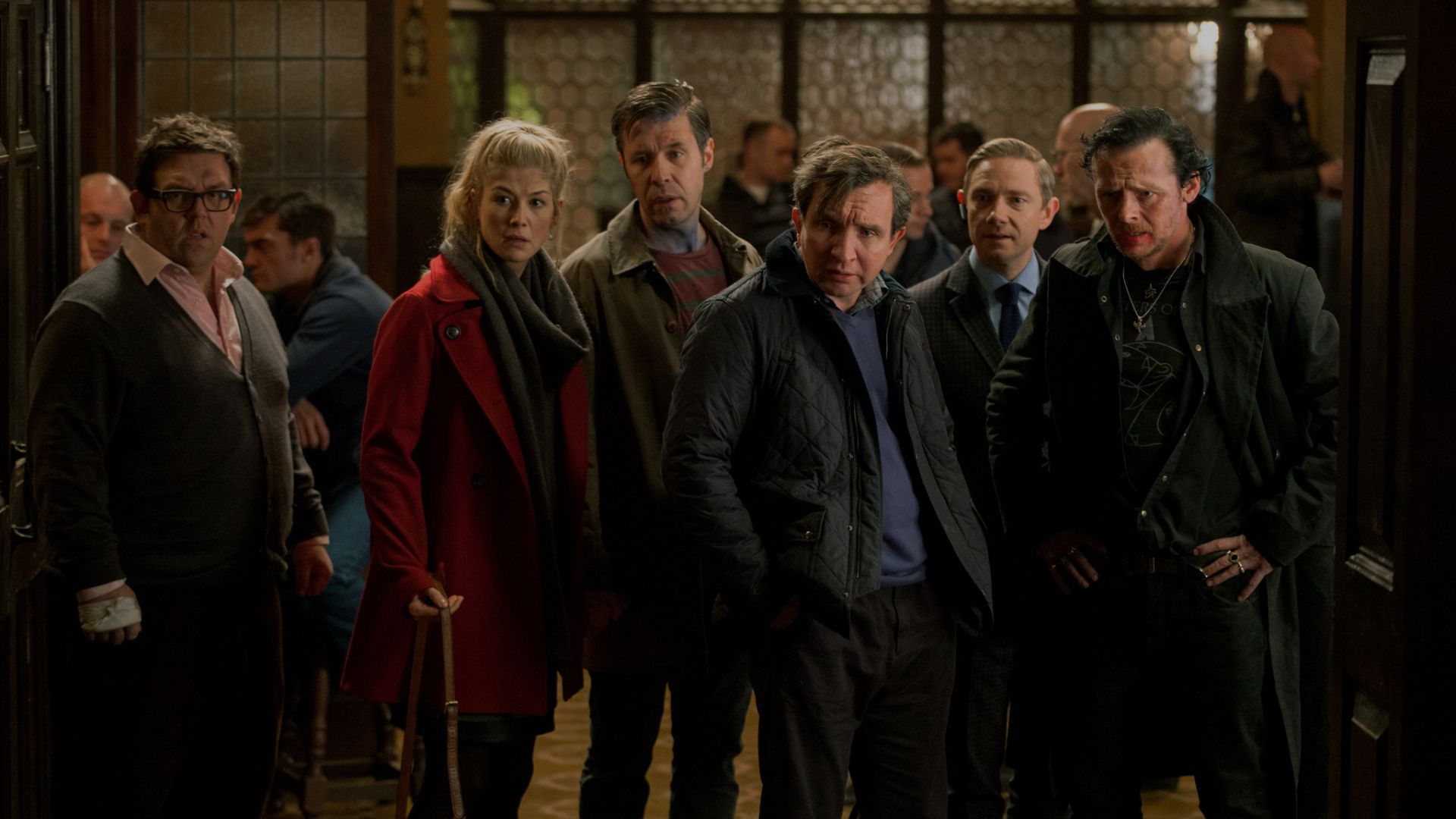
Few contemporary directors possess a signature as instantly recognisable as Edgar Wright. His whip-smart editing, rhythmic visual gags, and genre-bending instincts have combined over the years to create a cinematic language that feels almost musical in its precision.
With the arrival of his newest feature, The Running Man, audiences once again find themselves debating where this latest entry falls within his eclectic and endlessly rewatchable filmography. It’s the perfect moment, then, to take stock of his career so far. Now, for The Indiependent’s definitive ranking of Edgar Wright’s catalogue.
8. A Fistful of Fingers (1995)
Wright’s feature debut, a shoestring-budget that spoofs the Spaghetti Westerns, was made with friends and fuelled by pure enthusiasm. Featuring a cowboy seeking revenge on the wanted man who killed his horse, it has the unpolished charm of an early experiment from a filmmaker testing the boundaries of his comedic instincts.
Viewed today, it feels more like a historical artefact than a fully formed film, but that’s part of its appeal. Nick Allen (RogerEbert.com) fondly described the early effort as “the dawn of a filmmaker who thinks primarily in how to make a movie consistently gripping in the cinematic sense.” Beneath the cheap sets and silly effects, one can glimpse the emerging DNA of Wright’s later brilliance: playful editing, cheeky genre awareness, and a love of absurdity.
It’s not a polished movie, nor is it meant to be. It’s a window into the imagination of a filmmaker who would later refine these offbeat ideas into some of the most stylish, genre-defying films of the century.
7. Scott Pilgrim vs. the World (2010)
Wright’s cult classic video-game-infused romantic comedy is easily one of his most absurdly energetic films. Its premise alone lives up to that: it sees Scott Pilgrim (Michael Cera), who competes for the affection of Ramona Flowers (Mary Elizabeth Winstead) against her league of seven exes. Its aesthetic elements are even more brazen; with comic-book panels, kinetic transitions, and an ensemble cast that delivers pitch-perfect comedic energy, Scott Pilgrim became a blueprint for stylised filmmaking in the 2010s.
Yet beneath the sensory overload lies a film that is more emotionally grounded than dangerous, more playful than intense. The stakes are rooted in relationships rather than life-or-death peril, which gives Scott Pilgrim its charm but also limits its dramatic weight. Its thrills are aesthetic rather than visceral, and thus never truly pulse-raising.
Still, Wright’s craftsmanship is undeniable here. He creates a world where heartbreak becomes a boss battle, and growth becomes a levelling-up mechanic. It is stylish, inventive, and effortlessly cool, even if its emotional punch is gentler than in his other works.
6. Last Night in Soho (2021)
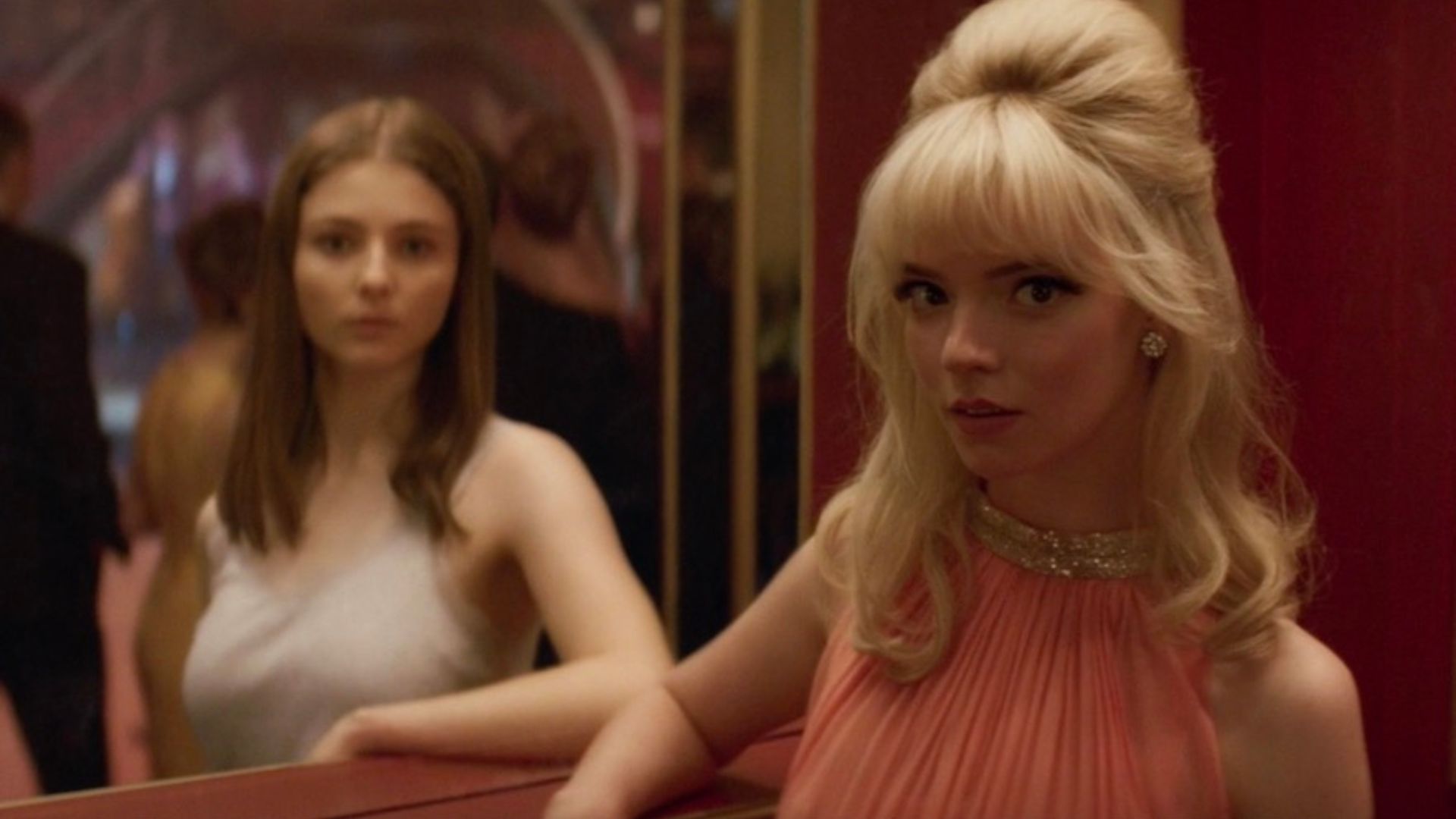
Last Night in Soho is an audacious genre experiment. Its intoxicating visual flair captures the allure of the 1960s with seductive precision, even as the story interrogates the darker underbelly of nostalgia.
The story follows Eloise (Thomasin McKenzie), a shy fashion student who becomes physically entangled with a glamorous woman from the 1960s. Wright plunges viewers into an unstable blend of fantasy and horror as the lines between dream and reality dissolve. The result is a film that is eerie, glamorous, and deeply melancholic all at once. It explores the seductive danger of idealising the past, especially in a post-#MeToo world where buried abuses continue to resurface.
Tonally, it’s a juggling act: part neo-noir, part ghost story, part psychological descent. While not all threads tie neatly, the film’s boldness and emotional sincerity make it one of Wright’s most fascinating, if imperfect, creations.
5. Baby Driver (2017)
Baby Driver is an unrelenting ballet of music, motion, and momentum. Equal parts heist thriller, jukebox musical, and romance, it’s the film where Wright’s audio-visual precision reaches its zenith. Every gear shift, every gunshot, every glance is choreographed into harmony with the soundtrack, turning the movie into a kinetic fever dream of perfectly timed chaos.
The story follows Baby (Ansel Elgort), a young getaway driver whose tinnitus is soothed by music. The premise allows Wright to choreograph entire action sequences as though they were written directly into the lyrics. High-speed chases flow like symphonies, shootouts become percussion lines, and even quiet moments thrum with rhythmic intention.
Yet the film is not without its dips. Its midsection wavers slightly as the plot struggles to deepen its characters. But once the story unleashes its third-act mayhem, the film roars back with unpredictable ferocity, largely thanks to Jon Hamm’s electrifying turn as Buddy. Baby Driver may prioritise energy over narrative complexity, but its sheer audiovisual mastery secures its place as a modern action essential.
4. The Running Man (2025)
Though met with mixed reactions, Wright’s The Running Man remake is a surprisingly layered reinterpretation of the dystopian classic. It operates as both homage and reinvention of its 1987 predecessor starring Arnold Schwarzenegger. Even Stephen King, famously dismissive of the original adaptation, compared Wright’s approach to Die Hard.
The film sees Ben Richards (Glenn Powell) participate in a month-long televised death game, in which he has to escape professional killers and survive to win money. The Running Man is all about constant pursuit, high physical stakes, engineered obstacles, and media manipulation. What Wright brings to the table is sharp satire wrapped in pulpy spectacle. His commentary on AI and the commodification of humanity feels disturbingly current. While some viewers might sense fatigue in these sci-fi tropes, Wright’s dark humour and pointed observations give the film fresh bite. It’s a bleakly entertaining portrait of a world addicted to violent escapism, filtered through Wright’s sly sensibilities.
The action pops when it needs to, buoyed by energetic performances. The film may lack some of Wright’s usual stylistic fireworks, but it compensates with thematic clarity and a confident shift in tone.
3. Shaun of the Dead (2004)
Shaun of the Dead introduced the world to Wright’s trademark visual wit, rhythmic editing, and genre-bending confidence. The visual motifs, dynamic transitions and musical flourishes would all define his career.
Rather than a simple zombie parody, the film is deeply human. It follows Shaun (Simon Pegg), a civilian stuck drifting in life, only to be spurred into action when the world literally falls apart around him. What makes the film resonate is how effortlessly it is able to balance the comedy and horror. Wright lets slapstick ensue whilst never losing sight of the fractured relationships and unresolved grief of the characters that coexist alongside the zombie gore.
In hindsight, Shaun of the Dead feels like Wright announcing his full cinematic vocabulary in one confident burst. It remains one of the most rewatchable films of the 2000s, and a perfect example of how comedy and horror can amplify each other beautifully.
2. Hot Fuzz (2007)
If Shaun of the Dead was Wright’s East Londoners’ take on a zombie apocalypse, then Hot Fuzz is rural England’s take on bombastic American action cinema. It follows police sergeant Nicholas Angel (Pegg), an overachiever transferred to the seemingly peaceful village of Sandford. What could have been a simple spoof becomes something richer: a gleefully elaborate mystery, a riot of action and gun flares.
What elevates Hot Fuzz is that the parody never devolves into mockery. Wright understands the rhythms of action cinema (very much a homage to Michael Bay bombast) intimately enough to recreate them with both satire and sincerity. The result is a film that is both a razor-sharp genre send-up and one of the best modern action-comedies in its own right.
1. The World’s End (2013)
There’s something almost alchemical about the way The World’s End concludes Edgar Wright’s Cornetto Trilogy. It doesn’t just carry forward the humour, visual sharpness, and emotional sincerity of Shaun of the Dead and Hot Fuzz; it synthesises them into a richer, more melancholic meditation on adulthood.
At the core is a deceptively simple premise: five middle-aged men reunite to complete the pub crawl they failed as teens. But the emotional machinery underneath is deeply nuanced. Gary King (Pegg) clings desperately to the past, convinced that recreating old glories will fill the cavernous void in his life. The return to their hometown becomes a horror show of artificial nostalgia, embodied by the perfectly pleasant, perfectly hollow “Starbucked” replicas that have replaced the town’s authenticity. The satire lands harder today; Wright’s critique of weaponised nostalgia (like those Disney remakes) feels eerily prophetic.
The comedy is both brisk and intricate, unfolding in layers that reward repeat viewings. Pegg delivers the performance of his career, fusing his sharp comedic timing with a raw sadness that makes Gary King one of modern cinema’s most complex “man-child” characters. The support performances from Nick Frost, Paddy Considine, Eddie Marsan, and Martin Freeman all form a heartbreakingly believable friendship that has weathered time, trauma, and personal reinvention. And Wright delivers his finest retro soundtrack that transforms their respective scenes, creating musical memories as potent as the ones the characters chase.
Words by Joseph Jenkinson
Support the Indiependent
We’re trying to raise £200 a month to help cover our operational costs. This includes our ‘Writer of the Month’ awards, where we recognise the amazing work produced by our contributor team. If you’ve enjoyed reading our site, we’d really appreciate it if you could donate to The Indiependent. Whether you can give £1 or £10, you’d be making a huge difference to our small team.