
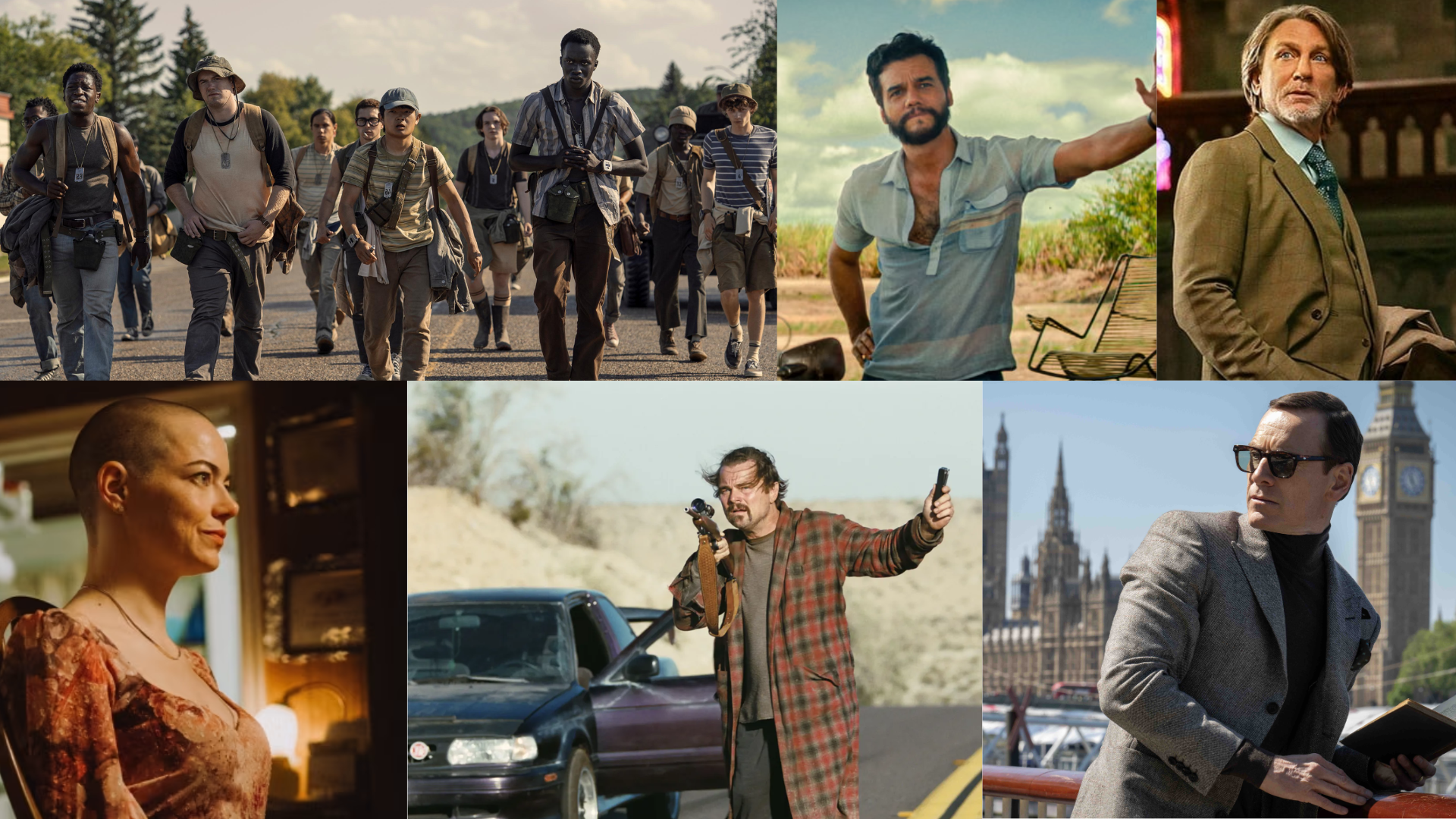
As another year comes to a close, The Indiependent‘s film writers share their favourite films of 2025—from blockbuster thrillers to subdued documentaries, and Gothic horror to bubbling romances.
One Battle After Another (dir. Paul Thomas Anderson)
A 27 year old man thinks One Battle After Another is the film of the year; you won’t get this opinion anywhere else guys.
Paul Thomas-Anderson’s long awaited thriller starring Leonardo DiCaprio as washed up political activist Bob Ferguson in transcendent form is by far the most technically accomplished, exciting and intelligent reverse blockbuster both this year and presumably in many years to come.
Paul Thomas-Anderson is my favourite director and he achieves one of his greatest feats as director and writer in this often hilarious take down of the ludicrous right wing figures that govern a huge portion of our existence. Sean Penn is on great form as the despicable Colonel Stephen Lockjaw and Teyana Taylor kills it as Leo’s volatile but ruthless partner Perfidia Beverly Hills.
There is also a star making turn from Chase Infiniti as the couple’s daughter Willa—it is a smorgasbord of acting talent coming together to make a bombastic ticking time bomb of a movie. Seeing this at a special screening at the Odeon Luxe in Leicester Square in Vista-vision was an experience I’ll never forget. Two days later I saw it at the Brighton Odeon and it was equally as good. If you can make screen five in the Brighton Odeon seem good you are onto a winner.
The defining cinematic experience of this year. Whether you’re chatting to a fellow cinephile or your parents round the dinner table, everyone loves One Battle After Another.
Frankenstein (dir. Guillermo Del Toro)
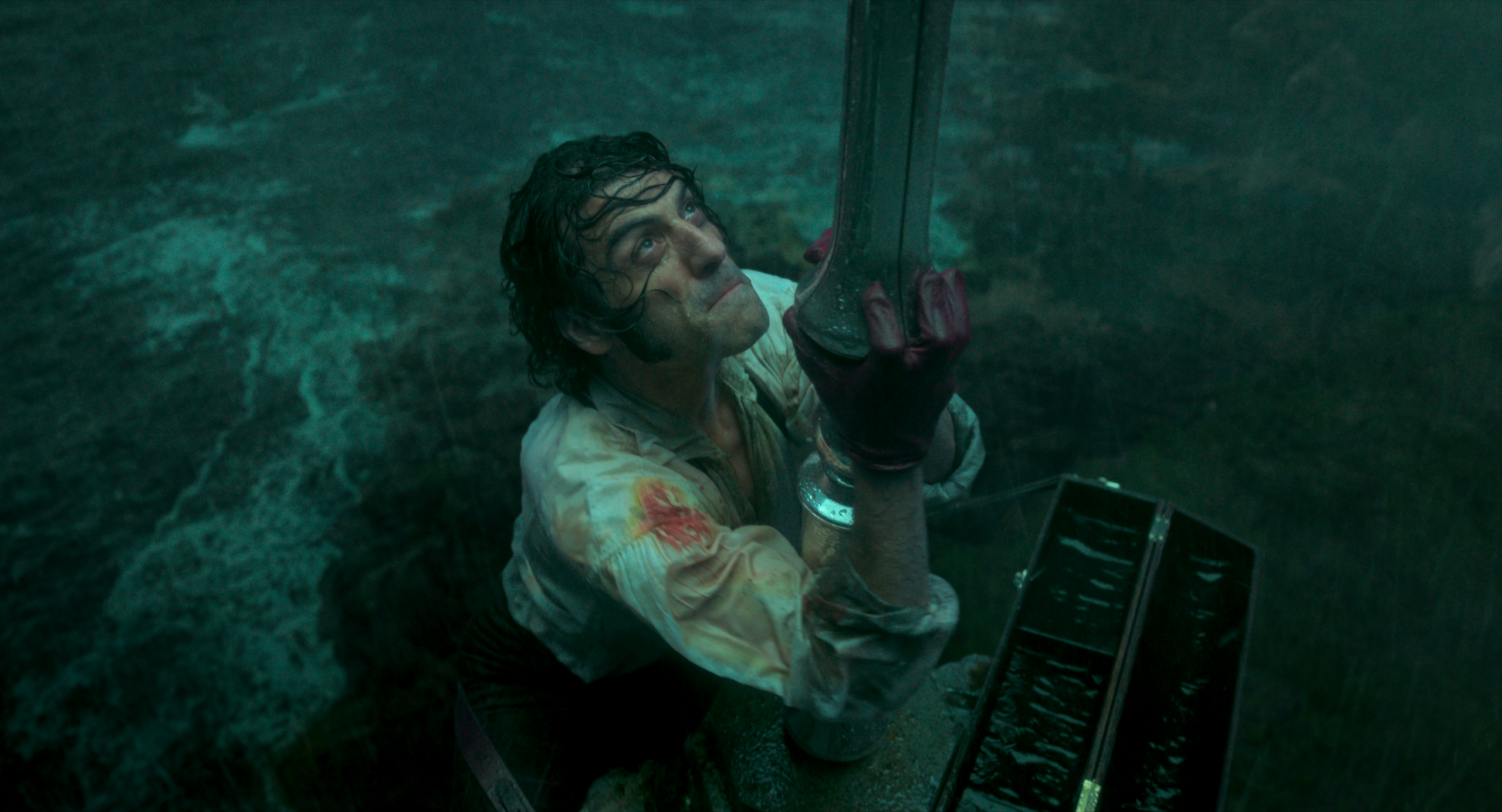
From a dream that haunted him for decades, to a reality that bewitched audiences with its rumbling heart—Guillermo Del Toro’s Frankenstein finally took shape and life on our screens this year.
Upon its Netflix release, Del Toro invited viewers in on his visions of blood-dripping malice and Miltonian-framed tragedies. With something of a Gothic, yet steampunk decor, we were allowed to rediscover the monster and his child anew.
Far and away the movie’s standout, Jacob Elordi thrives under Del Toro’s direction. Flexing his toned acting skills as The Creature, Elordi proves he is more than the tousle-haired love interest we’ve seen prior. Oscar Isaac provides dramatic bravado in accordance, unruly as The Creature’s ruthless dictator and parent. And Mia Goth, providing dual efforts as Victor’s mother and paramour, supplements the film’s heavy tone with a whipped-cream lightness.
It is always a delight to return once more to Del Toro’s realm of dream and reality, of ghosts and their captors, of monsters and their men. With wondrous elegance, we return to the familiar tale of the misunderstood, the different—but it never tires us. Del Toro knows that The Creature stands as a symbol for all we must embrace in these difficult times—and, he protects him thus.
Words by Bella Madge
The Long Walk (dir. Francis Lawrence)
If I had a nickel for every time a Stephen King dystopian adaptation came out in 2025, I’d have two nickels. Which isn’t a lot, but it’s weird it happened twice. And while both made for an excellent time at the movies, one was particularly brilliant.
Francis Lawrence, who directed three of the four Hunger Games movies, took on the challenge of adapting The Long Walk, oft-considered impossible to make for the screen. And yet, the end result didn’t just work, but served as a vehicle to showcase an excellent ensemble. Cooper Hoffman and David Jonsson give outstanding performances as the leads, serving as a reminder that the next generation of talent are certainly safe hands. Both have such a warm and inviting charisma, while allowing a vulnerability to present itself the longer we spend with them. And they aren’t the only ones; while we know each young man on screen has limited time to work with, The Long Walk manages to flesh out these characters so well, that every death hurts as much as the first.
The film can’t help but feel like a relic of the past in some ways, echoing the heights of the YA dystopian genre that defined the early 2010s. However, it also remains achingly relevant, if not on the nose, about state authoritarianism and its dangers. With the year ending with President Trump announcing an athletic competition with representatives from each state, a film like The Long Walk is as prescient as ever.
Words by Rehana Nurmahi
Sinners (dir. Ryan Coogler)
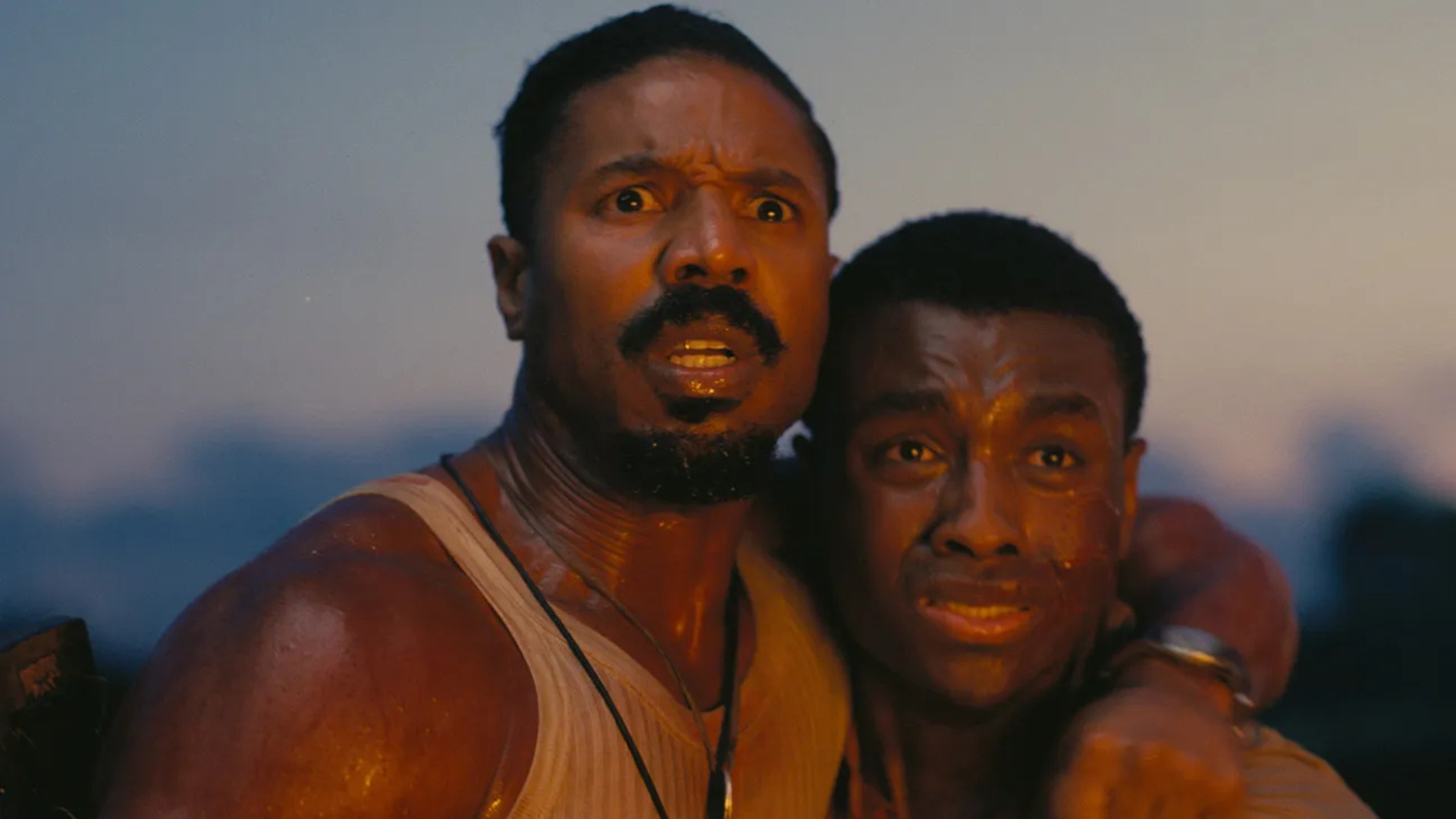
This time last year, as a big fan of Ryan Coogler’s previous work, I was putting into words my excitement for his upcoming release Sinners. Michael B. Jordan and vampires was all of the information I had available to me at the time so I couldn’t have predicted the cultural, musical, fantastical, horrifying and heart-aching phenomenon that was coming our way.
Visually Sinners is a stunning film, and sonically it’s even better, whether that’s Miles Caton’s stunning voice, the alluring score or Rod Wave’s song on the soundtrack. There is so much to take from this film with every viewing, the history of the black experience in America piercing the veil of what we’re initially presented with both metaphorically and literally.
Sinners cannot be confined to one genre, it is a great horror film, a great film about music, a great film about black history and it’s also an emotionally devastating film too. As if we weren’t already floored by everything that came before, the Buddy Guy-epilogue is even more gut-wrenching as an older Preacher Boy reminisces. He says, “Before the sun went down, I think that was the best day of my life. Was it like that for you?”
Stack replies with: “No doubt about it. Last time I seen my brother, last time I seen the sun.” Add to this Preacher Boy’s performance of ‘I Lied To You’ and that conversation towards the end between Smoke and Annie, not to mention that the brilliance that Delroy Lindo brings to the table, and you have a film that will stand the test of time no matter what.
Words by Jamie Rooke
Black Bag (dir. Steven Soderbergh)
In a year that established indie darlings like Paul Thomas Anderson and Ari Aster made their own splashes, Steven Soderbergh—once again returning from ‘retirement’—made two with little fanfare. In an impressive flexing of his genre muscles, Presence took a sideways look at ghost stories, but it was Black Bag where it all came together: having been up and down on Soderbergh over the years, I am finally thrilled by his vision. There may have been better, more important films released in 2025, but I’m not sure I enjoyed any as much as this.
Black Bag elegantly juggles two classic spy story tropes. From Tinker Tailor Soldier Spy, there’s an employee leaking secrets, and George (Michael Fassbender) has to find them. The problem is that Kathryn, marvellously played by Cate Blanchett, happens to be married to George—could it be that he’s being betrayed by the one person closest to him?
The elegant plotting of George’s investigations is very well-handled, in a film that grips us with dialogue in place of action; it opens with a terrific dinner party scene that establishes our cabal of suspects, and slowly teases out conflicts and motives between the six. But at its heart, Black Bag is a black-comic fable about marriage, and the secrets that keep them running. Fassbender and Blanchett are brilliant at absolutely selling their commitment to each other, the one unbending truth in a world of subterfuge.
Words by Max King
Champagne Problems (dir. Mark Steven Johnson)
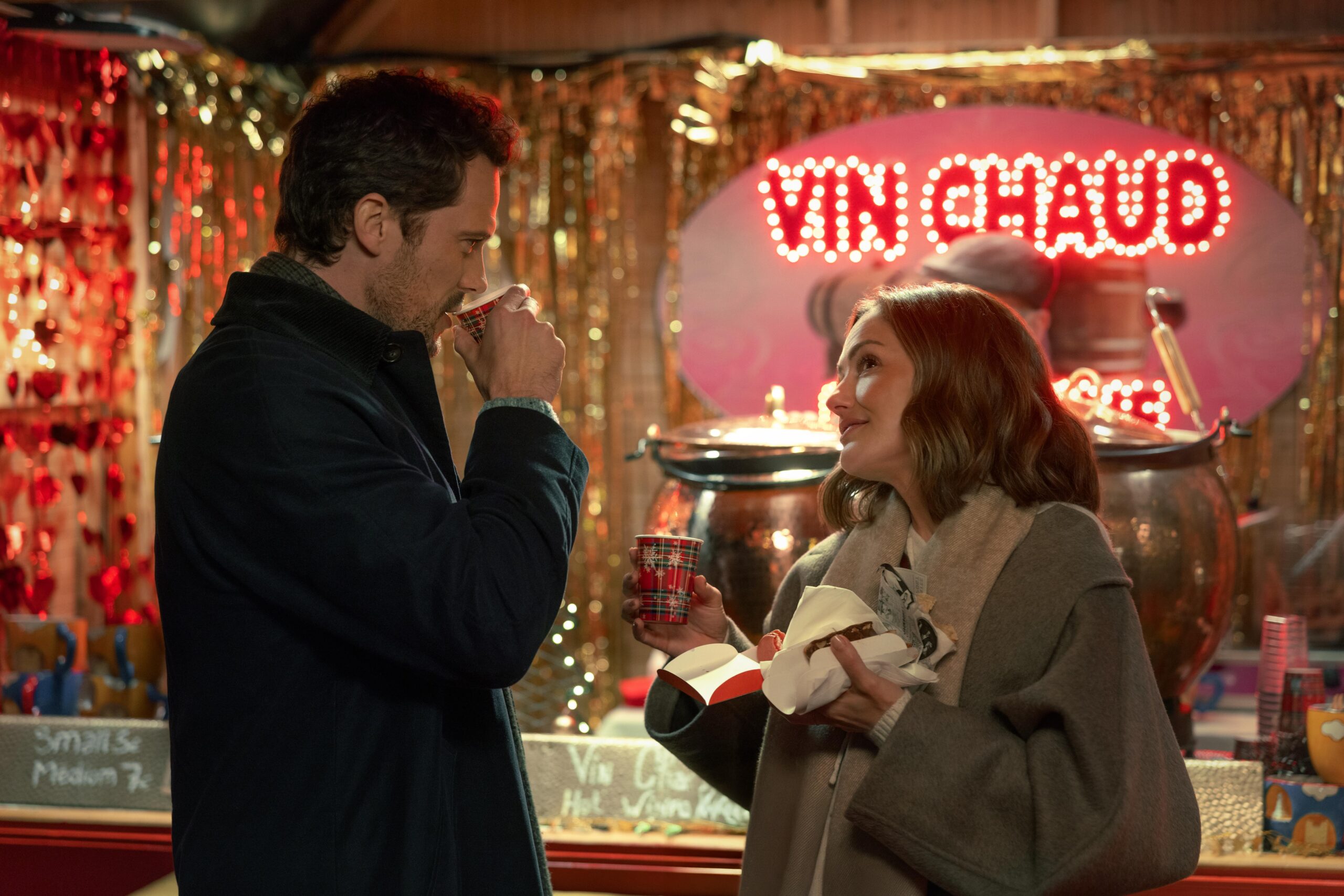
There’s a specific kind of joy in a rom-com that gets modern relationships right. The mess, the charm, the mixed signals, all of it, and Champagne Problems really does. It’s an easy watch from the start, warm and inviting, but what makes it stick is how emotionally honest it is underneath the familiar rom-com setup. It doesn’t just rely on cute coincidences and convenient timing. It leans into the awkward stuff: what people want, what they’re scared of, and the words they keep swallowing because saying them would make everything real.
The central relationship feels lived-in rather than perfectly packaged, helped by performances that do a lot with very little. The humour is genuinely funny, but it never turns the characters into jokes, and it never undercuts the sincerity. The quieter moments are where the film really shines. Those pauses where you can feel the weight of what isn’t being said, and the story trusts you to sit with it.
In a year crowded with spectacle, Champagne Problems stands out because it’s intimate. Romantic without being cynical, tender without being cheesy, and funny without losing sight of how fragile people can be with each other. If you still have a soft spot for rom-coms, this was easily one of the year’s best.
Words by Lara Sayess
Bugonia (dir. Yorgos Lanthimos)
When Yorgos Lanthimos’ Bugonia hit our screens in October, it quickly established itself as a solid contender for the best film of 2025. Lanthimos tempers his signature audacity with a more restrained, yet still delightfully deranged approach to deliver a dark satire that exposes the many flaws of our times.
A remake of the 2003 South Korean film Save The Green Planet, Bugonia follows two conspiracy theorists who kidnap an influential CEO they suspect is an alien sent to destroy Earth. What truly ties this wild concept together is the beautiful performances from two of the finest actors working today. Emma Stone and Jesse Plemons, reuniting as Lanthimos’ muses, elevate the film from an edge-of-your-seat thriller, into a heart-wrenching and revelatory study of conspiracies as a twisted means of emotional refuge, where imagination and truth become indistinguishable.
Aside from the magnetic performances, Bugonia’s astonishing cinematography and tense sound design should give the film a well deserved foot in the door this upcoming awards season. Lanthimos’ unique directional sensibilities shine through, in what is possibly his best feature to date.
Words by Freya Parker

The Roses (dir. Jay Roach)
Jay Roach’s The Roses, a modern, darkly comedic reimagining of the 1981 novel and the 1989 film The War of the Roses, is full of the same with thorny wit and acerbic British banter, thanks to its magnificent leads, Olivia Colman and Benedict Cumberbatch. They play Ivy and Theo Rose, a seemingly perfect married couple in Northern California whose lives are upended by a dramatic role reversal.
The story kicks off when architect Theo’s (Cumberbatch) career spectacularly collapses, mirroring the overnight rise of chef Ivy’s (Colman) seaside restaurant. Suddenly, Theo is the resentful, stay-at-home parent, and Ivy is the celebrated, ambitious breadwinner. This reversal of dynamic quickly ignites a tinderbox of deep-seated resentments, ego clashes, and passive-aggression that escalates into full-blown marital warfare.
Screenwriter Tony McNamara brings his signature sharp, wicked dialogue—a clear standout for those who enjoyed The Favourite or Poor Things. The film truly shines in the verbal sparring, where Colman and Cumberbatch, exhibiting electric chemistry, turn domestic squabbles into high-art insult comedy. Colman is brilliantly layered, swinging between vulnerability and icy fury, while Cumberbatch masterfully conveys Theo’s descent from a supportive husband to a scornful, desperate ‘beta-male’.
However, the film’s high-gloss comedic tone sometimes struggles to fully commit to the dark, devastating core of the original material. While the performances are universally praised, the narrative’s rapid escalation into sabotage and cruelty feels jarring in places, perhaps sacrificing emotional depth for extremely bitter satire.
Despite a somewhat uneven pace and a reluctance to fully embrace the blackest aspects of the comedy, The Roses is saved by its central performances. Watching two of England’s finest actors trade brutally funny barbs makes this a compelling, if occasionally frustrating, watch. It’s a marital drama that will make you wince, laugh, and perhaps feel slightly better about your own relationship woes.
Words by Sharmishtha Chahande
The Secret Agent (dir. Kleber Mendonça Filho)
With debates about Netflix, AI and short-form video intensifying this year, many films in 2024 have turned toward cinema’s past, from Linklater’s Nouvelle Vague to Bi Gan’s Resurrection. Yet among these backward-looking works, one film stands apart. Kleber Mendonça Filho’s mesmerising The Secret Agent is not interested in mourning cinema history. It is a living act of memory that binds film to history, place and the people who inhabit it.
Recife, for Mendonça, is more than a setting. It is a character as essential and charming as Jia Zhangke’s Shanxi or Paul Thomas Anderson’s California. In The Secret Agent, he guides us back to 1977, deep into the years of Brazil’s military dictatorship, following the journey of Marcelo, played with extraordinary depth by Wagner Moura. As in Bacurau (2019), where Mendonça reworked the western into a decolonial tale, he again takes a genre shaped by imperial histories, this time the spy thriller, and transforms it into something local, humane and politically grounded.
Despite the elegance of his craft, Mendonça never flexes for attention. At the centre of his cinema are the people (and cat) of Recife, especially those at the margins, rendered invisible by official histories. Here he draws a tender portrait of a small community bound by necessity, secrecy and survival. These are people who cannot speak their real names without risking their lives. The warmth they share becomes an act of resistance, a fragile gesture against hatred and fear.
Mendonça is also a programmer, critic and cinephile, and The Secret Agent reveals his love for cinema’s material life. He shows how films echo their historical moment, weaving the screening of Jaws (1975) into the dictatorship’s atmosphere or resurrecting Ennio Morricone’s score from Grazie Zia (1968) with new weight. The Secret Agent insists that cinema, however fragile, still remembers what history tries to erase.
Words by Matin Cheung
Steve (dir. Tim Mielants)
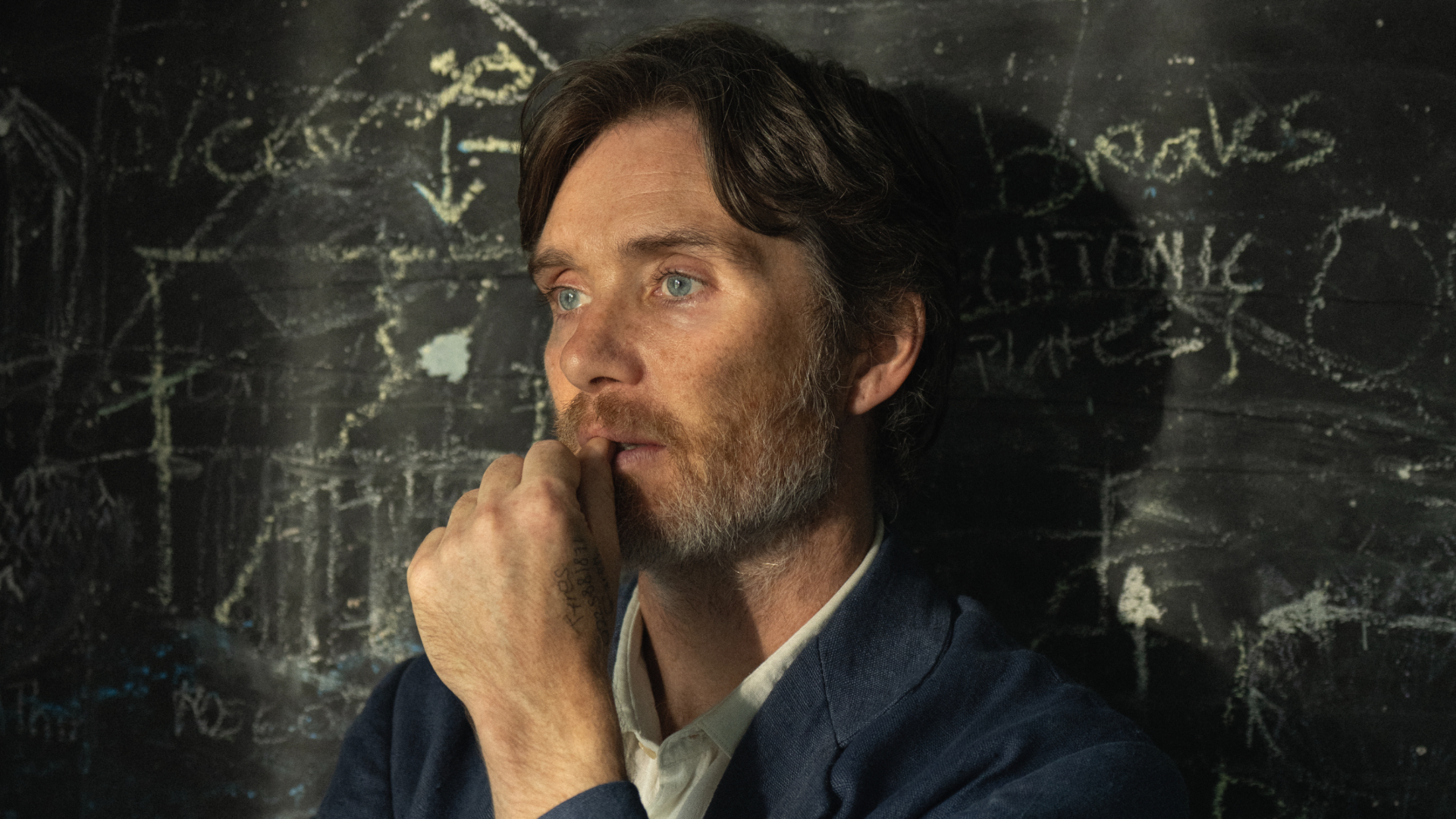
One film of 2025 worth looking back on is the Netflix Original Film Steve, adapted from Max Porter’s novella and Sunday Times Bestseller, Shy. Directed by Tim Mielants, starring Cillian Murphy, Tracey Ullman, Emily Watson, and Jay Lycurgo, Steve offers a poignant look at mental health, societal neglect, and the desperate need for connection.
Set in the mid-1990s, the film follows the devoted headteacher Steve (Cillian Murphy) battling to save his struggling reform school for troubled teenage boys from closure while confronting his own severe personal struggles with addiction and mental health. Concurrently, a troubled student Shy (Jay Lycurgo), torn between his past and future prospects, navigates his violent tendencies and fragility.
Through death-metal chaos of emotional pain and slashes of bizarre black humour, Steve is a thought-provoking film, abandoning the typical narrative-driven story, offering a glimpse into the ways in which we can never really know what’s going on in another person’s life.
Words by Jugo O’Neill
Wake Up Dead Man: A Knives Out Mystery (dir. Rian Johnson)
Wake Up Dead Man, the third instalment in Rian Johnson’s Knives Out series, is not just the year’s best film — it’s the rare franchise entry that makes everything before it feel like a dress rehearsal. Relocating Benoit Blanc (a silkily weary Daniel Craig) to a fictional village in upstate New York, Johnson swaps sun-drenched opulence for creaking floorboards, shuttered churches and a moody forest that feels like a living character. The set-up is deceptively simple: a domineering and spiteful priest, a loyal yet unappreciated housekeeper, a vicious congregation and a will reading that ends with a man very much not as dead as he appears. What follows is a clockwork ballet of crossed alibis and moral rot, in which every punchline conceals a clue.
Johnson’s writing is razor-sharp but never smug. The film skewers the commodification of faith and the grift of “healing” influencers — all without losing its playful touch.
The cast is really the cherry on top. Josh O’Connor enters in the lead role, delivering the performance of the year: the flawed yet good-hearted emotional heart of the film. Around him orbits a murderer’s row of character actors, each allowed a moment to steal the frame before Johnson snaps the focus back to the mystery at hand.
Technically, Wake Up Dead Man is immaculate. Steve Yedlin’s cinematography bathes stained glass and storm clouds in bruised, ecclesiastical light; Nathan Johnson’s score curls from hymn to horror without a seam. But what makes it 2025’s defining film is its heart. Beneath the twists lies a quietly radical insistence that justice isn’t a parlour trick, it’s a choice — messy, unglamorous and often made too late.
If Knives Out announced a franchise, Wake Up Dead Man announces a masterpiece.
Words by Sophia McHardy
Island of the Winds (dir. Hsu Ya-Ting)
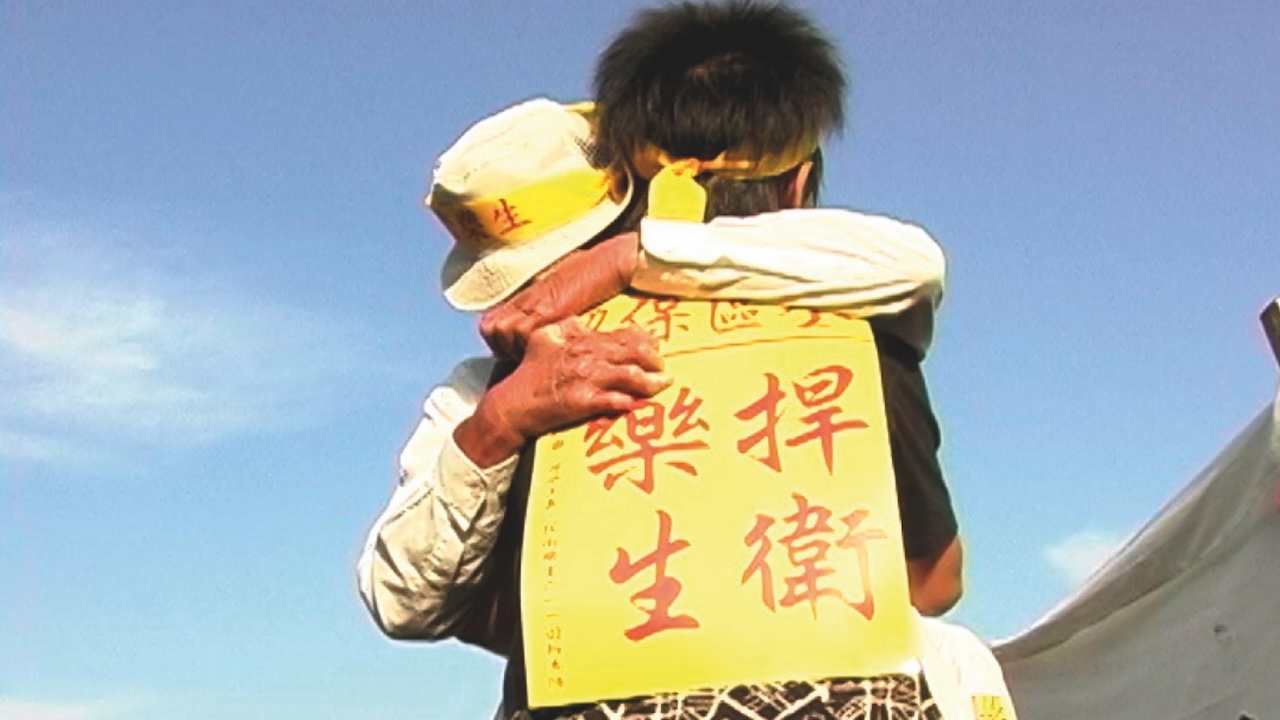
My pick of the year is Island of the Winds, a Taiwanese documentary screened at the BFI London Film Festival. Director Hsu Ya-Ting spent two decades following the lives of residents at Taipei’s Lesheng Sanatorium, where people with leprosy have been confined since the 1930s. As residents and student activists resist eviction and government-led demolition, Hsu captures moments that are both ordinary and extraordinary: poetic revolutionary songs sung despite illiteracy, tender interactions with their dogs, and scenes of humble laughter and everyday arguments.
After the screening, the director shared that there was three hours of raw footage and the post production took over two years. The director’s perseverance and the residents’ resilience echo one another, creating an intimacy that allows their voices and memories to be preserved with disarming sincerity. Island of the Winds is a powerful example of activist cinema, marked by patience, empathy, and remarkable craftsmanship.
Words by Angel Sun
Support the Indiependent
We’re trying to raise £200 a month to help cover our operational costs. This includes our ‘Writer of the Month’ awards, where we recognise the amazing work produced by our contributor team. If you’ve enjoyed reading our site, we’d really appreciate it if you could donate to The Indiependent. Whether you can give £1 or £10, you’d be making a huge difference to our small team.