
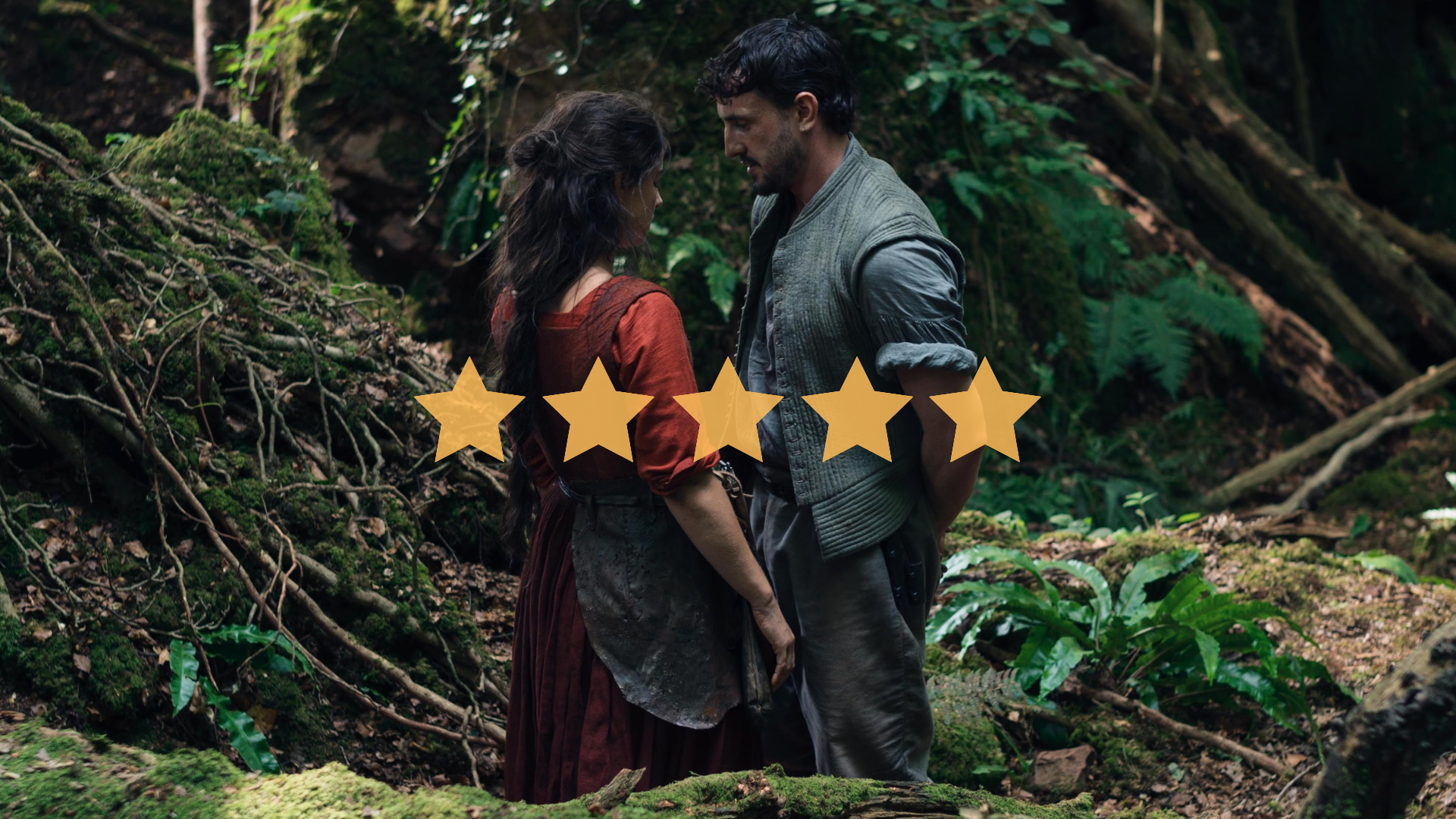
Hamnet is an emotionally exhausting, soul-searching experience, one that devastates as much as it soothes. It is a film of quiet observation and deep feeling, every bit as meditative as it is painful.
★★★★★
The last time the Bard loomed so prominently over cinema was in John Madden’s Oscar-winner Shakespeare in Love (1998). That film offered a glossy, fictionalised romance built around the creation of Romeo and Juliet. Hamnet, by contrast, could not be further removed from that tone. This is an intimate, authentic-feeling family drama, grounded in domestic sorrow rather than theatrical flourish. Following her Best Picture win for Nomadland (2020), director Chloé Zhao turns her attention to the origins of Hamlet, bringing serious artistic flair to a project already dominating awards-season conversation.
Behind the man who wrote the most famous tragedy in the English language lies a quieter, more devastating story. Will Shakespeare (Paul Mescal) and his wife Agnes (Jessie Buckley) are united by family, only to be fractured by grief following the death of their son, Hamnet (Jacobi Jupe). This is not a film about literary genius so much as the human cost behind it.
Where Shakespeare in Love framed creativity as romantic destiny, Hamnet resists mythmaking altogether. Adapted from Maggie O’Farrell’s novel, the film refuses to glorify the artistic process. Though Will is occasionally shown hunched over parchment by candlelight, this is fundamentally a story of love, loss, and attempted redemption. It unfolds between the almost magical, bucolic calm of 16th-century Stratford-upon-Avon and a plague-ridden, oppressive London, settings that mirror the characters’ inner turmoil.
Zhao proves herself a pure auteur force. Following the critical and commercial disappointment of Eternals (2021), Hamnet reaffirms her status as a filmmaker drawn to silence, atmosphere, and emotional ambiguity. As with Nomadland, pain is never over-explained, and meaning is found in stillness. The result is a work that feels deeply personal and spiritually resonant.
Much like O’Farrell (who worked alongside Zhao as a co-writer), Zhao refuses to approach the material with reverence or rigidity. Instead, Hamnet is filmed like a fever dream—fragmented, impressionistic, and emotionally unmoored. Memory bleeds into fantasy, grief disrupts linear time, and reality feels perpetually unstable. By rejecting the stiffness of traditional period drama, the film inhabits the inner lives of its characters, where emotion exists without logic or order.
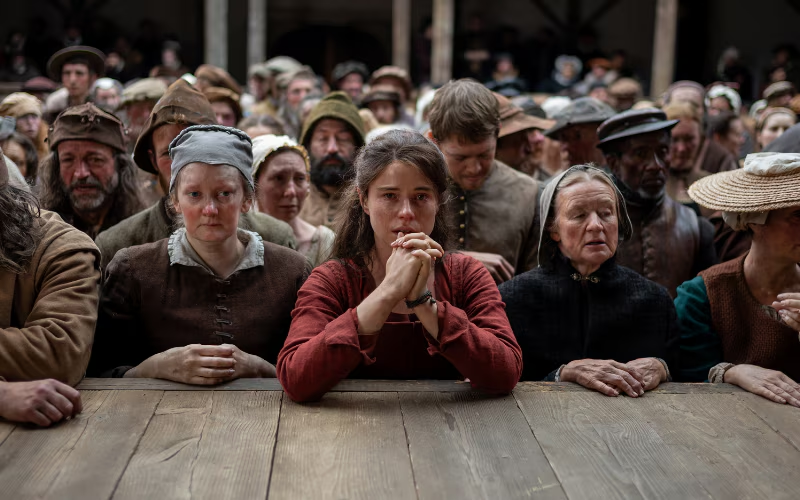
This dreamlike atmosphere is elevated by the extraordinary cinematography of Łukasz Żal. Known for The Zone of Interest (2023) and Loving Vincent (2017), Żal once again proves himself one of the most emotionally attuned visual storytellers working today. His images are ravishing yet unsettling, capturing turmoil and emotional hysteria within painterly compositions. Light, shadow, and movement pulse with interior anguish, making grief something that is not simply observed but viscerally felt.
At the heart of this journey through love, joy, grief, and unbearable loss are the extraordinary performances from two actors making a profound statement in contemporary Hollywood. First and foremost is Jessie Buckley, whose performance has dominated critical discussion and earned major award recognition at the Golden Globes. While some have described this as her “A Star Is Born” moment, it feels more like the culmination of an already extraordinary body of work.
Buckley has never coasted in her career. Whether in broad comedy (Wicked Little Letters), psychological fever dreams (Men), or soul-draining realism (Women Talking), her performances are consistently fearless and a canvas of emotions. As Agnes, Buckley summons every emotion imaginable; she’s loving, tender, furious, broken, resilient, often within the same breath. It is a performance of rare commitment, one that demands to be counted among the year’s very best.
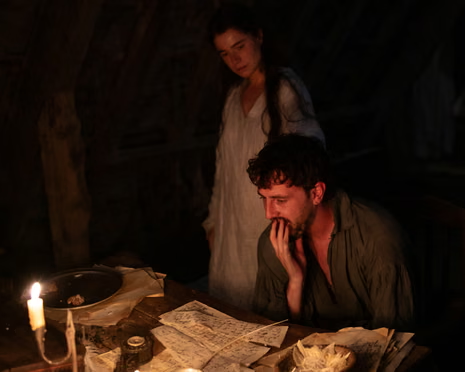
Paul Mescal proves an equally vital presence. After a brief detour into blockbuster territory with Gladiator II (2024), he returns to the intimate, character-driven dramas that best showcase his strengths. His Shakespeare is gentle, warm, and sparingly humorous, with grief expressed through restraint rather than spectacle. Mescal underplays sorrow with devastating effectiveness, offering a performance that feels achingly human, even if awards recognition may elude him in a competitive season.
Viewers should be warned: Hamnet opens an emotional rabbit hole. It devastates, but it also finds space for warmth, humour, and fleeting joy, reminding audiences of the fragility and persistence of love.
The ending ranks among the most affecting in recent cinema. Even the use of Max Richter’s oft-overused On the Nature of Daylight feels entirely justified here, landing with grace, restraint, and overwhelming emotional clarity.
The Verdict
Hamnet is not an easy watch, but it is a profoundly rewarding one. It is a film that lingers like a half-remembered dream, long after the final frame fades to black.
Words by Joseph Jenkinson
Support the Indiependent
We’re trying to raise £200 a month to help cover our operational costs. This includes our ‘Writer of the Month’ awards, where we recognise the amazing work produced by our contributor team. If you’ve enjoyed reading our site, we’d really appreciate it if you could donate to The Indiependent. Whether you can give £1 or £10, you’d be making a huge difference to our small team.