
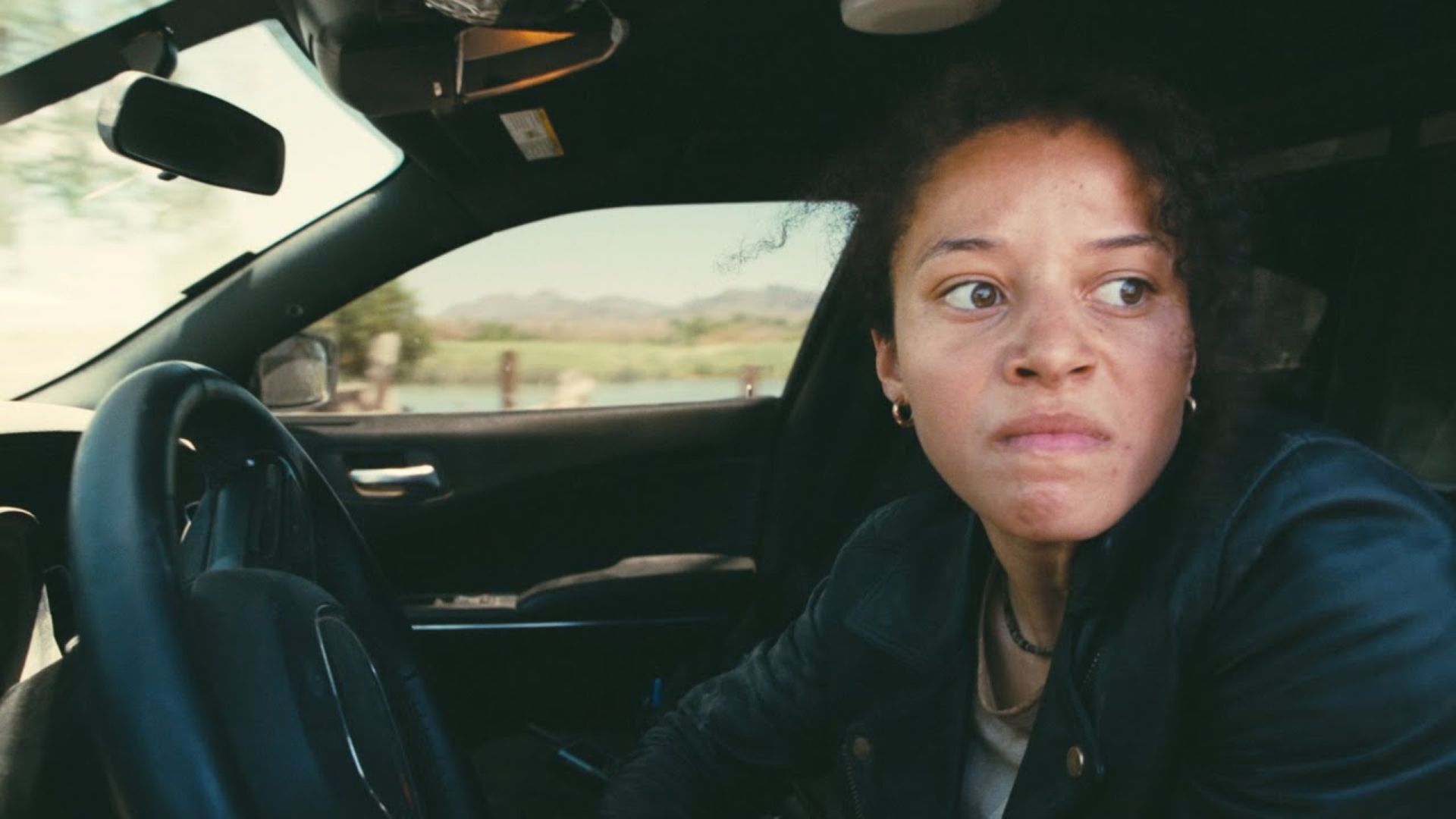
Few directors working today are as thrillingly unpredictable as Paul Thomas Anderson. Since crashing into the ’90s with the swagger of a born filmmaker, the auteur has refused to play it safe.
Now ten films deep, with the wild and wonderfully unruly One Battle After Another freshly in cinemas, Anderson has built a body of work that’s as varied as it is essential. With that in mind, where do his masterpieces rank, from bottom to top? Grab your falling frogs and drink… your… milkshake, because we’re diving in.
10. Inherent Vice (2014)
Inherent Vice might be Paul Thomas Anderson’s most polarising film. Its puzzle-box plotting and languid, dazed tone turned off many critics, with Reel Talk Online’s Candice Frederick remarking, “If I’m going to fawn over a puzzling film, I’d rather it be something that entertains me,” using Inherent Vice as the counterexample. Anderson isn’t trying to make sense so much as capture a state of mind, the disorientation of the post-’60s hangover, where idealism curdled into paranoia and everything feels like smoke slipping through your fingers.
The narrative is intentionally convoluted, but Anderson plays it for laughs and unease in equal measure: Josh Brolin’s strait-laced detective yelling about pancakes is as indelible as Katherine Waterston’s hypnotic, unsettling monologue. For some, the lack of clarity is maddening; for others, it’s part of the fun. Love it or hate it, Inherent Vice deserves credit for daring to be unclassifiable; part noir, part comedy, part fever dream and all PTA.
9. Hard Eight (1996)
Anderson’s debut feature is quieter and more restrained than his later films, but it lays the groundwork for many of his enduring themes. The story follows Sydney (Philip Baker Hall), a seasoned gambler who takes a down-and-out drifter named John (John C. Reilly) under his wing. What begins as a lesson in the mechanics of casinos evolves into a meditation on mentorship, loyalty, and buried guilt.
Though modest in scope, Hard Eight showcases Anderson’s gift for character and atmosphere. The seedy casinos and motel rooms exude a sense of weary melancholy, and the performances are uniformly strong, particularly Hall’s quietly commanding turn as Sydney. The film’s late reveal of a moral debt that explains Sydney’s devotion to John ties the narrative together with a mix of poignancy and inevitability. While it lacks the bravura of Anderson’s later work, Hard Eight is a confident, thoughtful debut that hints at the ambition and empathy that would define his career in the years to come..
8. One Battle After Another (2025)
Anderson’s latest, One Battle After Another, shows him once again reinventing himself, this time with a ferocious, action-driven spectacle that still bears his unmistakable fingerprints. The film bursts with kinetic energy, staging large-scale set pieces that rival anything Hollywood has produced in recent years. Yet within the chaos, Anderson grounds the story with humanity, giving each clash of ideologies and each act of violence an emotional weight. It’s a bold swing, and in many ways, a resounding success; thrilling, funny, and filled with moments that remind us why he remains one of the most daring directors alive.
Still, the film’s ambition can also be its weakness. The political allegories are sometimes heavy-handed, and certain characters feel more like archetypes than fully realised people. The tonal shifts, veering from broad comedy to brutal drama, occasionally jar rather than blend. But even with these flaws, One Battle After Another is a singular experience, as audacious as anything Anderson has attempted. Love it or hate it, the film cements Anderson’s place as a director still willing to take risks at a stage when many of his peers have softened.
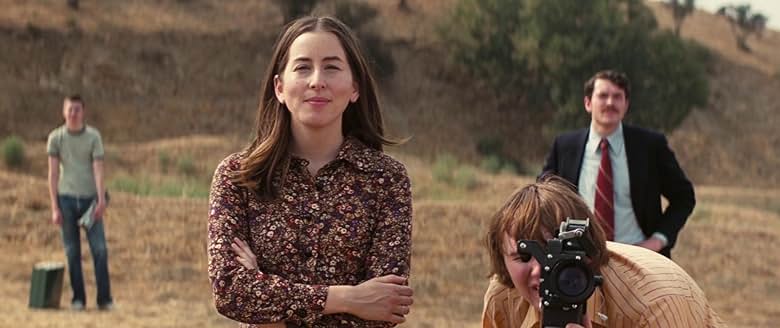
7. Licorice Pizza (2021)
Licorice Pizza is Anderson’s most carefree and nostalgic film. Rather than focusing on plot, Anderson lets the film flow like a spontaneous slice of life, which may veer in any direction. It follows Gary Valentine (Cooper Hoffman) and Alana Kane (Alana Haim) as they drift in and out of harebrained schemes and chance encounters with eccentric Los Angeles figures.
Their relationship defies easy definition (sometimes friendship, flirtation, and even rivalry), but Anderson treats it with warmth and honesty, capturing the chaotic energy of youth. The film is less about where Gary and Alana end up than about the thrill of being young, lost, and alive in a world brimming with possibility. Moreover, the 70s aesthetic is immaculate, from the fashions to the perfectly curated soundtrack, while cameos from Bradley Cooper, Sean Penn, and Benny Safdie add bursts of unpredictable energy.
6. Punch-Drunk Love (2002)
With Punch-Drunk Love, Anderson turned away from sprawling ensembles and crafted a tightly focused, 90-minute romantic comedy unlike any other. Adam Sandler plays Barry Egan, a lonely novelty supplier plagued by explosive fits of rage and a profound sense of isolation. When he meets Lena (Emily Watson), their tentative romance begins to unlock his potential for happiness, even as his insecurities and a bizarre phone-sex extortion scheme threaten to derail him. Sandler’s performance shocked audiences, swapping (at least mostly) his manic energy into something deeply vulnerable and unexpectedly moving.
The film’s style mirrors Barry’s emotional volatility. Bright splashes of abstract colour fill the screen between scenes, Jon Brion’s score jitters and swells unpredictably, and the camera careens to reflect Barry’s sense of disorientation. At its heart, though, the film is achingly sincere: a story of two broken people finding solace in one another.
5. Phantom Thread (2017)
In what was momentarily his final performance, Daniel Day-Lewis delivers a meticulous performance as brilliant but tyrannical couturier Reynolds Woodcock, whose rigid routines dominate the lives of those around him. When he meets Alma (Vicky Krieps), a seemingly passive waitress, their relationship evolves into a battle of wills, where love becomes inseparable from manipulation. The film’s brilliance lies in how it continually reshapes our understanding of who holds power in their intoxicating bond.
Beyond its narrative, Phantom Thread is a masterclass in craft. Anderson’s cinematography captures the textures of fabric and food with tactile precision, while Jonny Greenwood’s lush score adds a romantic yet unsettling undercurrent. Every detail, from the clinking of silverware to the rustling of a gown, is heightened to reflect the intensity of Reynolds’ world. By the end, Anderson transforms what seems like a conventional love story into something far stranger and more sinister, proving yet again his ability to reinvent genre from the inside out.

4. Boogie Nights (1997)
With Boogie Nights, Anderson announced himself as one of the most ambitious directors of his generation. Following a ragtag family of adult film actors and filmmakers across the 1970s and ’80s, Anderson approaches the subject matter not with mockery but with empathy. Beneath the glamour are characters seeking love, validation, and a place to belong on the fringes of Hollywood.
Anderson deploys his knack for soundtracks, stimulating with period-perfect hits, amplifying the shift from the sunny hedonism of the ’70s to the cocaine-fuelled despair of the ’80s. By the time the film closes on Diggler’s (Mark Wahlberg) infamous mirror monologue, it’s clear that Boogie Nights is less about pornography than about the fragile line between reinvention and delusion. It’s Anderson’s most exuberant film, but also one of his most tragic, a portrait of people dreaming big in a world that has little patience for their vulnerabilities.
3. Magnolia (1999)
Magnolia is Paul Thomas Anderson at his most operatic, a sprawling, three-hour mosaic of intersecting lives set against the backdrop of the San Fernando Valley. A major ensemble piece where each story, though separate, echoes the others in themes of regret and abuse. By weaving them together, Anderson creates a tapestry of human suffering and resilience that feels deeply intimate.
What elevates Magnolia beyond melodrama is Anderson’s audacious filmmaking. The famous singalong sequence, in which every character suddenly mouths the lyrics to the same song, is as bold as it is moving, collapsing their disparate experiences into a collective cry for help. And of course, the surreal downpour of frogs near the end serves as a biblical metaphor, breaking the cycle of despair in the most shocking way possible. It’s Anderson in maximalist mode, giving everything he has to the screen and daring viewers to meet him on that wavelength.
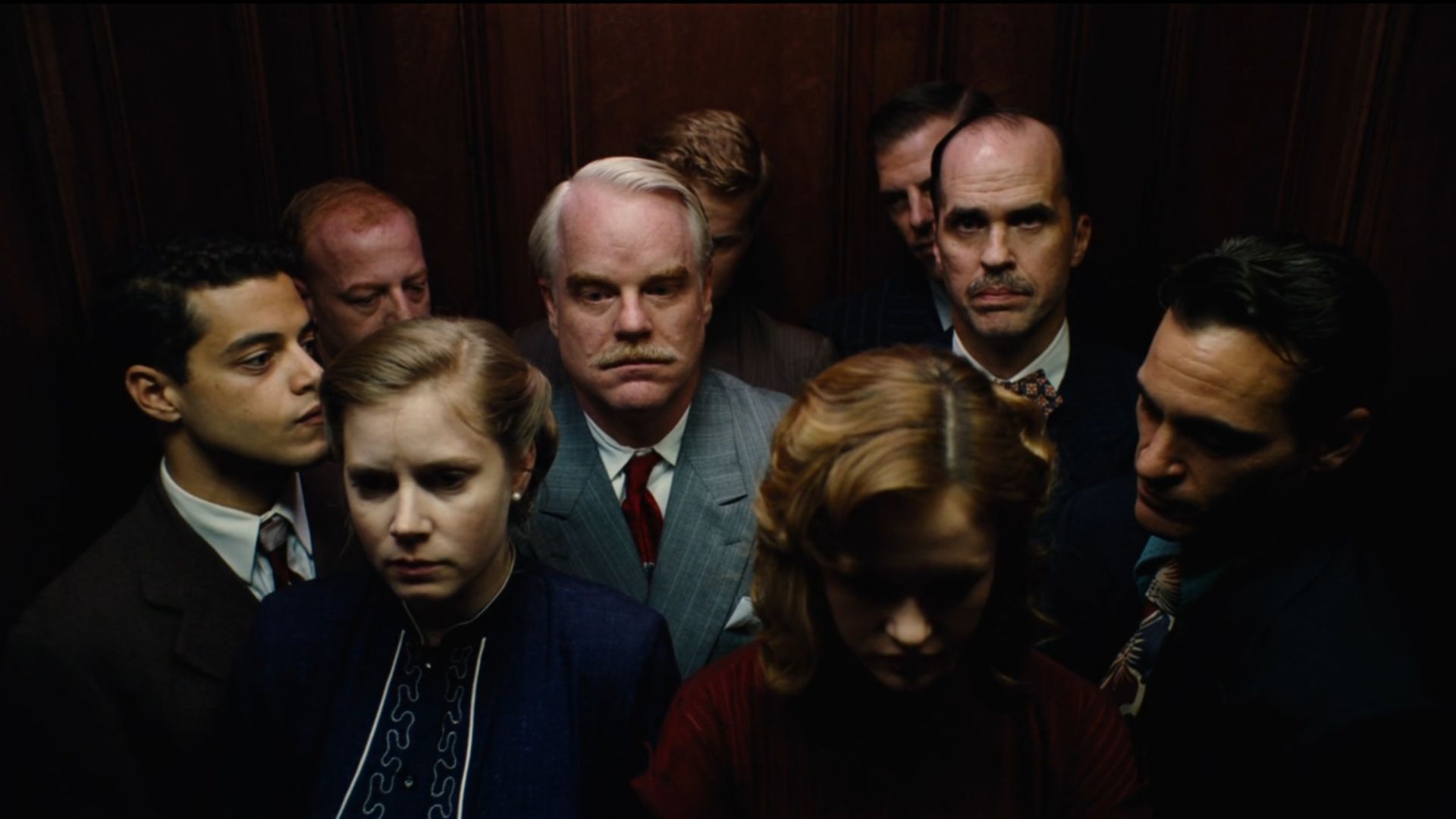
2. The Master (2012)
The Master is often regarded as one of PTA’s most enigmatic and haunting works. Focusing on themes of control, it sees Freddie Quell (Joaquin Phoenix), a restless and violent drifter, encounter Lancaster Dodd (Seymour Hoffman), the charismatic leader of a burgeoning philosophical movement. The narrative unfolds elliptically, often leaving viewers adrift in ambiguity, mirroring Freddie’s own instability and Lancaster’s cryptic methods. While some interpret the film as a thinly veiled portrait of Scientology, Anderson avoids direct commentary, instead crafting a story that tackles the universal human craving for faith and guidance.
Visually and sonically, the film is as commanding as its performances. Shot in 65mm, The Master has a timeless, almost mythic quality, with Jonny Greenwood’s eerie score heightening the atmosphere of unease. Moreover, the enigmatic side makes it all the more enthralling, making the film less about answers than about the raw intensity of the connection between two souls who can neither fully part nor truly belong to one another.
1. There Will Be Blood (2007)
Few films this century have felt as monumental as There Will Be Blood. Anchored by Daniel Day-Lewis’s titanic performance as Daniel Plainview (for which he won his second of three Oscars), the film is both a searing indictment of American capitalism and a deeply unsettling portrait of obsession. Plainview’s rise from silver prospector to oil baron is marked not by triumph but by greed and paranoia that gradually consume him. Anderson crafts a narrative of relentless ambition, where, by the end, Plainview becomes a shell of a man and a symbol of unchecked ambition, sitting in a mansion that feels more like a tomb.
The film’s power also lies in its formal rigour. Anderson uses wide, patient shots to emphasise the scale of Plainview’s endeavours, while Jonny Greenwood’s atonal score brings an apocalyptic intensity to even mundane scenes. The famous oil derrick explosion is one of the most astonishing sequences in modern cinema, fusing spectacle with tragedy. Yet the film’s climax, a chilling confrontation in a bowling alley (“I Drink Your Milkshake”), reduces the grand narrative back to its intimate, horrifying essence. There Will Be Blood lingers like a curse, that is unforgettable and uncompromising and is the peak of Paul Thomas Anderson’s filmography.