
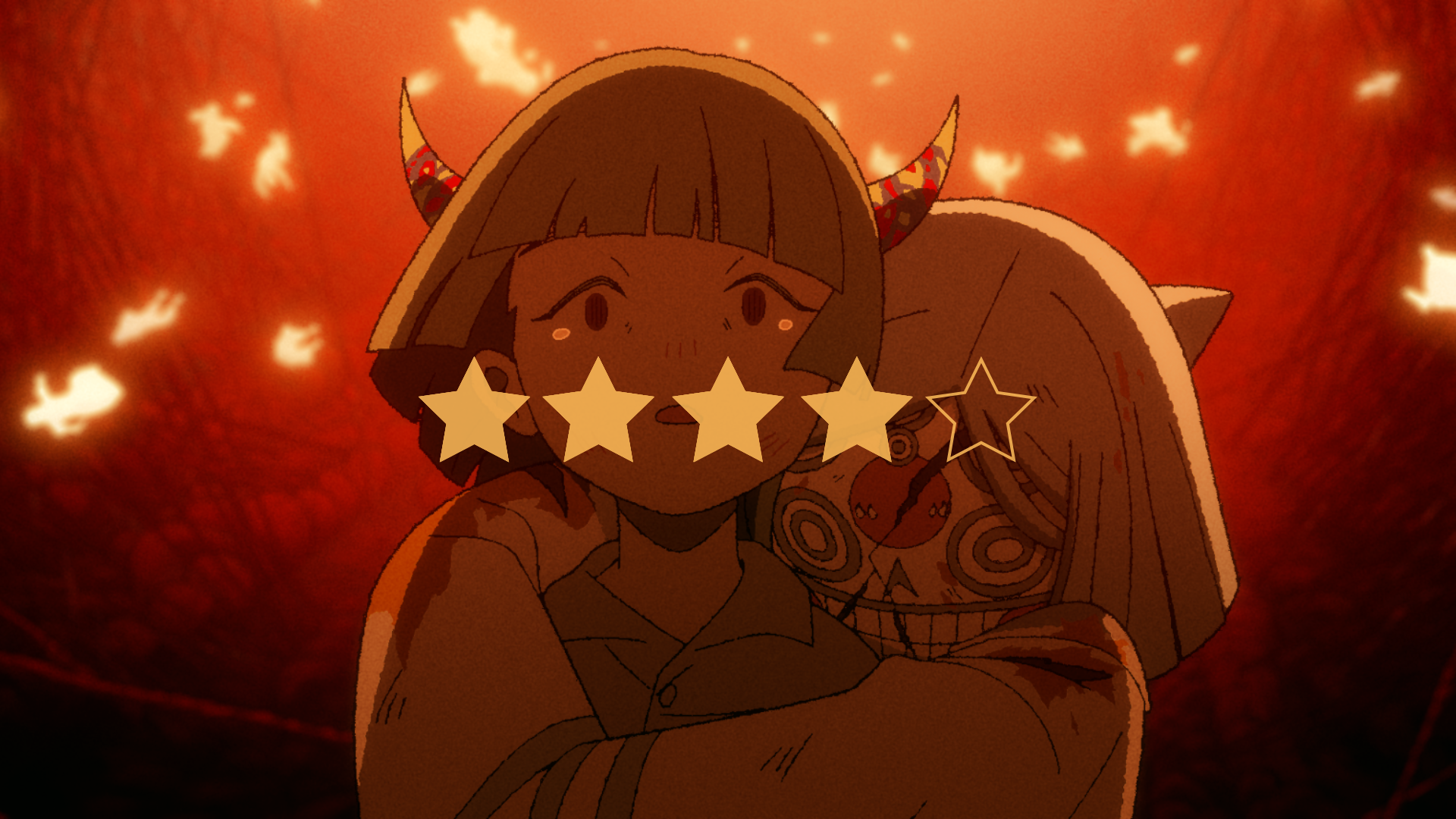
Another World marks a major milestone for Hong Kong cinema. It is the first locally produced animated feature since My Life as McDull (2001), the Annecy Grand Prix-winning film that brought everyday Hong Kong life to the global stage through the lens of a cute little pig. Breaking a decades-long silence in the city’s animation industry, Another World boldly explores the idea of afterlife and reincarnation—themes rarely addressed in Hong Kong film.
★★★★☆
Unlike the McDull series or other recent Hong Kong films, director Tommy Ng Kai-Chung’s debut feature Another World is not about the local Hong Kong society. Adapted from a Japanese fantasy anime Sennenki, it illustrates the intricate relationships between the human world and ‘Another World’, where Gudo and other spirits guide the deceased to their next life. Those who cannot resolve their hatred, grief, or redemption may develop a ‘seed of evil’, which will grow into a fully blown monstrosity that destroys the human world in return. Therefore, the spirits in Another World, led by Goddess Mira and Dark Knight, need to resolve the evilness and kill the monstrosity to maintain the balance between the two worlds.
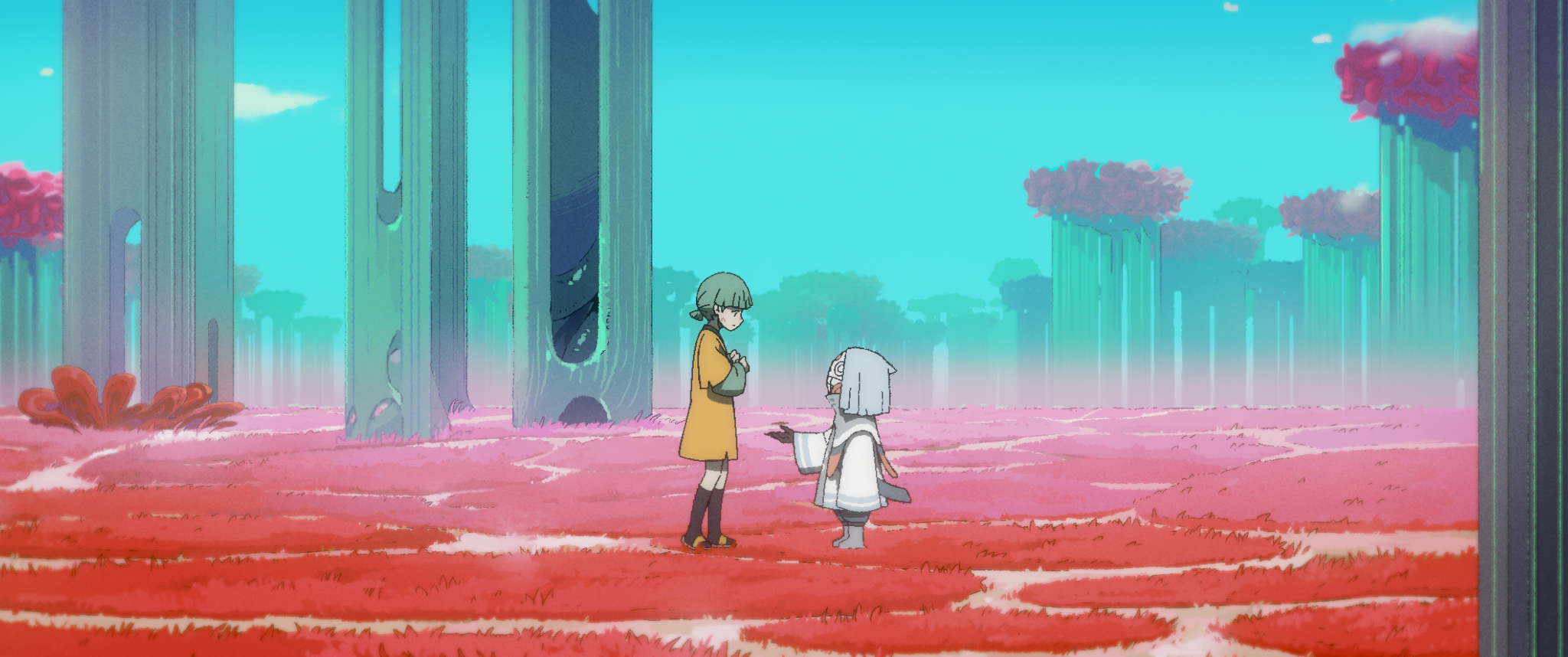
The story begins with spirit guide Gudo leading Yuri, a little girl who has died, to the next life while she searches for her brother. At the same time, Gudo encounters Goran, the princess and heir of Flower City, and Keung, a starving farmer oppressed by the ruling class. Gudo needs to guide them all through the process of cleansing their memories and unresolved resentment so that they can be reincarnated. Told through a partially non-linear structure, the film gradually reveals the connections between these intertwined stories.
Reincarnation, the act of letting go of hatred, and the cycle of unresolved negativity breeding further evil are central themes in Buddhism and Eastern philosophy. The animation successfully visualises these complex concepts, such as depicting the unresolved resentment as knots. The image of Gudo also evokes a Buddhist wrathful god, who guards death and dances at funerals to celebrate the completion of life. However, the rules of Another World rely heavily on narration from Gudo and the goddess Mira, and the film’s 111-minute runtime leaves key elements, like why Mira values Gudo so much, underdeveloped.
While the story is closely related to Eastern religion, the multiple storylines cover the monarchy and agrarian society and travel from the Industrial Revolution to post-World War I Germany. These historical moments are filled with violence and oppression, which is brutally depicted yet gorgeously drawn in the animation. Through this, it presents a contested definition of good and evil that makes the film more thematically complex. Moral boundaries are constantly blurred and twisted, which may be disagreed with by some audiences.
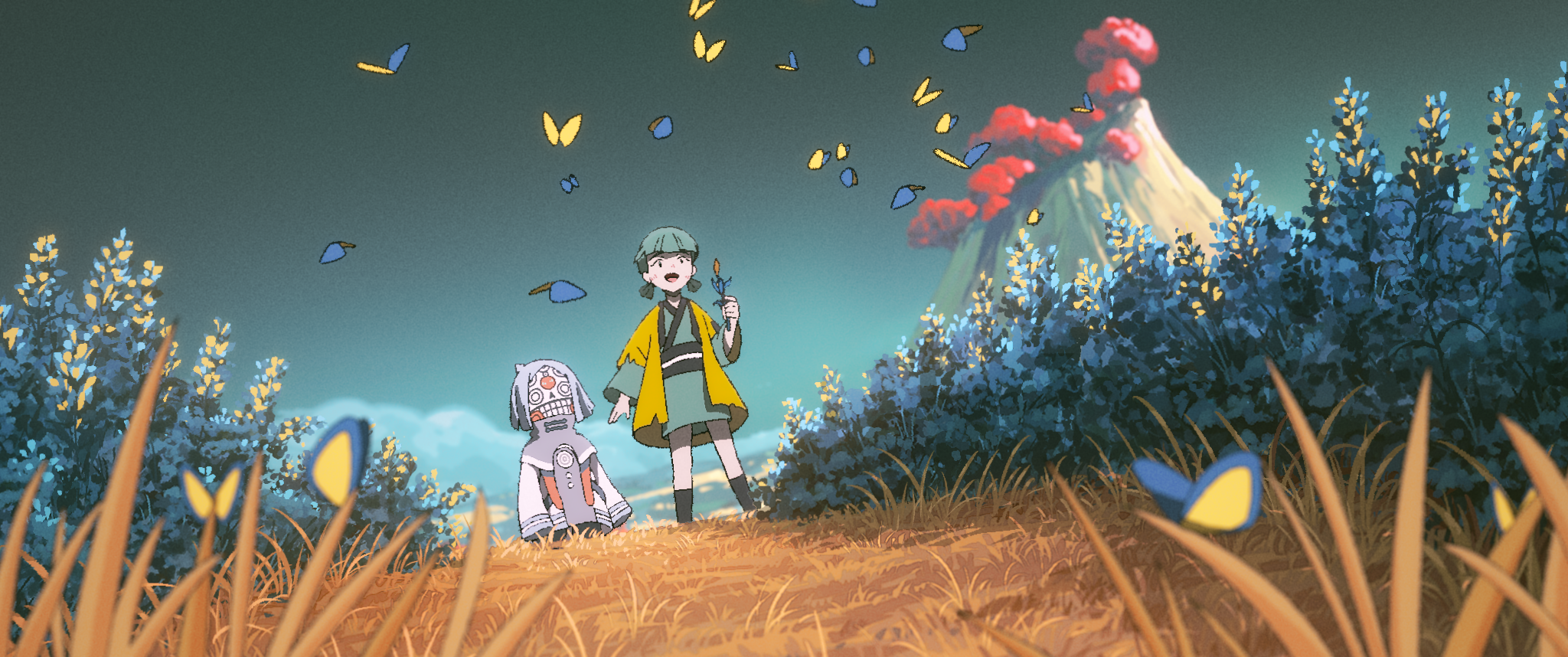
For example, Keung resists the dictator who forces the farmers to surrender half of their harvest. His justified anger as a victim is portrayed as a source of further evil that he must ultimately release. While forgiving and resolving hatred is known to be highly moral in Buddhism, is it too harsh for living humans who are suffering? Would the act of ‘resolving’ emotions bring more pain to the characters? The plot never comprehensively addresses these questions, which could be confusing or frustrating—but this clash between moral standards and actual humanity is thought-provoking, especially in an era of violence and instability.
Another World is a bold experiment. Its visuals are strikingly aesthetic, crafted by local animators and enriched with references to Asian religions, Japanese literature, and world history. While the story is closely related to Eastern religion, the multiple storylines cover the monarchy and agrarian society and travel from the Industrial Revolution to post-World War I Germany. The film challenges audiences’ understanding of humanity and morality, as well as the team’s persistence with its seven-year production. Worth a cinema visit, it opens new possibilities for Hong Kong’s animation industry.
The Verdict
Another World is visually compelling and both narratively and thematically complex. It attempts to create a sophisticated world where the living and the dead intersect within blurred moral boundaries, and succeeds to a degree. Matching its ambition with more fully developed storytelling and characters could have resulted in an even stronger animated feature.
Word by Angel Sun
Another World is in UK cinemas from 29th January
Support the Indiependent
We’re trying to raise £200 a month to help cover our operational costs. This includes our ‘Writer of the Month’ awards, where we recognise the amazing work produced by our contributor team. If you’ve enjoyed reading our site, we’d really appreciate it if you could donate to The Indiependent. Whether you can give £1 or £10, you’d be making a huge difference to our small team.