
As autumn leaves begin to fall across London, the city prepares for one of its most celebrated cultural events.
The BFI London Film Festival, running from October 8 to 19 October 2025, promises another stellar showcase of global cinema. Behind this carefully curated programme is the passionate programming team whose year-round dedication brings these cinematic treasures to London and UK audiences.
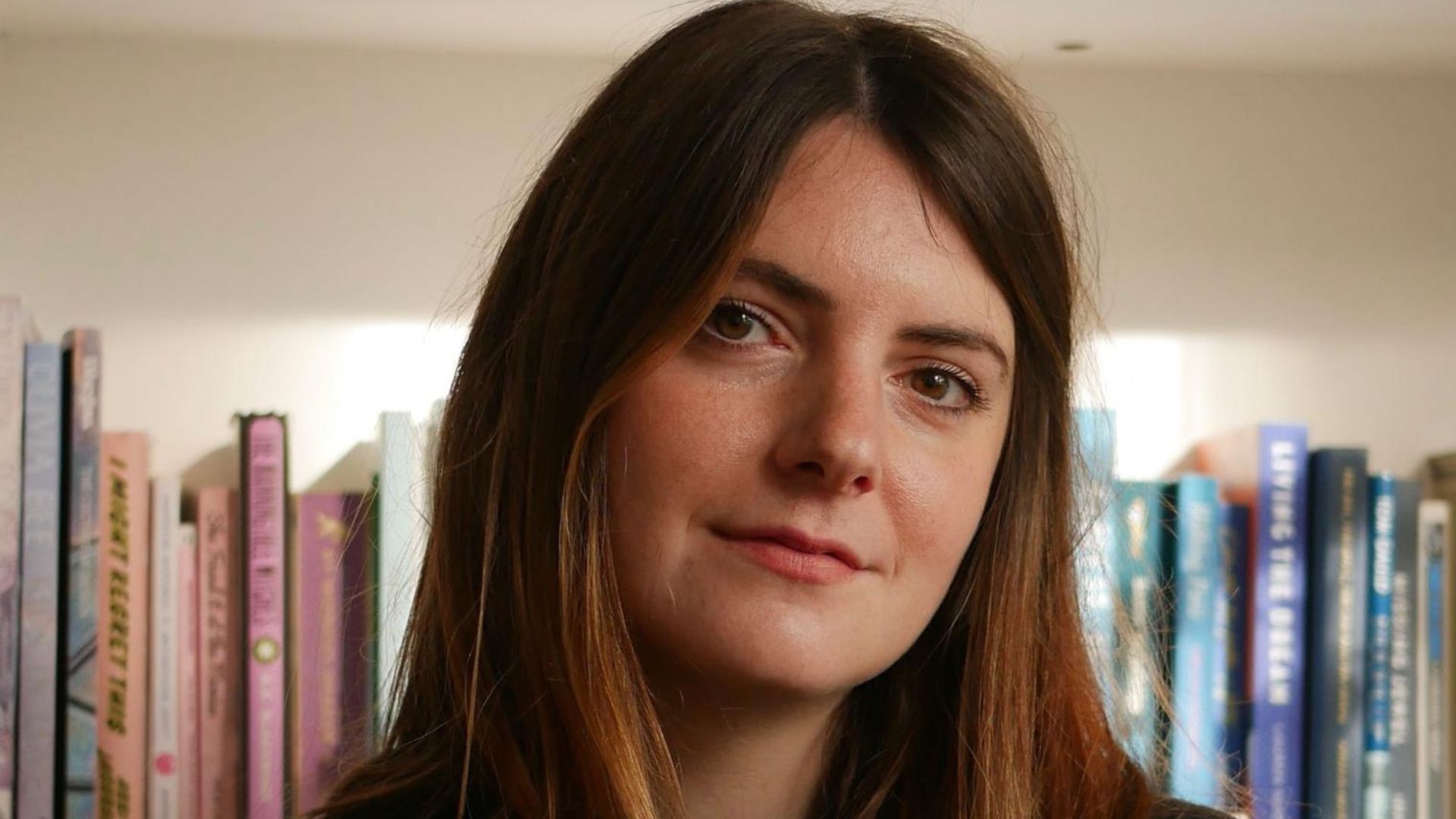
Ahead of this year’s festival, programmer Isabel Moir talks to The Indiependent about what audiences can expect. She radiates the enthusiasm of someone who truly loves what they do. Her role extends far beyond simply selecting films; it is about building bridges between filmmakers and audiences, discovering hidden gems, and creating a festival that reflects both London’s multicultural identity and the broader cinematic landscape.
For Moir and her team, the festival is never really over, it’s a continuous cycle of discovery and curation. “I work within a team of amazing programmers with Jen and Grace. And under our festival director, Kristy Matheson, as well as a selection committee, who also contribute to the festival programme,” she explains. “I’ve been working here for the last year, so it was my second film festival with the BFI.
“It’s very exciting. Throughout the year we are watching films and building the programme, visiting film festivals, tracking new talents, new films, what’s coming out, building relationships with sales agents and distributors to see what’s going to be available.”
The process is both methodical and magical. “We’ve been working on the programme since January, so it’s great to have it finally out,” Moir notes, highlighting the extensive preparation that goes into each festival edition.
Working under Festival Director Kristy Matheson has brought a fresh perspective to the programming process. “Kristy’s the only festival director I’ve worked with at LFF as part of my role in programming. But I think what she brings is a real international perspective and she has so much experience working for organisations and festivals outside of the UK, but also outside of London, so I think having that kind of perspective is really helpful,” Moir reflects. “I think in terms of working under Kristy’s direction, she brings a very collaborative approach which is very encouraging and it’s really lovely.”
Moir’s journey into programming spans fifteen years, during which she has worked across various aspects of film presentation. Her connection to the London Film Festival runs deep, both professionally and personally. “I’ve been working in programming for about 15 years, but I’ve worked in different avenues, so I’ve worked for the London Film Festival in different capacities, so I’ve always had a love of film. I’ve also been an audience member for the London Film Festival. I’m living in London so I know it very well.”
When it comes to selecting films, the process is both strategic and intuitive. The team’s primary consideration is always the audience. “Something that’s really important for London Film Festival to differentiate us is that we are an audience-based festival and we do have an industry programme,, the majority of the festival is for audiences which is not necessarily the case for other festivals.”
Moir continued, “It is such a unique experience. It’s like a real celebration of film and then offering audiences a range of films, some will be early previews and some might never get distribution in the UK, so it’s just really exciting to be able to platform talent from all around the world as well as UK talent.”
The decision-making process is thoroughly collaborative: “What’s really good is that we are a team and we have a selection committee. So it’s not just one person, we have lots of opinions, we all have very different areas of interest, experience and perspectives. We just discussed films very much in detail with a lot of care.”
“Taking place later in the year, the festival boasts a unique role in the cinematic calendar. It’s a really good overview of the buzzy, anticipated titles that have been kind of celebrated throughout the year. It’s a good snapshot of what is going on in cinema culture, but then also perhaps what’s to come in the next six months.”
As an audience-facing festival in one of the world’s most multicultural cities, representation is paramount, “We’re very aware of the makeup of the city and how multicultural it is. We’re always aware of showing films from around the world. And trying to find different stories that reflect different experiences so people feel represented within the programme and we hope that someone can see their experiences and see themselves in stories on screen, but also see things that might surprise them from experience that they perhaps don’t have.”
This inclusivity and diversity also extends beyond the screenings and films themselves: “We have a really good lineup of free talks, which is part of our LFF for Free, which include talks, short film screenings, DJ nights and family workshops in order to engage with audiences and allow them to come to different aspects and not just the films. There are also illustrated lunchtime talks on genres like horror, comedy and crime, a fun way to take advantage of festival conversations and hear from a range of talented speakers.”
The festival opens with a considerably star-studded film in the form of Wake Up Dead Man: A Knives Out Mystery. Moir explains the decision of inviting the title: “There’s a lot of anticipation for this title, for Wake Up Dead Man: A Knives Out Mystery. This is the third film within the franchise, which Rian Johnson has created and there’s a lot of excitement to see his film.
“It’s also got Daniel Craig. It’s got an amazing cast with Josh O’Connor, Andrew Scott and Glenn Close. It’s set in the UK as well, it gives that nice kind of connection. We also screened Glass Onion: A Knives Out Mystery a few years ago, as part of our closing night, so it’s nice to build that kind of relationship and that correlation between the festival programmes.”filmmakers She adds that Rian Johnson, the director of the film, will also appear at a special free event, The Art of the Whodunit, discussing the genre and connecting it to Knives Out.
Meanwhile, the closing film 100 Nights of Hero offers something entirely different. “So I think both films (Wake Up Dead Man and 100 Nights of Hero) offer something very different. They’re both quite buzzy, but they’re very different tonally,” Moir notes. “This is the second feature by Julia Jackman. It’s a bold and beautiful fairy tale based on Isabel Greenberg’s graphic novel. We played Julia Jackman’s first film, Bonus Track, a few years in the festival. So it’s really nice to continue that relationship and to support filmmakers early in their career, especially female film makers.” “And it’s got such a great cast. It’s got Emma Corin. It’s got Amir El-Masry. It’s got Charli XCX, Felicity Jones and Richard E. Grant. So we’re feeling like it will bring in audiences and people will be wanting to see this one.”
Among the gala screenings, Jafar Panahi’s Palme d’Or winner It Was Just an Accident represents the festival’s commitment to celebrating auteur cinema. “Jafar Panahi’s film won the Palme d’Or at Cannes. We anticipate a lot of people wanting to see it. The reviews have been really incredible. And Jafar Panahi, he’s a very celebrated auteur. He has a really long history with the Film Festival and an incredible body of work,” Moir explains. She also adds that Panahi will be featured in one of the Screen Talks.
Beyond the headline grabbers, Moir is particularly enthusiastic about several lesser-known gems. “So firstly, one of my favourite directors, Lucrecia Martel, the Argentine filmmaker. She has a new documentary called Landmarks, which I think would be a lot of interest to her because she normally works in narrative fictional cinema. Her last film was Zama (2017). So I think there’s going to be a lot of interest in her. I think she’s a very talented filmmaker and it’s about the legacy of activist Javier Chocobar.” She also highlights Weightless by Emilie Thalund, a Danish film she described as “Ahalf-brothers young girl’s experience over a summer in a wellness camp, and it’s kind of about her desire, and controlling notions of body image, and it’s very deeply affecting, very gentle, very well done.” Other discoveries include DJ Ahmed, “a film from Macedonia by Georgi M Unkovski, which played at Sundance and won the Audience Award. It’s very uplifting and fun,” as well as Endless Cookie by Seth Scriver and Peter Scriver from Canada. “A psychedelic surreal animation. It’s a family portrait that uses a lot of humour and storytelling to explore the contrasting upbringings between two half brothers, one is white and one is indigenous in Canada. It’s them telling the story through these animated characters.”
Asked about the festival’s larger vision, Moir stresses responsiveness and openness: “I think we’re responsive to the kind of conversations happening in the industry, seeing what other festivals are doing, seeing the trends and conversations. We’re very responsive to what audiences are drawn to in the programme and the films they seek out, so we try to meet those expectations as well as surprise them. We’re also very aware of the larger screen culture of what’s going on in London and the UK.”
For aspiring filmmakers and programmers, Moir offers practical wisdom rooted in her extensive experience. “We do submissions for the festival. And we’re not looking for anything too prescriptive in terms of parameters and how the film should be. For us, it’s a really exciting part of our job to watch these submissions come in and sometimes we don’t know anything about a film and we just find something incredible and then it ends up in the programme. Being one of the first people to watch a brand new film is very rewarding.” She cites Holloway, a documentary directed by Sophie Compton and Daisy-May Hudson, as an example: “It’s a really amazing documentary, but that came through submissions and we ended up screening it and it ended up winning the LFF Audience Award for Best Documentary. So it’s a really lovely moment all around.” For those interested in programming, she advises: “Because I worked on a lot of non-programming roles at venues and festivals, I think just being within the conversations, being within the world and understanding how a festival runs because so many of the roles at festivals and venues give you experience in programming. So I think it’s really important to watch everything, challenge yourself and film programmes not just about personal taste, but thinking about who audiences are, why this film would be considered.”
As our conversation draws to a close, Moir’s passion for cinema and dedication to audiences shines through every response. Under her careful curation and that of her colleagues, the BFI London Film Festival continues to serve as both a celebration of global and local cinema and a vital cultural bridge connecting London’s diverse communities with the wider world of film. In a year promising such an exciting lineup, it’s impossible not to share her enthusiasm for what waits ahead.
Interview conducted and article written by Mátin Cheung.
Support the Indiependent
We’re trying to raise £200 a month to help cover our operational costs. This includes our ‘Writer of the Month’ awards, where we recognise the amazing work produced by our contributor team. If you’ve enjoyed reading our site, we’d really appreciate it if you could donate to The Indiependent. Whether you can give £1 or £10, you’d be making a huge difference to our small team.