
“I shall be then a garden charmed from changing.”
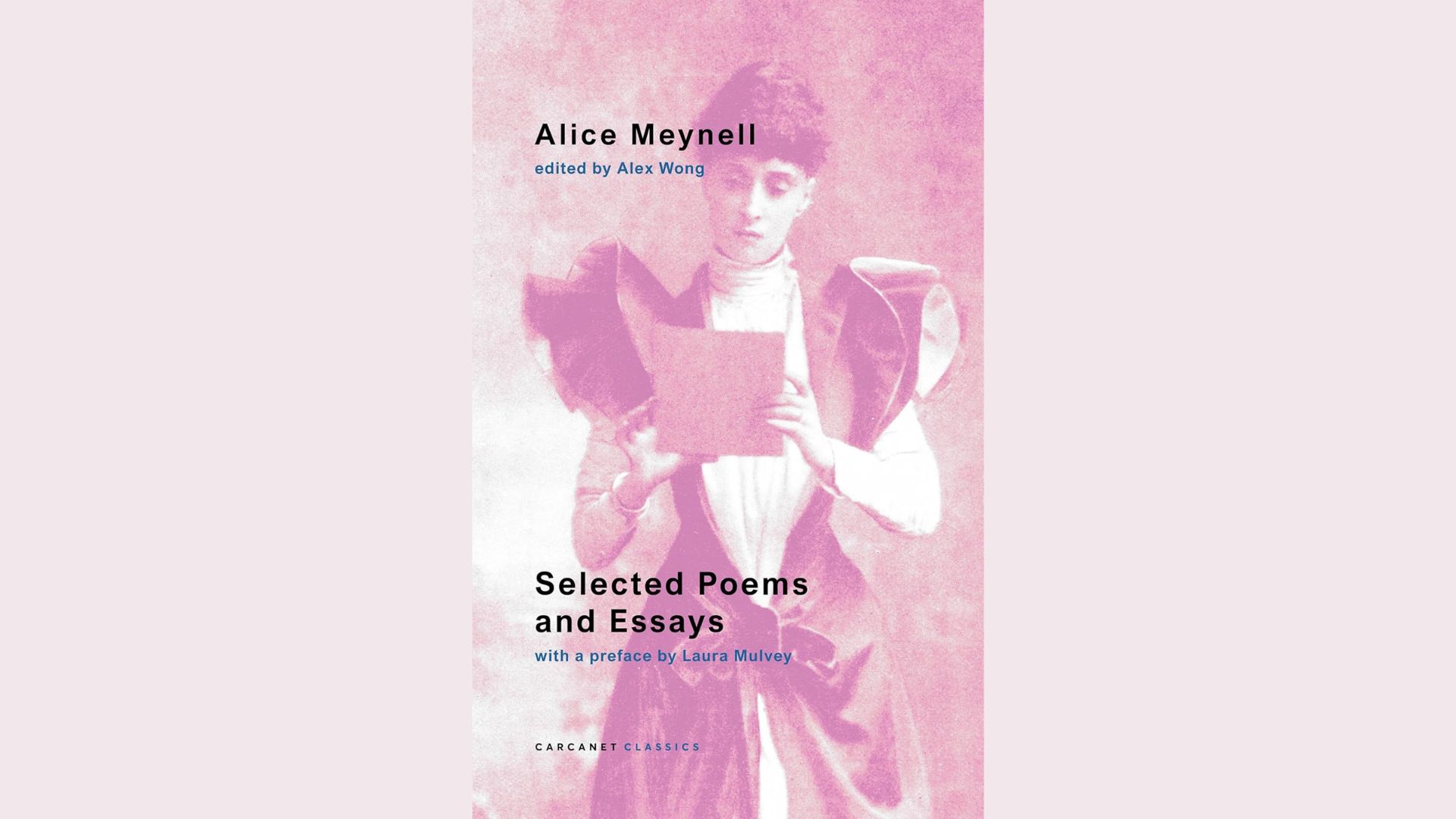
There is no quote that better describes the works of Alice Meynell, who has been reintroduced to the world with a new selection of poems and essays. It has been over 75 years since the last collection of Meynell’s work was published, and just over a century since the writer’s passing. A large literary personality in London from the late 19th century to the early 20th century, and the President of the Society of Women Journalists, she is revered for her exact use of words, which allows for lines that are as efficient as they are alluring. Carcanet’s new Selected Poems and Essays by Alice Meynell, collected and edited by Alex Wong, is wrapped in love for both Meynell’s intellect and her minute understanding of life’s many conflicts.
The preface by Laura Mulvey, Meynell’s great-granddaughter and popular feminist theorist in her own right, not only offers thoughtful connections between the two writers of different generations, but also centres Meynell’s work as relevant today.
The collection’s dedication to presenting her poetry in chronological order adds immensely to the reading experience, as we get to see Meynell bloom like the flowers that feature so much in her earlier work.
Poems like ‘A Letter from a Girl to Her Own Old Age’ and ‘Your Own Fair Youth’ manage to be both touching and astute. Their discussions of aging and time are especially appealing to young people, who often worry about how their actions will shape their future character, and hope to impress their older selves. Meynell shows us she understands the feelings of uncertainty that come with growth, and relates them to our naturally wild hearts.
Her continuous connection of human behaviour and all other natural life is what allows Meynell to approach all subjects with the same thoughtfulness, and nuance. In her eyes, our wild hearts are only tamed by social convention. She does not even see this as a particularly negative thing, as seen in both her later poetry (particularly in pieces like ‘The Laws of Verse’) and her essays, the medium where she shines best.
The essays in the collection handle a wide array of subjects, though the idea of femininity is most prevalent.
Meynell treats femininity as a force rather than something to be handled carefully. Through her Victorian perspective, we can see the foundations of a lot of modern feminist thought, as she paints women’s experiences as intrinsically different from men’s, but equally worthy for it. In her own words in ‘The Rhythm of Life’, the rhythmic pangs of maternity rule over our lives as much as the revolutions of the sun do.
‘Victorian Caricature’ was a particular treat to read, as well as ‘The Woman in Gray’. However, I keep coming back to ‘Near the Ground’, which suggests children are more in tune with nature due to their physical closeness with it. Much like Meynell’s other writings, it raises the question of the conflicting forces of nature and nurture.
Meynell’s work has revealed itself to me, as it has to many others, to be a never-ending treasure trove. With every read, I find in her lines gold which was previously hidden from my sight. Her meticulous word choice and disdain for filler allows her readers new perspective on the world every time they so much as look at a poem of hers, or at one of her timeless essays. She is a master of the craft and it is clear that Alex Wong, alongside everyone else involved in the publication of this collection, has done the new generation a service by introducing Meynell to the modern world.
Words by Elise Gavin
Want more Books content from The Indiependent? Click here