
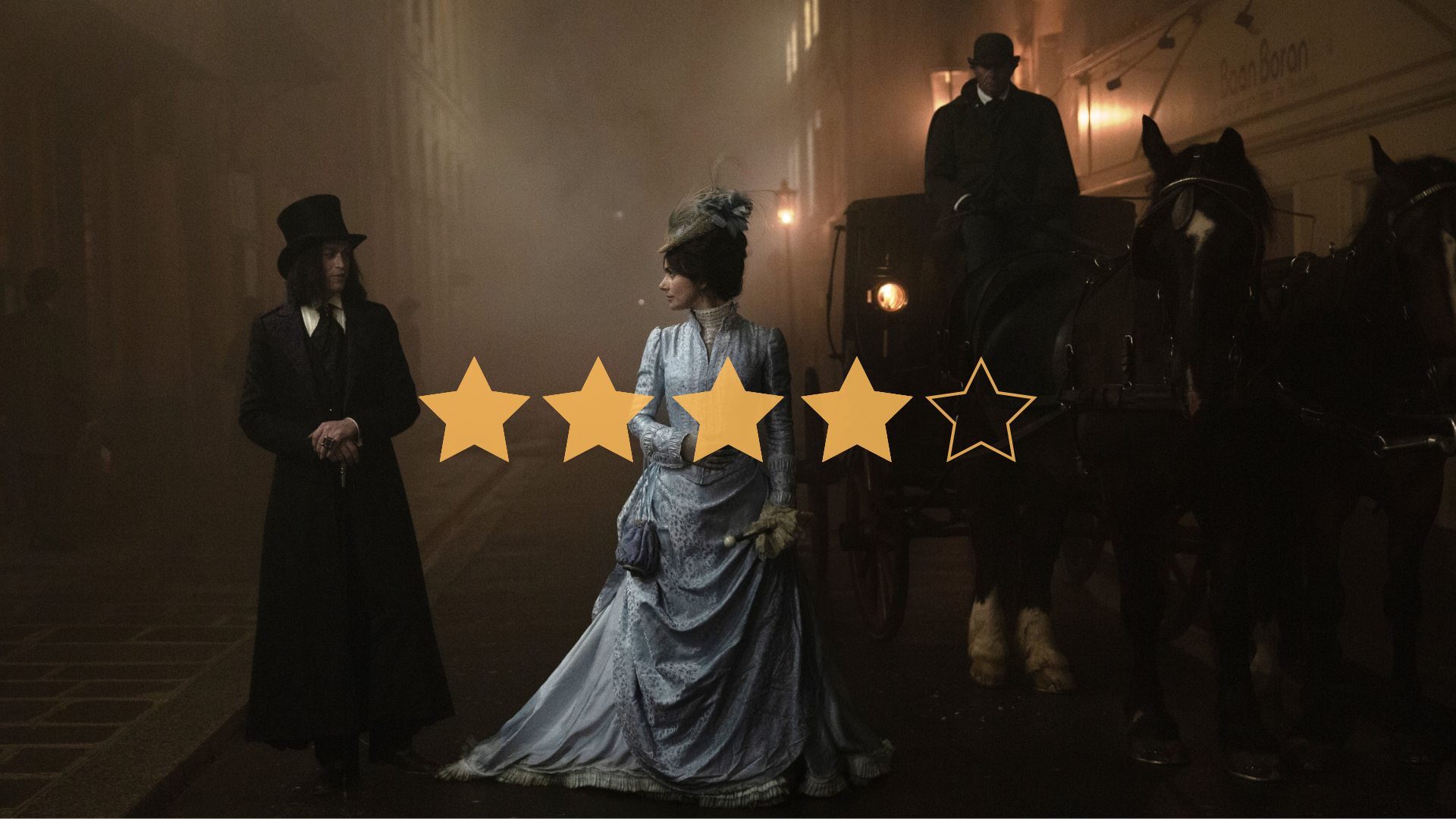
Luc Besson’s take on Bram Stoker’s 1897 classic remains loyal to the gothic themes with traditional vampire lore and elements of horror at the forefront. Yet he manages to intertwine an original romantic element to the character and his tale, drawing on powerful, captivating themes of love, God and salvation.
★★★★☆
Dracula is a renowned story of an antagonistic, cruel monster condemned by God, whose defining characteristic is devilish inhumanity. While vampires have long been associated with lust, painted as devious, cruel seducers, the horror genre has left them little space for themes of romance. But in this reimagining, Besson seamlessly entwines the titular character and his story with a passionate and pure element of true love.
The story begins in 15th century Romania, with Prince Vladimir (Caleb Landry-Jones) and his princess, Elisabeta (Zoe Bleu). The audience is immediately thrown into a beautifully gothic and intimate world, where seemingly only these two characters reside. The strange, almost disturbing sequence of their life together makes it instantly clear that their relationship is one of obsession or interdependence, and the witchy atmosphere further grounds the eerie element of the film.
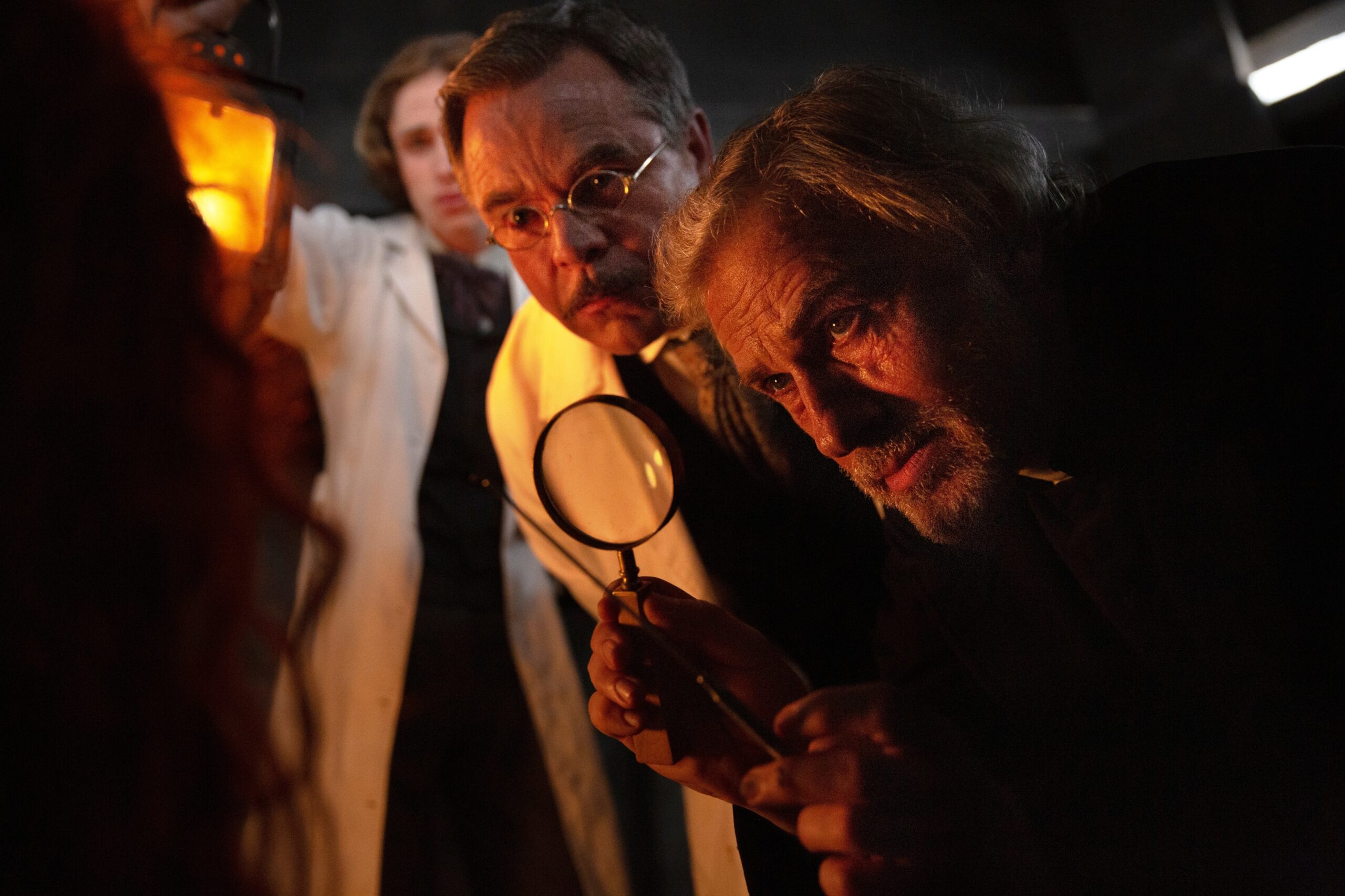
When war separates the two lovers, Vladimir wishes to punish God and commits an act so sinful that he condemns himself to live forever as a vampire—and Count Dracula is born. The film then moves to France, 400 years later where we find a doctor Dumont (Tonquedec) working at an institution. He invites a priest (Waltz), who has dedicated his life to finding and vanquishing vampires, to inquire after Maria (De Angelis), a victim of the Count, and together they provide a second storyline.
When we return to Romania, Count Dracula is found residing in his castle alone. Having lost hope in the search for his wife, he now ensnares unknowing victims to his castle to feed from. That is until a young lawyer (Abid) who seems to be destined for the same fate is saved by his engagement to the reincarnation of Elisabeta, now a young woman called Mina. Discovering this, Dracula prepares to reenter society and unite with his beloved—an action which does not go unnoticed by the doctor and the priest.
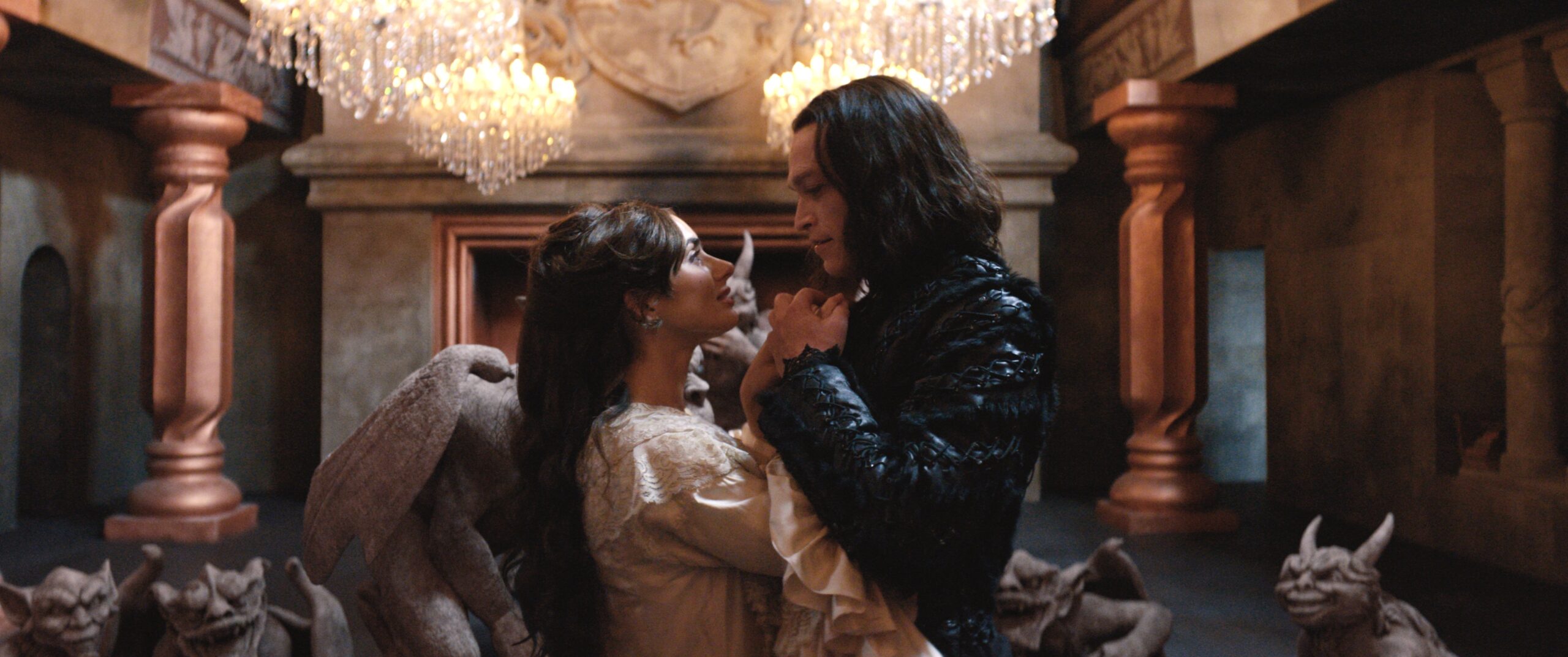
The complexity and depth of Dracula is permeable through the film; the character has a strong presence that fills the chasm of the immortal life he is punished with. Besson achieves this by offering different versions of our protagonist in relation to the particular stage of his cursed, unimaginable existence. Despite his transformations (both physically and emotionally) his devotion for his wife remains constant. His passion is not only expressed through romance, but through violence. In his first iteration as a young prince, he is esteemed in his affinity for killing. Naturally, this bloodlust does not cease as a vampire—nor does his passion for his wife. Both Prince Vladimir and Count Dracula commit beastly, vicious and inhumane acts, all in the name of something as pure and beautiful as love. Besson’s version of Dracula is impressively detailed, his character complex enough to house the opposing traits of utter eternal devotion and inhumane bloody violence.
With this protagonist Besson weaves a compelling exploration of religion and invites us to question his humanity entirely, as his murderous intent existed before he was condemned to be a vampire. The prince’s flair for violence was too great for it to be an act of obedience to God, despite what he claimed, and as the Count, his killing becames an open rebellion to religion. However when he is with his beloved, mostly in the film’s opening and in the final scenes, our protagonist is his most humane and warm-hearted. His love is synonymous with his humanity – the absence of love for him brings a monstrous existence. Besson shows this through his character and by repeating the romantic cinematography from the initial sequence in the final stages of the film. This creates a cyclical structure which supports the pacing and storytelling.
Landry-Jones is exceptional in his role. His dedication to the performance of each version of Dracula is so utterly flawless that you could almost consider them as separate characters. Alongside him, Waltz and De Angelis offer undeniably believable portrayals which enhance the world of Dracula. The cinematography is constantly captivating, offering beautiful romantic visuals in a gothic world, and the dialogue is lifted by striking one liners and wit.
Throughout the film, the ardour of our protagonist has motivated his adoration for Elisabeta but it has also fueled his thirst for blood (both as a warrior and a vampire). The film’s conclusion makes a final note on the presentation of passion as indicative of destruction as well as love by leaving us with a prominent feeling of peace. Though the finale’s atmosphere contradicts the passion of the film in its fervent exploration of love, violence, death and grief, the serenity that fills the space comes as a relief.
The Verdict
Dracula: A Love Tale is a beautiful, careful reimagining of the classic gothic novel. The compelling world plays with notions of morality, salvation, religion and love, which seduces the audience as effortlessly as Dracula does his victims. Though the conclusion can be interpreted differently, it ultimately finalises the film’s exploration of passion with the conclusion that it is not always romantic or good, but can instead slip into a context of obsession and inhumanity.
Words by India Gwyn-Williams
Support the Indiependent
We’re trying to raise £200 a month to help cover our operational costs. This includes our ‘Writer of the Month’ awards, where we recognise the amazing work produced by our contributor team. If you’ve enjoyed reading our site, we’d really appreciate it if you could donate to The Indiependent. Whether you can give £1 or £10, you’d be making a huge difference to our small team.