
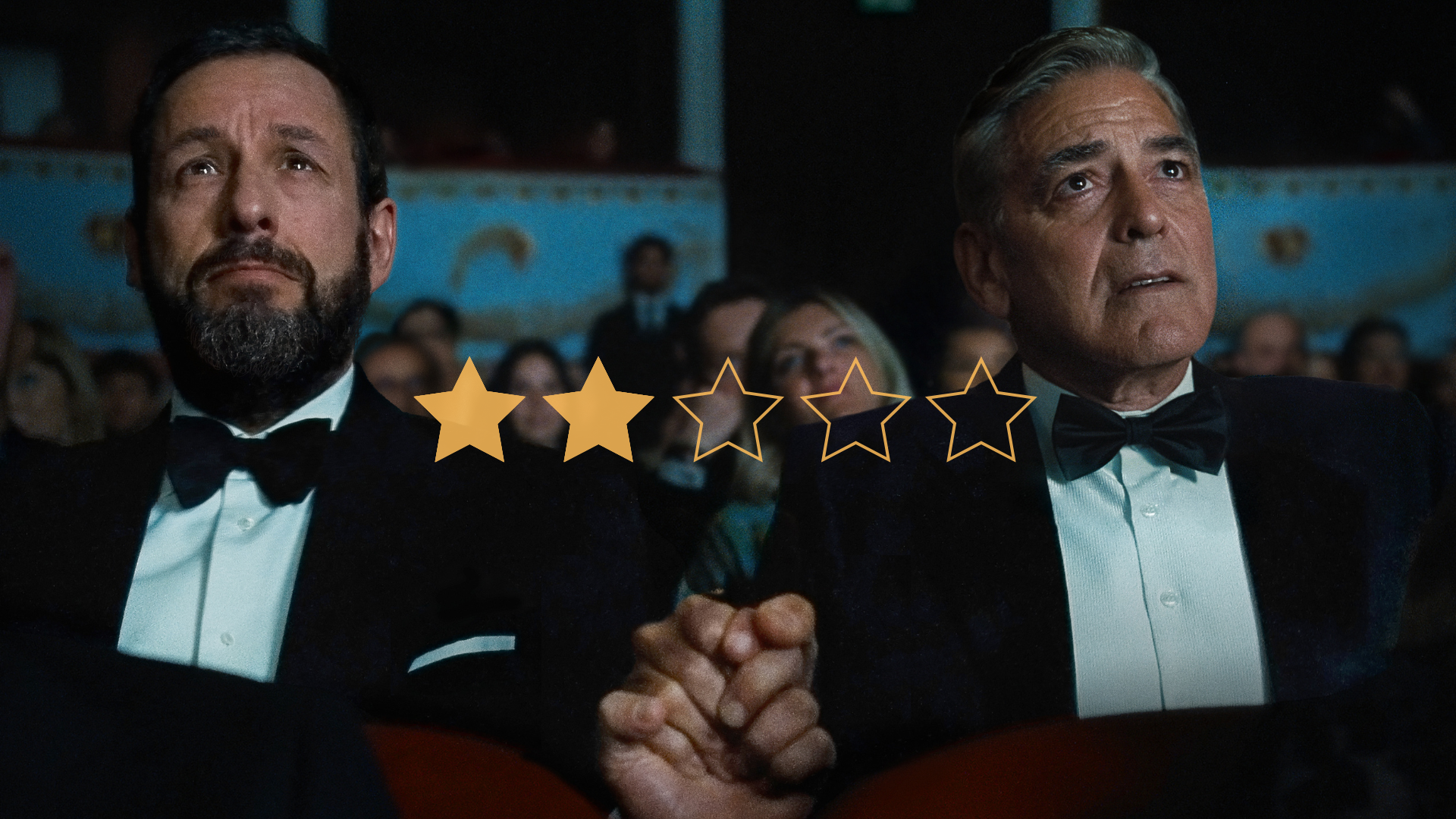
This glossy ‘Hollywood on Hollywood’ drama from director Noah Baumbach, co-writing with actress Emily Mortimer, can barely manage its own ego.
★★☆☆☆
Having taken a couple of years’ sabbatical to join his wife Greta Gerwig in penning the screenplay for her box-office juggernaut Barbie, Noah Baumbach is back on somewhat more familiar terrain with this featherweight tale of a fading movie star reflecting on his life and career whilst sojourning in Europe. On one level, it’s a film that appears to be asking intensely personal questions about loss and regret, and about the many sacrifices that one may have to make in pursuit of a life of fame and artistic success. On another, altogether less trenchant level, it’s asking a single, perennial question, to which the answer is hardly a subject of controversy: ‘Isn’t that George Clooney so dreamy?’
Tinseltown’s twinkliest silver fox, who last lent his honeyed baritone to Baumbach’s unflappably droll dialogue whilst voicing an actual fox back in 2009, is the titular Jay Kelly—a charismatic industry veteran whose beloved star persona allows him to brush off with a wink and a toothy grin more than a few accusations that all he does in his movies is turn up and ‘play himself’. Sound like anyone else you might know? We first meet Clooney’s Jay in pristine silhouette, illuminated from behind by the warm lights of an old-fashioned movie set. It’s a pointed introduction that comes hot off the heels of an epigraph from Sylvia Plath: “It’s a hell of a responsibility to be yourself. It’s much easier to be somebody else or nobody at all”. Indeed, if Jay is a man famous for pretending to be other people, recognisable simply by his shadow, it’s telling that for pretty much everyone in his off-screen life, from his long-suffering manager (Adam Sandler) to his two daughters, it often seems as though there’s nothing there behind the mask.
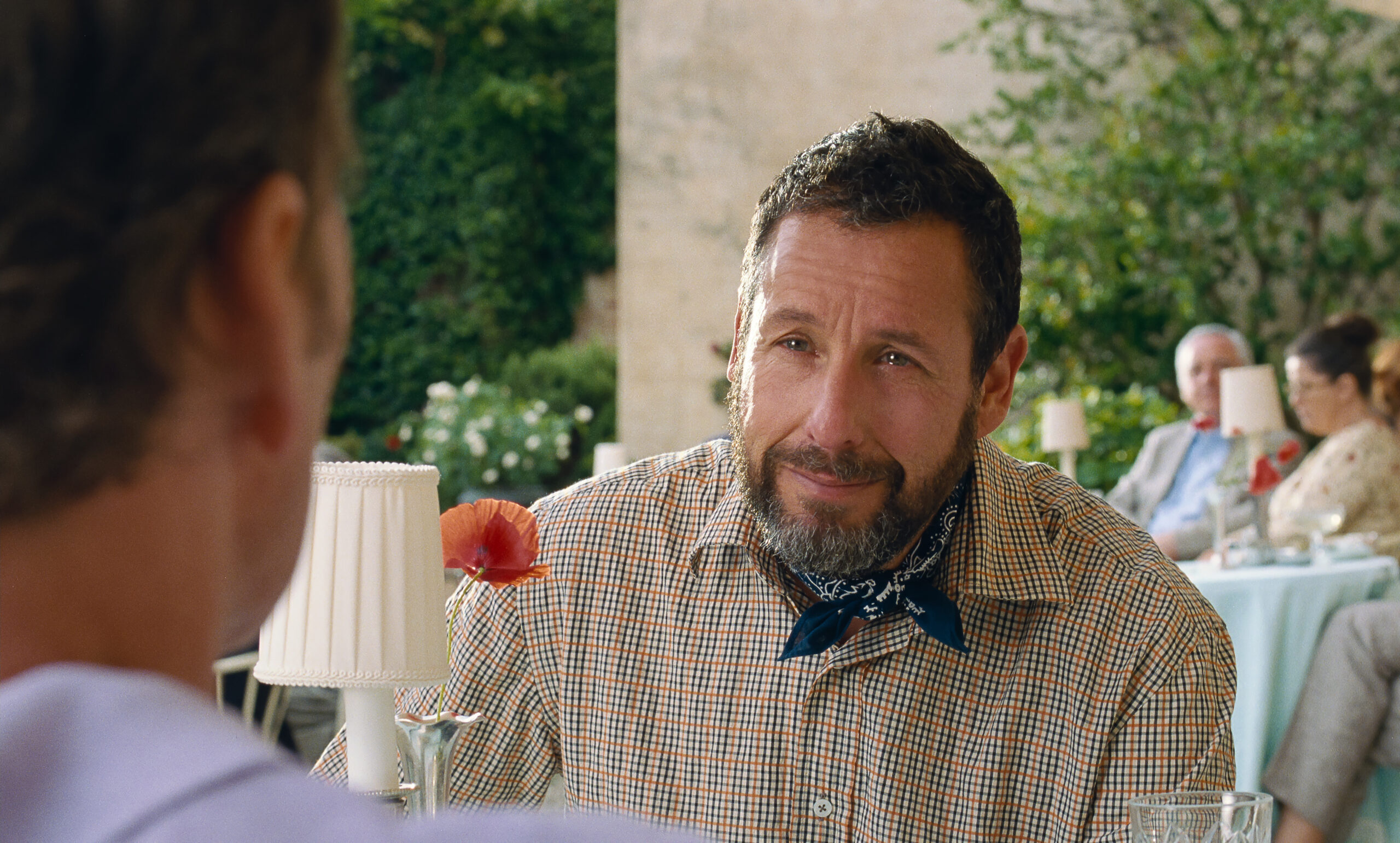
Emotionally distant, eternally self-absorbed, and only ever likeable by virtue of that winning Clooney charm, Jay gives new meaning to the old truism about actors being ‘empty vessels’—an adage he is cuttingly reminded of by an old pal from drama school with whom he unexpectedly reunites early in the film (Billy Crudup, in an excellent and regrettably brief performance). Crudup’s Timothy is now a wealthy child psychologist, but blames Jay for supposedly stealing the part that should have been his big break. Their meeting ends in a drunken and distinctly uncinematic fist fight in the parking lot, and ignites an existential crisis of sorts for Jay. Who is he and how has he gotten where he is? Would he make the same choices if he had his time again? We follow him on a lengthy journey to a Tuscan film festival where he is set to accept a lifetime achievement award, and, along the way, wind up taking more than a few quasi-surrealist diversions into formative memories of his youth—upon which the middle-aged Jay himself ruefully gazes, unseen by his younger self.
This is a Baumbach script, so naturally not without moments of wit and perspicacity—but beware he who gazes so far up his navel that he ends up interminably lodged in his own colon. Hollywood has hardly shied away from telling stories about itself over the years, but there’s a certain air of smug self-congratulation which permeates the worst examples of this sub-genre… and which hangs around like a veritable miasma in Jay Kelly. For a story all about actors, the film is weirdly deficient in actual drama: instead, we spend most of the time listening to people quip about the relative sizes of their private jets, and watching Jay being ogled at and fawned over wherever he goes as if he’s some latter-day folk hero (“I think that what you do is magic!”, he is told by at least one character—incidentally, in the film itself, there’s precious little evidence to justify this oft repeated claim that Jay is some kind of creative genius).
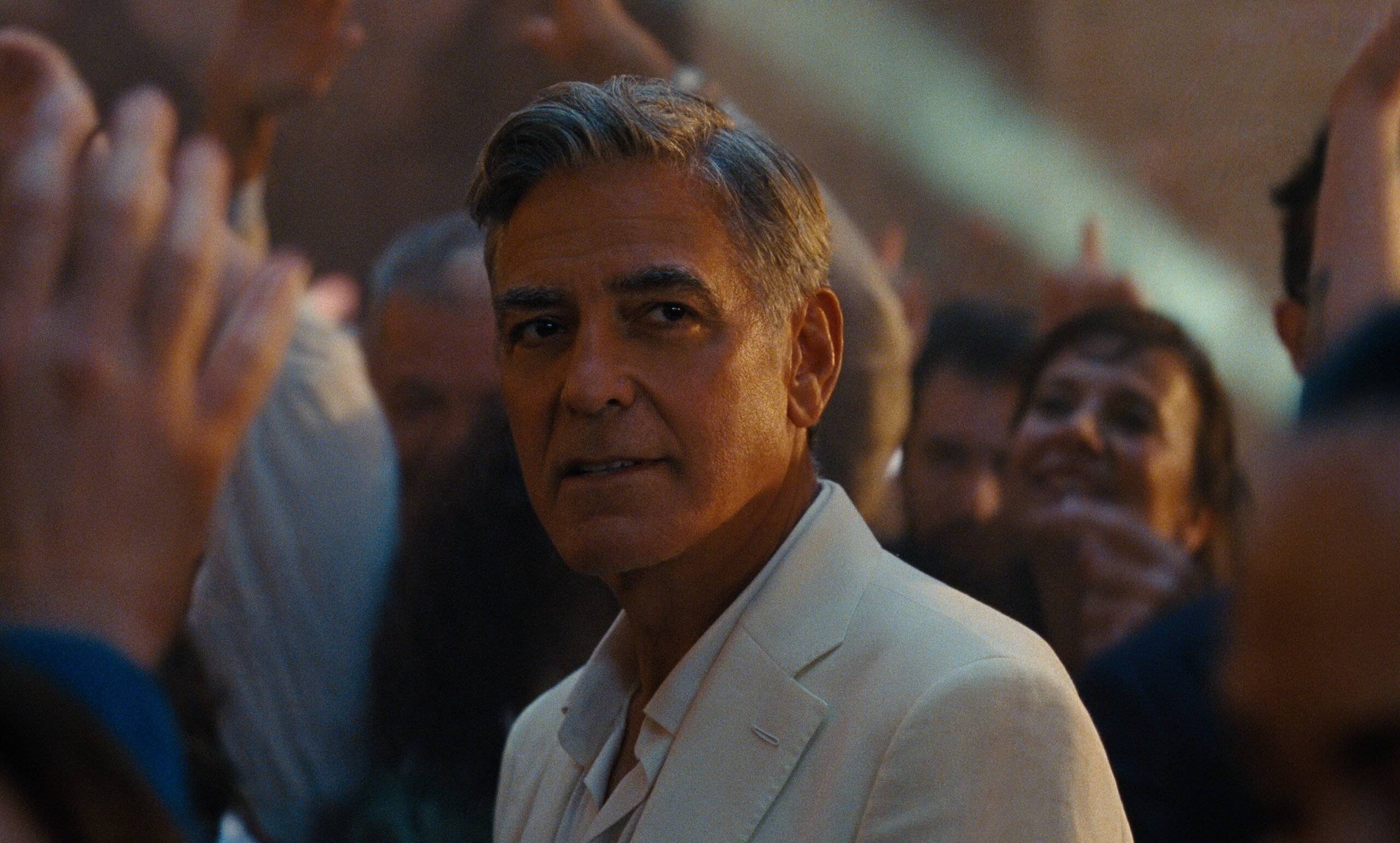
There’s some nice chemistry between Clooney and Sandler’s Ron, Jay’s counsellor in matters both professional and personal, but too often the character is instead left stranded in a half-baked romantic subplot with a frazzled publicist played by Laura Dern—so brilliant in her Oscar-winning turn in Baumbach’s much more emotionally compelling Marriage Story, but here one of many elements which never quite manages to gel properly with the central narrative. After over two hours, we eventually saunter towards a cinema-set conclusion; straddling the gap between sentimentalism and irony and, in the final instance, committing properly to neither. It’s a momentarily surprising move which winds up feeling more like a caveat than it does a coup de grâce, letting Jay off the hook a little easier than a braver, sadder version of the film might have done. Based on past achievements, Baumbach, Clooney, and most of the other talent involved are surely more than capable of making that film—but much has been sacrificed here at the altar of Hollywood self-adoration.
The Verdict
Lacking a more penetrating vision on its subject than needed, Noah Baumbach’s paean to all things Clooney vacillates between the syrupy and the sauceless.
Words by Isaac Jackson
Support the Indiependent
We’re trying to raise £200 a month to help cover our operational costs. This includes our ‘Writer of the Month’ awards, where we recognise the amazing work produced by our contributor team. If you’ve enjoyed reading our site, we’d really appreciate it if you could donate to The Indiependent. Whether you can give £1 or £10, you’d be making a huge difference to our small team.