
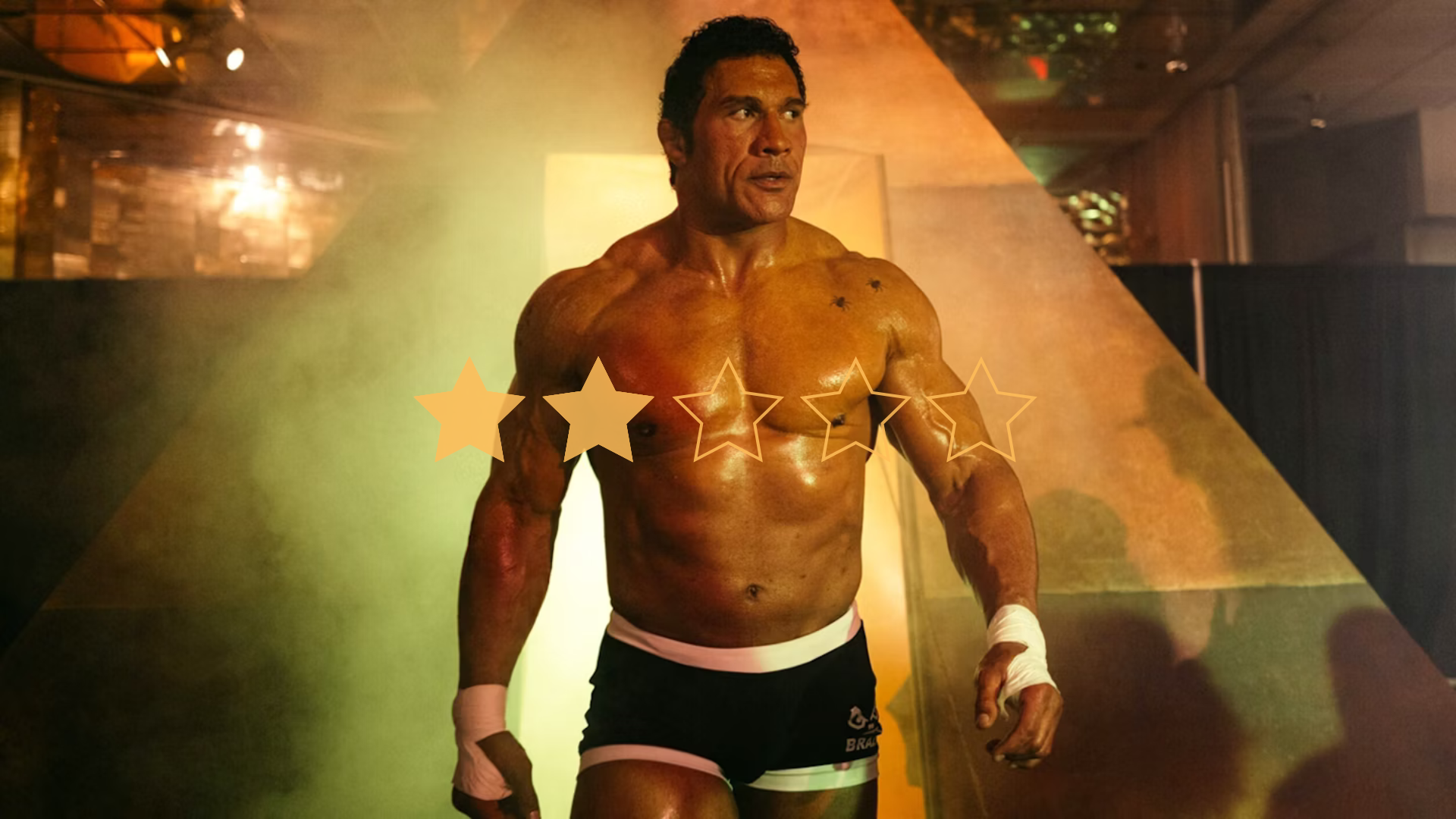
The Smashing Machine garnered momentous anticipation for Dwayne Johnson’s evolution into a more serious acting persona, whilst also promising an intimate look at UFC pioneer Mark Kerr. It delivers instead a film torn between Johnson’s hunger for gravitas and a narrative that rarely achieves the emotional punch it aims for.
★★☆☆☆
Sports films are among the most enduring and familiar genres in cinema. Whether following the classic ‘underdog triumph’ arc or the more reflective ‘journey is the destination’ narrative, they continue to draw audiences back repeatedly, most recently seen with the success of Joseph Kosinski’s F1. What truly defines the best examples of the genre, however, is not their adherence to formula but the empathy with which filmmakers approach their stories. Even when a film deliberately breaks from convention, this empathy remains essential.
Darren Aronofsky’s The Wrestler stands as a masterclass in this regard, not because it rejects clichés out of cynicism, but because it builds a deeply human portrait around its protagonist. Aronofsky’s direction and Mickey Rourke’s performance merge seamlessly to create Randy “The Ram” Robinson, a man both broken and dignified. Though a walking disaster, he is never mocked or diminished; instead, the film invites the audience to understand his devotion to the sport that defines him, and the emptiness that shadows him outside it.
The Smashing Machine aims for that same emotional resonance. In a classic underdog redemption story, it follows mixed martial artist Mark Kerr, a once-dominant fighter whose career unravels after a series of personal and professional setbacks. It stars Dwayne Johnson in a performance many have called a radical departure from his usual action-hero persona, yet one that still feels deeply personal. Like Kerr, Johnson is a larger-than-life figure facing the weight of reinvention; once the unstoppable star, he took hard losses after the failures of Black Adam (2022) and Red One (2024).
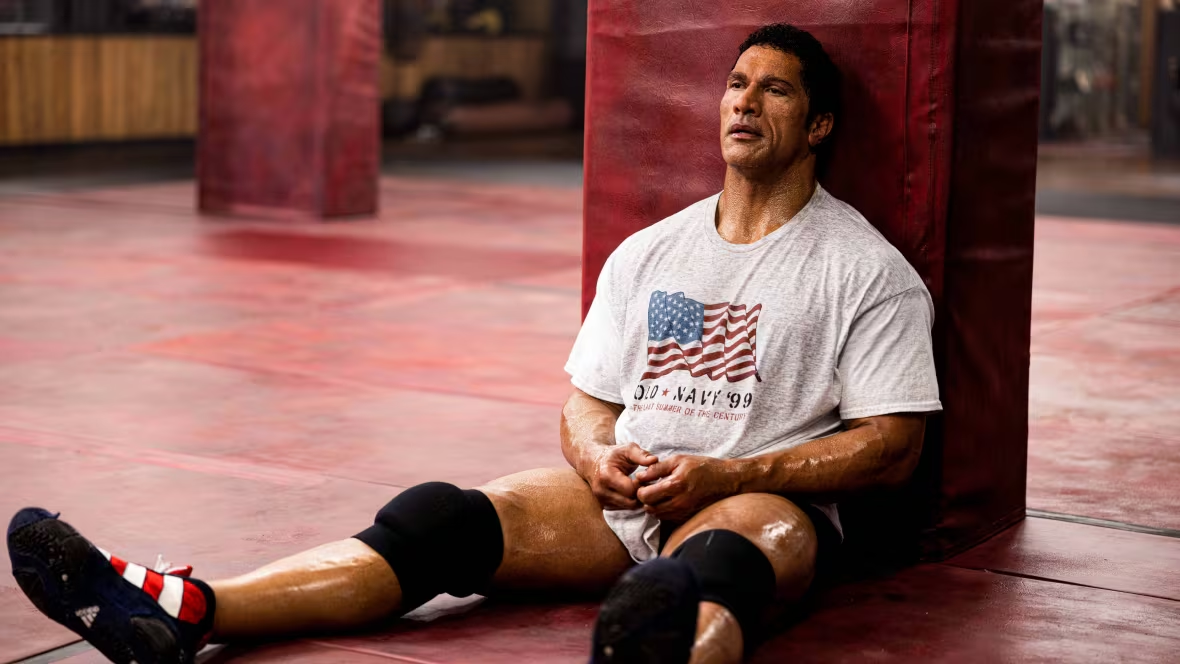
It’s a noble ambition, but in striving to redefine himself as a serious actor, Johnson occasionally overshadows the man he’s portraying, turning Kerr’s story into more of a reflection of his own journey than that of the fighter. We witness Kerr’s ascent to the top, yet the brisk and often disjointed editing, while capturing the necessary fights, fails to build emotional continuity or dramatic momentum. There’s little sense of the unbreakable bond Johnson’s Kerr shares with his sport or the profound emptiness that follows his first major defeat. Instead, we’re left with scattered glimpses of decline rather than a fully realised portrait of a man unravelling once the cage lights fade.
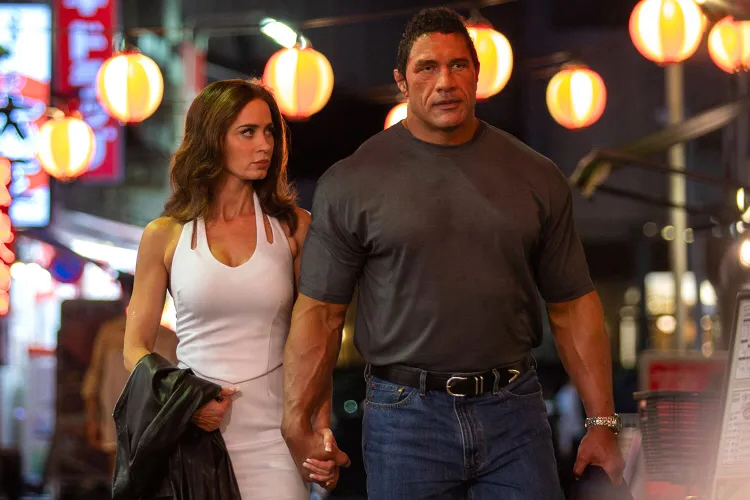
Kerr’s MMA career ultimately plays second fiddle to what the film seems more interested in exploring: a turbulent domestic drama between him and his partner, Dawn Staples (Emily Blunt). Meant to serve as the emotional core of the film, it fares no better than the central drama. The constant bickering between Kerr and Staples quickly exhausts any sense of sympathy; each argument feels repetitive, their reconciliations shallow and self-absorbed. It’s like watching two people who rushed into marriage without ever understanding each other. Audiences are never given a glimpse of their relationship before the chaos, no sense of warmth or a healthy history to anchor their conflict, making it difficult to care about whether they stay together or fall apart. By the final act, the viewer is more likely to hope they do the latter, a testament to how little empathy or depth the script affords them.
Director Benny Safdie’s earlier work, particularly Good Time (2017) and Uncut Gems (2019), thrived on chaotic, morally murky stories about self-destructive people spiralling deeper into the consequences of their own greed and desperation. Those films worked not only because of the kinetic direction but because their protagonists, brought vividly to life by Robert Pattinson and Adam Sandler, radiated a raw, magnetic humanity beneath their selfishness. You could not condone their choices, but you understood their compulsion. In The Smashing Machine, however, that delicate balance is lost. Both Johnson and Blunt’s characters lack the nuance and tragic depth that made Pattinson’s Connie Nikas or Sandler’s Howard Ratner perversely compelling. Here, they are simply unpleasant people making foolish decisions.
It’s a real shame because both leads are clearly aiming for prestige. Johnson seems determined to shed his long-standing typecast as the charming action hero and prove he can access something raw and vulnerable. His performance is solid, though at times it veers into self-consciousness. Too often, he performs emotion rather than inhabiting it, slipping into the exaggerated gestures and theatricality reminiscent of his wrestling days. The result is a performance that feels studied rather than lived in. The Academy may well reward the effort, but in truth, this is still Dwayne Johnson on screen. The most transformative element is the remarkable makeup work.
Blunt, ever the chameleon, once again disappears into her role with conviction. Yet she’s betrayed by a screenplay that confines her to a familiar Hollywood archetype: the suffering partner orbiting the male lead. Compared to The Fall Guy (2024), where she at least injected wit and charm into a similar setup, here she is saddled with a character so insufferable and underwritten that even her nuance can’t save it.
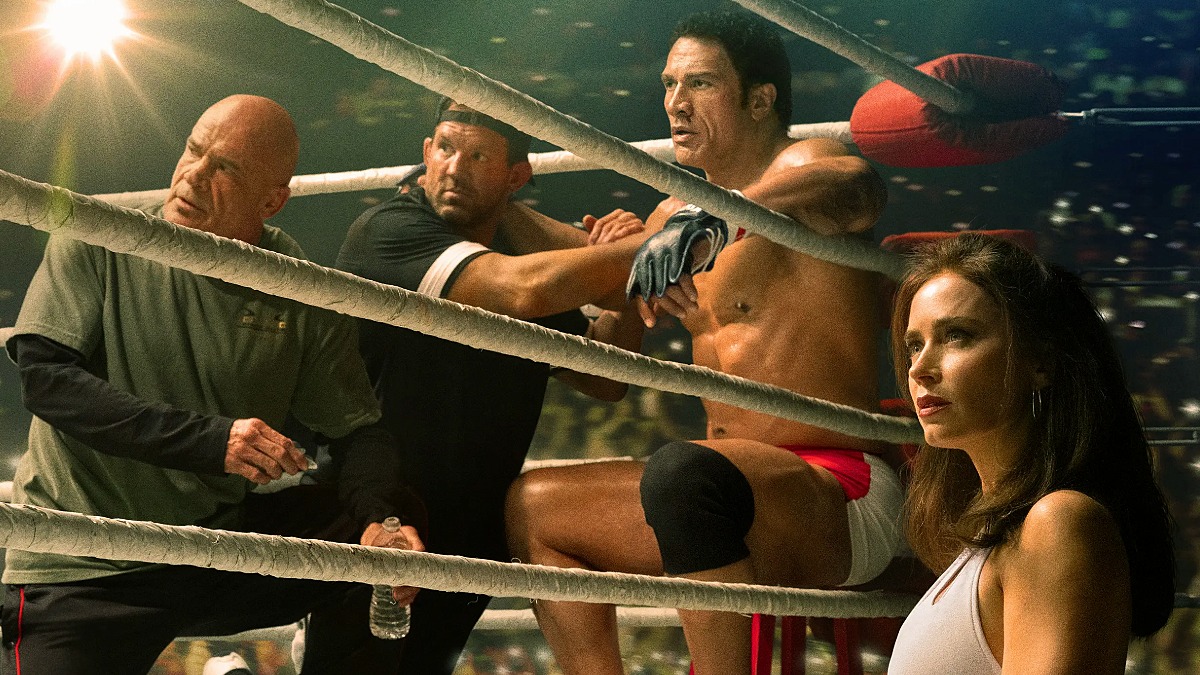
The film’s true revelation is Ryan Bader. The real-life MMA fighter brings a grounded authenticity to Mark Coleman, Kerr’s lifelong friend and fellow champion. The two capture a warmth and camaraderie the rest of the film lacks, and the story might have found its heart had it centred on their friendship: two fighters chasing the same dream, bound by loyalty yet divided by ambition. It’s a dynamic rich with emotion, squandered in favour of a repetitive domestic subplot that drains the film’s momentum.
One can’t help but suspect that Safdie never truly empathised with Mark Kerr’s story, or perhaps wanted to, but was constrained by Johnson’s image management. What could have been a raw portrait of obsession and friendship instead plays like a calculated vehicle for Johnson’s ‘serious actor’ rebrand.
The Verdict
The Smashing Machine feels less like a film about Mark Kerr than a platform for Dwayne Johnson’s reinvention. There’s plenty of craftsmanship on display, and strong performances from Johnson and Bader. However, the emotional coherence is missing. It’s a story about a man breaking apart that never quite lets us feel the cracks. Johnson swings hard for authenticity, but the punches, sadly, don’t land.
Words by Joseph Jenkinson
Support the Indiependent
We’re trying to raise £200 a month to help cover our operational costs. This includes our ‘Writer of the Month’ awards, where we recognise the amazing work produced by our contributor team. If you’ve enjoyed reading our site, we’d really appreciate it if you could donate to The Indiependent. Whether you can give £1 or £10, you’d be making a huge difference to our small team.