
CW: Harassment
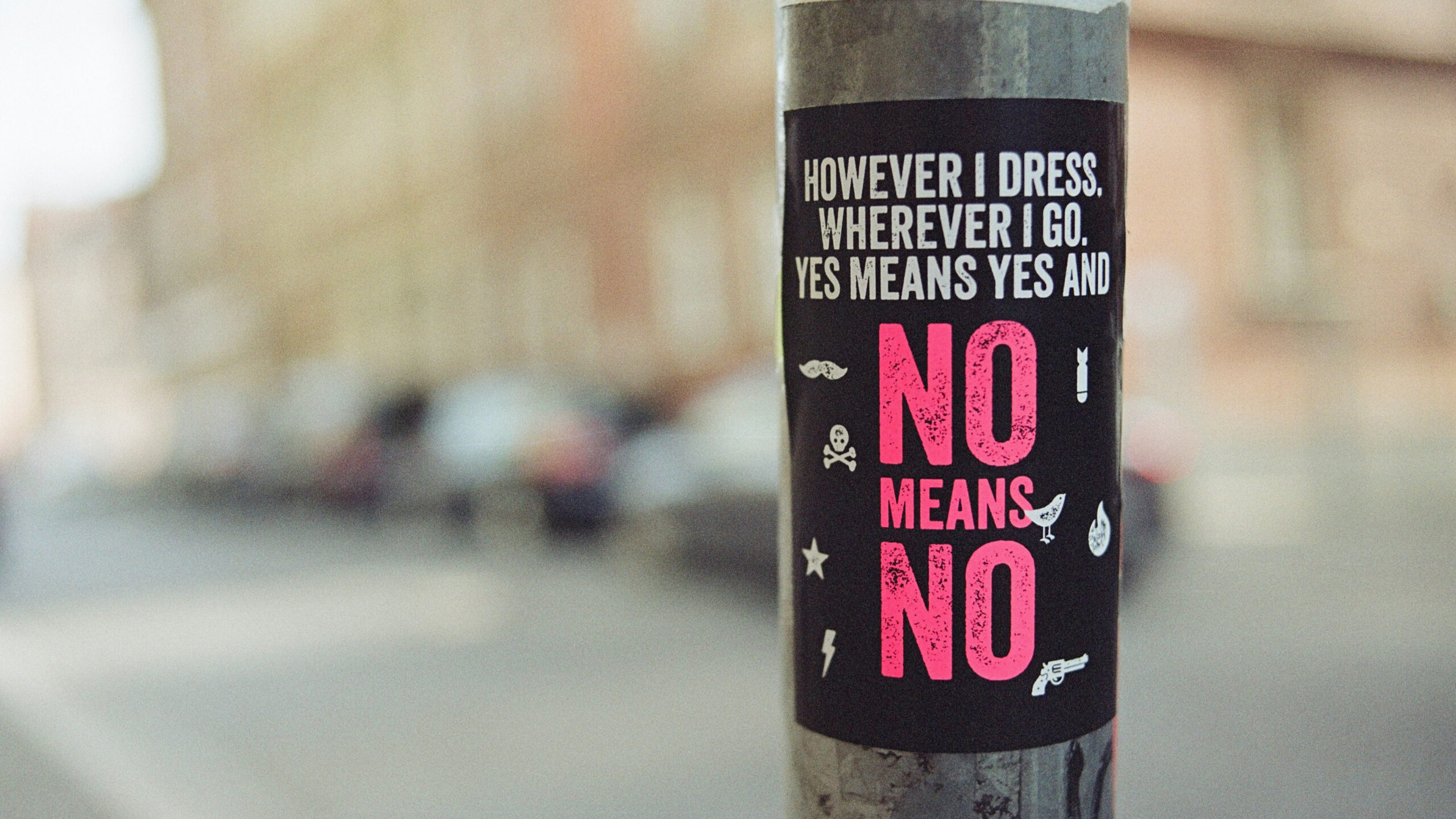
It was 11th February 2025, with the weather in Manchester forecasted as being cold and rainy. I wore a black, long-sleeved shirt and a skirt with tights, and my friend wore a similar outfit with a long coat. It shouldn’t have mattered what we were wearing; a person’s choice of clothes is not an invitation to be stared at or shouted at by a random passerby. We were apprehensive as it was our first time alone in Manchester, and one older man took this as an opportunity to invade our personal space to look us up and down. We were frozen in time and didn’t know how to respond to the situation. He shouted at us, “Well, you two look good, don’t you?” With fight or flight mode activated, we attempted to ignore him and walk on so that he wouldn’t say or do anything else. Despite it being simple and somewhat ‘nicer’ than other comments we heard further into the night, it was not a compliment. We were only seventeen. It was street harassment.
Street harassment definitions can vary, but it is generally understood as “unwanted comments, gestures, and actions in public spaces, making victims feel unsafe and uncomfortable.” Catcalling, staring, and unwanted advances are all examples. The behaviours themselves have become so overlooked that they are expected and, therefore, normalised. What makes someone so special that others think it’s okay to treat them like meat? Nobody should have to feel afraid or threatened to walk the streets by themselves. Have you ever experienced a negative interaction on the streets and thought, ‘Well, this is just what happens?’ Have you ever stopped to think that this is not what should happen at all?
It doesn’t matter who you are because it appears to happen to everyone. When The Indiependent invited participants to respond to a questionnaire about street harassment, the comments included the following:
“I was harassed for being transgender, and I was catcalled with a group of friends.”
“I was walking to school in Year 9 and a man called out to me, saying I was hot and wouldn’t leave me alone on my way to school, making weird comments about me.”
“To be honest, it was so regular for years that they all blend in. Probably scariest when younger and on my own.”
Data from across the globe demonstrates that street harassment still occurs. A recent survey conducted by The Indiependent found that:
– 91% of respondents have experienced catcalling.
– 89% of respondents have been harassed.
– 85% believe street harassment increases at night.
– 41% were wearing jeans and a t-shirt (dispelling the idea that individuals are ‘asking for it’ by their choice of clothes).
– 47% of respondents don’t feel educated enough about street harassment.
– 79% of respondents do not think the media portrays harassment accurately.
The last two statistics, in particular, seem to suggest that educational units and platforms are not effectively spreading awareness of street harassment. Sure, lots of people understand the definition of harassment itself, but those are the same people who wouldn’t know how to identify it simply because no one taught them how to. Other responses to the questionnaire include:
“I haven’t been taught how to respond or how to protect myself if the situation escalates.”
“Well, I feel as though when I do hear about it, it’s sugarcoated like ‘well what were you doing to deserve that, what were you wearing, etc.’”
Since the institutions that are supposed to teach individuals about these matters are seemingly failing to do so, movements have been set up to make a real change in the world.
A campaign called Catcalls Of Sheffield, which is a branch of Chalk Back, a non-profit organisation with the mission of taking action against harassment, was founded by Babhravi Krishnan and Flo Rushton in April 2024. They aim to stand up against street harassment and chalk experiences on pavements to make more people aware of the circumstances individuals face.
In an interview, it was asked how many submissions they have received since establishing their foundation. Rushton told me “To date, since April 2024, we’ve received 192 anonymous submissions of harassment in Sheffield.” By now, this number will have increased.
A nonprofit on a wider scale is Right To Be (formerly Hollaback!), which was founded in 2005 in New York City. From 2005-2011, Hollaback! conducted a study in Manhattan and Brooklyn, which found that 60% of reported incidents happened on the street. In 2015, they created free online bystander training to teach people how to react in certain situations, sparking an entire network of people. Included in the bystander training is the ‘5 Ds’ of Bystander Intervention: Distract, Delegate, Document, Delay, and Direct. Doing some of these strategies could potentially save someone from the risk of it getting out of control.
If you are someone who has experienced harassment when walking outside, or someone who has had to question whether they have even been harassed at all, then you are not alone. The time has come not only to take a stand against this behaviour, but to lobby even harder for changes in education, resources, and support for victims so that real change can be implemented from the ground up. Whether that be by showing educational videos in class to make students more aware of what harassment is and how to reduce it, or by offering help when you see someone in public experiencing it, every bit counts.
Together, we can make a difference.
Words by Madi Chantry
Support The Indiependent
We’re trying to raise £200 a month to help cover our operational costs. This includes our ‘Writer of the Month’ awards, where we recognise the amazing work produced by our contributor team. If you’ve enjoyed reading our site, we’d really appreciate it if you could donate to The Indiependent. Whether you can give £1 or £10, you’d be making a huge difference to our small team.