
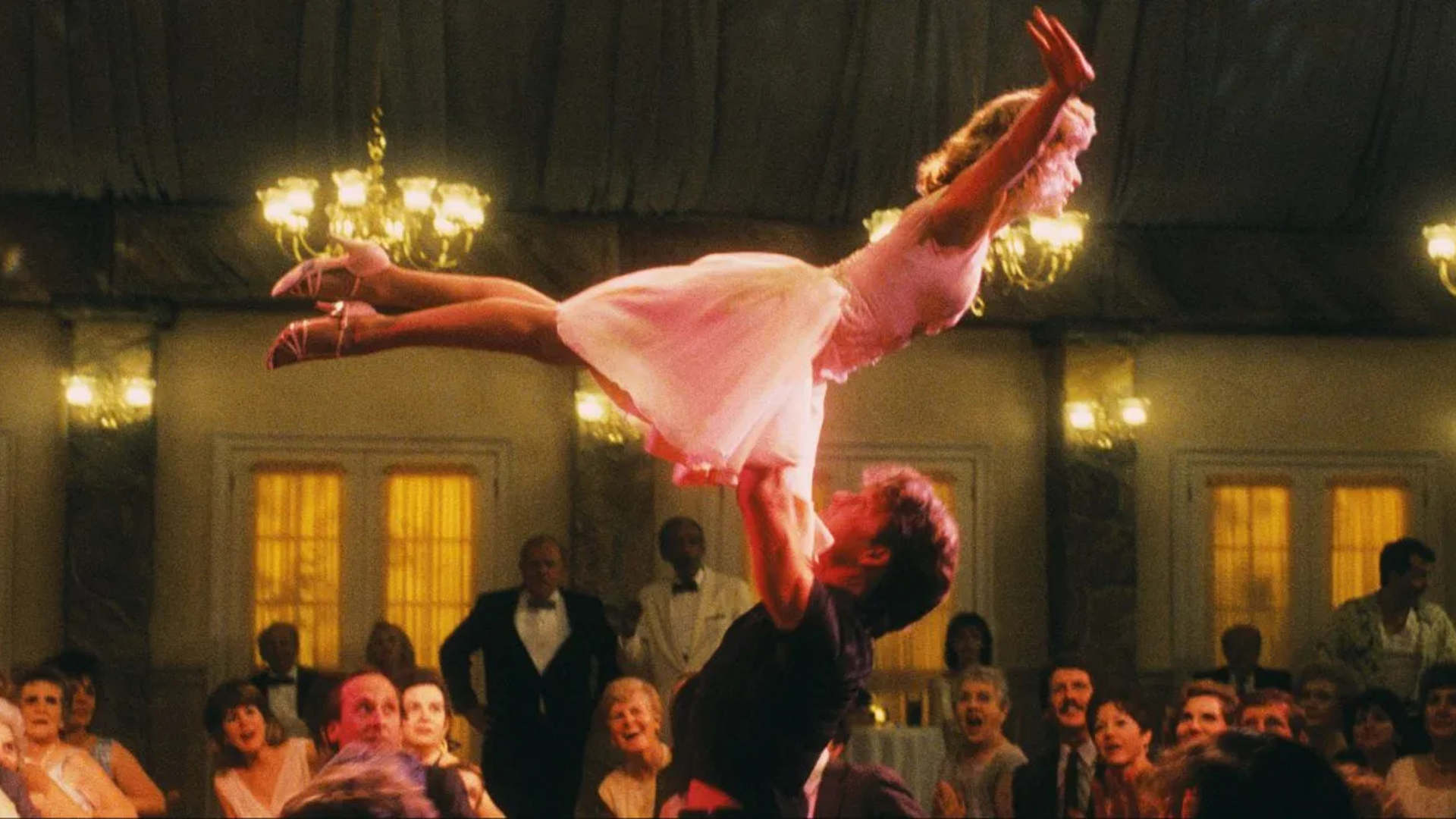
I watched Dirty Dancing (1987) this summer, and it didn’t occur to me to mind that it was my fourth rewatch this year.
My first introduction to Dirty Dancing wasn’t a 90-minute run where you decide by the rolling credits if it’s love. Instead, a single scene found me when I was seven or eight years old. I remember tiptoeing downstairs late one evening as a child, eyes adjusting to the living room glow after spending the past hour tossing and turning in bed. Dirty Dancing was playing on the TV that night, and my parents let me nestle between them on the sofa as the dialogue hummed around us. I remember watching Baby (Jennifer Grey) and Johnny (Patrick Swayze) shuffling across a lakeside log to a song I recognised from one of my CDs—’Hey! Baby’ by Bruce Channel.
I’m not sure whether it was the familiarity of the song, or the quiet comfort I felt watching the pair dance clumsily, but for a while, I was entirely fixated on that one scene entirely. I was far too young to acknowledge the film’s wider context at the time (its themes of class, racial injustice, even abortion), but the very next day I was looping ‘Hey! Baby’ on my CD player, re-creating Baby’s silly moves in my bedroom and unknowingly starting what would come to be a lifelong connection to the 1987 classic.
When you’ve rewatched something as much as I have Dirty Dancing, it becomes increasingly difficult to separate each individual viewing. But the one constant through every lift, twirl, and “nobody puts baby in a corner” is that it’s been a film that I share with my mother.
In fact, Dirty Dancing seems to have a reputation with mothers. Whether it’s your mum’s favourite, her mum’s favourite or a film you’ve watched together over countless takeaways, there’s something truly uniting about watching daddy’s girl Frances Houseman (nicknamed Baby) experience her first love with charismatic dance teacher Johnny Castle.
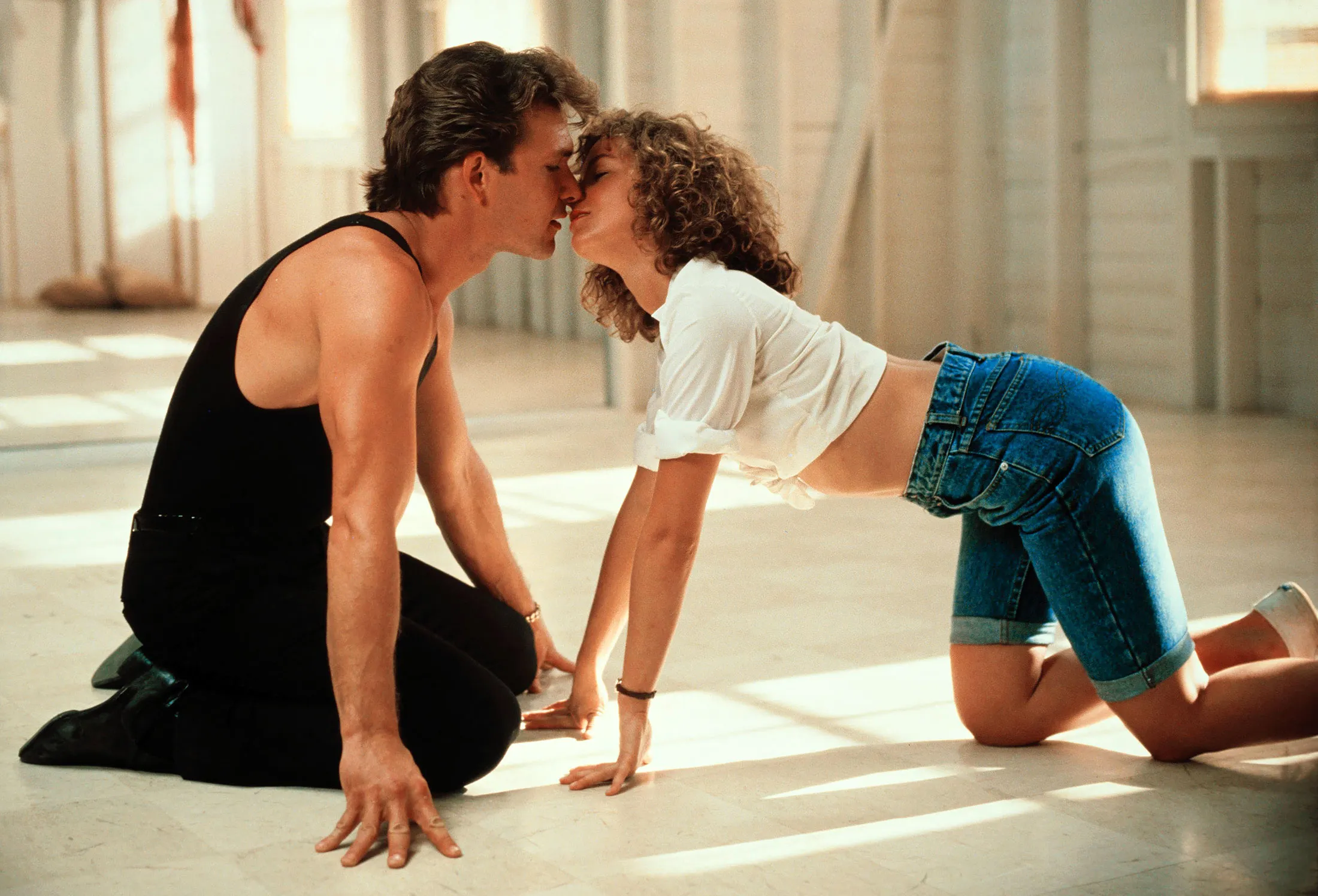
While we fail to see much on-screen connection between Baby and her mother, the themes of womanhood and female connection were very much rooted in the film from its production stage. It was conceptualised by women, for women. Dirty Dancing was written by screenwriter Eleanor Bergstein, who collaborated closely with producer Linda Gottlieb to authentically tell the story from a young woman’s perspective. Working on a meagre budget of just $4.5 million, they fought to make a film that many didn’t believe in—and it paid off. The film had a 19-week box office run, earned over $214 million worldwide, and became a cult classic.
Writer Bergstein remains insistent to this day that Baby is not based on herself, however she does acknowledge the many parallels to her own life. She, too, was nicknamed ‘Baby’ until her early twenties, spent summers vacationing in the Catskills, and loved to ‘dirty dance’ in sticky basements. Not to mention that she and Baby share a tenacious drive.
Baby is more than the passive love interest in someone else’s coming-of-age story—she’s the one asking questions, taking risks for love and standing up for what she believes in. However, we also see a vulnerable, awkward side to her that’s just as charming, a lot of which is due to Director Emile Ardolino.
To capture moments that were unscripted and genuine, Ardolino often left the cameras rolling between scenes, which the actors were unaware of at the time. One of the most iconic outcomes of this is a scene where we see a restless Baby get the giggles in rehearsal. As the pair practice an intimate dance move which involves Johnny stroking the side of Baby’s arm, we see Grey’s natural ticklish response across a number of takes, as Swayze gradually loses patience.

Not only do scenes like these capture the natural chemistry between the pair, but they give the film an unusual level of authenticity. This also explains why the film struck such a chord with women when it was released, and why it still resonates with their daughters today. Released in 1987 but set in the summer of 1963, the film bridges generations at a time—women who lived through Baby’s era, women who first fell for the film at the box office, and the daughters who continue to discover the story decades later.
In spite of its cultural significance and generational reach, for me this film will always be more than a pop culture reference. It’s a film I’ve grown up with, one I reach for on summer evenings, winter evenings or when I’m in need of a fool-proof cure to the Sunday scaries. It has scenes I’ll never tire of rewatching and a soundtrack I’ll never tire of re-playing.
I owe it all to you, Dirty Dancing.
Words by Nicole Colucci
Support The Indiependent
We’re trying to raise £200 a month to help cover our operational costs. This includes our ‘Writer of the Month’ awards, where we recognise the amazing work produced by our contributor team. If you’ve enjoyed reading our site, we’d really appreciate it if you could donate to The Indiependent. Whether you can give £1 or £10, you’d be making a huge difference to our small team