
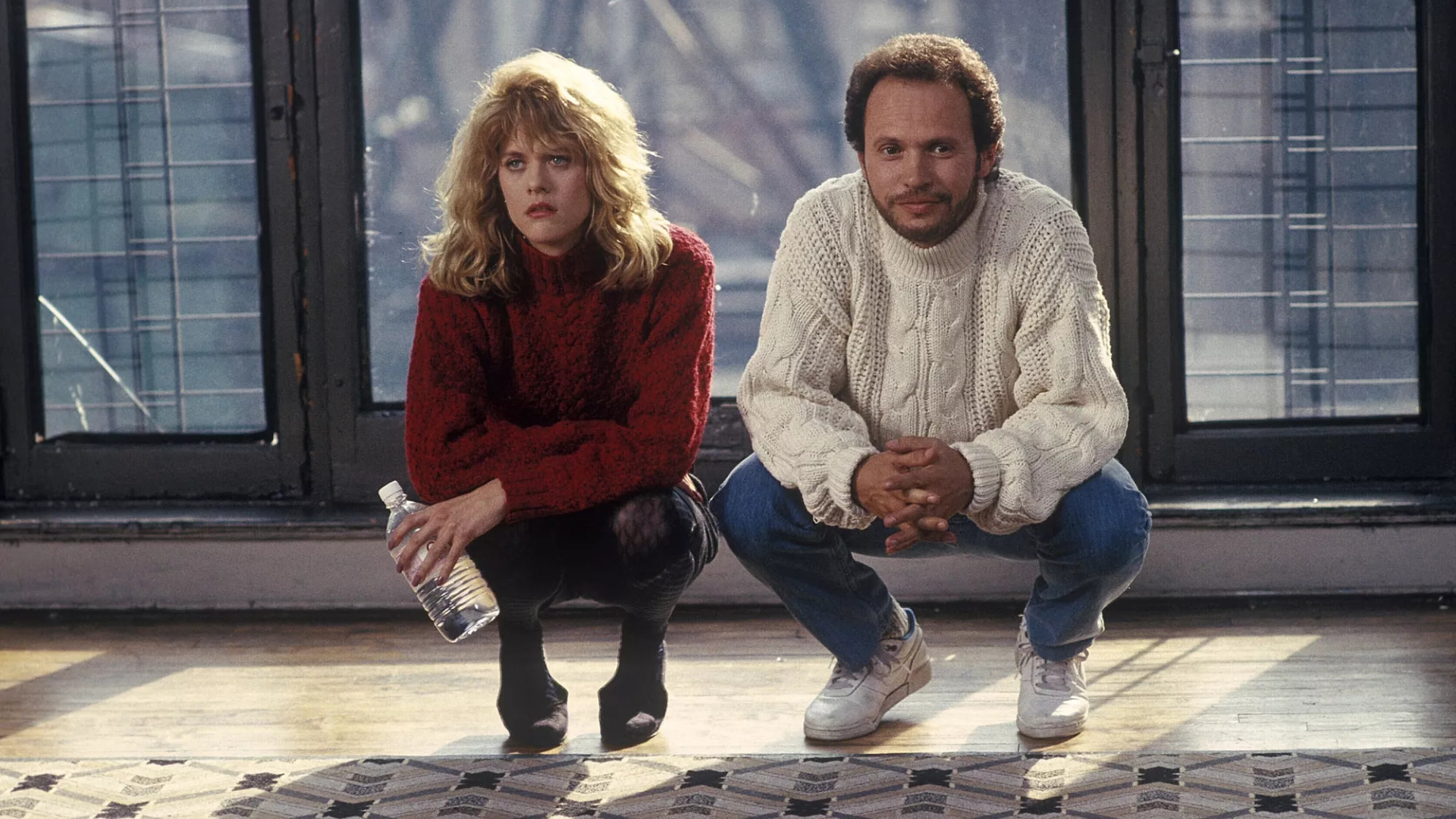
When Rob Reiner and Nora Ephron sat down for lunch one day, little did they know that they were going to make history. From the talkies to screwball comedies, 1989’s When Harry Met Sally was a culmination of American film history and growing thoughts surrounding the conflicts that exist between men and women.
36 years after its release, the film still continues to be a classic, well-loved by each generation. The film’s quippy marketing scheme gave it the tagline, ‘Can men and women be friends?’. To put it in internet-speak terms, that was rage bait to create buzz around the film. The real question the film is asking is: ‘‘Do we get a second chance at love?’
How When Harry Met Sally came to be
When Harry Met Sally, a film all about talking, funnily enough, emerged from a conversation. The story goes, Rob Reiner and Andy Scheinman sat down to lunch at the Russian Tea Rooms with Nora Ephron in New York. Reiner presented a film idea. Ephron rejected it. From there, they began discussing their lives being singles in the 80s. Rob Reiner had been single for 10 years after his divorce. According to the Special Featurette interview between Ephron and Reiner, this led to an idea of a story about two close friends who don’t have sex so as not to ruin their friendship, but then do. This concept caught Ephron’s attention.
It’s interesting to note that the film evolved from a place of dialogue between two people who were transparent about how dating is for men and women, respectively. Reiner and producer Andrew Scheinman were honest about their dating history, whilst Ephron was astute in her observations about how women navigate their sexual and dating lives. When Ephron interviewed the two men on their single lives, she was “horrified. Not surprised, but it was horrifying”.
Ephron went to work on a first draft, whilst Reiner went on to direct other projects. When it came time to shoot the movie, the leading roles had been cast, but the script wasn’t finished yet and was constantly changing. Like any good story, it was redrafted over and over again and refined for perfection.
What makes the film so great
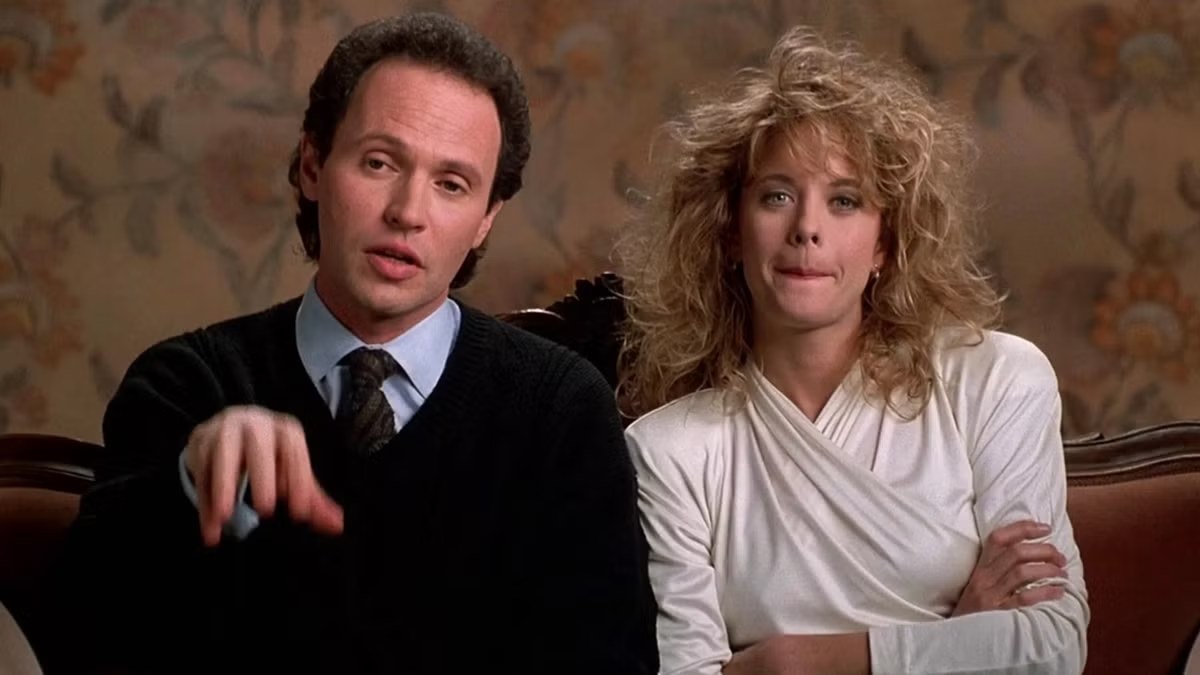
When Harry Met Sally is the result of collaboration between incredibly talented people. It really is just that simple. Every aspect of the film is great, from the writing to the directing, performances, cinematography, locations, set and costume design. Even the soundtrack evokes a warm and cosy feeling, featuring jazz music stylings like ‘It Had To Be You’ by Harry Connick Jr.
The script is a masterpiece of dialogue, witty, sharp and clever in all the right places. Ephron builds a world full of fun and entertaining characters. from the titular protagonists, Sally (Meg Ryan) and Harry (Billie Crystal), to the supporting cast, Marie (Carrie Fisher) and Jess (Bruno Kirby).
The stakes aren’t really high (they never are in romantic comedies), but the story is compelling. It begins with Harry and Sally’s first meeting, sharing a car on their way to New York after university. Harry is brutish, cynical and dark-humoured, whilst Sally is optimistic, perky and undeniably cheerful. Ephron humanises both characters by imbuing personal characteristics into them. Sally’s meticulous orders mirror Ephron’s, who would edit every dish regardless of where she dined. From the start, Harry launches into empty platitudes about how men and women can never truly be friends because of sex.
They run into one another again, five years later, at an airport. Harry is still annoying, and Sally is still exasperated by his take on men-women relations. They meet again about 12 years after their first meeting, both comfortably in their careers (Sally as a journalist, Harry a political consultant), both coming out of serious relationships. Harry is getting divorced, whilst Sally and her partner have broken up. They become close friends as they navigate their new adult lives.
Ryan and Crystal are lightning in a bottle. Their chemistry is phenomenal in a way that feels true to everyday life, but elevated in a way that only truly excellent romcoms can achieve. Both performances are steeped in comedic genius with a flair of realism that is tender and endearing. When Sally tells Harry about why her relationship ended, the audience cannot help but sympathise with her.
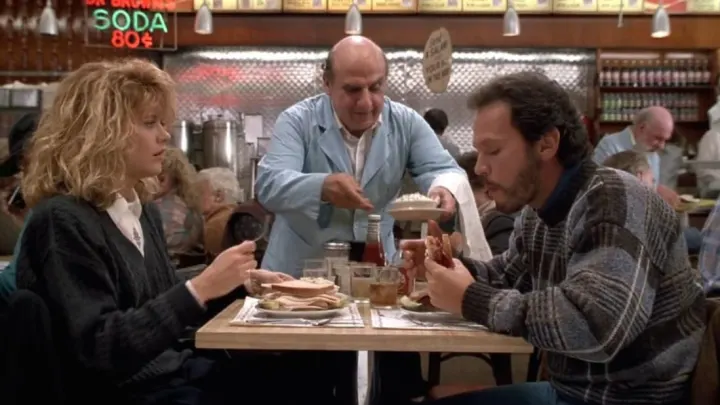
It was Ryan’s idea that Sally should publicly perform a fake orgasm, a scene that became iconic in its own right. It’s absurd and cringe-inducing, but it confronts the very real discourse about how performative sex can be for women and how men want to have their ego stroked in a sexual environment. Crystal’s input made the scene even better—he suggested that someone say the infamous line “I’ll have what she’s having”, delivered by none other than Reiner’s mother, Estelle.
The film also reinforced the aspirational fantasy that is a key component of rom-coms —the fantasy of a perfect career, home, lifestyle, and city. It’s a real love letter to New York City, each season appearing stunning and rich. Moments of Harry and Sally walking down the street as the autumn leaves fall make New York City seem like a magical place to live.
The Legacy of When Harry Met Sally
In Robert Egbert’s review of the film, he calls it “conventional”. He’s not wrong: Girl meets boy. They fall in love and get married. Yes, it’s predictable, heteronormative, and New York City is bizarrely lacking in diversity for the 1980s. But the film tackles issues of sex in relationships head-on and doesn’t shy away from the ugly truths, whilst remaining humorous. Though romantic comedies don’t cover the most intense subject matters, When Harry Met Sally takes the idea of falling in love seriously.
Romantic comedies have been attempting to recapture the magic of When Harry Met Sally for the past 36 years. However, not many can hold a candle to its magic. As upcoming filmmakers take on the romantic comedy genre, there is a desire that my generation will get its own great romantic comedy classic beloved for decades to come.
Words by Ayomide Asani
Support the Indiependent
We’re trying to raise £200 a month to help cover our operational costs. This includes our ‘Writer of the Month’ awards, where we recognise the amazing work produced by our contributor team. If you’ve enjoyed reading our site, we’d really appreciate it if you could donate to The Indiependent. Whether you can give £1 or £10, you’d be making a huge difference to our small team.