
“Jews will be Jews while the world lasts, and they will become, through suffering, better Jews with more Jewish hearts.” – Helena Frank
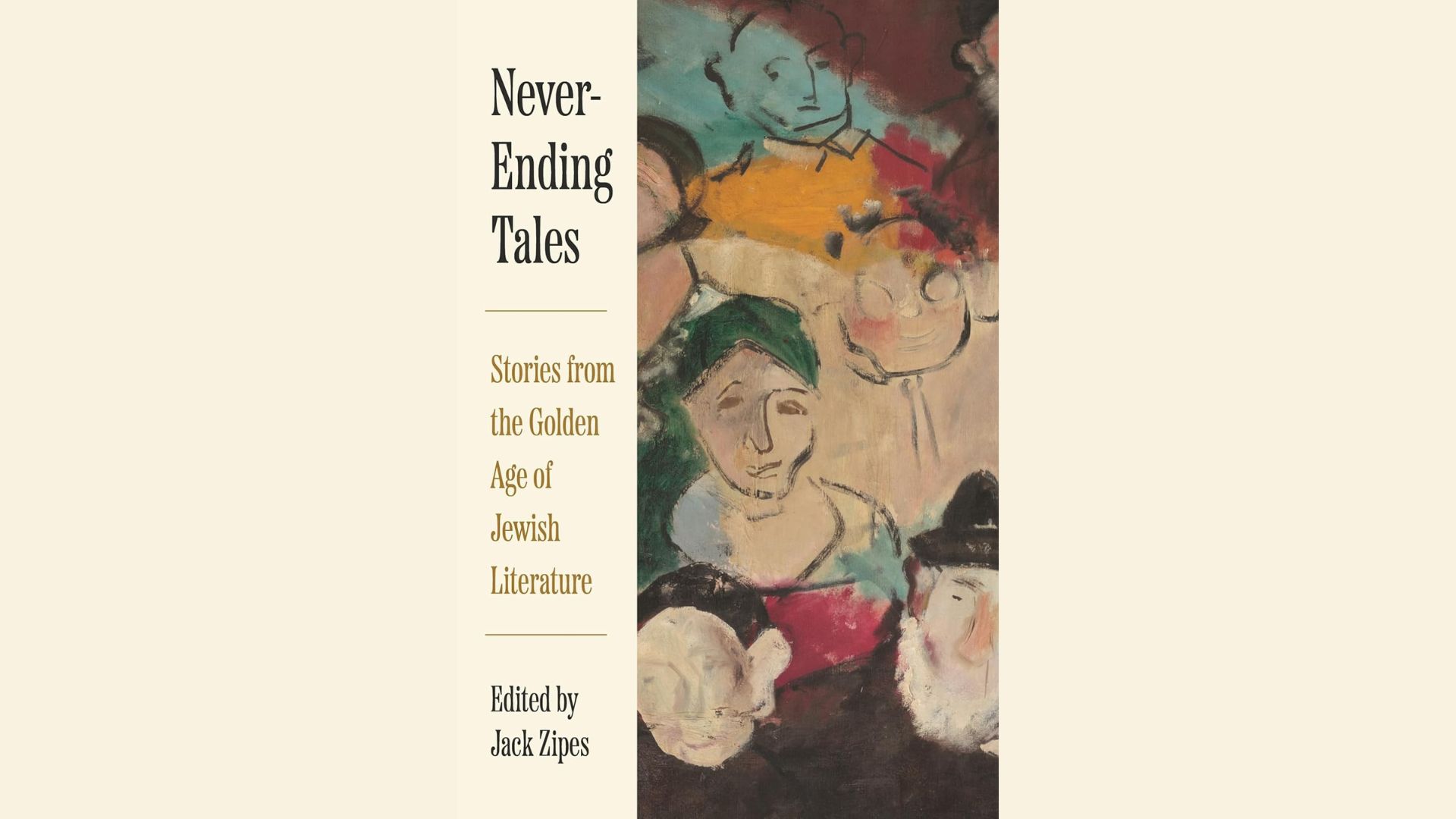
This quote which opens Jack Zipes’ ambitious new anthology Never-Ending Tales: Stories from the Golden Age of Jewish Literature, published by Princeton University Press, effectively captures the essence of the book: the wondrous perseverance of the Jewish community, enabled by the continued hope of their people in the face of the antisemitism throughout the 19th and early 20th centuries.
The anthology wisely asks its readers to understand how literature stood as one of the purest sources of hope for Jewish communities, and how it helped to connect people to their cultural identity in times that it was cruelly challenged by the outside world.
The introduction provided by Zipes provides vital historical context for the contents of the anthology, speaking on the relevance of Jewish Question. The Jewish Question refers to the continual debates that gained prominence in 19th century Europe that surrounded the treatment of Jews, eventually leading to the founding of the state of Israel, and its presence enshrouds this collection.
Zipes, no stranger to the subject of antisemitism in his work, proposes in this anthology that fantasy stories became, and remain, a keen tool against the violent oppression of Jewish people, especially in the context of the Jewish Question. He states that these tales, particularly those originally written in Yiddish, became “flowers of possibility for many Jews”. Reading these stories, it is easy to see why.
The collection pointedly first features the short stories ‘The Operated Jew’ by Oskar Panizza and ‘The Operated Goy’ by Salomo Friedlaender, with ‘The Operated Goy’ serving as a direct satirical response to the first.
‘The Operated Jew’ follows the Jewish medical student Stern as he puts himself through a number of procedures to assimilate into German society, only to revert to his ‘monstrous’ self. ‘The Operated Goy’, however, follows a German man who converts to Judaism in order to marry a beautiful Jewish woman. Though Zipes covered both texts in more detail in his publication The Operated Jew and The Operated Goy: Two Tales of Antisemitism, they function greatly as a foundation for the overarching themes of this anthology by illustrating the time’s anti-Jewish narratives.
The collection also boasts a number of other noteworthy stories, ranging from grounded to mythical. Stories such as Bastomski’s ‘Rabbi Leyb Saves the Jews of Prague from Evil Decrees’ and Peretz’s ‘The Image’ feature traditional magical figures that vehemently protect their community, whereas stories such as Franzos’ ‘Two Saviours’ and Alecheim’s ‘The Wedding that Came Without its Band’ offer a more realistic take on miracles, displaying their heroes as everyday citizens of great bravery – showcasing the many, many, faces of Jewish power.
The anthology features a short novel, namely Hugo Bettauer’s The City Without Jews. The novel, a greatly enjoyable read, follows an antisemitic Vienna after it decrees to throw out its Jewish population, and we observe how it affects city life in a myriad of unexpected ways. Optimistic, I believe that it is one of the anthology’s strongest tales, and fittingly ends its fiction selection.
The anthology closes with two essays, Herzl’s ‘The Jewish Question’ and Schwarz’s ‘The Essence of Survival’, serving much of the same purpose as the introduction in providing historical understanding. Nonetheless, they were insightful, and hold a deserved place in this collection.
Zipe’s anthology boldly interacts with a range of mediums, featuring a short novel and two essays alongside 28 tales of varying lengths. Rather than form, their contents are joined together by their doctrines of hope, with them all reacting to the Jewish Question in one way or the other. In them, words become both weapons and sources of solace.
Any reader who endeavours to pick up a copy will find themselves wiser to the world, and enchanted by the endlessly witty tales of the Jewish Golden Age.
Words by Elise Gavin
Want more Books content from The Indiependent? Click here
Support The Indiependent
We’re trying to raise £200 a month to help cover our operational costs. This includes our ‘Writer of the Month’ awards, where we recognise the amazing work produced by our contributor team. If you’ve enjoyed reading our site, we’d really appreciate it if you could donate to The Indiependent. Whether you can give £1 or £10, you’d be making a huge difference to our small team.