
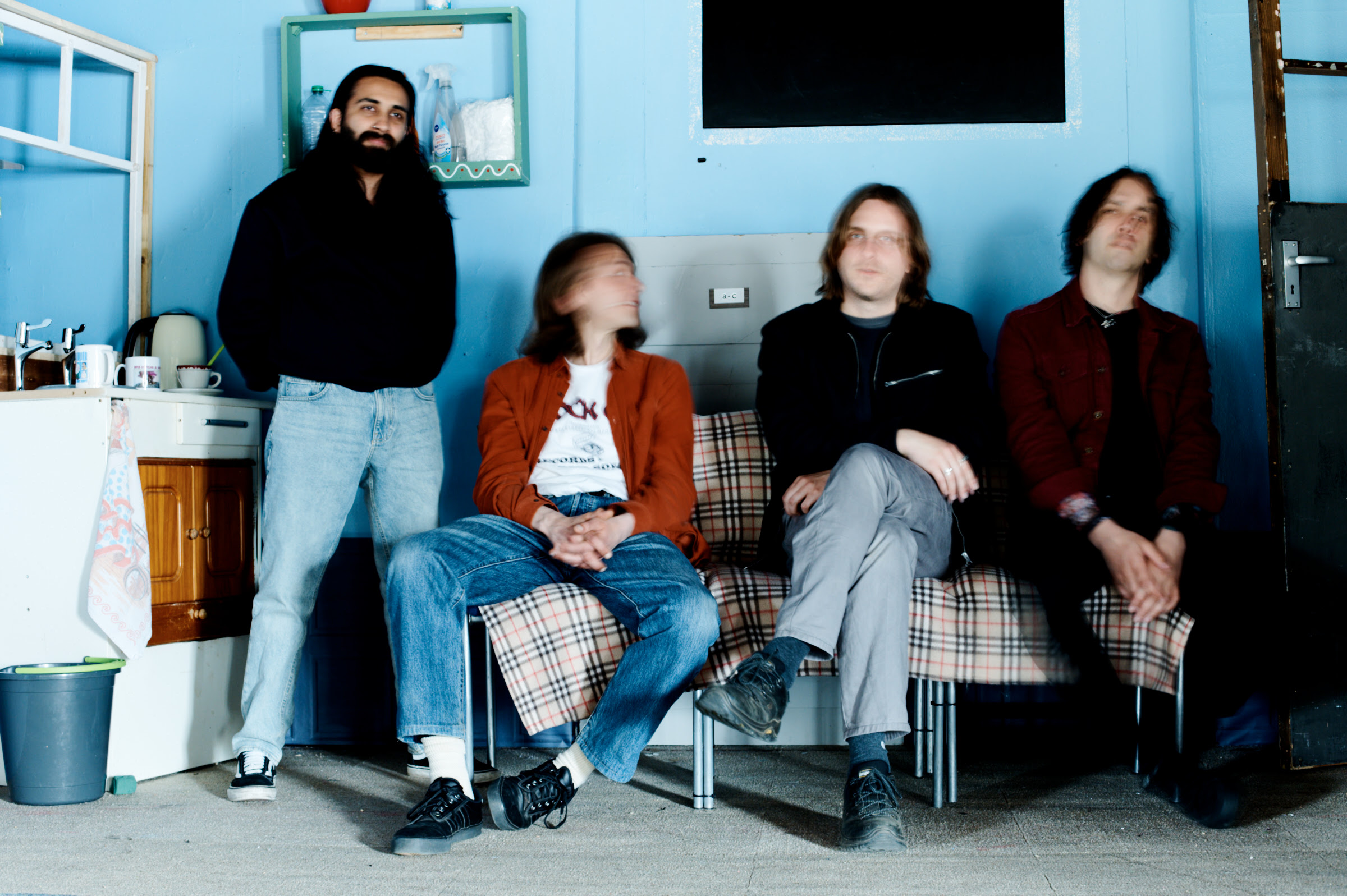
The Wytches have always occupied a singular, smoke-filled corner of the British psych-punk landscape. Since their 2014 debut Annabel Dream Reader, the Brighton-formed band has consistently delivered in their unsettling energy and gothic gloom. Their fifth studio album Talking Machine released today via Alcopop! Records, is a decisive and welcome return to form. It is a record steeped in analogue grit, deliberately embracing imperfection to make a loud, urgent statement about the age of digital artifice. This new project successfully fuses the band’s feral, surf-tinged rock energy with a newfound lyrical sophistication, creating a work that is both menacingly retro and profoundly relevant.
This new project is defined mainly by its strong production. Eschewing the isolated precision of later records, the band—now a four-piece consisting of Kristian Bell, Daniel Rumsey, Mark Breed, and Bhav Thaker—recorded the entire album live to analogue tape. This decision pays off immediately, drenching the entire experience in a dense, tangible atmosphere. The sound is thick and unpolished; drums bleed into guitar amps, and Bell’s vocals often run through a Leslie cabinet to achieve a disconcertingly mechanical, choral effect, sitting deep in the mix. This sonic choice immediately grounds the album in the raw, untamed spirit of ’60s garage rock, a clear influence that Bell has openly cited.
Tracks like ‘Black Ice’ are perfect examples, exploding with a ferocious, unrestrained energy that demands volume. The production isn’t merely nostalgic; it serves a thematic purpose, lending authenticity and human warmth to a record that constantly grapples with the anxiety of the machine age. The guitar work throughout is exceptional, functioning as the primary narrator, weaving sulky, looming solos and sharp, jagged riffs through the rhythmic spine provided by bassist Rumsey and drummer Thaker. The overall effect is less a clean recording and more a live transcription of four musicians locked in a dimly lit, sticky-floored room, and it is electrifyingly good.
The thematic core of the album is brilliantly established by its title track, which Bell derived from Thomas Edison’s historical nickname for the gramophone. This reference point allows The Wytches to draw a clever parallel between 20th-century fears about pre-recorded music replacing live performance (as seen in Edison’s “Tone Tests“) and today’s widespread panic surrounding artificial intelligence and the replacement of human creativity. The record explores these anxieties not through didactic sermons, but through a persistent, knowing gloom and existential dread woven into the lyrics.
Songs like ‘Talking Machine’ use this lyrical framework to critique manufactured realities. However, on the other hand, the slow-burning centrepiece, ‘Factory’ conjures images of mechanical repetition and human alienation. It’s here that the band finds a compelling balance: their sound is a defiant, organic antidote to the digital sterility they are discussing. The intentional rawness of the recording becomes a statement on the inherent value of imperfect, human-made art in a world trending towards algorithmic perfection.
The album’s true strength, however, lies in its dynamic range, a refinement of the soft/heavy extremes the band has always employed. While tracks like ‘Black Ice’ and the charging ‘Coffin Nails’ deliver the punishing, riff-driven psychosis expected of The Wytches, the band expertly counters this with moments of devastating intimacy. ‘Factory’ for instance, begins as a sludgy, menacing build, showcasing the band’s ability to create tension that feels less like a sudden blast and more like a slow, crushing wave.
The essential structural deviation arrives with ‘Is The World Too Old?’, which abruptly shifts from the prevailing distortion into a moment of rare tenderness. Here, acoustic tones and reflective songwriting take centre stage, demonstrating a commitment to Bell’s confessed appreciation for classic songwriters like Bob Dylan and Elliott Smith. This quiet introspection doesn’t relieve the album’s underlying tension but rather intensifies it, acting as a moment of vulnerable reflection before the final stretch.
Track five, ‘Romance’ is a heavy, emotionally charged composition, building a slow-motion storm of distortion and Bell’s unsettling, echoed vocals, yet still underpinned by an unexpected layer of haunting string arrangements. It’s intense, a moment of loud, ringing despair. This intensity is then perfectly counterbalanced by the album’s final track, ‘Romance 2’ which acts as its mirror image. Stripped down almost entirely to a soft, acoustic framework with delicate, mournful instrumentation, it offers a fragility to the preceding chaos.
Where the first part was a sonic explosion of human anxiety against the machine, the second is a quiet resignation, or perhaps a gentle fade-out of the human voice, suggesting the quiet sorrow of loss or acceptance. This contrast doesn’t offer catharsis but leaves the listener in a lingering daze, solidifying the record’s position as a dark and dreamy mystery that provokes thought long after the final, soft chord fades into the analogue tape hiss.
In summary, Talking Machine is The Wytches’ most compelling work in years. By physically returning to the raw, analogue methods of their beginnings, they have created a record that feels vibrantly alive and immediate. It is a smoky, swaggering, and atmospheric collection that doesn’t just re-assert their identity as masters of jet-black soundscapes, but also proves that the most powerful response to machine-made anxieties is art made explicitly, defiantly, by human hands. It’s an imperfect, raw jewel of an album that should satisfy long-time fans and intrigue new listeners looking for rock and roll with a compelling conceptual edge.
Words by C. Sharmishtha
Support The Indiependent
We’re trying to raise £200 a month to help cover our operational costs. This includes our ‘Writer of the Month’ awards, where we recognise the amazing work produced by our contributor team. If you’ve enjoyed reading our site, we’d really appreciate it if you could donate to The Indiependent. Whether you can give £1 or £10, you’d be making a huge difference to our small team.