
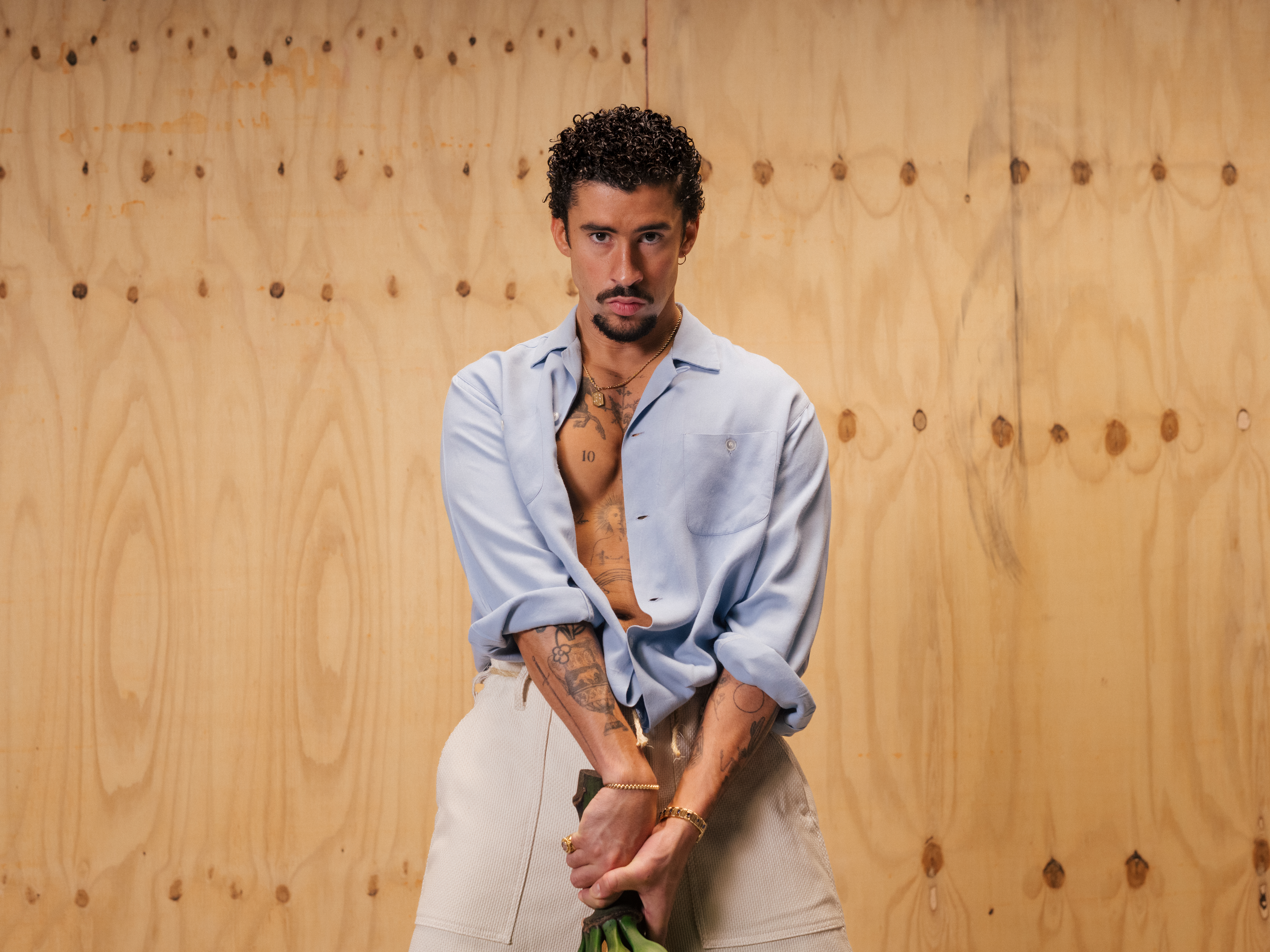
In the early days of 2025, global superstar Bad Bunny, otherwise known as “The King of Latin Trap” surprisingly dropped his sixth solo, record-breaking, mega-hit album DeBÍ TiRAR MáS FOToS (I should have taken more photos). The record was an immediate success among fans and critics all over the world and has grown to be one of his most-loved bodies of work in the months since its release. Shortly thereafter, he announced a two-month residency at the José Miguel Agrelot Coliseum, the biggest concert venue on his native island of Puerto Rico.
The first show kicked off in San Juan on the 11th of July, where he would hold a huge 30-date residency over the summer, which concluded, with an additional surprise date on September 20th. One surprising, yet remarkably on point element for anyone familiar with his artistry, was that Benito Antonio Martínez Ocasio (the artist’s real name) reserved the first nine dates of the residency to local island residents only. The aim of this was to give an advantage to Puerto Ricans before opening up the rest of the shows to international audiences, which were bound to sell out at lightning speed. Benito appropriately named the string of concerts “No Me Quiero Ir de Aquí” (I don’t want to leave here), a lyric from his 2022 political anthem ‘El Apagón’ (The Blackout), a meaningful name for a highly political statement and a homecoming for the most popular Spanish-singing artist in history. Tickets sold out in a matter of hours.
Upon its release, DTMF was celebrated as a cross-generational album, full of anthems and enough joy and nostalgia to unite Puerto Ricans at home and the five plus million part of the US diaspora. Beyond that community, it has reached the hearts and flooded the homes and clubs of cities worldwide, spending seven weeks in the UK Top 10. The album’s simple yet now iconic cover art, composed of two empty plastic chairs set against a background of banana trees, instantly resonated with Puerto Ricans and Latin communities worldwide – particularly with those who have had to leave home and settle elsewhere. TikTok was quickly flooded with videos of mothers and uncles crying to the album’s title track: “Debí tirar más fotos de cuando te tuve, Debí darte más beso’ y abrazo’ las vece’ que pude” (I should have taken more photos of when you were mine, I should have given you more kisses and hugs whenever I could). As often with Bad Bunny, the music is an amplifier for something much bigger than the artist himself.
His small Caribbean island of Puerto Rico has been an incorporated US-territory since the Spanish ceded it to them in 1898. Its people have a long history of colonial rule, of catering to mostly US tourists and to an unbalanced power dynamic with the United States. Puerto Ricans started relocating to East Coast cities en masse in the 50s and 60s, seeking more attractive work and lifestyle conditions (most of you are probably familiar with West Side Story). Half a century later, after making significant austerity cuts and laying off public workers, its government officially filed for bankruptcy in May 2017 and the island was then hit by the catastrophic hurricane Maria in September of the same year, killing close to 3,000 people and devastating the island’s power grid. One month later, 89% of the island’s population was still without electricity. It’s around this time that a young boy from the north of the island, who was working in a grocery shop at the time, emerged as a young, promising fresh voice on the island’s iconic reggaeton and trap scene. His 2017 hit ‘Estamos Bien’ (We’re Okay) turned into a perfectly-timed, heartwarming anthem, full of hope amidst all the suffering. Years after, ‘El Apagón’ and its accompanying documentary, acted as another angry hymn against the ongoing blackouts the island continues to experience to this day.
The history and politics of the island are wrapped up in the music itself and the tapestry-like, genre-bending nature of Bad Bunny’s discography all contribute to his importance as one of our time’s greatest pop artists.
The history and politics of the island are wrapped up in the music itself and the tapestry-like, genre-bending nature of Bad Bunny’s discography all contribute to his importance as one of our time’s greatest pop artists. Puerto Rico popularised reggaeton with timeless hits like Daddy Yankee’s “Gasolina” which exploded onto the world stage in the early 2000s, around the time Benito was coming of age and which shaped most of his early music. 2022’s Un Verano Sin Ti (still the most-streamed album in the history of Spotify) and DTMF, the two recent works which propelled him to superstardom, partly owe their success to how they masterfully weave in more traditional elements of folk genres such as “bomba”, drum music which was first used by African slaves on the island’s coasts, “plena” traditionally used to convey political messages and the more famous “salsa”. This homage to the cultural richness of his beloved island is perfectly portrayed through the residency’s set design, which featured a “casita” as a centre stage, surrounded by lush vegetation that would make every Puerto Rican think “wow, that reminds me of my grandma’s house”.
What a surprise then, when the infamous Monobloc white chairs from the album’s cover started popping up in front of stadiums all over the world in May, announcing an upcoming world tour “De Puerto Rico Pal Mundo” (From Puerto Rico To The World), which would make its way from the Dominican Republic to cities like Marseille, Tokyo and London. To the astonishment of all, Benito’s team did not announce one single date in the United States, despite it being his biggest market and the huge number of fans living there desperately awaiting to see him perform these songs live.
Against the turbulent backdrop of Trump’s presidency and ICE’s repressive crackdown against (mostly Latino) immigrants, Bad Bunny said in an interview with I-D d that “there was the issue that fucking ICE could be outside and it’s something we were very concerned about”. He also stated that “people from the US could come here to see the show”. Instead of facing backlash and despite some disappointment, fans praised his decision to put the safety of his community first.
On Sunday, the NFL announced that Bad Bunny would be headlining the 2026 SuperBowl Halftime Show, which he captioned on social media “I’ve been thinking about it these days, and after discussing it with my team, I think I’ll do just one date in the United States”, adding once again, “this is for my people, my culture and our history”.
The residency wrapped up at the end of September, with a bonus show “Una Más” (One More) on September 20th, which was livestreamed through Amazon Music and their most-watched single-artist performance to date. It’s estimated that the event boosted Puerto Rico’s GDP by 400 million $, with concert-goers eating out at local restaurants and touring the island, a much-needed boost after the devastating effects of recent hurricanes and Covid. Some will argue that an influx of tourists will strain an already struggling tourist-destination, which is exactly what Bad Bunny denounced in his 2025 song ‘Lo Que Le Pasó a Hawaii’ (What Happened To Hawaii).
However, after watching the incessant stream of videos and articles coming out from the archipelago over the summer, including countless tears and joy from emotional fans while an equally moved Bad Bunny addressed the crowd, it seems the healing power and universal resonance of his music are far greater. He is a powerful and immensely proud voice of resilience for his people, for those who decide to stay and those who had to leave. This residency was a celebration of the rich history and incredible culture of his island, as well as the highs and lows of living there, which are reverberated through his music. Ultimately, it was a love letter to Puerto Rico and a reminder that music still holds the power of bringing people together, even when politicians fail.
Words by Laetitia Collier
Support The Indiependent
We’re trying to raise £200 a month to help cover our operational costs. This includes our ‘Writer of the Month’ awards, where we recognise the amazing work produced by our contributor team. If you’ve enjoyed reading our site, we’d really appreciate it if you could donate to The Indiependent. Whether you can give £1 or £10, you’d be making a huge difference to our small team.