
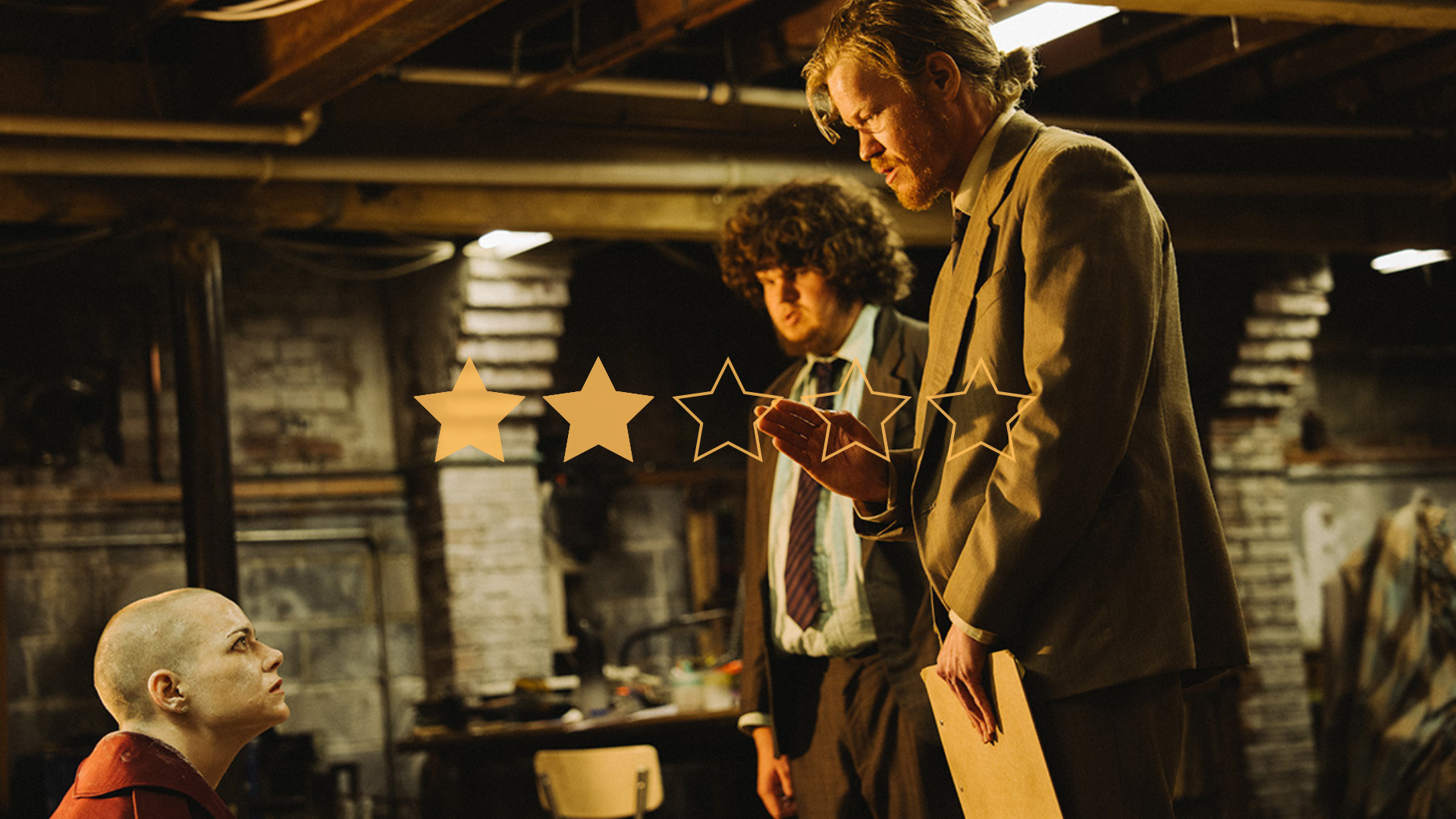
In Bugonia, Yorgos Lanthimos turns conspiracy and social critique into cold-hearted spectacle, drained of empathy or insight.
★★☆☆☆
Since their 2018 collaboration The Favourite, Emma Stone and Yorgos Lanthimos have become one of the most defining director and actor duos of Hollywood cinema, dominating both the festival circuit and awards season. Their partnership has yielded a Golden Lion for Lanthimos and a second Oscar for Stone. It is hardly an overstatement to call their latest collaboration, Bugonia, one of the year’s most anticipated films. The cast also includes Jesse Plemons, who won Best Actor at Cannes for Kinds of Kindness (2024), his first collaboration with the pair, and newcomer Aidan Delbis.
Adapted from Jang Joon-hwan’s 2003 South Korean cult film Save the Green Planet!, Bugonia follows Teddy (Plemons), a conspiracy-obsessed beekeeper, and his cousin Don (Delbis), who kidnap Michelle Fuller (Stone), the powerful CEO of a global corporation. Convinced she is an alien plotting humanity’s destruction, Teddy locks her in his basement, determined to save the planet through increasingly delusional acts of torture. His theories are built from conspiracy podcasts, internet rabbit holes, and his own pseudo-scientific experiments to purge himself of psychic compulsions and shut the aliens out of his “brain box.”
Announced in early 2024, just weeks before Stone’s second Oscar win for Poor Things, Bugonia arrived under enormous hype, heightened when Stone appeared in a short wig at the New York Film Festival soon after shooting wrapped. Beneath its grotesque and comic surface, the story evokes the case of Paul Bennewitz, an American engineer whose obsession with UFO conspiracies in the 1980s was fuelled by intercepted signals near Kirtland Air Force Base and further intensified by government disinformation agents, eventually leading to his mental breakdown and institutionalisation. In Lanthimos’s typically surreal and clinical style, the film turns this premise into a reflection on belief, delusion, and complicity in the so-called post-truth era. It tries to show how far-right rhetoric, anti-vaccine conspiracies, and digital misinformation have reshaped public trust.
At the same time, Bugonia directs its satire at the commodification of progressivism. Through Michelle, Lanthimos skewers the corporate adoption of environmentalism and diversity rhetoric, the way these ideas become emptied, rebranded, and sold back as moral virtue. A running joke about ethical work hours exposes the hollowness of capitalist self-regulation. The film also gestures toward class conflict; Teddy’s mother lies on life support, her condition implicitly linked to the systemic neglect that radicalises him. His paranoia, the film suggests, emerges not from madness alone but from a desperate need for agency within a broken structure.
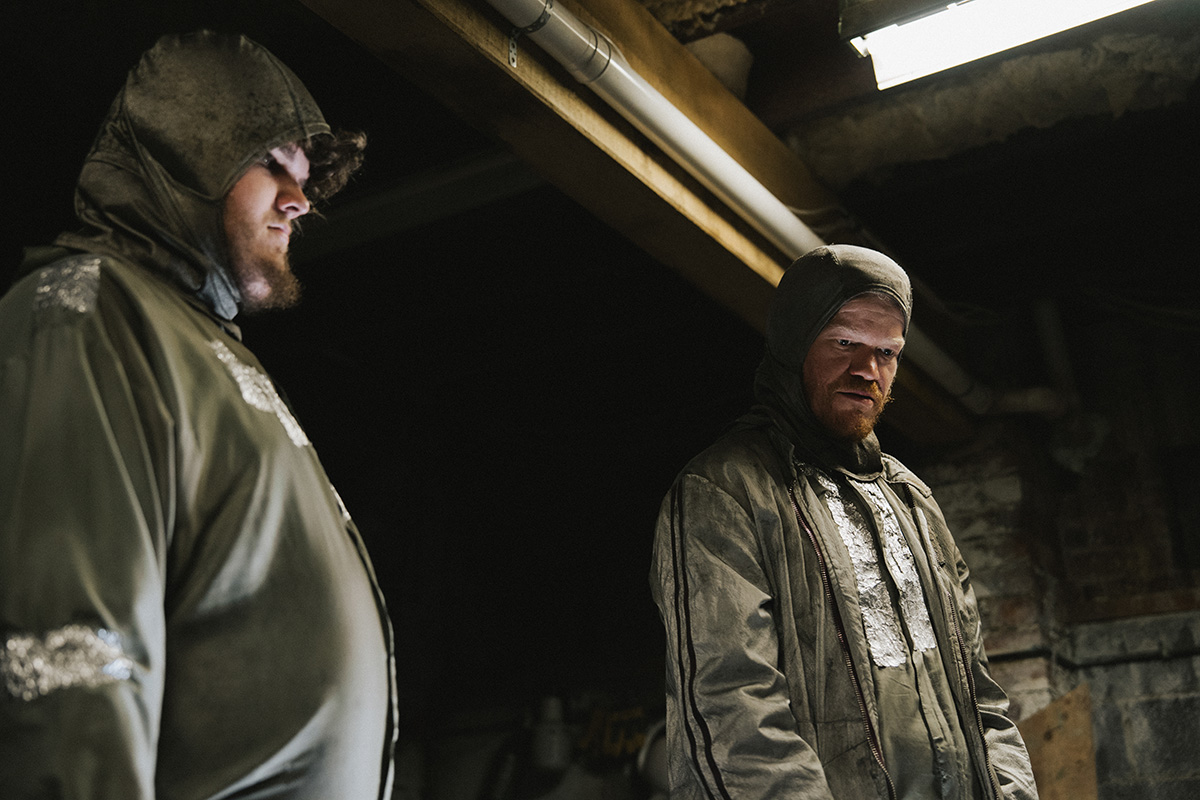
Yet despite this seemingly rich foundation, Bugonia often feels like an intellectual exercise more interested in displaying its ideas than feeling them. Beneath its surreal imagery and sci-fi absurdity, the film’s social critique never cuts deeply enough. The sharpness of Korean social satire, particularly its class awareness, is lost here, leaving the depiction of Michelle’s company without real social or economic context. Each satirical moment feels like low-hanging fruit, raising the question of whether these gestures exist for the laughs or for the characters themselves. For much of its runtime, the film remains absorbed in the spectacle of Teddy’s brutality and unraveling mind, turning an allegory of systemic failure into a study of individual pathology. It shows that society breaks a man, but rarely asks why or how.
All three leads are exceptional. Stone weaponises her charm into unsettling ambiguity, and Plemons delivers one of his most frighteningly contained performances. Yet the most affecting presence is Delbis as Don, the reluctant accomplice whose flickering empathy humanises the chaos. He gestures toward the film’s most interesting question: why do ordinary people, those who might not be true believers, turn to conspiracy in the first place? Unfortunately, his character is left underexplored, overshadowed by the spectacle of Teddy’s mania.
The film’s final act culminates in a dramatic revelation, one best left unspoiled, that attempts to land a last-minute satirical punch. Instead, it slips into cynicism. What begins as a critique of social class and capitalism ends as a performance of nihilism, a gesture that mistakes cruelty for insight. The finale’s shock feels less like revelation than resignation, its humour curdling into disdain. If Bugonia recalls Neon Genesis Evangelion in its finale, it lacks the same emotional depth or compassion.
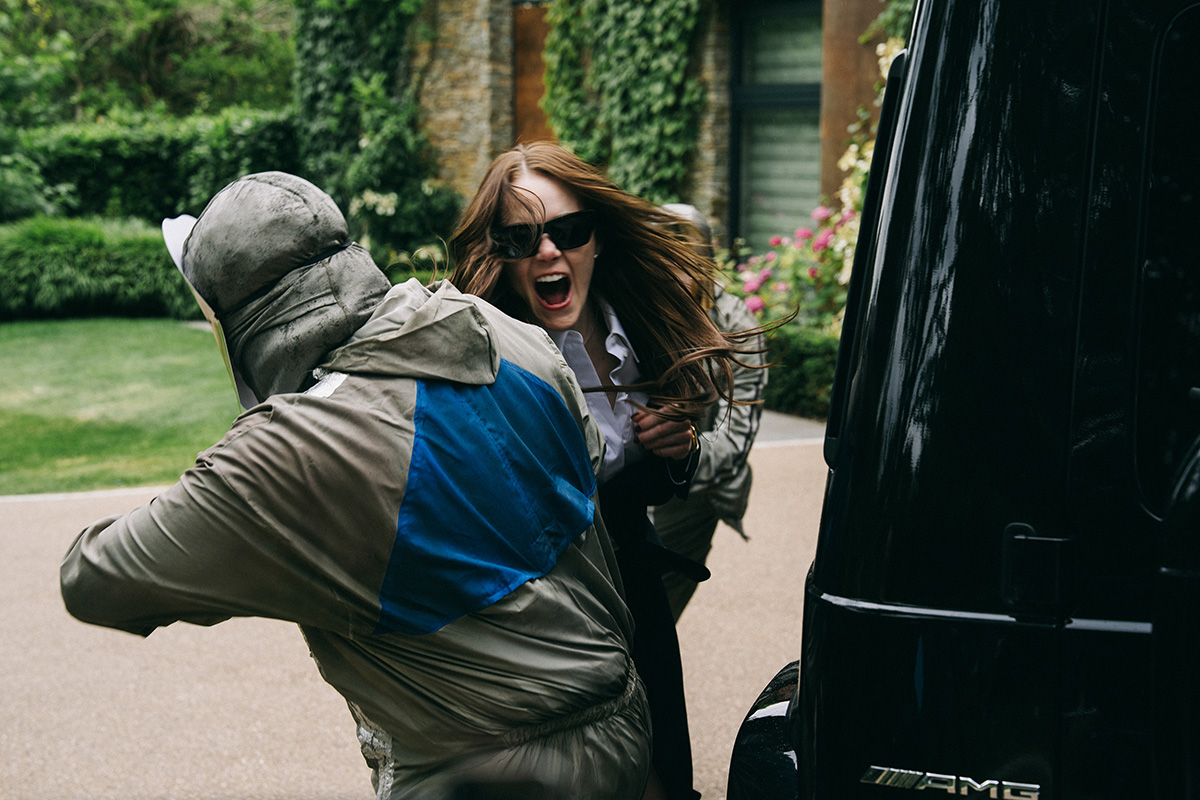
Lanthimos now finds himself in a strange phase of his career. With his prestige firmly established, his aesthetic, once raw, offbeat, and painfully human, has become a polished brand. His signature absurdism remains, but the heart that once beat beneath the grotesque surfaces has grown faint. From Dogtooth (2009) to The Favourite, his characters’ eccentricities were tinged with melancholy, even tenderness. In Bugonia, they feel more like carefully designed oddities, vessels for another awards-season victory.
The Verdict
Bugonia is a film of great craft and intelligence but little warmth. It speaks eloquently of systems that break people, yet offers no space for healing. The cruelty is deliberate, perhaps even necessary to Lanthimos’s vision, but it leaves one wondering whether the filmmaker, once so attuned to the fragility of human strangeness, has grown too distant from the humanity that first defined him.
Words by Matin Cheung
Support The Indiependent
We’re trying to raise £200 a month to help cover our operational costs. This includes our ‘Writer of the Month’ awards, where we recognise the amazing work produced by our contributor team. If you’ve enjoyed reading our site, we’d really appreciate it if you could donate to The Indiependent. Whether you can give £1 or £10, you’d be making a huge difference to our small team.