
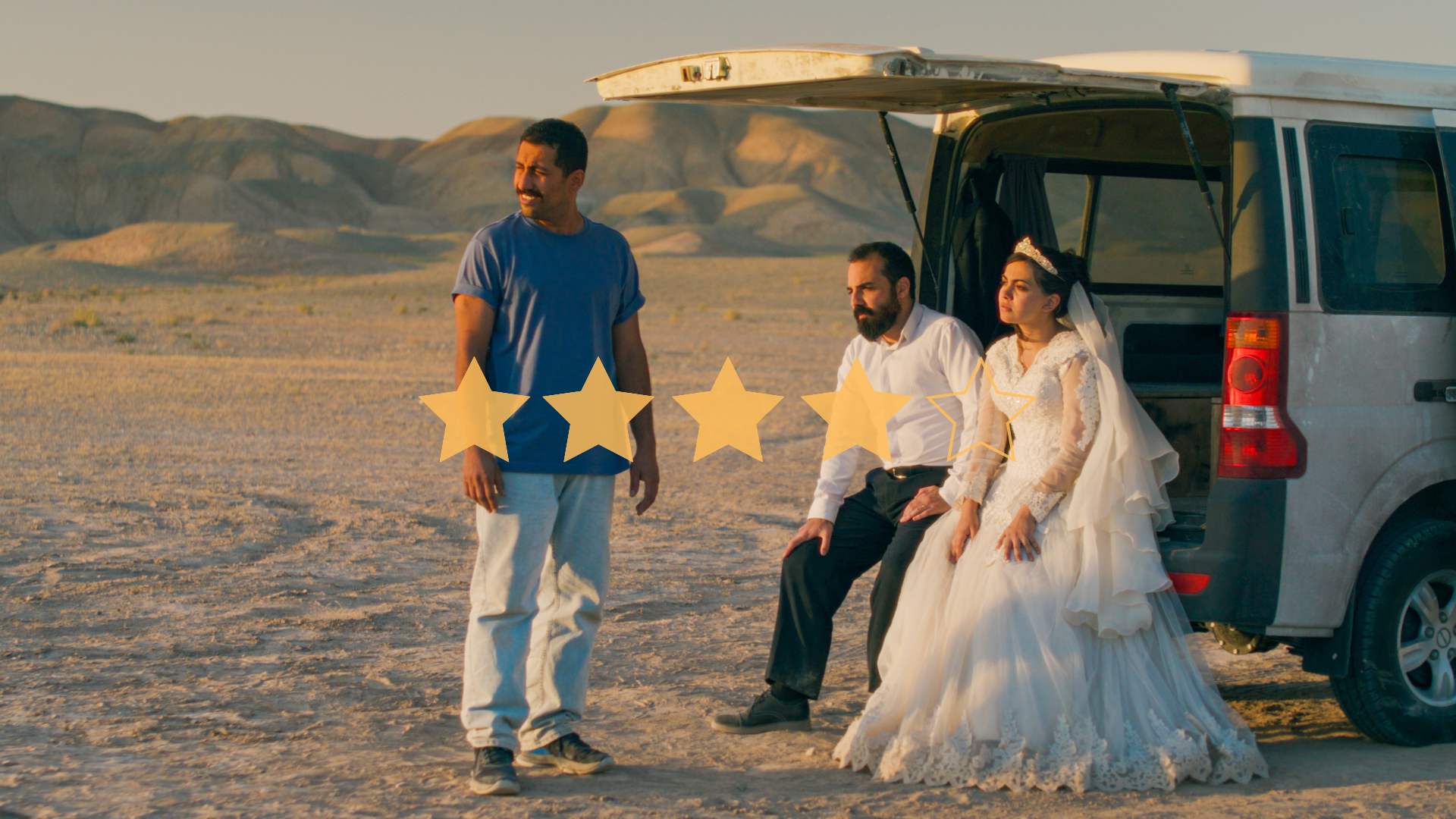
Jafar Panahi’s Palme d’Or–winning It Was Just an Accident follows a group of strangers bound by a single event, revealing how private wounds mirror Iran’s political history.
★★★★☆
The Galas at the BFI London Film Festival are always the most coveted events of the season, glowing with stars and new films. This year was no different. Alongside the high-profile titles such as Wake Up Dead Man: A Knives Out Mystery, Frankenstein and After the Hunt, one smaller and quieter film held the same power to captivate. It Was Just an Accident, the new work from Iranian director Jafar Panahi, arrived at the festival after winning the Palme d’Or at Cannes earlier this year. With this win, Panahi joins a rare group of filmmakers, including Henri-Georges Clouzot, Michelangelo Antonioni and Robert Altman, who have each taken the top honours at all three major film festivals: Berlinale, Cannes and Venice.
The film begins in silence and darkness. Eghbal, played by Ebrahim Azizi, drives along a lonely road with his pregnant wife and young daughter. The quiet of the night is broken when the car hits something unseen. The family continues, shaken, until the car breaks down and they stop at a small garage. The mechanic, Vahid (Vahid Mobasseri), is known as “Jughead” for his habit of holding his painful side. As he examines the car, a look of recognition crosses his face. He believes he knows this man from his painful past. From this moment, the story turns. As the time flies, others become involved, most notably: bookseller Salar, wedding photographer Shiva (Mariam Afshari), the couple whose wedding she is documenting, bride Goli (Hadis Pakbaten) and groom Ali (Majid Panahi), and local troublemaker Hamid (Mohamad Ali Elyasmehr). Brought together by coincidence, the group finds themselves confronting the traces of a shared past they cannot easily name. The story unfolds over a single day, through dim garages, hospital corridors, parking lots and empty roads. The camera watches as words are spoken and withdrawn, as faces search for truth in half-light. The world outside acts normal while this small group circles a question that none of them can name.
Told with quiet, black humour that recalls Waiting for Godot, the film unfolds like an old fable that speaks softly yet sharply about justice, revenge and forgiveness. It asks a question as ancient as storytelling itself: what would you do if you were suddenly face to face with the person who once caused you unbearable pain? The situation seems simple, yet no answer feels right. Each character stands between anger and hesitation, torn by the pull of memory and the wish to act. The film does not seek heroes or villains; it observes how easily cruelty spreads, how it can move from one hand to another, from one life to the next. It suggests that violence is never just an individual act but something carried by the system that permits it, a current that passes through those who once suffered and those who now strike back. Within this uneasy circle, some characters wish to punish, others to forgive, and some cannot decide which would hurt more. What remains is the silent question of what revenge might do to those who demand it, and whether forgiveness is ever a kind of surrender or a way to begin again.
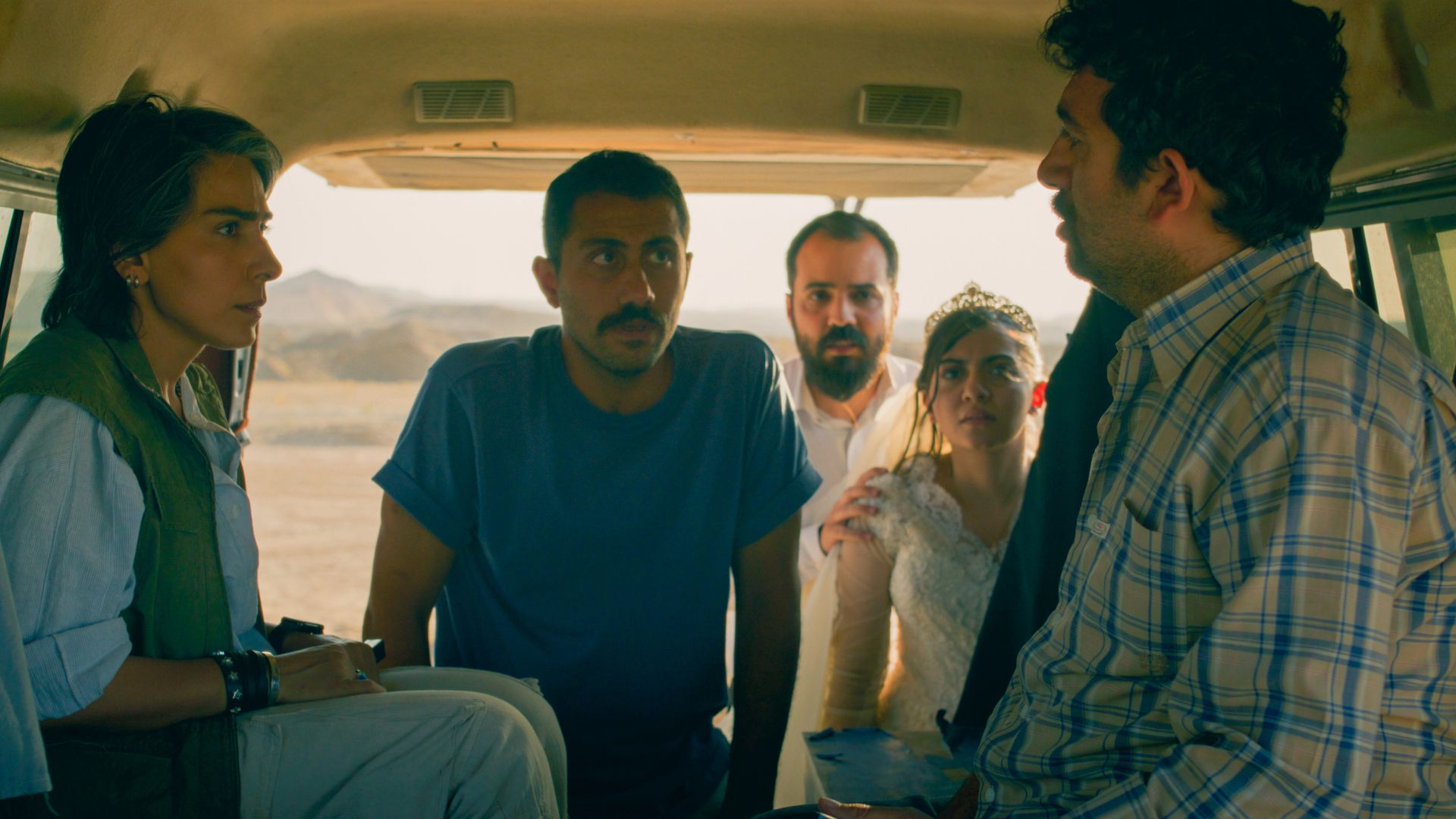
Through these encounters, Panahi captures the rhythm of daily life with fleeting, almost comic details. A nurse expects a small “gift” before offering assistance, while some parking guards accept a few notes from the group to turn a blind eye and let them pass, even with a card reader in hand just in case anyone runs out of cash. These small exchanges, gestures of caution more than generosity, show how people learn to navigate the rules and keep trouble at bay. Yet the deeper weight of history emerges from the long, uneasy arguments among those inside the van, people bound together by anger and memory. As they argue, doubt, and accuse, the scene begins to echo the country’s own divided history. In Iran, democracy has often arrived through the voice of religion, promising justice but demanding obedience, while secular rulers have spoken of freedom of beliefs yet governed through fear. Across generations, one form of control has replaced another, each claiming to act for the people. In the words of these captors, that pattern repeats, belief against scepticism, vengeance against restraint, the hope for change shadowed by the risk of becoming what they resist. Their struggle for resolution becomes a small reflection of a nation still caught between faith and authority, between the dream of justice and the fear of power.
It is also impossible to speak of Panahi without remembering Abbas Kiarostami, the master of Iranian cinema who won the Palme d’Or for Taste of Cherry in 1997. Panahi began his career as Kiarostami’s assistant, and their collaboration shaped the path of modern Iranian film. His debut feature The White Balloon (1995), written by Kiarostami, won the Camera d’Or at Cannes and revealed a new voice that carried the quiet humanity of his mentor. There is also a clear parallel between Kiarostami’s Ten (2002) and Panahi’s later self-reflective works, including This Is Not a Film (2011), Closed Curtain (2013), Taxi (2015), 3 Faces (2018) and No Bears (2022), each exploring the relationship between reality, fiction and the act of storytelling. With It Was Just an Accident, Panahi steps away from that mirror for the first time in over a decade, returning to the realism of his earlier dramas. Yet, like Taste of Cherry, this new film carries the same quiet question that binds both filmmakers: how to stay human in a world that constantly tests one’s faith and endurance.
Still, echoes of his experience remain. The film’s central figure is a man recently freed from confinement, and Panahi himself has lived through the same ordeal. It is not an autobiographical story, but the resemblance carries weight. It calls to mind Kiarostami’s final works, Certified Copy (2010) and Like Someone in Love (2012), which show how his experiment between fiction and non-fiction was no longer limited to narrative or form. It had become something poetic, woven into conversation, performance, gesture, and his masterful design of mise-en-scène. With only one film so far in this new stage, and with the uncertainty of whether Panahi will face persecution again, it is too early to draw any firm conclusion. But it invites quiet curiosity about where Panahi’s filmmaking might turn next.
It Was Just an Accident is a simple story told with patience and care. It may not have the self-referential wit or deliberate ambiguity that marked Panahi’s past decade of work, but its simplicity feels like renewal all the same. Behind it lies not only the struggle to make art under restriction but also the courage to ask again about mercy, memory and the possibility of change. After years of confinement, this film stands as both a return and a beginning for a filmmaker whose voice continues to speak with humour and humanity.
The Verdict
It Was Just an Accident marks a turning point for Panahi. It looks back to where he began and forward to what may come next, told with the same humour and humanity that define his work.
Words by Matin Cheung
Support the Indiependent
We’re trying to raise £200 a month to help cover our operational costs. This includes our ‘Writer of the Month’ awards, where we recognise the amazing work produced by our contributor team. If you’ve enjoyed reading our site, we’d really appreciate it if you could donate to The Indiependent. Whether you can give £1 or £10, you’d be making a huge difference to our small team.