
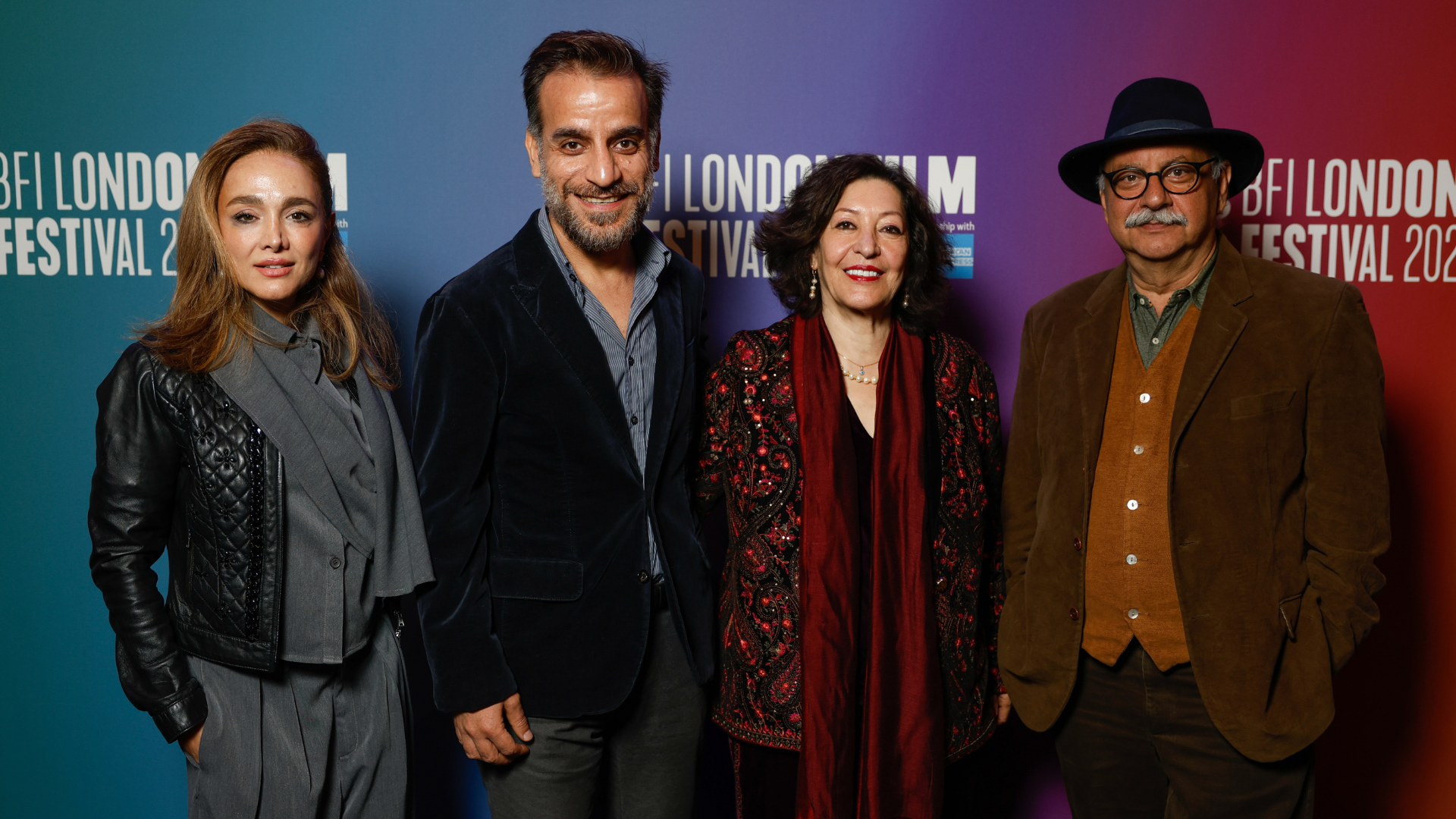
Since the great Iranian New Wave, spanning from the 1960s to the 2010s, Iranian filmmakers have been an unignorable force in the history of cinema. From Abbas Kiarostami to Asghar Farhadi, from Jafar Panahi to Mohammad Rasoulof, they have continually pushed the boundaries of cinematic art, questioning the very foundation of what cinema is and expanding its aesthetic possibilities beyond the Western territory.
This year’s BFI London Film Festival welcomed Black Rabbit, White Rabbit, the latest work from Iranian filmmaker Shahram Mokri, as part of the Official Competition. Like its title suggests, Black Rabbit, White Rabbit is a film that leads its audience down a rabbit hole of stories within stories: a mystery of performance, illusion, and truth. The film follows an armourer who suspects a prop gun might be real, an actor who seeks a part in a film that may not exist, and a woman haunted by the idea that her car crash was no accident. These seemingly unrelated moments begin to converge into a haunting reflection on art, authorship, and the thin line between fiction and reality.
On a cosy afternoon, The Indiependent had the opportunity to sit down with Mokri to discuss his new film, the legacy of Abbas Kiarostami, and the distinctive spirit of Iranian cinema.
We began with the inspiration and origin behind the complex, multi-layered structure of the screenplay. “The idea at the heart of the script has to do with the world of my profession, the world of filmmaking, of cinema. That’s a sort of world within a world within a world within a world, and I know that there’s so many good stories to tell about it,” Mokri explained. “At the same time, I love complex cinematic structures. I love non-linear narratives, and I think that a meta-film can be a good metaphor. It can be a good way of working. So really it was these two ideas coming together at the heart of the film: It’s about , a filmmaker making a film out of my country, and I’m a filmmaker making a film out of his own country.”
We hold a shared love for Abbas Kiarostami, the late master of Iranian cinema whose films often play with similar ideas, and with whom Mokri shared a deeply moving personal relationship. “First of all, he is my favourite filmmaker. But he also taught me cinema. I was his student.”.
“In Abbas’s last film, 24 Frames, there’s one frame that contains a tree, and on that tree he wrote my name,” Mokri said.
Recalling the moment he first saw the film, a surreal and extremely moving experience after Kiarostami’s passing, he continued, “It was a very interesting moment for me. I almost felt as if Abbas was putting something on my shoulders, passing something onto me. And so I’ve always, from then on, tried to pay particular attention to Abbas whenever I make a film. It’s important for me to pay a little homage to him.”
Beyond affection and respect, Mokri also reflected on Kiarostami’s artistic influence on him and his own filmmaking. “What I find so interesting about Abbas Kiarostami’s cinema is that, in one way or another, all his films are meta-films, in the sense that they’re very often films about acting or about making a film. And so what I’ve tried to do in Black Rabbit, White Rabbit is to look through the lens of making a film about making a film, or being a filmmaker making a film about a filmmaker making a film. And so I hope that I’ve been able to pursue this direction in the right way.”
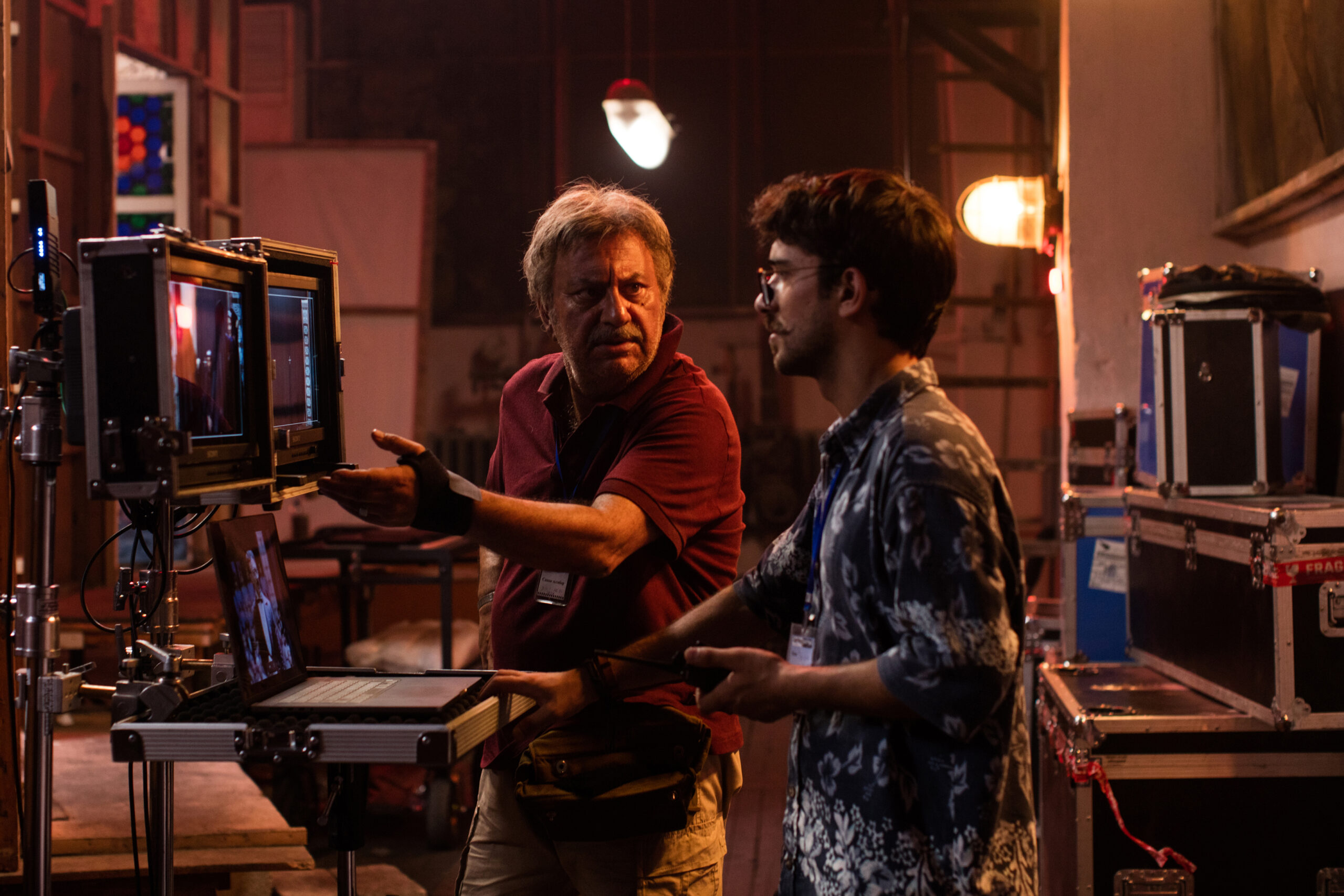
Like some of Kiarostami’s later works, such as Certified Copy and Like Someone in Love, which were shot and produced outside Iran, Black Rabbit, White Rabbit was filmed in Tajikistan and is representing the country as its official submission for Best International Feature Film at the 98th Academy Awards. Mokri shared his thoughts on this phenomenon as an Iranian filmmaker. “When we’re talking about Iranian filmmakers making films abroad, it is slightly different in the sense that usually there has been some sort of problem that has pushed the Iranian filmmaker to make a film out of their country.”
Using Kiarostami’s films as an example, he explained, “For instance, Kiarostami’s films made out of Iran had to do with his desire to make films about women and romantic relationships under normal circumstances, which he could not have made in Iran. And in fact, if you pay attention, none of his films made in Iran are about women.”
He then considered his own creative position and the reality he wanted to reflect . “Similarly, I think this time around, I’ve become bored of making films that show women not in normal circumstances, or rather, making films where we pretend that the way we depict women is natural, whereas there’s nothing natural or real about it. And so I’ve got to a place where I feel if I want to make a film that shows women under normal circumstances, I either need to wait until the circumstances change in my country, or make that film out of my country.”
Black Rabbit, White Rabbit also stands out for its intricate narrative structure, which Mokri approaches like an elaborate puzzle. “All my feature films have quite complex structures, and so I’ve learned to first work through the architecture, the complex structure of the film, and then through the narratives that work within the architecture. I always begin by composing the puzzles and thinking which stories can work together to create this puzzle, and only at that point do I start working through the narratives’ details. The first story that came to my mind for Black Rabbit, White Rabbit was the story of someone who works on a film set, and thinks that they might have a very bad day.”
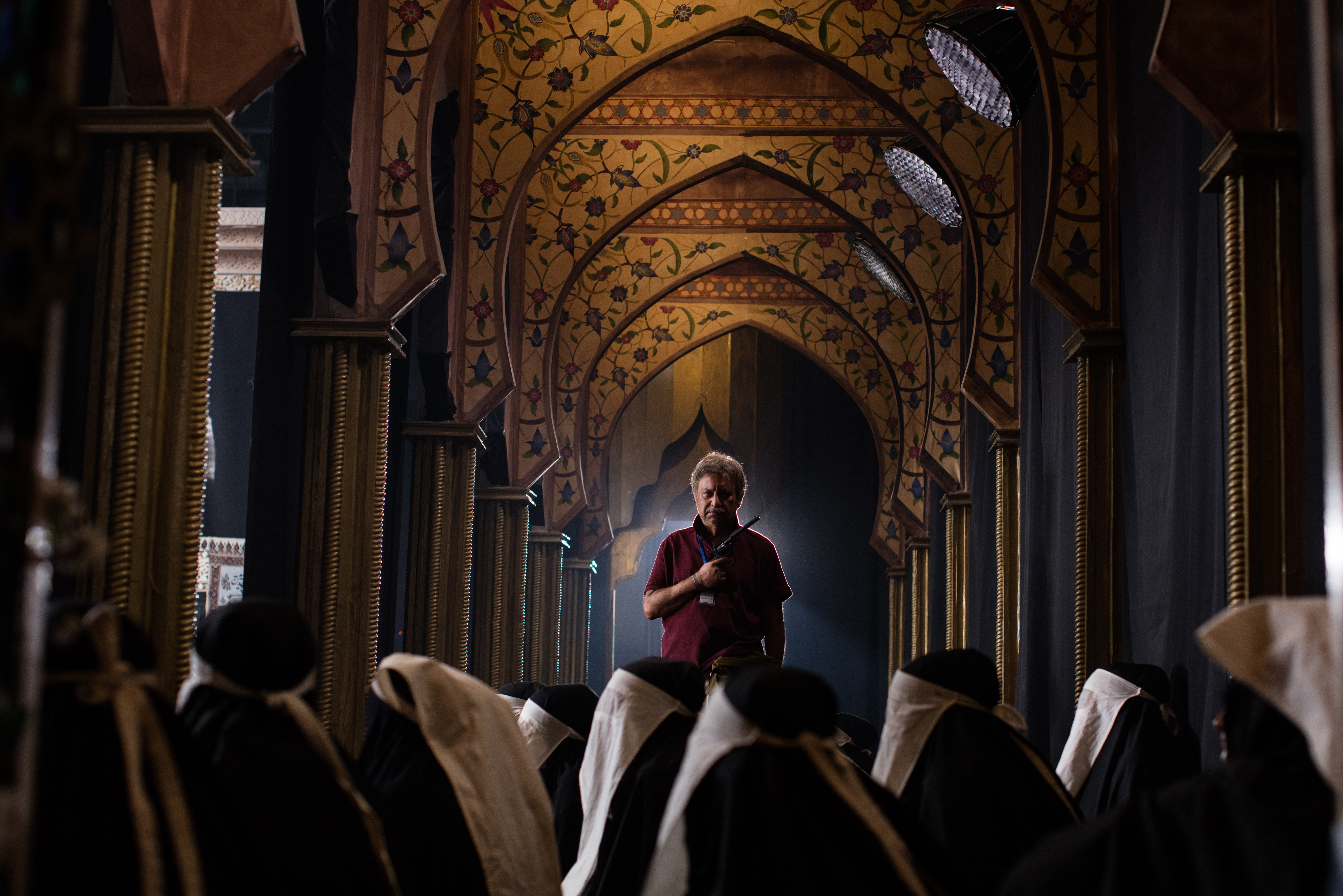
We ended our conversation by reflecting on what gives Iranian cinema its enduring beauty, its power to express social and political truths through ambiguity and poetry. “I think the unique aesthetics and refinement of Iranian cinema has very much to do with our culture, a culture that is so complex in the sense that nothing is just at face value, nothing is simply what it appears. There’s always something deeper behind every detail, every symbol, every image, and this pervades every aspect of our culture. And that’s, I think, what then comes into cinema and makes it so refined and multilayered, but also delicate.”
It was a deeply moving, rabbit-hole experience to talk with Mokri. The spirit that Kiarostami passed on to him, a spirit that continues to live through the filmmakers he once guided, including this year’s Palme d’Or winner Jafar Panahi and Mokri himself. Though facing persecution and unable to create freely in their own country, simply for making films that reflect reality and defend the most basic right to breathe, Iranian filmmakers like Panahi, Maryam Moghaddam, Behtash Sanaeeha, Mohammad Rasoulof, Hossein Rajabian and many others continue to use their cameras as weapons, their determination as strength, and their art as resistance. Through film, they reflect, record, and remember the fragile truth of life in Iran. For Mokri, meta-cinema is both mirror and language, a way of tracing truth through the illusion of filmmaking itself, and as he continues to drift between reality and imagination, one can only wait to see what hidden worlds his lens will uncover next.
Words by Matin Cheung
Support the Indiependent
We’re trying to raise £200 a month to help cover our operational costs. This includes our ‘Writer of the Month’ awards, where we recognise the amazing work produced by our contributor team. If you’ve enjoyed reading our site, we’d really appreciate it if you could donate to The Indiependent. Whether you can give £1 or £10, you’d be making a huge difference to our small team.