
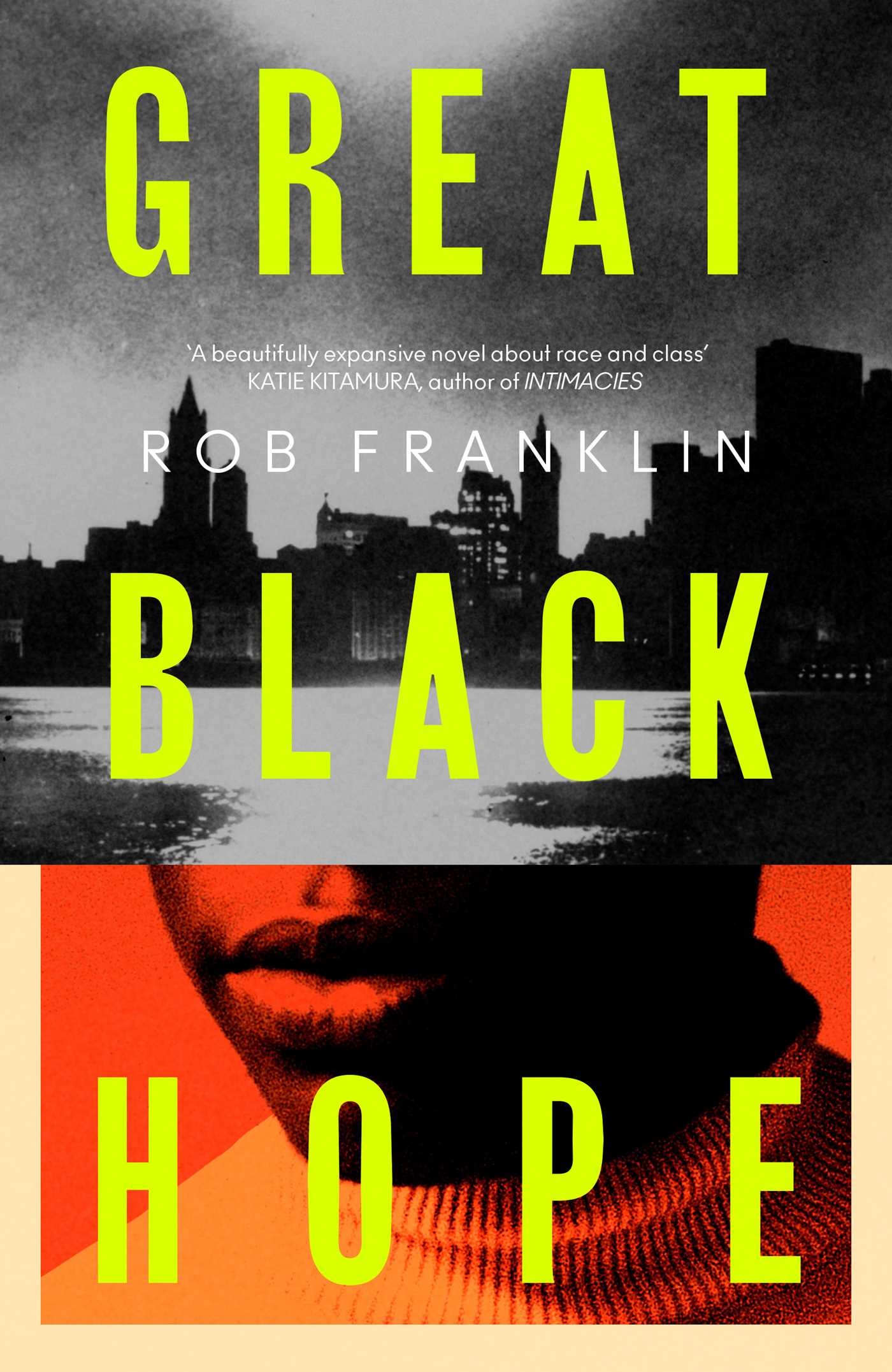
At an early age we are taught not to judge a book by its cover, but I made this grave mistake when my copy of Rob Franklin’s debut novel Great Black Hope arrived. The title is boldly set in bright neon green text against the split image, the upper half consisting of a grainy black and white cityscape (I presume to be New York) and the lower, the bottom half of a Black man’s face, rendered in deep red. This sense of urgency is reinforced with a blurb that oozes tension and anxiety. Yet, there is a sense of calm in Franklin’s writing, even in the opening pages where Smith gets arrested for drug possession.
Smith is a Queer Black graduate from Stamford, who comes from a wealthy, successful family. After graduating, he relocated to New York and embraced the city’s vibrant nightlife. Smith’s arrest for cocaine possession comes at a time when he’s reeling from the loss of his close friend, Elle England, from what appears to be a drug overdose. As he awaits his court date and the tragedy behind Elle’s death unravels, the novel follows Smith, as he battles against his self-destructive tendencies while under America’s all-seeing eye.
The crime and thriller elements of the novel dominate the narrative in the first few chapters, but as the pace slows down, Franklin uses this moment to create a rich, reflective atmosphere. His prose radiates with the type of confidence you might find from a seasoned, heavy-weight novelist. It’s precise, funny and addictive. This display of writing enters its peak about halfway through the novel when Smith leaves New York for his home town in Atlanta.
Franklin’s decision to leave New York at first seems peculiar. At its heart, Great Black Hope is a New York novel, the city so integral to the central themes and plot. Leaving the city equates to leaving a main character behind. This brief spell away from New York City effectively brings a halt to the novel’s main plot lines. However, this pause allows us to learn more about Smith, his family and where they come from. It also serves as a pause for Smith, distancing himself from the seductive scene that led to his arrest.
The plot lines surrounding Smith’s court case and Elle’s death are returned to in the third act as Smith arrives back in New York, though the tension, which is ever-present in the first act, has diminished. Franklin’s attempt to blend in touches of crime and thriller while tackling themes of death, race, sex, class and addiction is admirable but, in a novel just over 300 pages long, it runs the risk of weakening the story’s plot.
It’s only in the second chapter that the reader learns that Smith’s full name is David Smith – a common name by all accounts. Smith shares it with his father and while looking up details of his arrest, he notices that several David Smiths were arrested around the same time. This naming choice is no accident. Franklin uses humour to great effect in scenes such as when Smith and his father are referred to as the David Smiths, but this story is an allegory about the shared experience several people face in a prejudiced society. David Smith could be anyone.
Words by Julian Amani
Want more Books content from The Indiependent? Click here
Support The Indiependent
We’re trying to raise £200 a month to help cover our operational costs. This includes our ‘Writer of the Month’ awards, where we recognise the amazing work produced by our contributor team. If you’ve enjoyed reading our site, we’d really appreciate it if you could donate to The Indiependent. Whether you can give £1 or £10, you’d be making a huge difference to our small team.
How did the bold and striking cover art influence your initial expectations of the novel?