
Macabea Lives: Clarice Lispector and the Politics of Seeing
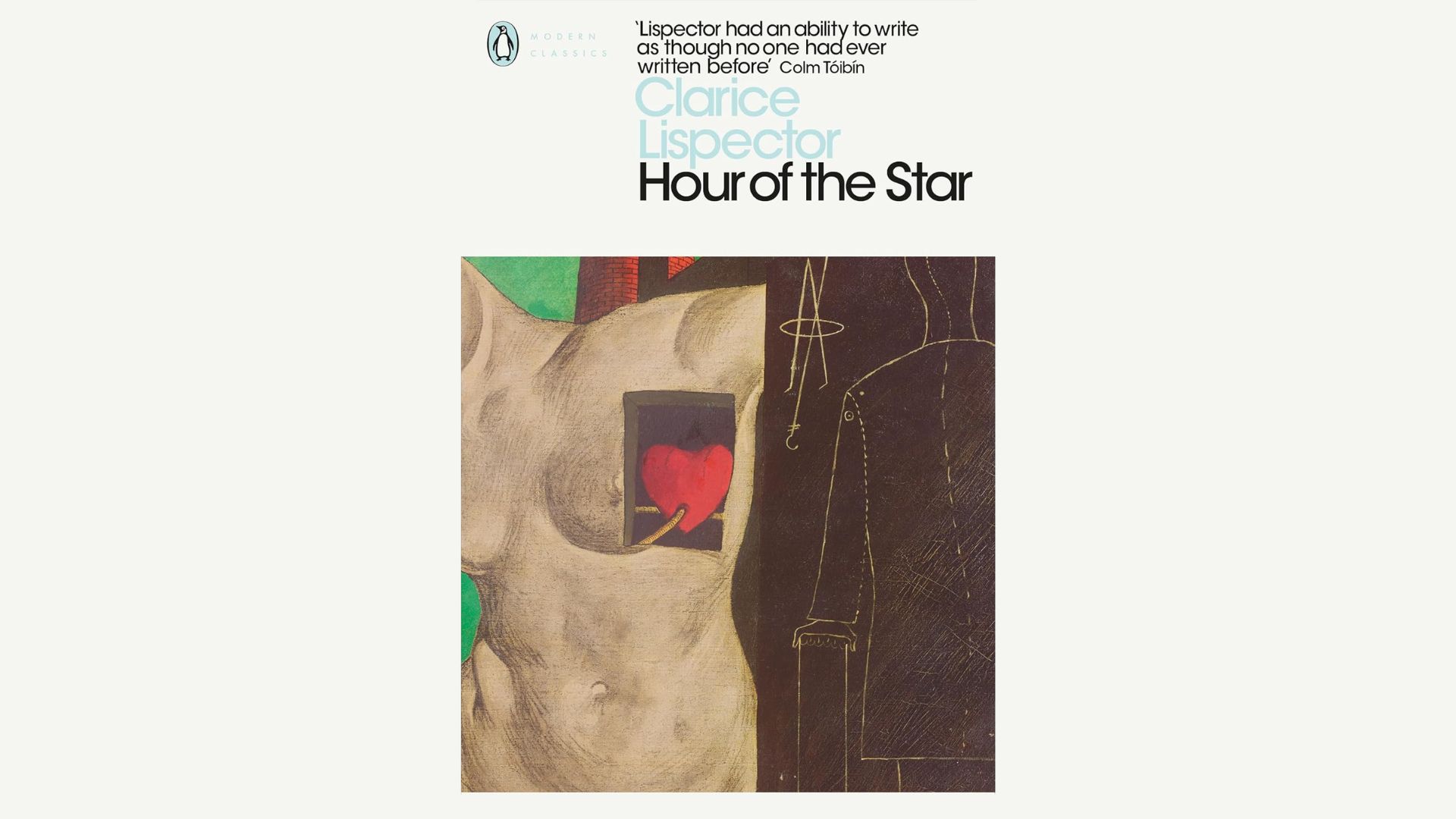
Passing the shopfront of Foyles, I notice the familiar twinkle of my friend’s eye, refracted by the window’s glass and laser pointed back at me – “should we pop in?” Traipsing amongst the shelves, I come to a halt by Clarice Lispector’s The Hour of the Star, translated by Benjamin Moser. “You absolutely have to read this” I gush, pressing the Modern Classics cover into her hands.
My first experience with the novella had been a few years prior. However, its content remains current, the title sat at the roof of my mouth, waiting to be blurted out in recommendation at any given opportunity. Though its initial publication dates back to 1977, my interpretations and takeaways remain forever relevant; holding a magnifying glass to the political landscape of today.
Narrated by the fabricated writer Rodrigo S.M., the novella is a sort of metafiction. Rodrigo chronicles Macabea, our half-fledged heroine’s story, but also wrestles with the act of telling itself. Through Rodrigo, Lispector introduces readers to Macabea, a woman from rural northeast Brazil who moves to Rio de Janeiro. Described with an at times pitiless frankness, Macabea is painted as sickly, lacking self-awareness and even “ugly”. Her descriptions, though sparse, jutted out to me through the page; conjuring images of collarbones and the damp yellowed wallpaper of her shared bedroom. Hauntingly, Macabea appears to accept, or at least lacks the room space to question, her suffering; operating her life with a naive yet stoic resilience.
Though only 96 pages of her exist, I grew surprisingly fond of and protective over Macabea.
Lispector herself described the story as a tale of “anonymous misery”. Akin to J.B Priestley’s ‘Eva Smith’, Macabea, to me, is an emblem of ‘every girl’. Or any individual that has struggled to see or to find meaning in their own life, scraping through a world designed against them, perhaps unaware of their own misfortune. She is a symbol of wider systemic issues; the product of inequalities. The narrator’s ambivalence toward her character can be seen as a critique of how lives like Macabea’s are portrayed or ignored in popular narratives. In contemporary society, the media’s role in shaping how we view marginalised people, especially poor or disenfranchised women, remains critical. Lispector’s construction of Macabea endures because it compels us to confront the persistent invisibility of marginalised women, both in fiction and in life, and critiques the narratives that constitute that invisibility.
Rodrigo S.M.’s intrusive narration bends the very act of storytelling. The way he tells the tale holds more weight than the tale itself. We are left wondering if suffering can ever truly be captured on the page. Or are we, like Rodrigo, always failing to do justice to lives like Macabea’s? Glaringly, Macabea’s story is told through the mouthpiece of a man with no relation to her. Her whole life is reduced to under 100 pages, and retold through someone who clumsily misses her glints of brilliance. Macabea has never known true love, but she clings to the slivers of information that the radio offers.
In contemporary media, social platforms, broadcast news, and popular culture, we see the plight of the marginalised continually reduced and misconstrued. Every day, politicians brazenly spout misrepresentations and falsifications. Thousands of girls, like Macabea, share bedrooms in Gaza. Tiny shooting stars of brilliance, so easily missed and so frequently misremembered.
Words by Isobel Slocombe
Want more Books content from The Indiependent? Click here