
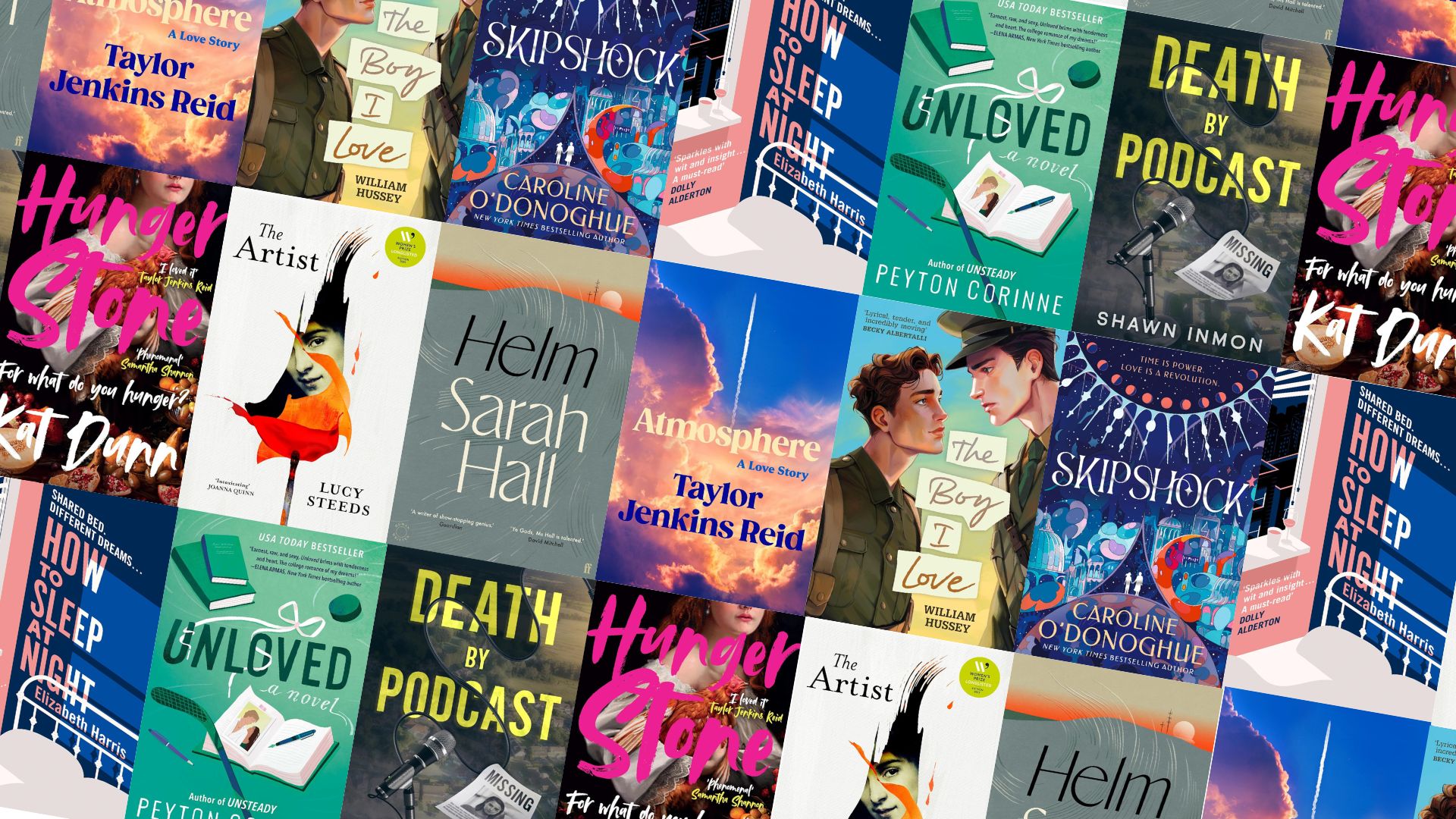
If 2025 had a reading mood, it was one of seeking honesty in the quietest and loudest corners of our lives. This year’s standout novels didn’t just tell stories—they cracked open identities, challenged comfortable narratives and amplified marginalised voices.
Our team’s top reads wandered from sapphic astronauts and haunted housewives to wind spirits and war-torn trenches. They tackled the big stuff—shame, climate, societal facades, resilience and the nagging question of how we live with ourselves—even when no answers are easy.
Across genres and the globe, the books that stuck with us this year all leaned into vulnerability, transformation and the uneasy negotiation between the world’s demands and personal authenticity.
Each contributor has outlined the book, or books, that they think stood out to them most this year.
Libby Jennings
Atmosphere, by Taylor Jenkins Reid, hit all the right sapphic-romance notes for me this year.
Set in the 1980s, it follows astronaut Joan Goodwin through NASA training, her complicated relationships and the quiet tensions of living authentically during a politically charged era. Rather than relying on Jenkins Reid’s trademark twists, the novel leans into a gentler, more traditional love-story arc, highlighting both the fragility and resilience of queer relationships under pressure.
It treats queer love as simply love; natural, tender and never over-explained, something many books still miss the mark on. On release it generated huge buzz and a range of critical responses: praised for its tender central romance and strong characterisation, but critiqued for predictable beats and a lighter thematic touch.
For me, its simplicity was its strength. Charming, immersive and at times heart-wrenching. It’s the kind of book you can disappear into and finish in a single sitting.
Joyce Boy Charaa
Death By Podcast by Shawn Inmon is one of my favorite reads this year. It left me pondering for a while how society has evolved and completely changed, and how social media has caused us to chase new values in life, values that are never enough to seek.
The book offers a thought-provoking reflection of today’s society. It’s a story about truth and fabrication, integrity and fakeness. These opposite values convey a sharp criticism of social media and its obsession with appearances.
I found this novel of great enjoyment to read and explore, and dive into the reality of the world we live in, where honesty is a myth and success is the way that often comes with a price.
Rebecca Barksby
The UK’s only named wind, Helm, is the main character in Sarah Hall’s seventh novel, a sweeping narrative that stretches across millennia. From Neolithic tribes to a misplaced iPhone, Helm recounts the stories of the people and objects that have passed through the Pennines and felt its force.
I loved Helm for its gritty, folkloric tone, which perfectly suits the northern England landscape, as well as its astonishing creativity as it shifts fluidly between historical and literary fiction. The novel tackles a remarkably diverse set of themes, including climate change, relationships, aging, and mental health, without ever losing momentum. It made me laugh, it made me think, and at times, it unnerved me.
Jugo O’Neill
This January saw the publication of The Boy I Love by William Hussey, a young adult queer romance set during the First World War in the lead-up to the Battle of the Somme.
Through the vivid and unforgiving portrayal of life in the trenches to the cruel and harrowing prejudices of queer existence, Hussey offers a bittersweet and achingly poignant story of love at a time when love seemed impossible for so many reasons.
The writing is tender and poetic, the sheer detail and meticulous research is incredible, and though it never once clouds the brutality of the period, it is a romance at heart. The relationship between Stephen and Danny is fast-paced but tender. There is no fairytale ending, no happily ever after, but we have closure.
The Boy I Love is a heart-wrenching and hopeful exploration of love, courage, and human spirit in the face of adversity. It shines a small light on the untold stories of gay men during one of the most devastating of conflicts – these men who lived and died defending a country that, for the most part, despised them. A country which would not hesitate to reward their sacrifice and bravery with public disgrace. And yet their story assures us that happiness exists, that love can prevail in the darkest of times, and we must treasure it.
Sophia McHardy
Unloved by Corrine Paynton is a rare romance that handles messiness with real tenderness. Hockey star Freddy and hopeless romantic Ro both carry more baggage than they let on—neurodivergence, broken confidence, and the ache of feeling unlovable. What hooked me was how honestly the book shows two flawed people stumbling toward real connection, learning to see past reputation and shame. Awkward, gentle, and quietly affirming, it’s a romance that actually believes in second chances.
Eleanor Harvey
Do you ever read the news and think: how do these people live with themselves? Elizabeth Harris confronts this question head on in How To Sleep At Night, which neatly illustrates how the “big issues” of the day trickle down to affect us all. When Ethan announces his plan to run for Congress as a Republican, it forces his liberal husband Gabe to decide between personal and political loyalties. Along the way, Harris sharply interrogates hypocrisy, modern love, and what it truly means to be a good person.
But if you’re looking for something a bit lighter, Layne Fargo’s The Favourites is frothy fun with obvious shades of Taylor Jenkins Reid. Loosely inspired by Wuthering Heights, ice dancers Kat and Heath (get it?) have to balance torrid romance and professional rivalries with competing at the Olympics. All the drama makes US politics seem comparatively simple.
Ed Bedford
My picks for this year are Lucy Steeds’ The Artist and Caroline O’Donoghue’s Skipshock. Although very different in genre and setting, the books both stood out to me for the same reason, and so give me an excuse to not settle on just one book. That reason is a blend of perfectly written prose and an absorbing love story based on characters that invite almost endless thought.
The Artist, set in 1920s Provence, is primarily historical fiction, whereas Skipshock, set across multiple worlds, is primarily science fiction.
Both Steeds and O’Donoghue write in clear prose, which balances descriptive world building, narrative flow, and a pleasing sense of fun. O’Donoghue’s prose is quicker, using a mix of references and allusions to build the world as Margo travels through it at speed, whereas Steeds is far more sensuous, giving, aptly, rather painterly descriptions of what appears to be sun baked inertia. These are both books my mind will be returning to and recommend to friends.
Gemma Gradwell
Haunting yet lovely, Kat Dunn’s Hungerstone is a sapphic gothic masterpiece. A delightfully crafted retelling of the original vampire novel, Sheridan Le Fanu’s Carmilla, the story pairs a dark, glittering romance with a journey of self-discovery and liberation. Childless and lonely housewife Lenore spends her days preparing for society’s biggest event of the season at the behest of her ambitious husband Henry, until the mysterious Carmilla appears in the couple’s life after a tragic accident. Soon, strange and unnatural occurrences plague Lenore, along with a growing desire that will not be silenced.
A tale of want and liberation, it is this seductive horror’s enduring themes of shame, class and the complexity of womanhood that solidify it as an unforgettable read.
From haunted landscapes to political battlegrounds and intimate heartbreaks, these novels prove that in 2025, nothing counts as an “easy read”. Fiction was anything but escapist. Instead it was a mirror—sometimes painful but always achingly honest—offering up the possibilities for empathy, understanding and even connection, however briefly. As the year turns, we carry these stories forward: a little more aware of the fractures in ourselves and the world, and maybe a little more willing to keep reaching across them.
Words by Sophia McHardy
Want more Books content from The Indiependent? Click here
Support The Indiependent
We’re trying to raise £200 a month to help cover our operational costs. This includes our ‘Writer of the Month’ awards, where we recognise the amazing work produced by our contributor team. If you’ve enjoyed reading our site, we’d really appreciate it if you could donate to The Indiependent. Whether you can give £1 or £10, you’d be making a huge difference to our small team.