
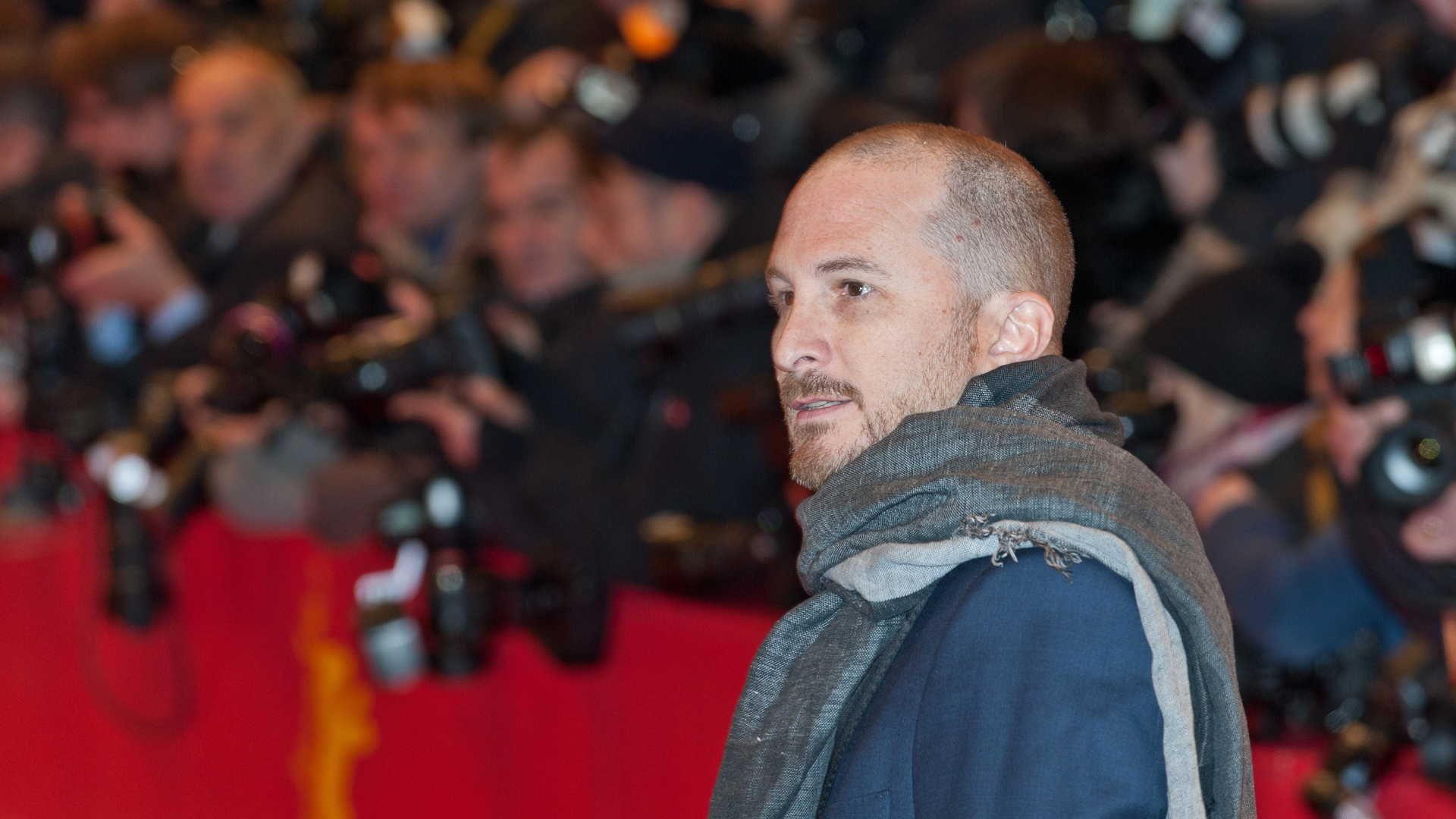
Few contemporary filmmakers inspire as much fascination, heated debate, and outright discomfort as Darren Aronofsky. Each of his nine feature films is a twisted tale of ambition, addiction, and inevitable self-destruction, lingering with audiences long after the credits roll.
Though his films are rarely easy to watch, they are impossible to ignore, as they brim with audacious style, fearless performances, and a commitment to probing the darkest corners of the human psyche. This ranking of Aronofsky’s filmography, from the transcendent highs to the bold missteps, traces the evolution of a director who refuses to play it safe.
9. Mother!
Although made with the same intensity as Aronofsky’s other films, Mother! (2017) is let down by how it abandons subtlety almost immediately. It quickly becomes clear that this domestic thriller is an allegory of humanity’s abuse of Mother Nature, leaving the rest of the film to spiral into ever more grotesque imagery and relentless escalation. For many, it represents Aronofsky at his most indulgent. Michael Scragow called the film “a fake cinematic fever-dream, the kind made by a director so self-conscious.”
The performances, led by Jennifer Lawrence and Javier Bardem, are committed but not their career best. Lawrence carries the film’s escalating hysteria with remarkable stamina, but the script offers her little beyond suffering. Mother! is undeniably ambitious, but its blunt-force symbolism leaves little room for mystery.
8. The Fountain
Often considered Aronofsky’s most divisive film, The Fountain (2006) is seen as either a misunderstood masterpiece or an overindulgent failure. Roger Ebert dismissed it as “not a great success” with “abrupt changes of tone,” while Gayle Sequeria praised it, saying that the “limitations of the body [and] susceptibility of death have never been more keenly felt” than in Aronofsky’s film.
Spanning three timelines (past, present, and future), it explores love, death, and the search for meaning. Hugh Jackman and Rachel Weisz deliver deeply committed performances, but the film’s blend of science fiction, fantasy, and spirituality can overwhelm more than enlighten. Visually, the film is dazzling, with cosmic imagery achieved through practical effects rather than CGI. Yet its ambition often outpaces its clarity, leaving audiences adrift in abstraction. The Fountain remains a fascinating experiment, but one that struggles to connect emotionally in the way Aronofsky’s strongest films do.
7. The Whale
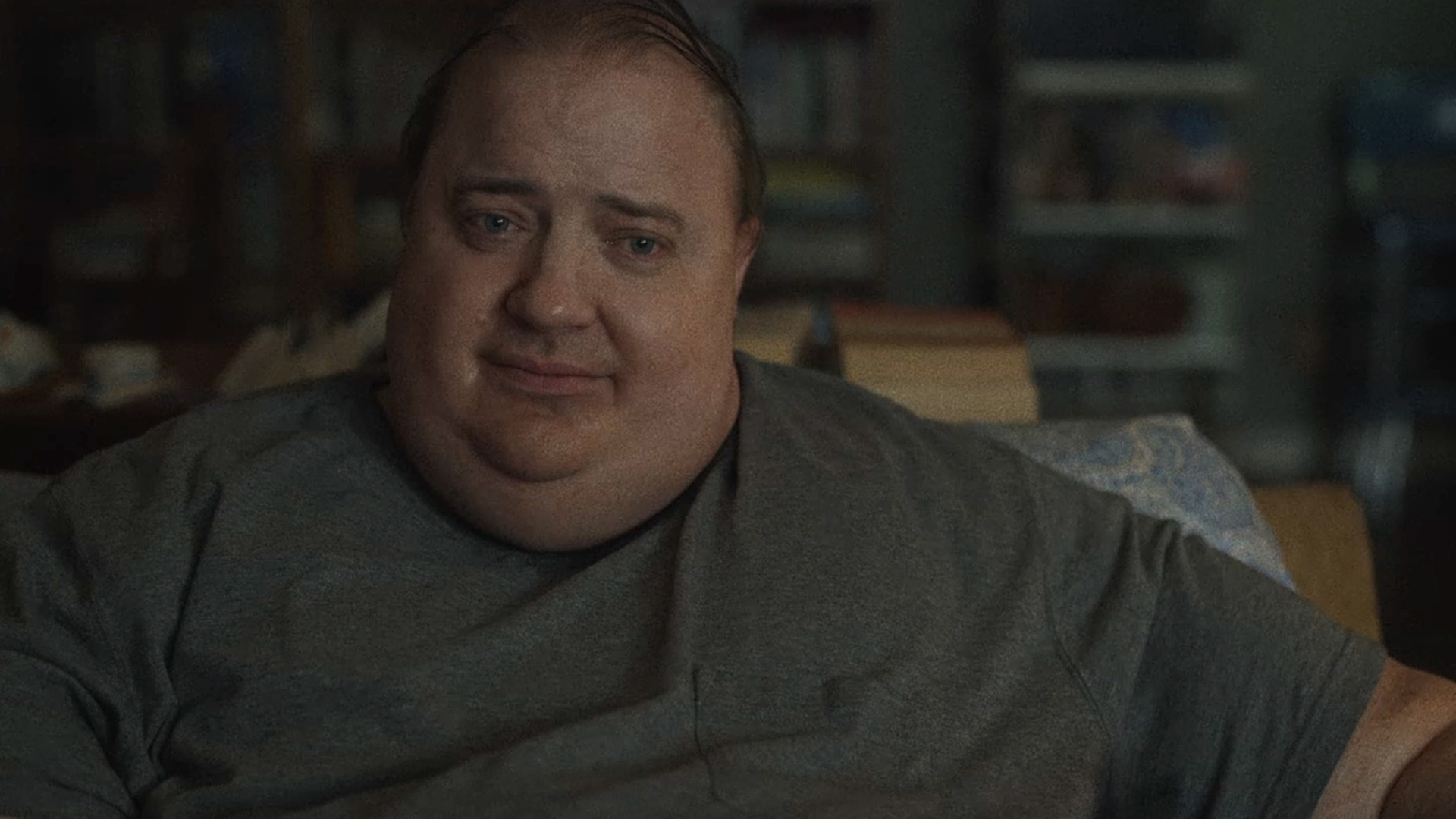
Casual moviegoers remain eternally grateful to The Whale (2022) for resurrecting Brendan Fraser’s career. After years of absence, Fraser returned with a performance so raw and humane that it earned him a well-deserved Oscar. His portrayal of Charlie, a reclusive man seeking redemption, is both heartbreaking and quietly dignified, a reminder of the talent Hollywood once sidelined.
Aronofsky, however, takes a back seat here, allowing Fraser’s work to dominate. His direction is subdued, often stagey, reflecting the play origins of Samuel D. Hunter’s script. For example, while the claustrophobic setting and manifold monologues amplify Charlie’s isolation, they also lead to moments of melodrama that strain credibility. The film has been the subject of heated debate around fatphobia and representation, but even its harshest critics acknowledge Fraser’s extraordinary performance. In the end, The Whale feels less like an Aronofsky project and more like an actor’s hero journey.
6. Noah
Aronofsky’s attempt at a biblical epic surprised audiences expecting a straightforward retelling of the story of the Ark. Instead, Noah (2014) is an ambitious, unflinching and often bizarre mix of myth, environmental allegory, and action spectacle. Russell Crowe’s titular performance grounds the film, portraying Noah not as a saint but as a conflicted man struggling with divine responsibility. The giant rock creatures, the Watchers, may seem outlandish, but they highlight Aronofsky’s willingness to inject mythological eccentricity into Hollywood spectacle.
The film remains divisive, sparking controversy for its departures from the traditional story and while praised for its overt ecological undertones. Yet those very choices are what make Noah such a fascinating entry in Aronofsky’s filmography: an epic that asks its audience to wrestle with faith, myth, and morality in ways they may not have expected.
5. Pi
Aronofsky’s debut film, made on a shoestring budget, remains a fascinating curiosity. Pi (1998) follows a paranoid mathematician who believes he can find order within the chaos of numbers, blending thriller elements with surrealism. Though rough around the edges, the film brims with creative energy and introduces many of the obsessions that would define Aronofsky’s career: the dangers of obsession, the search for meaning, and the cost of brilliance.
Its stark black-and-white cinematography and frenetic editing set the tone for Aronofsky’s visual style. While not as emotionally devastating as his later work, Pi is the purest distillation of an artist finding his voice, and its influence can still be felt in independent cinema.
4. Caught Stealing
Aronofsky’s latest output, his adaptation of Charlie Huston’s exhilarating novel, marks a surprising yet welcome swivel into slick, black-comedy thrills. While it departs from the psychological intensity of his usual work, the film never loses sight of the pulpy noir sensibilities that have long defined his work. The source material’s violent, fast-paced narrative provides fertile ground for Aronofsky to revisit his recurring preoccupations, obsession, downfall, and survival at the edge of despair, but in a new, brashly entertaining register.
Austin Butler commands the screen with hypnotic charisma and unwavering humanity, further cementing his status as one of the most compelling actors of his generation. Surrounding him is a stacked ensemble: Zoë Kravitz, Regina Hall, Liev Schreiber, and Vincent D’Onofrio each bring texture and bite, while Matt Smith, almost unrecognisable, delivers a scene-stealing turn that will be talked about long after the credits roll. For longtime admirers, it’s a reminder of his daring versatility; for newcomers, it might just be the most accessible entry point into one of modern cinema’s most uncompromising filmmakers.
3. Black Swan
Black Swan (2010) is Aronofsky at his most baroque, blending psychological horror with melodrama to tell the story of a ballerina consumed by obsession. Natalie Portman’s Oscar-winning performance as Nina Sayers anchors the film, capturing both the fragility and madness of a young woman striving for artistic perfection. The film’s use of mirrors, doppelgängers, and body horror turns ballet into a battleground of the psyche, a metaphor for the pressures placed on women to embody contradictory ideals of innocence and sensuality.
The film’s technical craft is equally striking. Matthew Libatique’s cinematography spins between elegance and terror, while Clint Mansell reworks Tchaikovsky’s Swan Lake into something darkly hypnotic. The film is perhaps Aronofsky’s purest expression of art as self-destruction, with Nina achieving transcendence at the exact moment she destroys herself. For some, it’s operatic excess; for others, it’s a masterpiece of psychological cinema. Either way, Black Swan cemented Aronofsky as one of Hollywood’s most daring visionaries.
2. Requiem for a Dream
If Pi announced Aronofsky’s arrival, Requiem for a Dream (2000) made him impossible to ignore. Where his debut was a lo-fi experiment, his sophomore feature was a full-fledged artistic assault, powered by a cast that elevated his vision to tragic heights. Jennifer Connelly, Jared Leto, and Marlon Wayans gave their finest performances to date, but it was Ellen Burstyn who delivered a career-defining turn as Sara Goldfarb, making her snub at the Oscars one of the Academy’s great oversights. Together, the four arcs form a tapestry of destruction, each character undone by the very thing they believed would save them.
Technically, the film remains one of Aronofsky’s crowning achievements. Clint Mansell’s haunting score, particularly the now-iconic “Lux Aeterna,” merges with rapid-fire editing that mirrors the compulsive cycles of addiction. And the final twenty minutes are a merciless crescendo where all four narratives collide in despair, creating one of the most unforgettable, punishing sequences in cinema history. It is this perfect union of performance, craft, and unflinching honesty that makes Requiem a century-defining masterpiece.
1. The Wrestler
For all of Requiem and Black Swan’s relentless emotional turmoil, expressed through a sensory-destructive style of artistry, Aronofsky’s pivot toward quiet realism in The Wrestler (2008) hits harder. The film explores similar themes of self-destruction born from ambition and loss, but the framing is far more universal. Not everyone has grown up around drugs or ganglands, but everyone knows the pull of a hobby, passion, or career that provides a fleeting escape from the monotony of everyday life. In Randy “The Ram” Robinson (a career-best from Mickey Rourke), Aronofsky finds a character whose struggles are accessible and painfully human, a man clinging to his passion long after the world has moved on.
Of course, much of the film’s impact comes from Mickey Rourke’s extraordinary central performance, which remains one of the 21st century’s most powerful turns. Cinematographer Maryse Alberti enhances this intimacy with her handheld, documentary-style camera work, following Randy through decadent trailer parks and cramped corridors with unflinching closeness. The result is a film that feels both achingly real and quietly mythic in a story of a man who gave everything to his art, even when it no longer loved him back.
Caught Stealing is in UK cinemas from 29th August.
Words by Joseph Jenkinson
Support The Indiependent
We’re trying to raise £200 a month to help cover our operational costs. This includes our ‘Writer of the Month’ awards, where we recognise the amazing work produced by our contributor team. If you’ve enjoyed reading our site, we’d really appreciate it if you could donate to The Indiependent. Whether you can give £1 or £10, you’d be making a huge difference to our small team.