 mat, it feels brutal. You feel outclassed, outmuscled and outsmarted.)
Accepting the Struggle
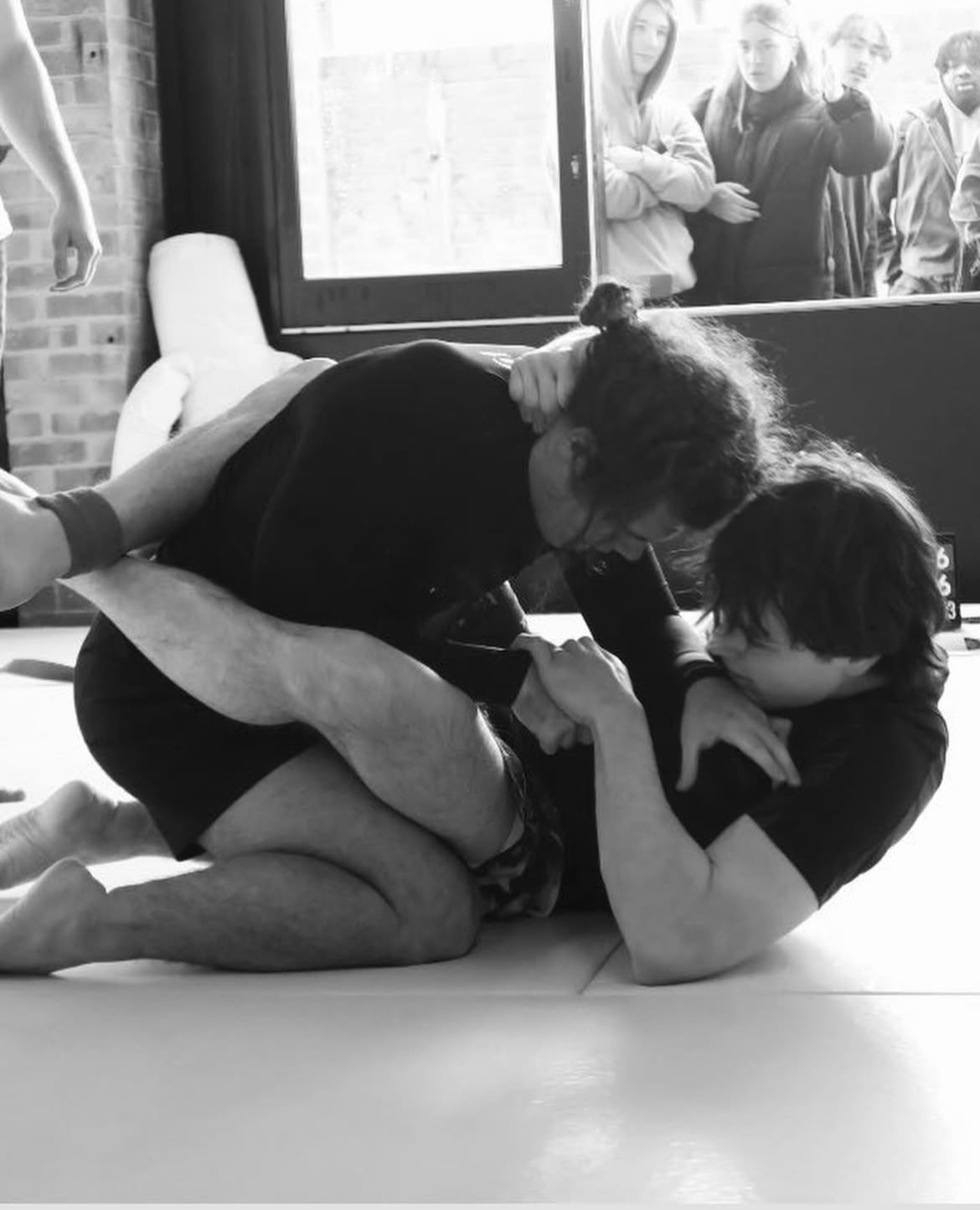
When you first step onto the Brazilian Jiu Jitsu (BJJ) mat, it feels brutal. There is no other way to put it. You feel as if you’re outclassed, outmuscled and outsmarted more times than you can count.
But here’s the simple truth, everyone starts here. Everyone. From world champions to weekend hobbyists, even your instructor who seems completely untouchable. Truth is, they all began at the bottom. They all began by getting tapped, gasping for breath and questioning if they’d ever improve.
Simply put, BJJ doesn’t care about your ego. What it does care about is teaching patience, humility and perseverance. Every roll and every drill are a reminder that discomfort is a part of growth. When you learn to embrace that discomfort or to “accept the suck” as some might say, you discover that persistence is the gateway to progress.
This article reflects on Brazilian Jiu Jitsu and the lessons it teaches about patience and perseverance. Progress doesn’t happen overnight, and most of the time it isn’t even noticed until one looks back. Meaningful change comes from showing up again and again, and again.
What even is Brazilian Jiu Jitsu
A friend once gifted me a mug that said BJJ is “the art of folding clothes while people are still in them.” As silly as it sounds, it’s still the best description I’ve heard. Brazilian Jiu Jitsu is a grappling martial art built on leverage and technique rather than brute strength. Proving that knowledge often beats raw size.
Training comes in two styles: A) gi: where the traditional uniform is worn and becomes part of the fight; and B) no-gi: which removes it entirely and relies on body control and positioning. Both feel like solving a puzzle under pressure, forcing you to stay calm while someone is trying to overwhelm you.
For me, what makes BJJ unique is its practicality. It’s not only practiced by hobbyists but also used by self-defence instructors, stunt performers and even military units. Within the martial arts community, it is often compared to chess, as each position can branch into endless possibilities. Within the Brazilian Jiu Jitsu community, it is widely accepted that the sports depth demands a long journey, often taking a decade or more to reach black belt and several years just to move past white.
Grain by Grain – The Rice Heap Paradox
The Rice Heap Paradox or the Sorites Paradox, is an old philosophical puzzle. It goes as follows: place a singular rice grain on the ground, it’s not a heap. Add another rice grain and yet it’s still not a heap. Keep at it, adding grain by grain until at some point you end up with a heap of rice. But where exactly was the turning point?
The paradox exposes the challenge of defining boundaries for concepts that may experience gradual change. In the end, it’s not really about rice heaps at all but about how small additions build into meaningful change, even when no single step seems like the decisive one.
For me, progress in BJJ has always been subtle, much like the piling grains of rice. Each technique and each small detail seemed almost invisible on its own. Yet over time, these tiny grains gather and suddenly what once felt impossible, submissions, transitions and escapes, became natural. There was no single “aha” moment for me. For true progress is never instant. It is the gentle accumulation of countless small efforts. Only fully visible when you pause, step back, and see how far you have come.
The Philosophy of Perseverance and My Takeaways
The metaphor of the rice heap and the lessons learned in Brazilian Jiu Jitsu extend into many areas of life. In relationships, it becomes clear that small gestures matter most. A word of encouragement, a moment of listening, or simply being present carries more weight than any grand display. Bonds are not built in a single breakthrough but through the quiet repetition of consistency.
In work and professional life, the lesson of resilience is evident. Just as on the mats, there are moments when progress feels impossible, when it seems as though others are moving ahead while progress appears stagnant. In those moments, the focus should not be on comparison but on staying committed. Setbacks are not failures; they are part of the journey that strengthens skill and character.
Humility is another key lesson. Humility involves the ability to sit still, to listen and to learn from those with more experience. Rather than dismissing advice, it should be accepted with openness, trusting that wisdom often arrives subtly and reveals itself over time.
Closing – Still Showing Up
The lessons continue to unfold, on the mats and beyond. Defeats are still endured and setbacks continue to appear. Yet quietly, the grains are accumulating. One day, a glance backward will reveal a mountain of rice, each grain carrying the weight of a lesson, the echo of perseverance and the quiet power of simply showing up.
Words by Yoan Nikolov
Support The Indiependent
We’re trying to raise £200 a month to help cover our operational costs. This includes our ‘Writer of the Month’ awards, where we recognise the amazing work produced by our contributor team. If you’ve enjoyed reading our site, we’d really appreciate it if you could donate to The Indiependent. Whether you can give £1 or £10, you’d be making a huge difference to our small team.