
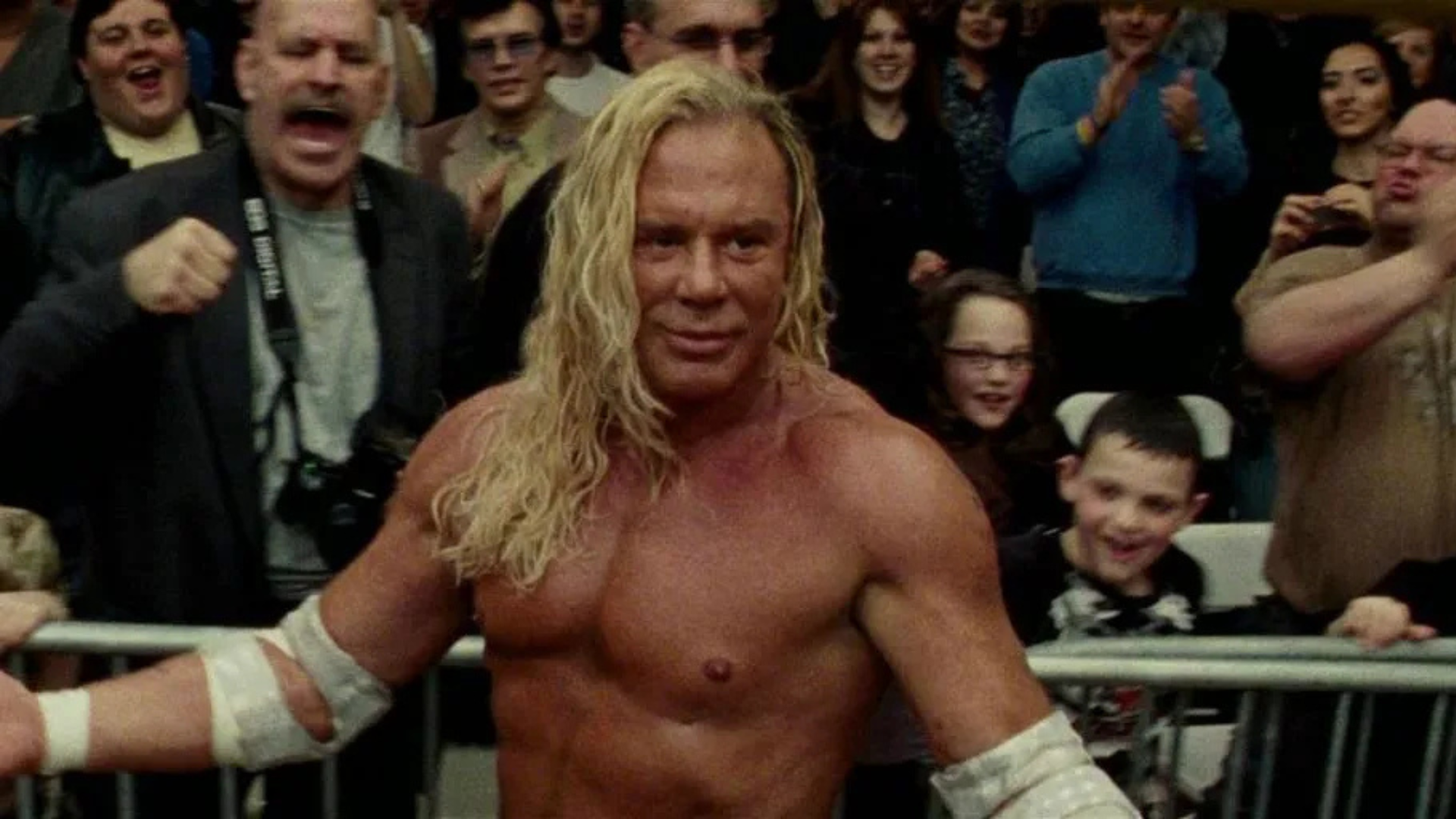
Darren Aronofsky has long been regarded as the auteur hellbent on exposing the fragility of human ambition and its inevitable collapse. Amidst his variable portraits of self-destruction, The Wrestler (2008) is perhaps his most haunting achievement, a film less showy and surreal than most of his work, but infinitely closer to the bone.
Once a professional wrestling superstar, Randy “The Ram” Robinson (Mickey Rourke) is now past his prime, fighting low-rent matches in school gyms and picking up shifts at a grocery store. His body is failing, his family estranged, and his attempts at intimacy are tentative and doomed. The only place he feels whole is inside the ring, under the hot lights and in front of a roaring crowd, fighting to hold the last scraps of his legacy.
Before The Wrestler, Aronofsky had established his reputation with films that explored the pain of the human condition in a heightened, surreal form. Pi (1998) and Requiem for a Dream (2000) relied on Matthew Libatique’s stylised cinematography and Jay Rabinowitz’s fractured editing to warp time and perception, overwhelming viewers with a sensory assault that mirrored the inner disorientation of the characters.
With The Wrestler, Aronofsky descended from the celestial and the nightmarish to the grim streets of New Jersey, stripping away all traces of stylisation in favour of a raw, documentary-like realism. Working with cinematographer Maryse Alberti, he embraced handheld camerawork, natural light, and authentic locations, often shooting with a single 12mm lens that kept the camera pressed close to Randy’s battered frame. Long, uninterrupted takes replaced the frenetic montage of his earlier films, immersing viewers in the quiet grind of his protagonist’s existence.
Aronofsky would return to this intimate mode of filmmaking with The Whale (2022), another chamber piece built around a comeback performance, this time by Brendan Fraser. However, the latter film often lapses into stagey melodrama, a flaw compounded by the baggage of its theatrical origins and debates over fatphobia. The Wrestler, however, achieves the emotional tirade through three infinitely human aspects.
Firstly, its lead performance from Rourke is arguably one of the finest of the 21st century thus far, and without the need for a body suit. Aronofsky has a gift for drawing career-defining turns from his actors, but what Rourke achieves here feels almost alchemical. The life of the former Hollywood golden boy, marked by self-destruction and eventual exile, mirrors Randy’s so closely that performance and biography collapse into one. This is on top of how the actor trained extensively for months with professional wrestlers, enduring the bruises and exhaustion of the ring (requiring three MRI scans) to authentically inhabit Randy’s battered body. Watching his vulnerability, his rawness, makes the film nearly unbearable at times, as though the camera has intruded on something too intimate to share.
This leads to the second point: how The Wrestler treats art and escapism through professional wrestling. Dismissed by many as a spectacle, Aronofsky portrays it with both brutal honesty and quiet reverence. Wrestling becomes a metaphor for the human condition: who hasn’t clung to a passion or mask long after it became unsustainable? Yet this pursuit comes at a steep cost, feeding an audience hungry for illusion.
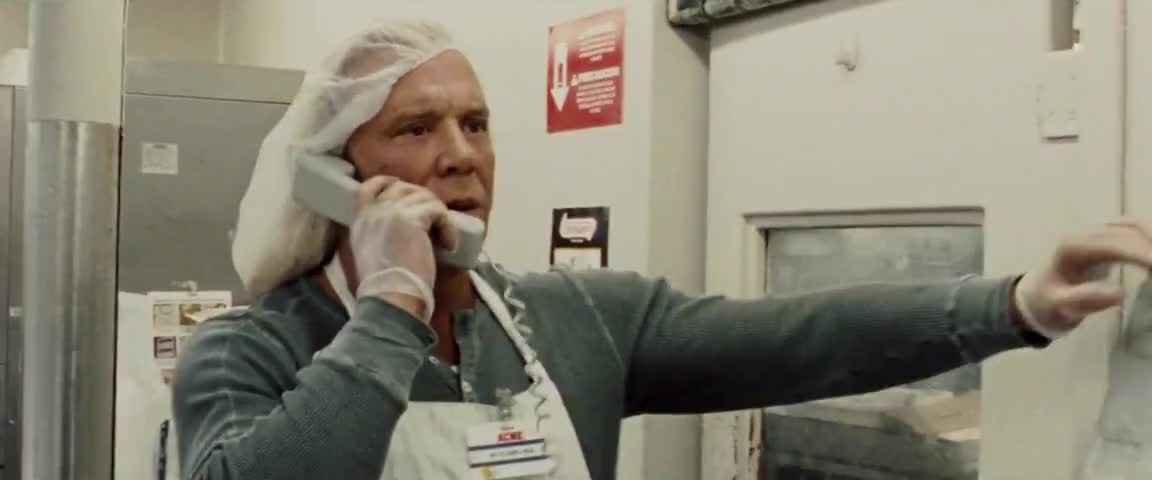
While art promises escape, the film suggests escapism can also be destructive. Randy’s only refuge is the ring, even as it hastens his decline. Like the drugs in Requiem for a Dream, wrestling becomes a way of fleeing reality, but one that erases his true self. Robin Ramzinski disappears into the myth of “The Ram,” a split that collapses when he quits his job at the Deli and embraces his fatal return to the ring (“Oh Robin… it’s Randy!”).
Randy’s tragedy feels more universal than Aronofsky’s extremes elsewhere. Not everyone knows drug addiction or obesity struggles, but many know the fear that a passion giving life meaning might also destroy it. The hunger for applause, once sustaining, may leave only emptiness. Through Randy’s broken body, The Wrestler forces its audience to confront these questions, the ache echoing far beyond the ring.

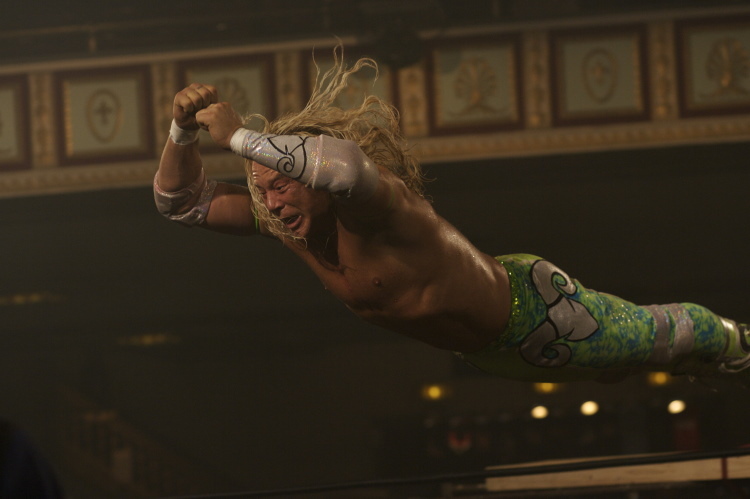
Finally, there is no redemption here. Whereas most sports dramas, and even The Whale, promise some form of triumph at the end, The Wrestler offers only inevitability. The underdog arc is teased, then stripped away. There will be no miraculous comeback, no championship belt to restore Randy’s place in the world. His final leap from the top rope is not victory, but surrender. It’s a recognition that sometimes the only way to feel alive is to return to the very thing that is killing you.
The added sprinkle of sombreness is that Rourke’s similarities with Randy continued beyond The Wrestler. Though his comeback was expected after the film’s release, which saw multiple award nominations and wins, the actor slipped back into obscurity, taking low-budget projects that mirrored his character’s decline. Both actor and character suffer for their art, with little payoff.
The tears in his eyes during that final match carry the full weight of the film. They are not only tears of gratitude for fans who still chant his name, though that is part of it. They are also grief for the life he has lost, resignation for the life he cannot build, and acceptance of the end he has chosen. Randy “The Ram” Robinson may be a fiction, but in that moment, he embodies something devastatingly human: the refusal to let go of the only identity that ever truly made sense. If Requiem for a Dream is Aronofsky’s howl, The Wrestler is his whisper. Yet whispers, when heard clearly, often cut deepest. The film lingers because it suggests a truth many would rather avoid: sometimes the roles we cling to, the passions we pursue, the masks we refuse to shed, are the very things that undo us.
Words by Joseph Jenkinson
Support The Indiependent
We’re trying to raise £200 a month to help cover our operational costs. This includes our ‘Writer of the Month’ awards, where we recognise the amazing work produced by our contributor team. If you’ve enjoyed reading our site, we’d really appreciate it if you could donate to The Indiependent. Whether you can give £1 or £10, you’d be making a huge difference to our small team