
Content warning: this review contains references to alcoholism and suicide. If you require support, please contact the Samaritans through their website, or on 116 123.
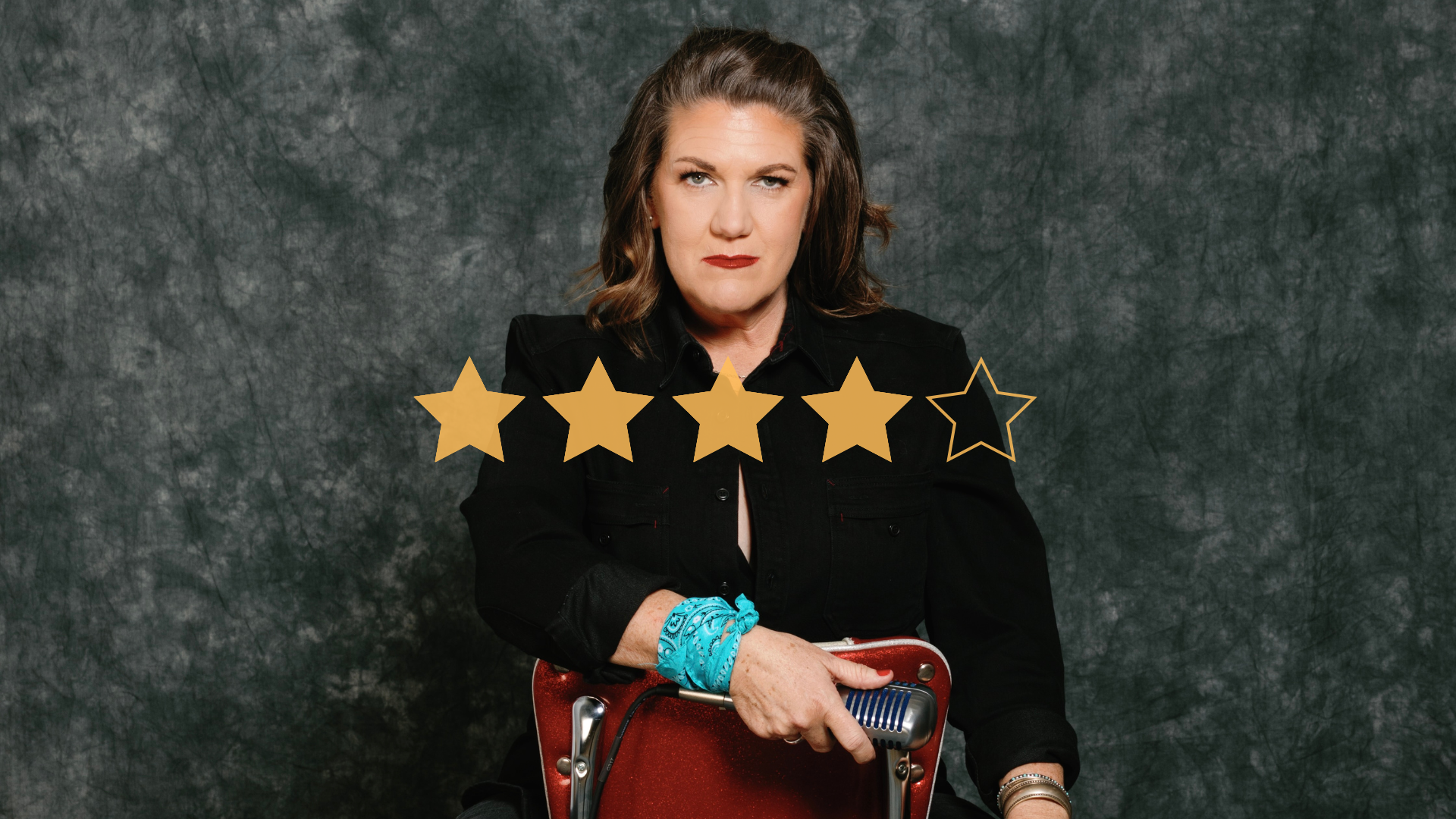
★★★★
When we first enter the theatre for No Good Drunk, a figure sits in the corner, cowboy hat obscuring her face, and white boots poking out from the darkness. Then the show begins, and writer and performer Stacie Burrows bounces up to introduce her story. The ominous, perhaps slightly creepy start is a stark contrast to the warmth she brings to the play.
No Good Drunk was born out of Burrows’ desire for curiosity. When she is pregnant, her neighbour’s child says she should call her baby Brock. Upon telling the story to her parents, her mum turns white as a sheet: Brock was her estranged father’s name, who died when she was nine from cirrhosis of the liver, caused by alcohol poisoning. Armed with nothing but a few records plucked from her late grandmother’s filing cabinet and an unsatiable curiosity, she embarks on a mission to uncover her family’s hidden past, discovering how deep alcoholism runs in the men in the family.
A key theme in the show is the necessity of talking about alcoholism, not shying away from it. History has a tendency to rhyme, not repeat, she reasons, citing her family history as why. Her grandmother Clairice forbid Brock from seeing his daughter, which meant she was unaware of the signs and went onto marry an alcoholic. The disease can be hereditary, which means it is extremely important that their children are aware. Unfortunately, Burrows’ brother was never told that his dad was an alcoholic and died by suicide, instead believing he was ill, and unfortunately fell into the same path. Burrows tries her best to support him, but ultimately cuts off contact when he leaves her disturbing voicemails and emails threatening her and her kids. Burrows vows to tell her nephews his story, to hopefully stop history from rhyming.
The songs, co-written by Burrows and Sam Small are outstanding, and they are packed with vivid imagery. A stand-out one is when she describes Laura as having two granite crowns, referring to her two tombstones. They compliment her voice very well, which at places gave me goosebumps, especially during the higher pitched wailing which really show her pain and anguish. The multimedia element is mostly effective, particularly when she presents photos of her family, copies of important documents like death certificates, and voice notes she captured during her investigation. There are home videos played during her singing, which don’t particularly add anything to the narrative behind the sweet anecdote of her kids helping to film them.
Plays like this one can often end up being centred around the alcoholic: as she says, while the no good drunk is having the time of his life, everyone else is destroyed in his orbit. Burrows tries her best to reframe the narrative, paying testament to the strong women who broke away from these abusive men and provided the best life possible for their children, despite being miserable themselves. She is particularly proud of her mother, who has experienced the impacts of alcoholism as a daughter, wife and mother.
As Burrows reminds us at the start, the play is highly relevant. Alcoholism is sadly still prevalent in many families, which she is brutally reminded of when she finds her 17 year old son blacked out in the driver’s seat of his car one Sunday morning after mixing too many substances. She is determined that history won’t rhyme again, and gets him into one of the top rehab programmes to support his recovery. No Good Drunk is a very emotional show, and by the end, multiple audience members were crying with her.
No Good Drunk will be performed at Pleasance Courtyard – Attic until 25 August as part of Edinburgh Fringe.
Words by Ellen Leslie
Support The Indiependent
We’re trying to raise £200 a month to help cover our operational costs. This includes our ‘Writer of the Month’ awards, where we recognise the amazing work produced by our contributor team. If you’ve enjoyed reading our site, we’d really appreciate it if you could donate to The Indiependent. Whether you can give £1 or £10, you’d be making a huge difference to our small team.