
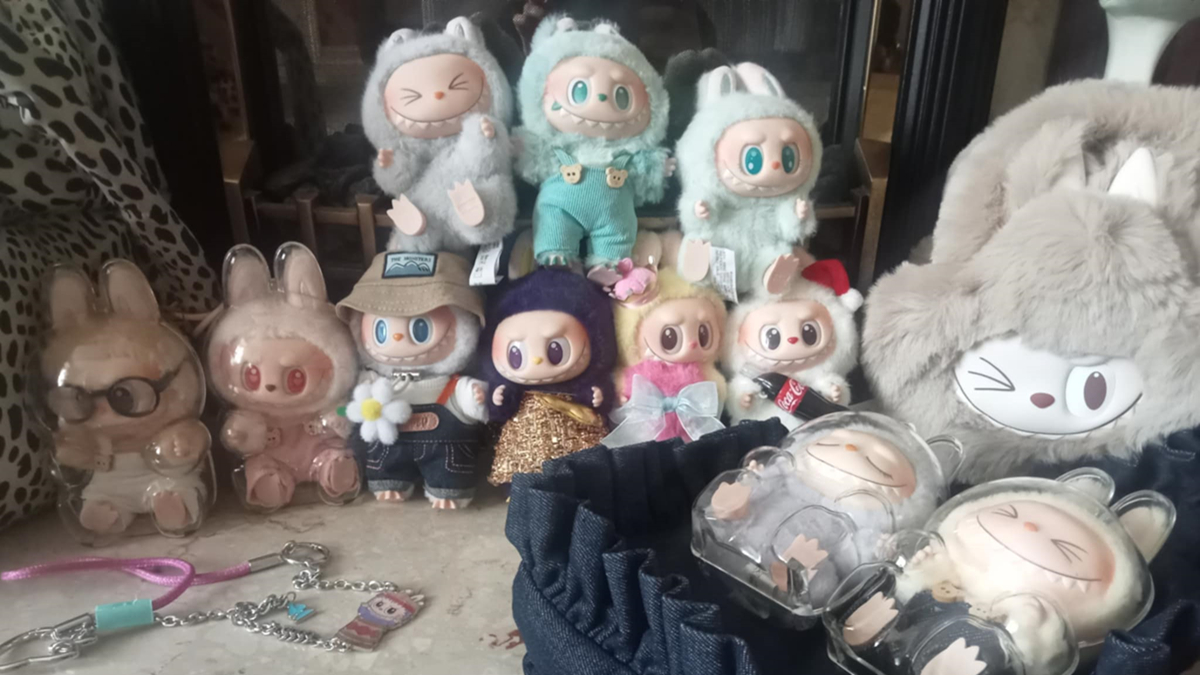
From keychains on shoulder bags to massive queues and counterfeit versions sold by street vendors, there is no escaping the worldwide success of Labubus; furry plush dolls with bunny ears and a signature toothy smile that is either adorable or eerie. Designed by the Hong Kong-Belgian artist Kasing Lung and marketed by Chinese retailer PopMart, the toy is another ubiquitous trend that illustrates China’s cultural influence on the rest of the world.
Under globalisation, particularly with social media, Asian pop songs, TV shows, and food have become more accessible to the West than ever. Think how popular K-pop and sushi are, for instance. Labubus are the latest example. The elvish dolls rose to fame after K-pop idol Lisa from Blackpink posted a picture of them. While Korean and Japanese cultures are well-liked, Chinese nationals and culture have a more predominant influence worldwide due to China’s historical ties with foreign countries; colonialism, frequent trading, and communities established by Chinese sailors in the 19th century.
China has been putting in the effort to catch up with the world since the reform and opening-up policy in 1978. Introduced in 2000, the Go Out (Zou Chu Qu) Policy provided state subsidies to support Chinese enterprises with acquisitions abroad. In 2013, the Chinese government launched the Belt and Road Initiative to connect China with the world, both geographically and economically. Following on from these government policies, the soaring economic performances in the past years have cemented China’s title as the world’s biggest manufacturer. For decades now, Chinese factories have been manufacturing goods designed by and sold under the names of Western companies. In recent years, with an increasingly well-established manufacturing system and a rapidly growing economy, China started developing their own labels that export internationally. PopMart is just one example.
China has been consistently making economic breakthroughs with their comprehensive knowledge of global trends. Made in China 2025 aims to reduce reliance on foreign technologies and shift the country’s economic focus from manufacturing to higher-end industries, including artificial intelligence (AI), robotics, and electric vehicles. The video game Black Myth: Wukong and the animated film Ne Zha 2 represent success following investment in these sectors. Black Myth: Wukong, which has sold over 20 million units worldwide, boasts stunning graphics and an interactive combat system facilitated by AI. Centred on the Chinese mythological character Wukong, the game contains traditional poems and fables that were translated into English. The game went above and beyond to promote Chinese culture by embedding it in the game’s narrative.
Also gaining impressive sales through harnessing AI was Ne Zha 2, an animated action film which has grossed over $2.19 billion. It has overtaken Inside Out 2 to become the highest-grossing animated film in history, and has surpassed Star Wars: The Force Awakens to become the fifth highest-grossing film ever. These blockbusters, and the Labubu craze, demonstrate how Chinese exported emanations have extended beyond the country’s traditional powerhouse industries into a variety of media forms. Chinese media has been praising Ne Zha 2 for months, portraying it as an acclamation of Chinese cultural influence. The Global Times, a Chinese tabloid, wrote that “Chinese culture is constantly moving forward in inheritance and innovation and showing its unique charm.” Ne Zha 2 proved to be a prime opportunity to prove that China can now make its high-quality animated films with lasting cultural impact.
While Ne Zha 2‘s success is undoubtedly impressive, doubts have been raised about the film’s global popularity. Around 97% of the film’s box office sales came from within China. Chinese viewers also reportedly make up most of the demographic watching Ne Zha 2 in other countries. This aroused immense patriotic sentiment, generating peer pressure and facilitating word of mouth for the film. Chinese audiences repeatedly visited the cinema for Ne Zha 2, and schools organised trips to the cinema. This collective effort contributes to the skyrocketing box office, and yet implies that the high numbers might realistically fail to reflect the film’s true popularity and reach.
So, where do Labubus fit in? Unlike Black Myth: Wukong or Ne Zha 2, Labubus have definitively broken out of the Chinese market. PopMart has revealed that sales of Labubus generated $870 million in the first half of 2024, popularity that has caused the retailer’s website to crash on multiple occasions. The dolls, their variations, and their outfits are all over social media, from unboxing videos to memes and costumes. Celebrities from all walks of life have shown off their collections, from pop star Dua Lipa to the Academy Award-winning actress Michelle Yeoh. As if being everywhere is not enough to prove the dolls’ prominence, TIME has named PopMart one of the 100 most influential companies in 2025, thanks in large part to the Labubus.
The loyalty of many of China’s 1.4 billion residents is strong enough to support its advanced media industries inside the country. These trends already serve as a warning that international media and entertainment companies cannot take the support of Chinese audiences for granted. Now, with the rise of the Labubus, the warning is even starker; that the latest viral trends need not come from America, Europe, or other countries in East Asia. China is more than capable of extending its cultural influence far beyond what it has managed to achieve previously. And it is thanks in large part to the Labubus.
As with many consumerist crazes, it is not entirely innocent, particularly when it comes to China’s national image. A 2023 survey shows that China was largely seen unfavourably across 24 countries, due in part to ongoing concerns regarding human rights and worries about the territorial integrity of China’s neighbours. Yet people clearly overlook the country’s debatable national image when it comes to indulging in the latest trend. The hype for Labubus has proved that the world’s desire for up-to-date trends outweighs any unease towards their country of origin. Like Chris Pereira, founder and chief executive of consultancy firm iMpact said, Labubus are just “so good that no one cares they’re from China.” China’s increasing cultural capital worldwide is a means for the country to shirk off elements of its sometimes negative reputation.
While the Labubu sensation might be coincidental and momentary, it will not be the last Chinese product that sweeps across the world. The popularity of the doll proves that the world’s scepticism about China doesn’t stop Chinese goods from thriving in the international market, building on the success that new Chinese media already enjoys at home. With consumers’ behaviours conflicting with their attitude towards China alongside the country’s continual improvements across numerous sectors, the day when Chinese labels outshine the rest of the world may be closer than many people suspect.
Words by Megan Wong
Support The Indiependent
We’re trying to raise £200 a month to help cover our operational costs. This includes our ‘Writer of the Month’ awards, where we recognise the amazing work produced by our contributor team. If you’ve enjoyed reading our site, we’d really appreciate it if you could donate to The Indiependent. Whether you can give £1 or £10, you’d be making a huge difference to our small team.