
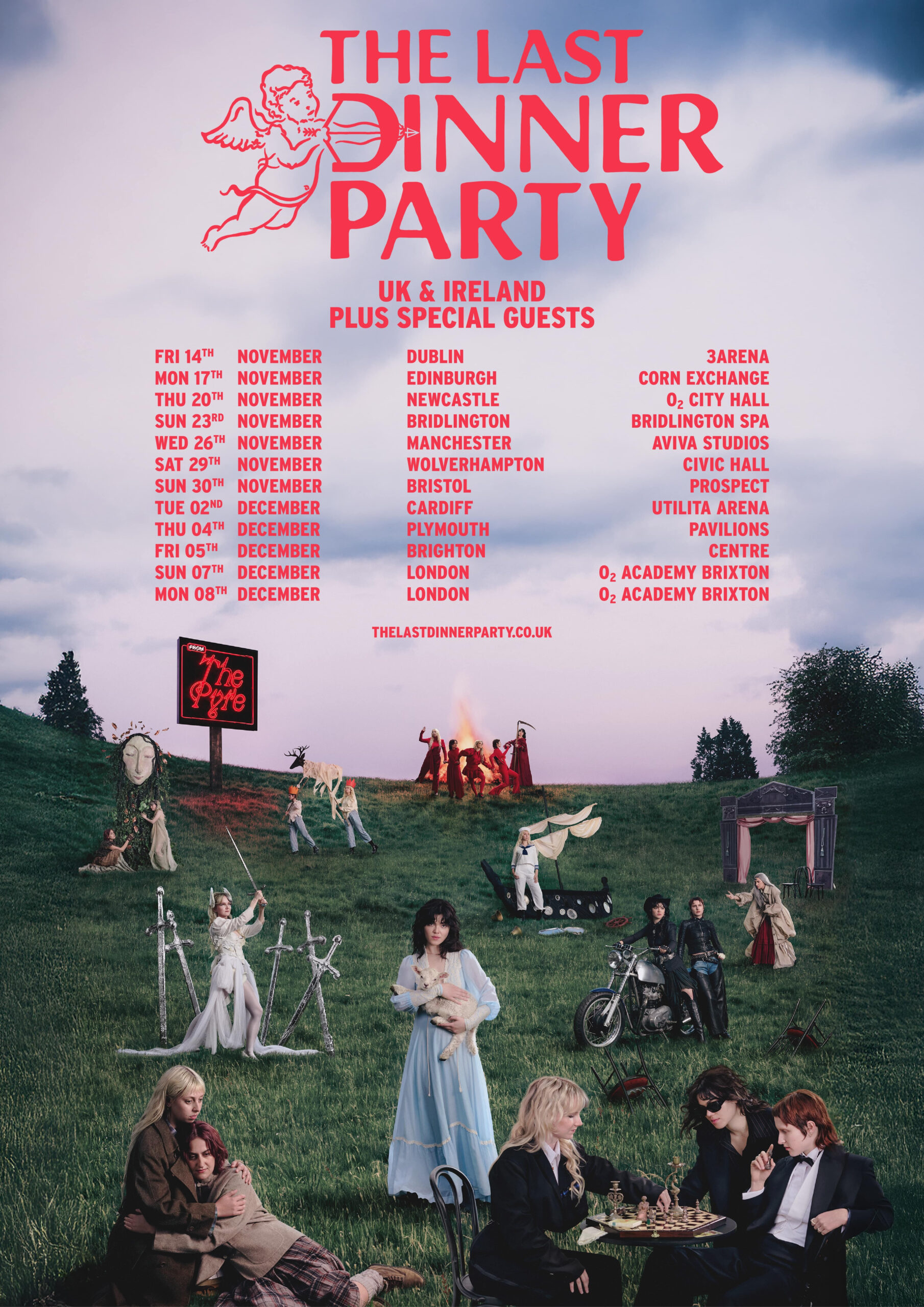
Stepping into the UEA LCR on a chilly November evening to see The Last Dinner Party felt like entering a mythical landscape rather than a student union venue. Gone were the medieval-esque banners, golden goblets and soft clamshell lighting from their last tour; in their place stood moss-covered boulders and ornate arches, like ruins of a long-forgotten garden. It was a fitting visual metaphor for a band entering a new era.
When they last played Norwich in late 2024, The Last Dinner Party had one twelve-track album and a reputation as one of the UK’s fastest-rising acts. Now, with their second album The Scythe, they arrived in Norwich with a set lasting one hour and forty-five minutes. They did not just showcase their new tracks; the brilliance lay in how new material intertwined with debut-era essentials.
The venue was nearly full even for the support, a testament to the main act’s pull but a daunting prospect for any opener. Fortunately, the audience were in for a treat with Imogen and the Knife. The unique orchestration of saxophone, trumpet, drums and bass blended beautifully with the brooding vocals and keyboard of frontwoman Imogen. At times the vocals were PJ Harvey-esque but always powerful, distinct and perfectly matched to the arrangements. Lyrically, the songs were uncompromising, the sound dark like noir-jazz.
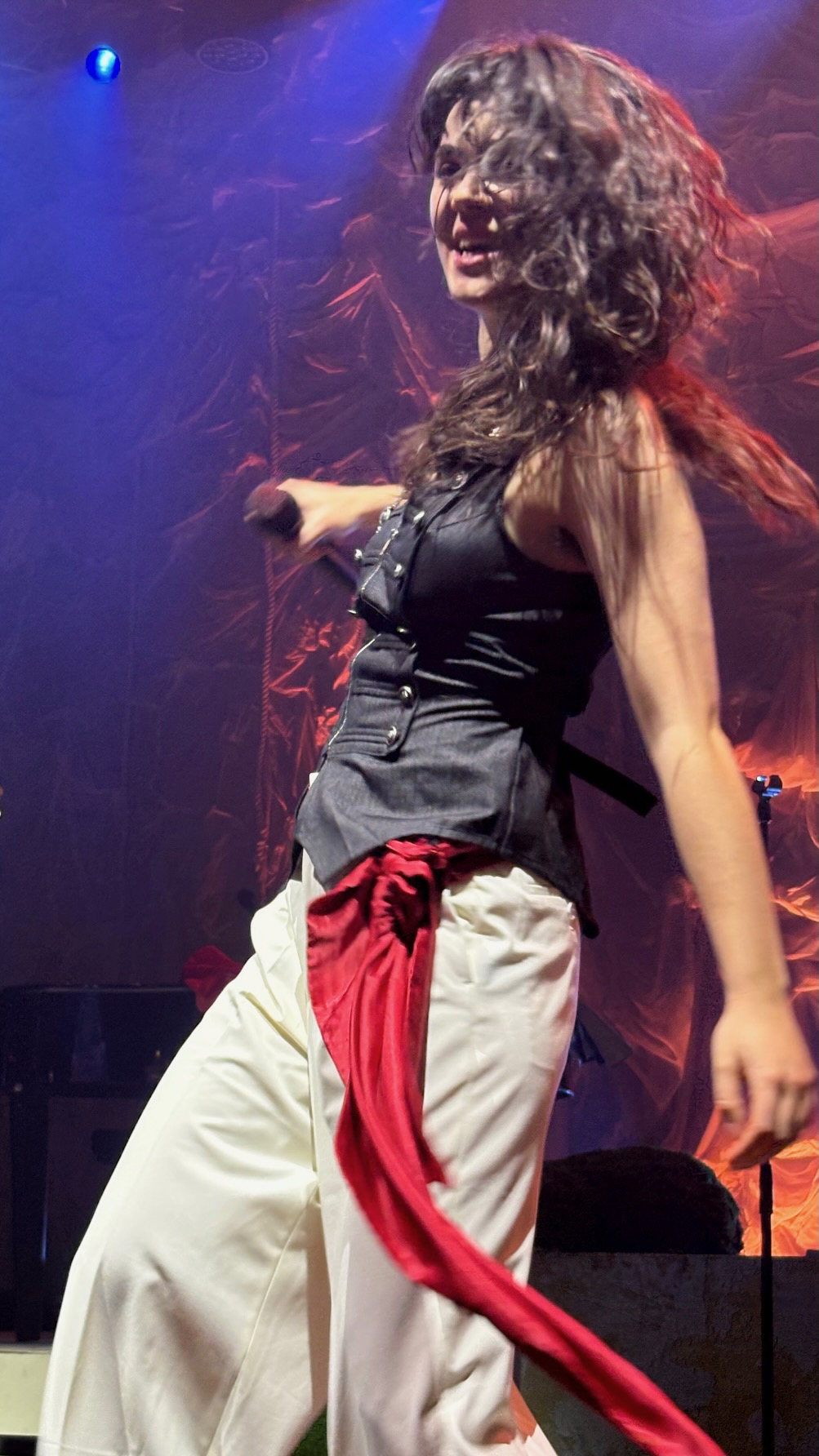
The excitement was palpable from the screaming assembly as the five band members filed onto the stage and fired up the opening chords to ‘Agnus Dei’. Flanked by her bandmates, Abigail Morris took centre stage wearing a Napoleonic-era military jacket, white trousers and a thick red ribbon. From the first moment, Morris conducted the room like a charismatic general, all arm flourishes and Jarvis Cocker-like wrist flicks. As the song drew to a close, Emily Roberts stood at the rear stage with her St. Vincent guitar and tore through the final bars.
‘Count the Ways’ followed, with its own theatrics: Roberts and bassist Georgia Davies stood shoulder-to-shoulder at the rear while Morris, with a falsetto flourish, leaned against Aurora Nishevci’s piano. During the song, a fan in the pit passed a lesbian pride flag to Morris, who smiled, waved it proudly, then laid it across the piano.
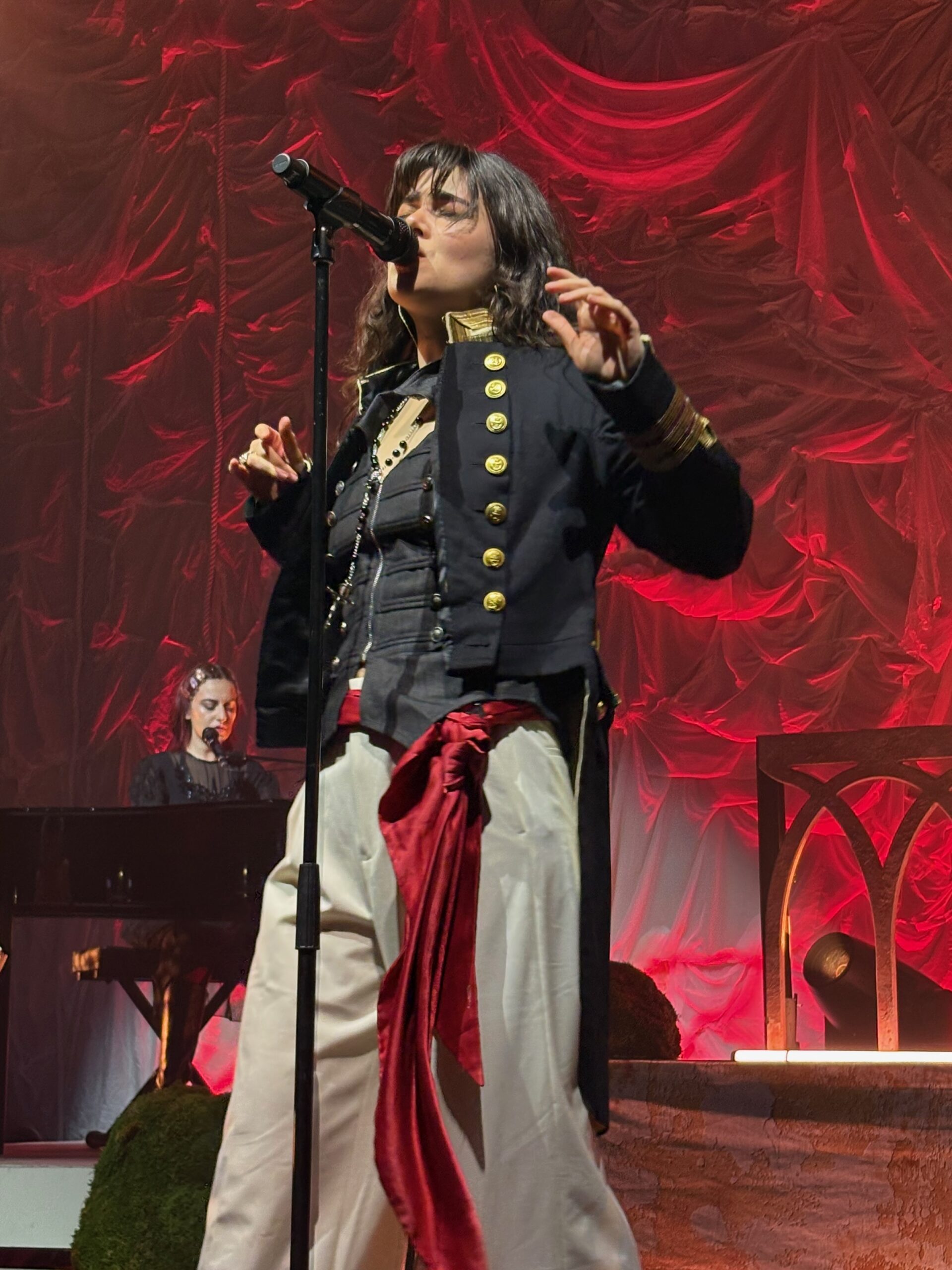
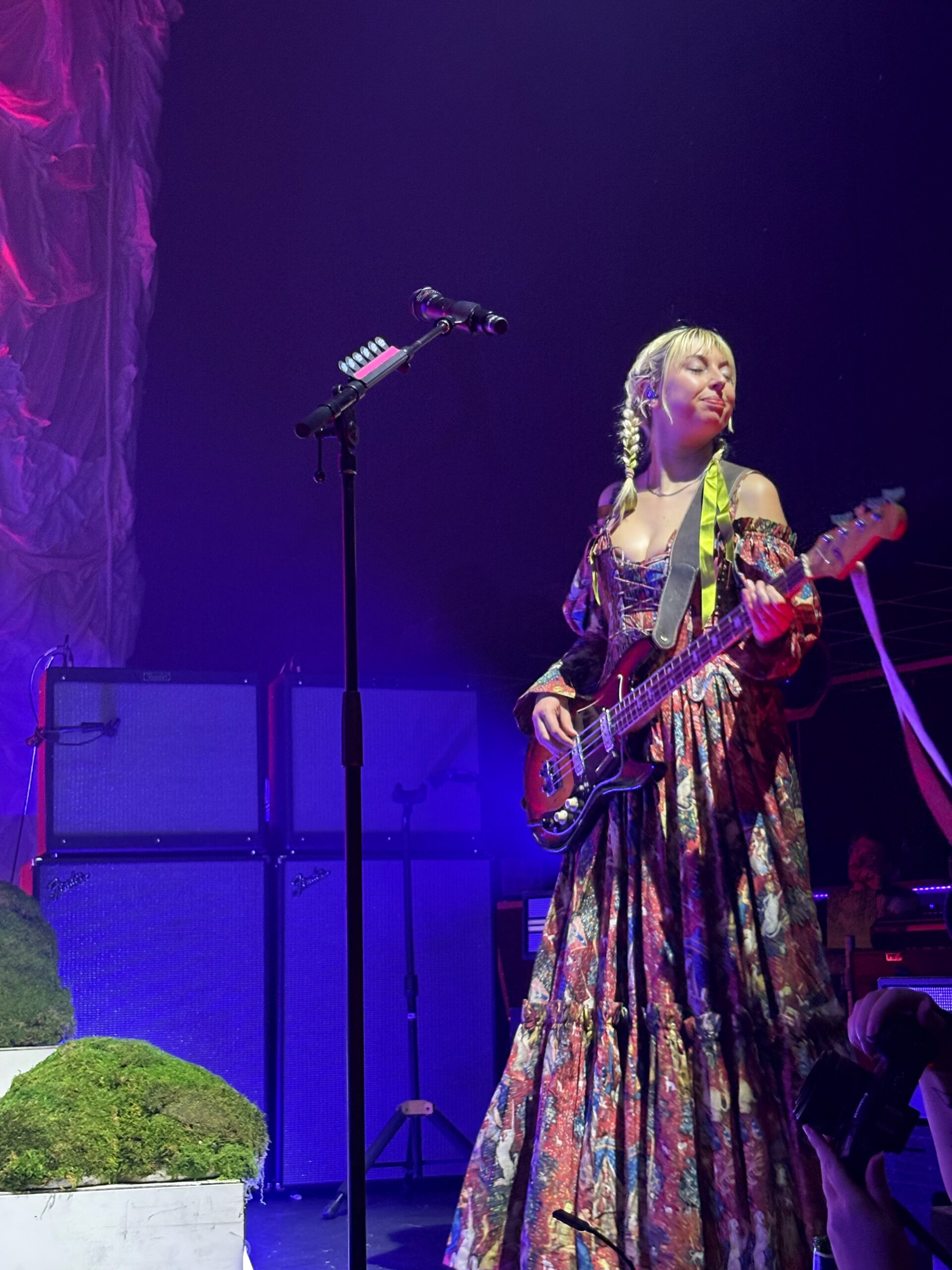
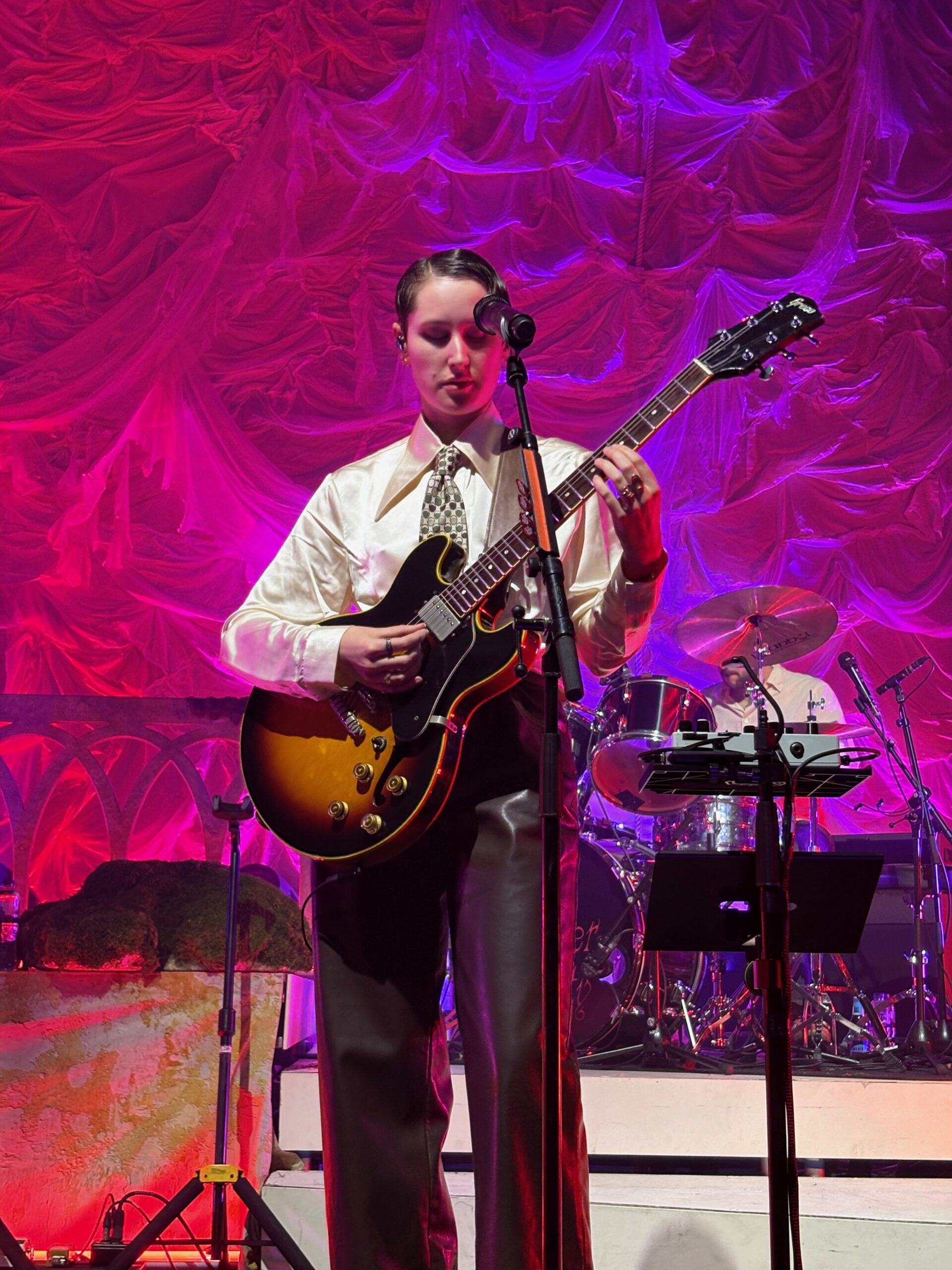
Throughout the night, the band showcased not just musicianship but personality. Before ‘On Your Side’, Morris announced “We are so glad to be among you again,” and giggled “Yay!” when a fan replied “We’re glad too!” When she accidentally spilled her beer after a trip to the pit during ‘My Lady of Mercy’, she joked, “Looks like I’ve p*ssed myself,” while Davies teased her. Having been handed a replacement, Morris said with a regal flourish, “When you’re old enough, someone brings you beers!”
It was striking to see the band sharing more vocal duties. Nishevci took lead vocals on ‘I Hold Your Anger’, showcasing her rich tone as she accompanied herself on piano while the band kept a slow, steady beat. Morris played acoustic guitar, duelling against rhythm guitarist Lizzie Mayland before the final verse.
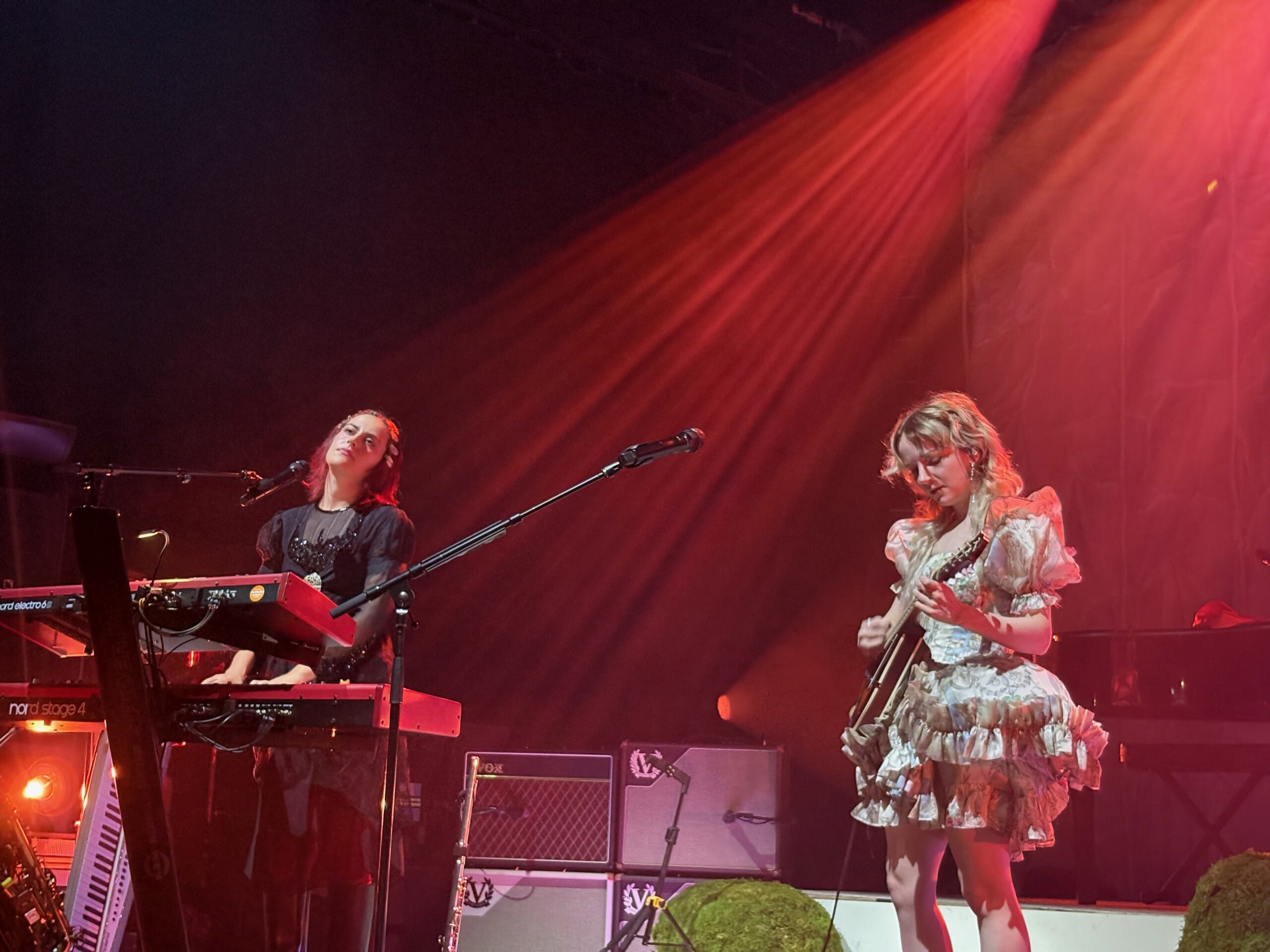
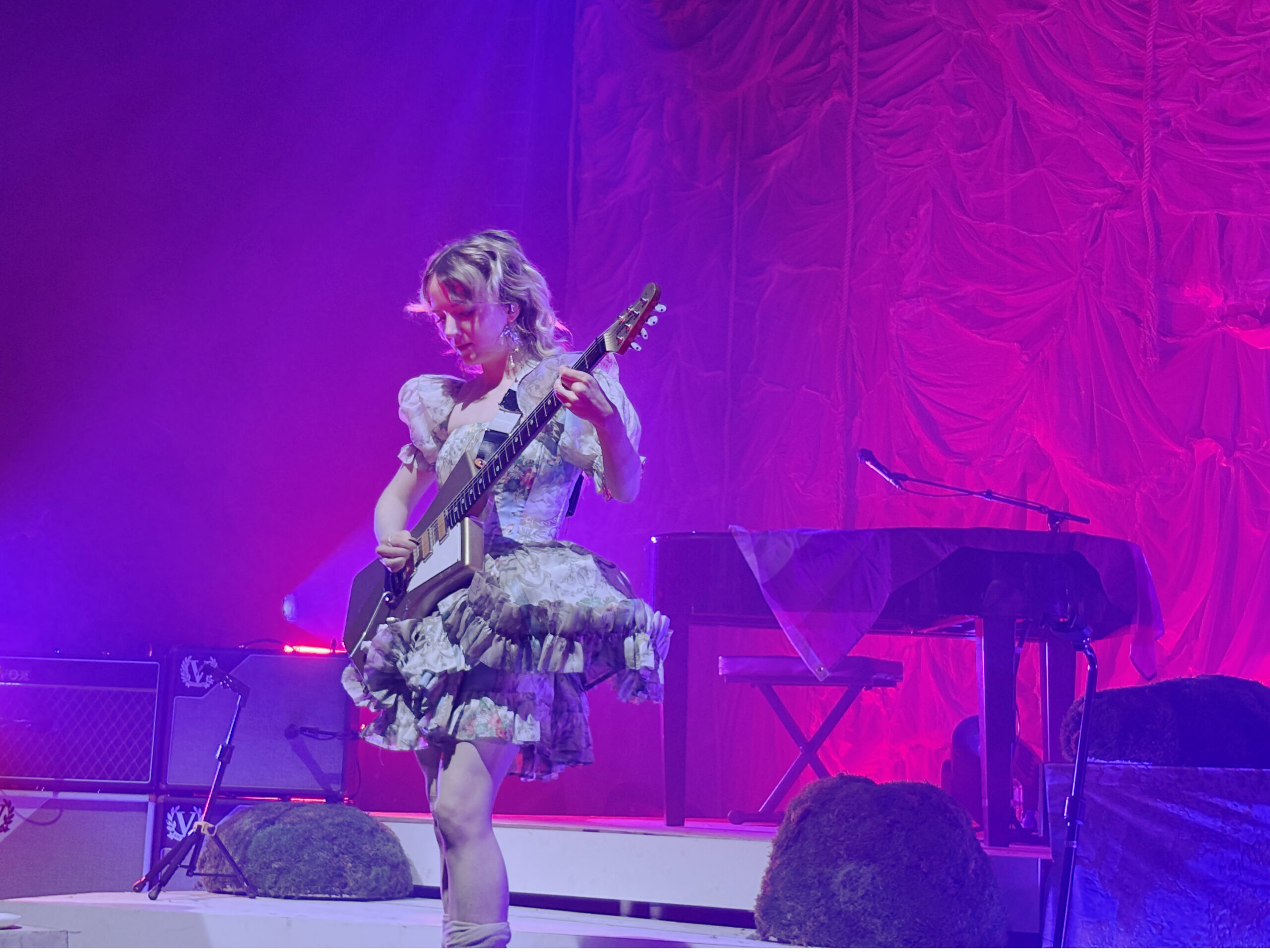
Nishevci also led on ‘Gjuha’, explaining her shame at not knowing her mother’s Albanian tongue. She said the Irish-language film Kneecap helped crystallise the song’s meaning: “It’s a yearning for connection and a celebration of language.” The harmonies framed Nishevci’s vocals and ended with Roberts’ mesmerising mandolin riff. To highlight their versatility, Mayland sang the first verse of ‘Rifle’ while Morris played piano.
The band’s musical development is evident in the way they are able to change the pacing but keep the audience with them. During ‘Woman is a Tree’, the crowd fell silent as the group formed a tight circle, screaming in unison before Morris’ soft lead floated over them. Angelic backing vocals gave the moment real weight.
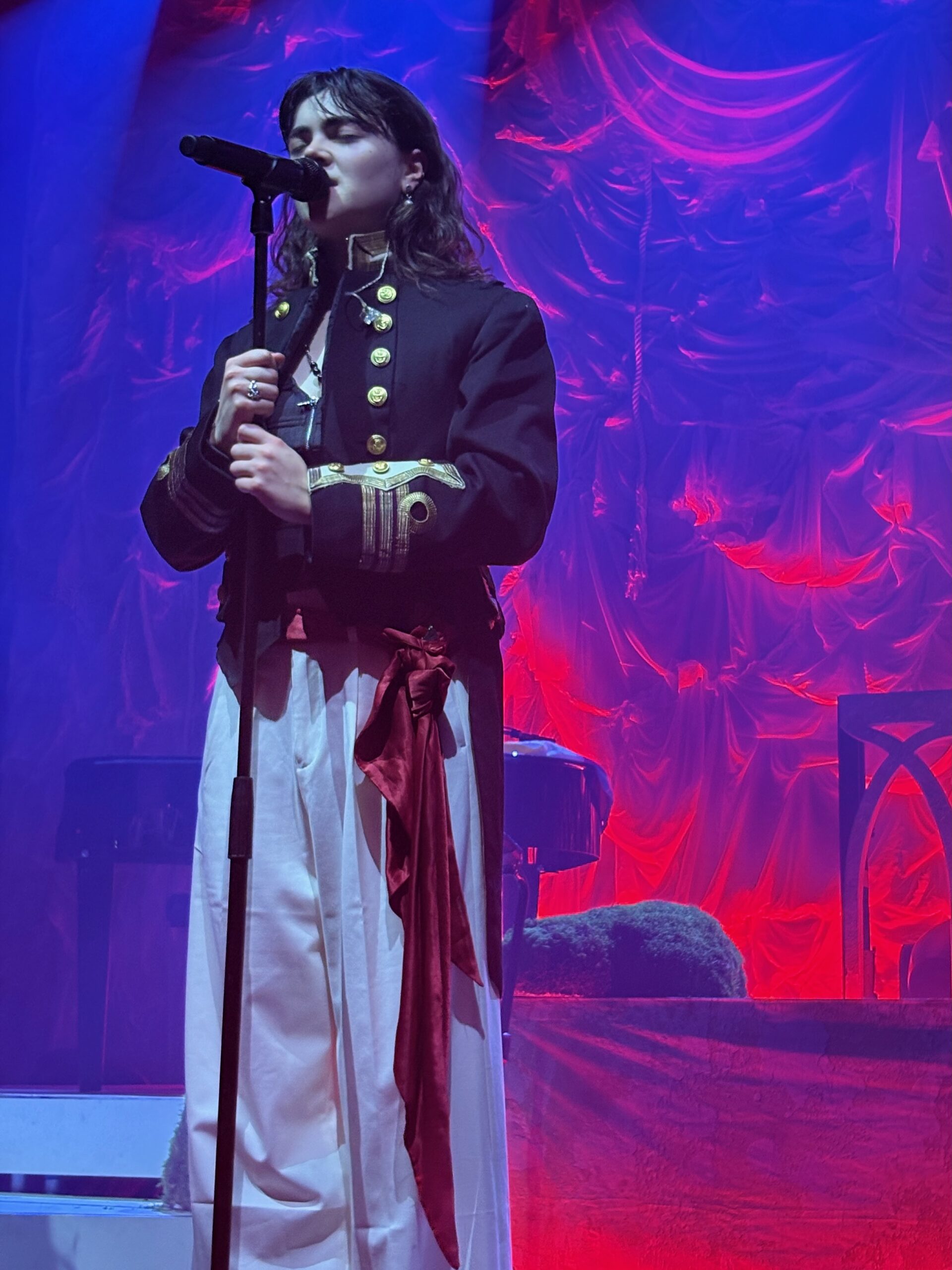
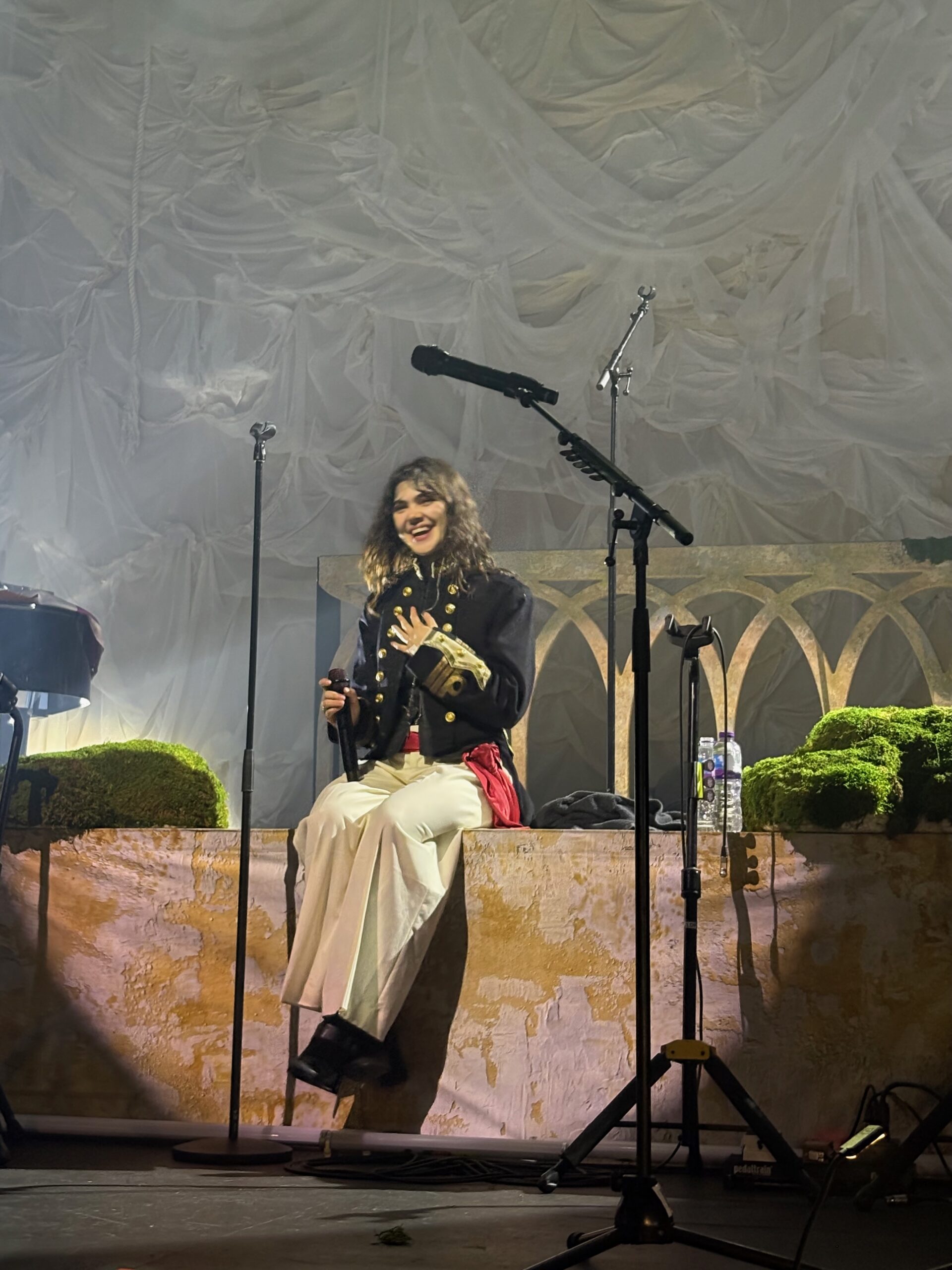
‘Sail Away’ was another moving moment as the band sat down with just Nishevci’s gentle piano accompanying Morris’ swooning vocals. Morris giggled at the sight of the audience swaying with their mobile phone lights. It was one of several moments where the band’s theatricality gave way to something unguarded and human.
The band were just as potent when they went heavy. The unreleased ‘Big Dog’ was a sound explosion: Davies spoke the long introduction, lights strobed, guitars howled, and Morris prowled before collapsing to her knees in a falsetto climax. ‘Burn Alive’, rarely played on this tour, drew an ecstatic reaction — enough to make Morris confess she enjoys playing it later in the set when she is less nervous (It was the opener on the last tour). This time she revelled in it, strutting across the stage as the crowd danced. ‘Sinner’ opened with a slow build; Morris casually watched as she sipped a beer. As Roberts played the familiar riff, Morris slipped off her jacket and began dancing and twirling, dueting with Davies while Roberts played a scorching solo.
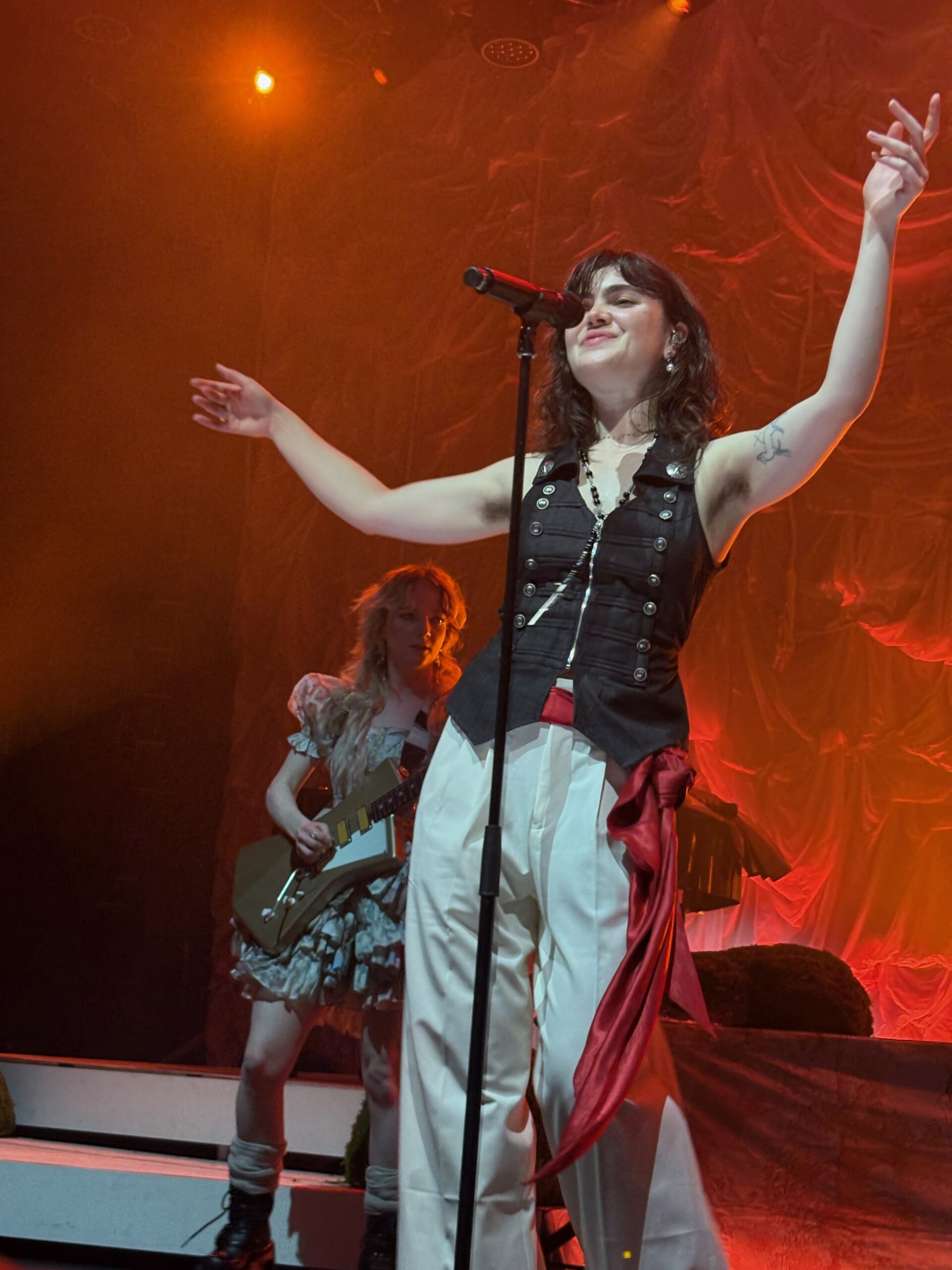
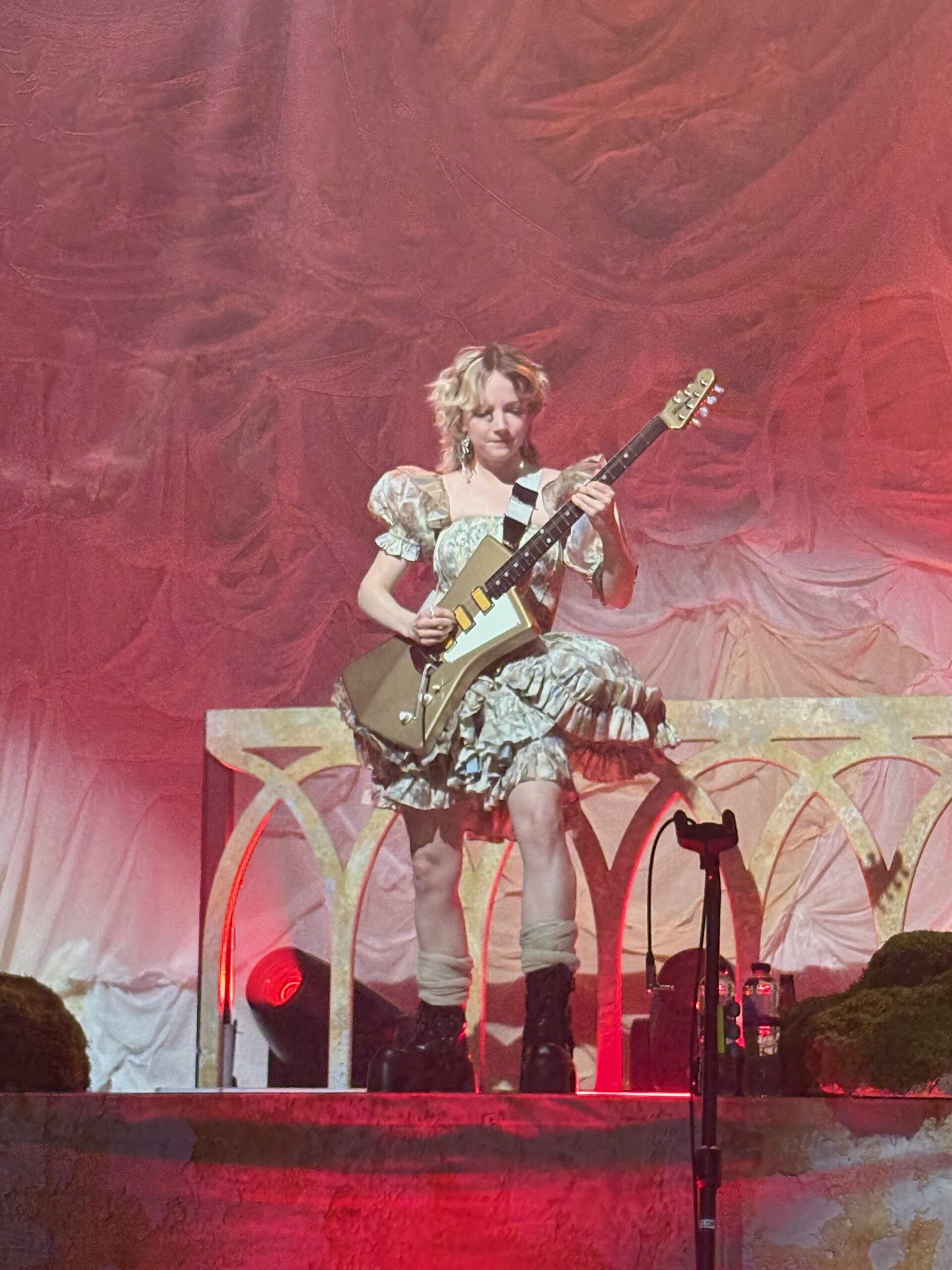
A highlight was the recent single, ‘The Scythe’, a song about grief and loss, using the metaphor of a scythe to represent death or separation, with a thread of hope. Roberts started on flute before switching to slide guitar, creating a swirling tapestry under Morris’ powerful vocal. For once, Morris stood at the mic stand orchestrating the crowd, who sang back every line. As the lyrics “Don’t cry, we’re bound together” echoed across the venue, there was a tremendous sense of togetherness.
Not everything went smoothly — and that made the night even more impressive. During ‘Inferno’, Morris halted the song when someone fainted in the pit. “We have to make sure everyone’s okay,” she insisted, asking for a thumbs-up before thanking the audience for their patience and counting the band back in. It was a moment of professionalism and compassion that reinforced the bond between band and fans.
And then: chaos. The crowd went wild to smash hit ‘Nothing Matters’ and maintained that energy during the frenzied encore, ‘This Is the Killer Speaking’. Before the final chorus, Morris taught the audience simple choreographed moves resembling the mashed potato. Channeling her inner school matron, she created a pantomime atmosphere — kitsch, wholesome, and lapped up by the crowd.
The final act was not musical but communal. During the reprise of ‘Agnus Dei’, Morris paused to thank every single member of their back-room team — sound techs, crew, caterers — each named and applauded.
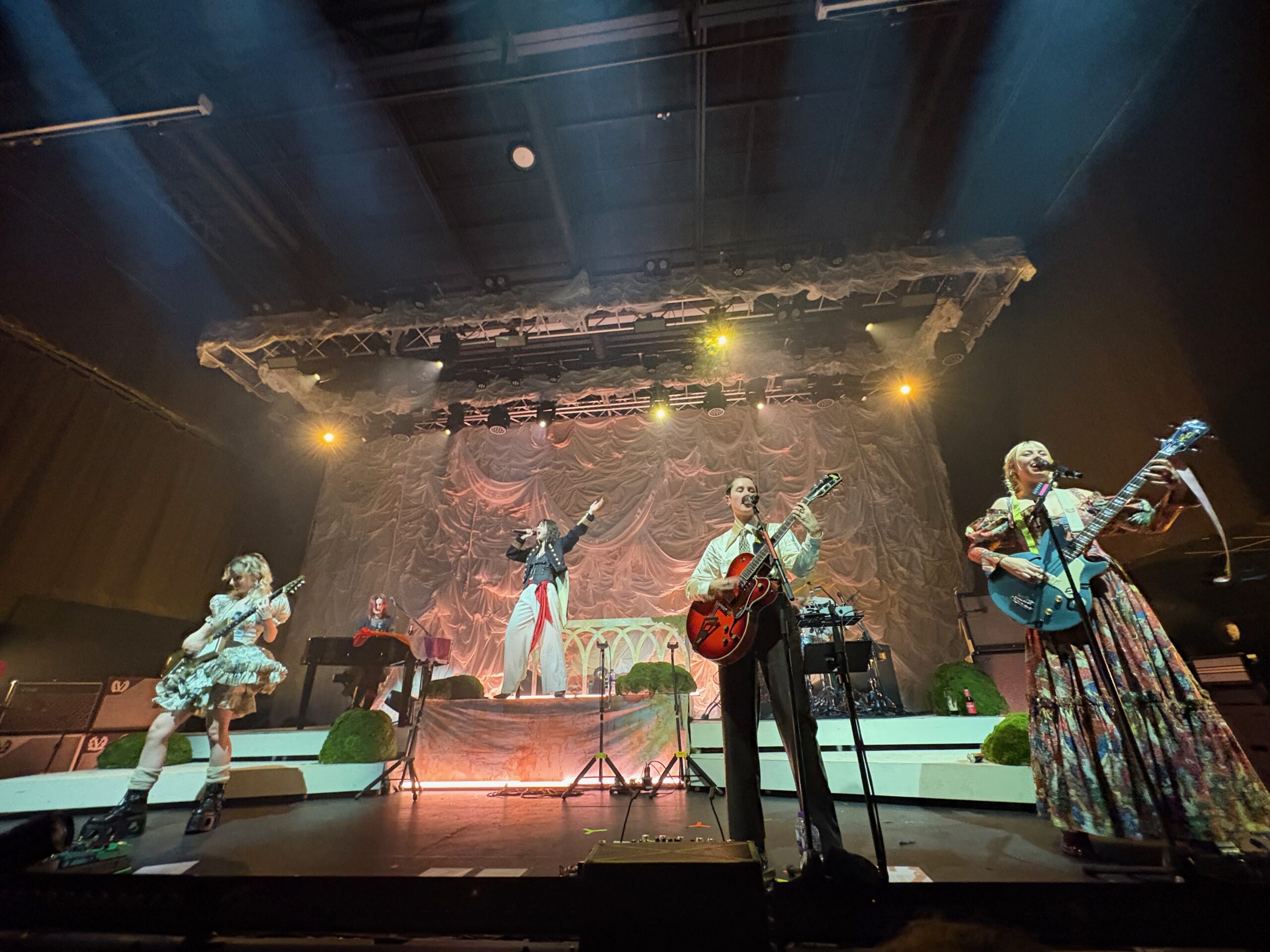
As the last notes faded and Morris, jacket back on, declared, “Well Norwich — that’s our show,” a realisation settled over the room. This felt like the last time the band would ever play a venue this size. UEA is a venue known for ‘I was there’ moments over its five decades — this show will be one people talk about for years.
The Last Dinner Party were already a band that delivered inventive performances blending classic rock tropes with modern lyrical observations. They are now a fully formed artistic force — confident, joyful, original and, above all, passionate about their music and the people who come to listen. They have crafted a cohesive show that is packed with thrilling musicianship, intimacy, and connection. The band clearly believe in themselves and we should too.
Words and photos by Andrew Butcher
Support The Indiependent
We’re trying to raise £200 a month to help cover our operational costs. This includes our ‘Writer of the Month’ awards, where we recognise the amazing work produced by our contributor team. If you’ve enjoyed reading our site, we’d really appreciate it if you could donate to The Indiependent. Whether you can give £1 or £10, you’d be making a huge difference to our small team.