
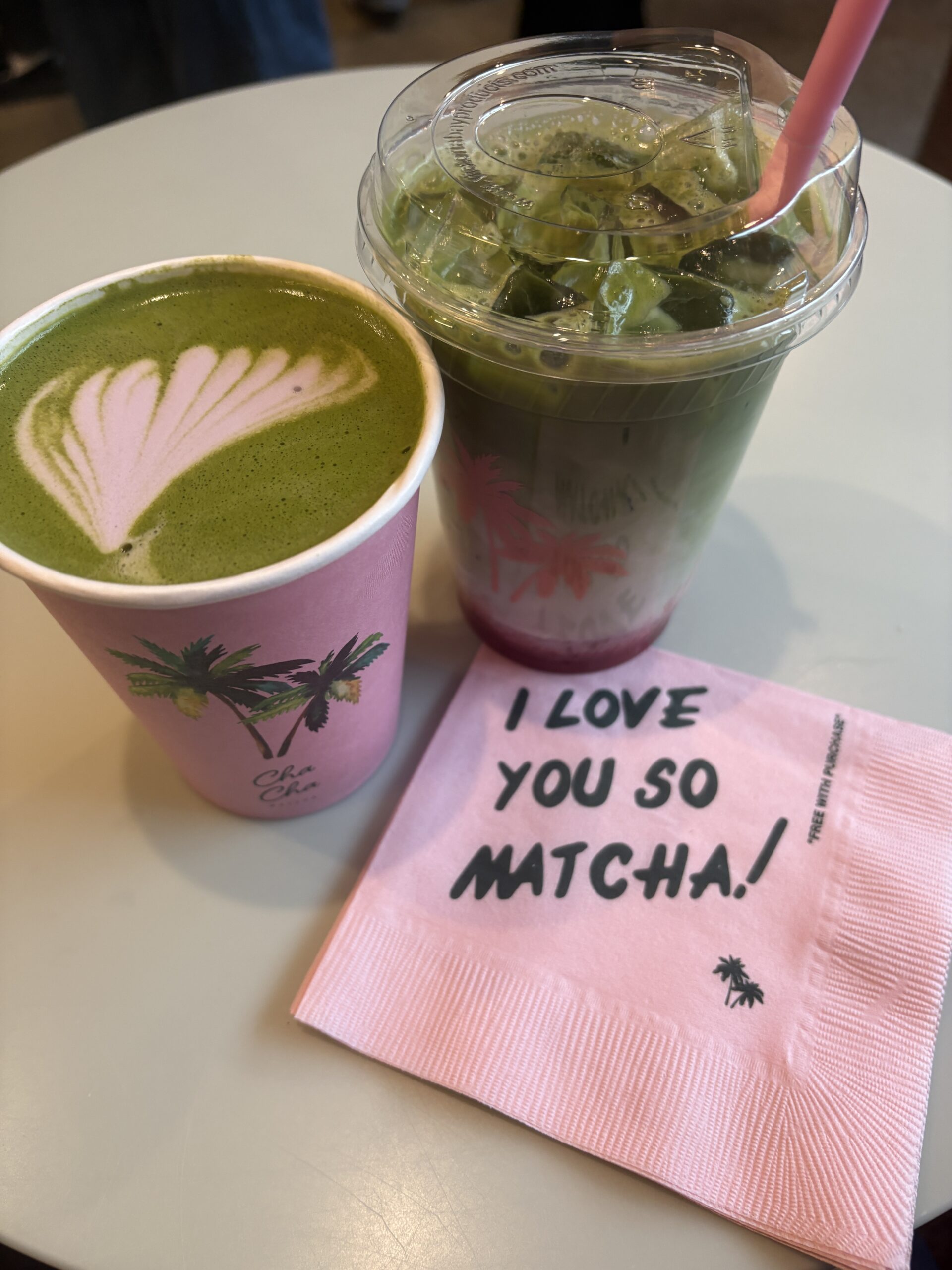
For years, coffee has been the quintessential caffeine fix for anyone chasing a quick energy boost. It’s in every low-lit montage: the character bleary-eyed at 3 a.m., surrounded by empty cups, grinding out late nights and all-nighters; the universal symbol of relentless effort. But lately, a new contender has elbowed its way into the coffee shop spotlight: matcha.
Once reserved for Japanese tea ceremonies and wellness circles, the green giant is now making its way into the hands of Gen- Z as a preferred alternative. I, for one, rushed to try the new Jenki matcha flavour at Borough Market the moment I heard about it – a frothy, emerald-hued cup that promised both calm and energy. This shift isn’t just about taste — it arguably reflects a deeper change in how this generation approaches energy, wellness, and the pressures of daily life.
The Health Benefits of Matcha
Google “health benefits of matcha,” and you’ll find a laundry list: antioxidants, metabolism boosters, focus enhancers, and more. But what really sets matcha apart is the way it fuels your body – like a steady climb rather than a chaotic sprint. Coffee might throw a jolt at you, only for you to crash an hour later, but matcha delivers a calm, sustained lift.
The secret? Caffeine paired with L-theanine, an amino acid that promotes focus and calm simultaneously. It’s the brain’s equivalent of a slow, deliberate playlist, rather than a drum-and-bass coffee jolt.
Beyond energy, matcha packs a powerful nutritional punch. Its catechins, particularly EGCG, fight oxidative stress and inflammation, while chlorophyll supports detoxification. Every cup is more than a drink: it’s a mini wellness ritual, a quiet moment of nourishment for both mind and body. In a culture obsessed with speed and output, sipping matcha feels almost subversive — a conscious decision to fuel yourself without sacrificing balance.
The Cultural Aesthetic: The Rise of Matcha on Social Media
Matcha has exploded on social media, becoming the ultimate Instagrammable beverage. With carefully curated café presentations, matcha lattes flood Instagram feeds and dominate TikTok. Yet beneath the swirl of froth lies a bigger story: this isn’t just about capturing a perfect photo.
For Gen-Z, matcha embodies a lifestyle of intention. It signals a moment taken for oneself — a pause in the constant scroll, a deliberate sip amidst the noise of notifications, deadlines, and the ever-present pull of hustle culture.
Cafes have caught on, crafting drinks that are not only delicious but visually compelling, tapping into a culture of wellness and mindfulness. Here, the Instagrammable and the mindful coexist. You can post your frothy green latte without undermining your pause. It’s a quiet rebellion against the performative grind, a way to occupy both worlds: aesthetically shareable yet personally restorative.
The New Flex: Balance Over Hustle
Gen-Z seems tired of the old hustle flex and are more than ready to rebrand. Productivity used to be the badge of honour – late-night deadlines, side projects, endless feeds of people working under aesthetic lights. Coffee was the fuel and exhaustion was the trophy. Matcha, by contrast, feels like a refusal of that mindset: premium yet minimalist, indulgent yet intentional. The flex isn’t in overextending yourself – it’s in how you choose to show up, how you nurture your own pace.
This generation craves experiences that feel both meaningful and manageable. Matcha offers exactly that. Unlike coffee, which is often brewed by a machine at the push of a button, matcha preparation is done by hand. The act of sifting, scooping, and whisking the bright green powder into water is tactile and deliberate, more like a mini ceremony than a caffeine transaction. Those few minutes of mindful motion – the quiet froth building beneath the whisk – force you to slow down. It’s meditative, intentional, and grounding in a way coffee rarely is.
That said, matcha isn’t universally accessible. High-quality ceremonial-grade powder can be costly, making it harder for some to fold into their daily routine. On a global scale, rising demand has also sparked concerns around sustainability – from the intensive labour of hand-picking young tea leaves to the environmental footprint of exporting a product largely grown in Japan. Yet for many, these questions don’t outweigh the benefits. Compared to coffee, matcha still offers a gentler caffeine experience and a ritual that feels more intentional – making it, for now, the greener choice in more ways than one.
Why Matcha Matters
Matcha isn’t just a drink – it’s an important cultural mirror. It reflects Gen Z’s values: slowing down, investing in wellbeing, and embracing rituals that nurture both body and mind. Vibrant, shareable, and social-media-friendly, it’s ultimately about presence, balance, and self-care. The rise of matcha signals a generation ready to reject all-nighters and the caffeine-fuelled grind, swapping them for a green cup of calm, a walk, and a laptop closed at 5 p.m.
Words by Amy Kelly-Ember
Support The Indiependent
We’re trying to raise £200 a month to help cover our operational costs. This includes our ‘Writer of the Month’ awards, where we recognise the amazing work produced by our contributor team. If you’ve enjoyed reading our site, we’d really appreciate it if you could donate to The Indiependent. Whether you can give £1 or £10, you’d be making a huge difference to our small team.