
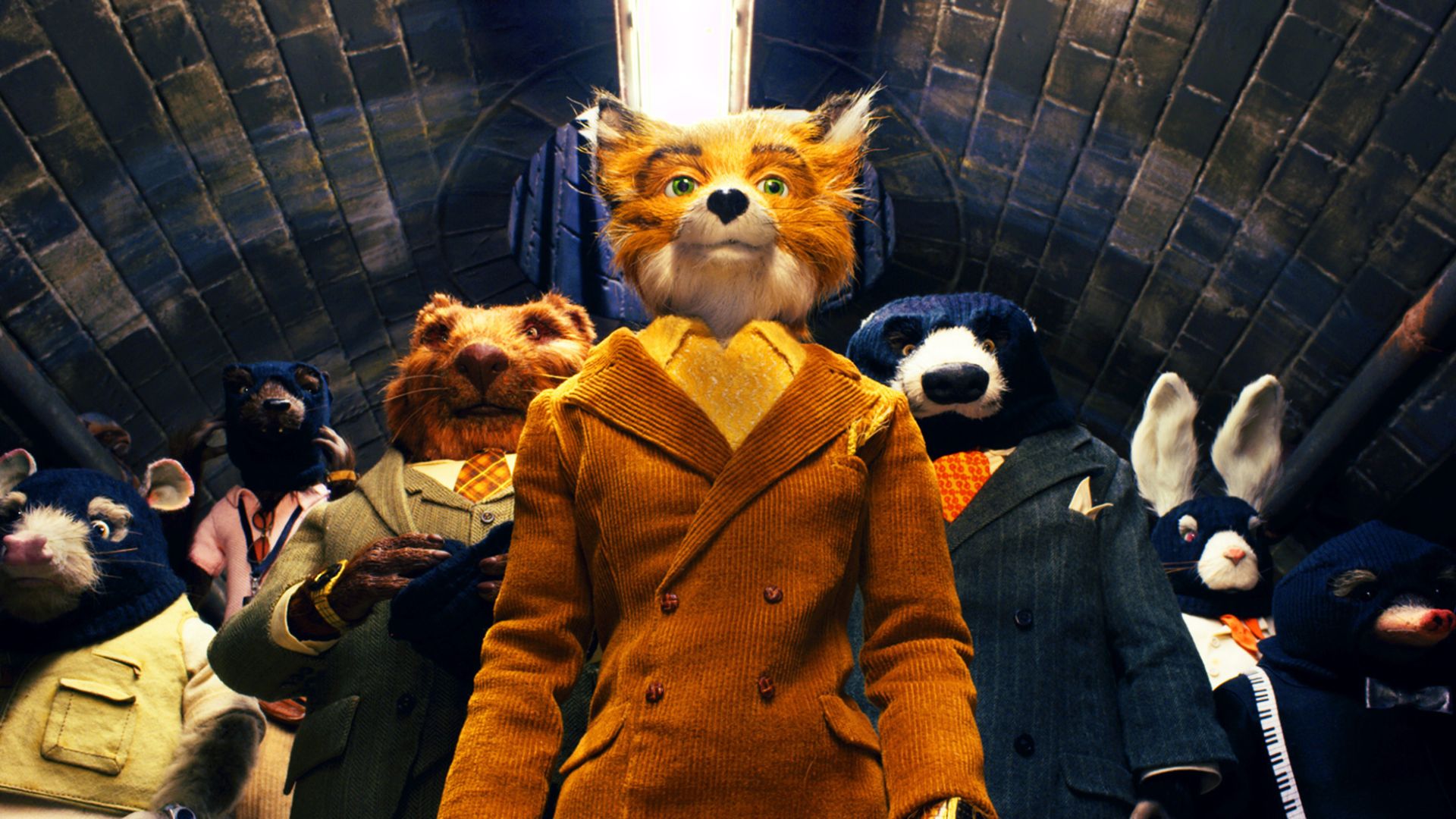
If I could bottle the feeling I had when first watching Fantastic Mr. Fox, it would feel like the warmth of winter soup; filling and cosy.
There were many children’s movies that defined my childhood, from the chase for the Piston Cup in Cars, to the jewelled wonders of Aladdin and the celestial worlds of Treasure Planet. But, Fantastic Mr. Fox represented more to me than talking toys or culinary rats – Fantastic Mr. Fox showed me what it’s like to feel seen. And if you would allow me to share the bottle, you’ll find that Fantastic Mr. Fox tastes of acceptance.
Before being diagnosed with autism at age ten, I felt like I couldn’t quite click with the world around me. My social interactions felt misaligned, my emotions felt foreign, and my mind ran rampant with uncontrollable fear. You can imagine how hard this is for a child – you can’t communicate it, can’t spell it, can’t paint it, something just feels different. When I received my diagnosis, I felt an unparalleled sense of relief – suddenly, I had a reason to explain why everything hadn’t felt as effortless as it did for others. But I also felt an enormous sense of pride, I had something that made me unique and I was going to hold onto it and never let it go.
Autism on screen has always been a contentious topic as it’s hard to find true representation of something with so much variety. As a child, I remember going to the library to find books on the topic, excitement ripening like lotus petals in my chest. But, try as I might, I struggled to find myself in any of the books’ pages; the black and white print failed to match the voracity of the colours that blossomed in my mind. Little did I know that my eyes were soon to be lit up by auburn foxes, strong oak trees and apple cider. Soon, I was going to see myself on screen and realise being different was the most important thing I could be.
Based on Roald Dahl’s seminal book, Fantastic Mr. Fox’s release in 2009 was Wes Anderson’s first foray into stop-motion. It was highly regarded at the time of its release, being called “in some ways, (Anderson’s) most fully realized and satisfying film.’” The film follows the life of the titular Mr Fox (voiced by George Clooney), who is trying to settle down in the countryside, after years of stealing from farmers. He lives with his wife Mrs Fox (Meryl Streep), their son Ash (Jason Schwartzman) and his visiting nephew Kristofferson (Eric Chase Anderson). However, Mr Fox’s animalistic nature bubbles up and he escapes his domestic life to steal from farmers Boggis, Bunce and Bean. He eventually plunges himself, his family and friends, into an unexpected battle of man versus nature.
Anderson lovingly recreates the painted canvas of whimsy of Dahl’s 1970 book. It’s a world of gentle cosiness, from the rustic backdrop of the Fox’s home to the sugary topping of Mrs Bean’s nutmeg ginger apple snaps. Alexander Desplat provides the movie with a delicate countryside sound, full of banjo twangs and xylophonic beats that ring like a bell. Alongside its autumnal colouring, this atmospheric effect feels like a warm hug to a child – the kind of one you crave after a long day at school. But, Anderson wanted to bring a maturity to the book’s source material, making it introspective beyond being visually appealing.
Anderson did not want to shy away from the danger of the original story; he confronts his viewer with the physical danger that the farmers present, with tractors that roar like tanks and the sharp pop of guns. But, just as he approached their threat with unwavering hands, Anderson approached the dialogue with a steady, unsweetened tongue – he wanted to give his child audience a life lesson, as opposed to a fairy tale.
I gravitated towards this film as a child because it treated me like an adult. Alongside the playfulness of Mr Fox’s heists, there was a melancholic edge of existentialism to his character. He often expresses dissatisfaction with his life, saying the much-quoted line “I don’t want to live in a hole anymore” and even questions his place in the world’s natural order: “Who am I Kylie? Why not a bird or a beagle or a bald eagle?”.
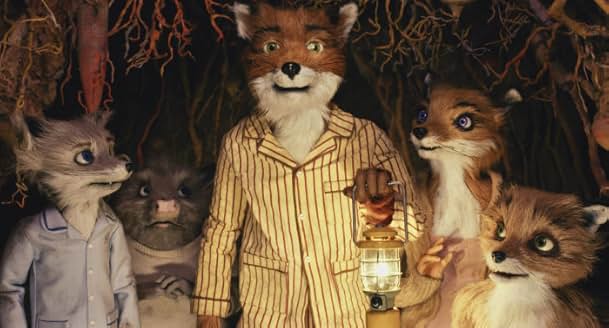
The dialogue is often sophisticated in its ideas, unafraid to counteract quirkiness with harsh reality. But, where Disney movies over-preach and over-simplify, Anderson wanted to play into the weighty notions children begin to have about life. He wanted to let them know that they shouldn’t be afraid of big ideas, to question life and to carry on despite these unanswerable questions.
The film’s most central motif, however, finds its heart within the Fox family. Mr Fox’s family are all undergoing various struggles – Mr Fox wants more than domesticity, Mrs Fox struggles with Mr Fox’s lies to her, Kristofferon’s father is gravely ill and Ash is struggling to feel normal and to fit in. There are consequences to the family’s actions, Mr Fox’s antics lead Mrs Fox to question their own marriage, saying “I love you but I shouldn’t have married you.” Despite their animalistic nature, Anderson wanted to capture a slice of family life that felt genuine, that felt human.
Family dynamics can be strained by expectation; but they are bound by unwavering connection. In spite of their problems, the family come together to face the farmers, to dig as one, to plan as one, to eat as one and to fight as one. But throughout, Ash struggles to feel connected to his family, and by extension, the world around him. This is where my relationship to the film comes into play.
As a child and as a 21 year old, the character of Ash saw something in me that no other book, film, song or painting could. He spoke to that part in me that felt disconnected, angry, disillusioned, hurt, lost and confused. Coming to terms with being different is enough to fill anyone with angst – but, as a child, it stings because you barely understand yourself or your world yet. All you can think is: why am I like this? Why am I forced to feel like this?
But, as little me went on her journey of acceptance, she realised that she had to cradle her differences close to her chest. Because, like Mrs Fox says to Ash, ‘there’s something kind of fantastic’ about being different. So, whilst Ash saw that angsty part of me, he also saw the prideful part, beaming and swelling within my chest. His acceptance of who he was, how he was important and needed in his own ways, made me realise I was those things too.
Whenever autumn blows into town, I journey back in time to the first time I ever felt seen by a film. It was a film contained within a world of melting oranges and sunset yellows, a world of perplexing thoughts and scary men with tractors, a world of your mother’s hugs and your father’s reassurance. It was a world where I could play, where I could relax and laugh. And, it was a world where a very small me could feel seen, more than anyone had ever seen her before. Because being ‘different’ is no bad thing, and as Ash taught me, there is no such thing as ‘normal.’
Words by Bella Madge.
Support the Indiependent
We’re trying to raise £200 a month to help cover our operational costs. This includes our ‘Writer of the Month’ awards, where we recognise the amazing work produced by our contributor team. If you’ve enjoyed reading our site, we’d really appreciate it if you could donate to The Indiependent. Whether you can give £1 or £10, you’d be making a huge difference to our small team.