 for this week's instalment of Movie Mondays.)
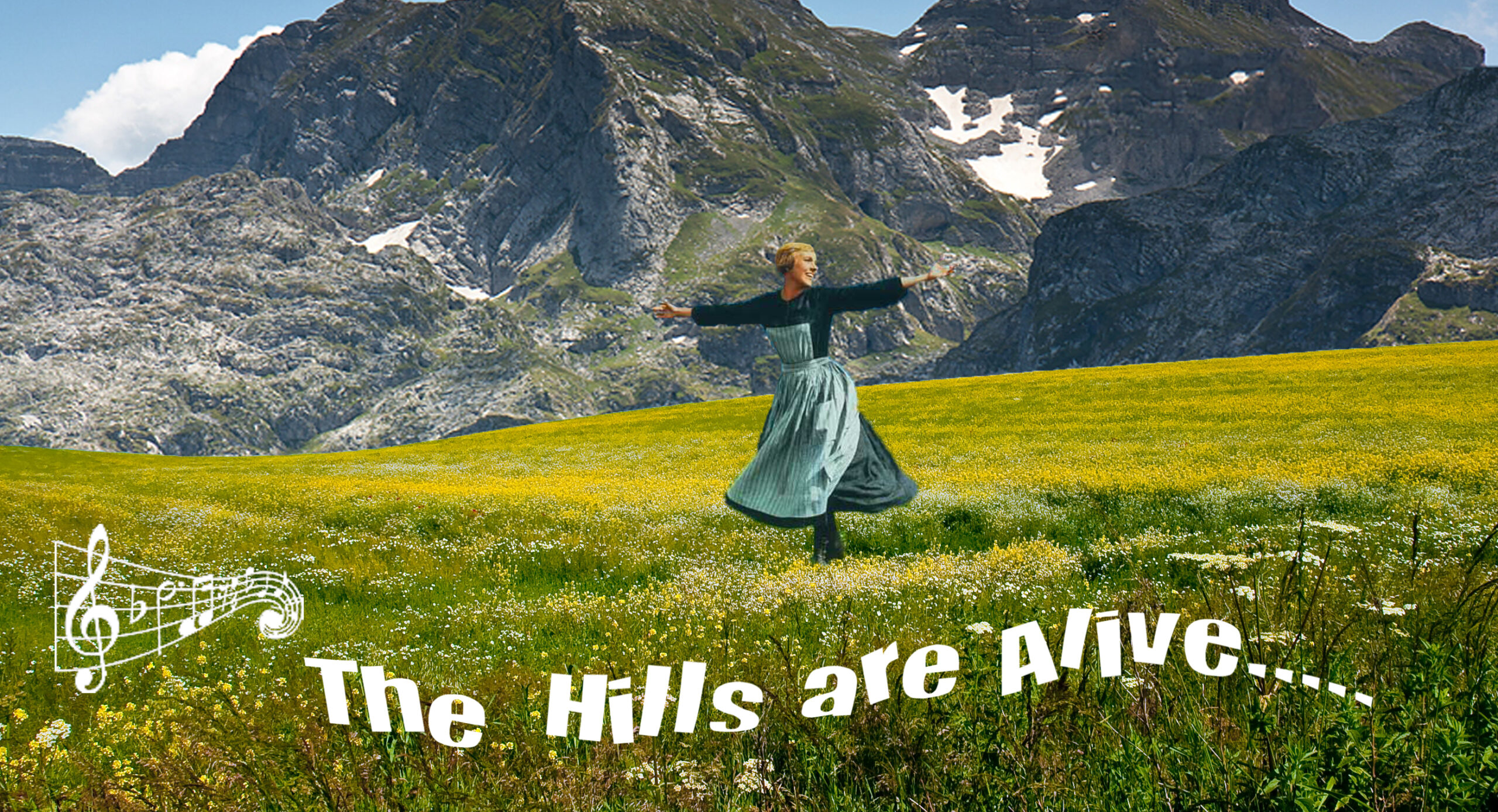
I will never get bored of The Sound of Music (1965). The film might be slightly sentimental and a heavily edited version of a true story; but to me it embodies music’s magic and wonder.
When I first saw The Sound of Music, almost half a century after its release, I was around the age of the second youngest Von Trapp children, Marta. One would probably think the film came across as outdated. However, the story, songs and scenic shots made an impression for life. The film has become one of the few I rewatch every once in a while, each time with a slightly new perspective.
Maria (Julie Andrews) is a free-spirited novice at Nonnberg Abbey in Salzburg, Austria, who is sent to the home of a retired naval officer, Captain Georg von Trapp (Christopher Plummer), to become the governess of his seven children. One of my first memories of watching the film, is how fascinated I was by the seven Von Trapp children.
As an only child, having six siblings was something I could not even imagine. Having a nanny who sews fabulous clothes out of old drapes for each child, and teaches them how to sing by inventing ‘Do-re-mi’ on the spot, seemed even more miraculous. Each song involving the children was a highlight, and I would’ve gladly skipped the rest.
Fast forward a few years, and my perspective of the story had changed. Liesl and Rolfe singing ‘Sixteen Going on Seventeen’ was suddenly not as boring, but rather romantic, though old-fashioned. Before I knew it, I had passed Liesl’s age, and my attention finally shifted onto Maria. She wasn’t the unrelatable adult anymore, but an uncertain young woman searching for her dream. More than once have I found myself listening to ‘I have confidence’ on repeat while internally singing along.
Mother Abbess singing ‘Climb Every Mountain’ is also a definite regular. To me, Maria finds her dream while singing with the children. Not only does she teach them how to sing, she brings ‘music back into the house’, as the Captain states. He initially wants to fire her after learning what his children have been getting up to, but is moved when hearing them singing. Plummer plays the role of a grieving widower and strict father magnificently.
As a child, I couldn’t stand the Captain’s initial fiancé, the wealthy Baroness, and thought she was the epitome of an evil stepmother. Her chumminess with Max Detweiler, a family friend, somehow made her even less likeable. The romance between the Captain and Maria was something I strongly disliked as well. Why would she marry the old guy? It seems I was still immune to Christopher Plummer’s charms back then.
As I got older, I started to feel more sympathy for both relationships, and admiration for Eleanor Parker’s portrayal of the Baroness. The way she and the Captain break up, is probably one of the most mature break-up scenes I have ever seen. Both have already realised they are not meant to be with each other, and go separate ways on friendly terms. The Baroness shows real class when she points out the Captain’s feelings for Maria, despite her disappointment. This makes amends for her earlier attempt to separate them.
She is just as much searching for a purpose in life as Maria, even though they couldn’t be more opposite in character. In the end however, Maria is the only one who can bring the broken family back together. Music is what makes the children open up to her and reconnect with their father. Maria and the Captain fall in love with each other through music: while the latter sings ‘Edelweiss’; and while they dance together at the Ball.
Shortly after the Captain’s marriage to Maria, Austria is annexed by the Third Reich, and he is ordered to accept a commission at the German Kriegsmarine. Not approving of the Nazis and their ideology, the Von Trapp family attempts to flee the same night, but is stopped by the leader of the Nazi Party. To avoid causing suspicion, they end up performing at the Salzburg Festival, a music festival the children were secretly signed up for by Max.
The concert is symbolic for their farewell to Austria. The captain sings ‘Edelweiss’, but is overcome by emotion and unable to continue singing. The crowd eventually joins in along with his family, much to the displeasure of national socialists present. Unfortunately, this has led to many people believing ‘Edelweiss’ to be an Austrian folksong, when in reality, it had been composed solely for the film.
Nevertheless, this scene gives me goosebumps every time. The Von Trapp family uses music as a peaceful, but impactful form of resistance. After their performance, they manage to slip away, and eventually escape over the mountains to Switzerland, after a nerve-racking chase.
In reality, the Von Trapp family departed from the nearest train station, instead of dramatically hiking over the mountains to freedom. This is only one of many alterations that were made. The Sound of Music was first developed as a stage musical, based on the West German film The Trapp Family (1956) and the 1949 memoir The Story of the Trapp Family Singers, by Maria von Trapp. The Broadway production turned out to be a huge success, but had already sacrificed truth for the sake of the story.
The musical film we know today, directed by Robert Wise (West Side Story), is a largely fictionalized story as well. For example, the real Maria was a tutor to only one of the children (whose names and ages had been changed for the film). Georg von Trapp was allegedly devoted to his children, instead of being an emotionally unavailable father. Furthermore, he and Maria married 11 years before the Anschluss happened, not one month before. The latter claimed in her memoir to first have loved the children, and only learned to love Georg after they got married.
The history nerd reading this might now immediately discard The Sound of Music from their to-watch list. Even though the film is a heavily romanticised version of what really happened, I will never agree with Christopher Plummer calling the film ‘The Sound of Mucus’. Despite its inaccuracies, it’s almost impossible to hate the film. To me, it is fiction, based very loosely on some historic events.
The landscape around Salzburg is truly breathtaking, and fits perfectly with all the soundtracks, adding to the nostalgic, almost fairytale-like feeling. Andrews initially thought about rejecting the part, as it seemed too similar to her role as nanny in the movie that had made her famous only one year earlier: Mary Poppins (1964). Thank God she didn’t, because without her marvellous singing, the film would not have been the same.
I think The Sound of Music is a great family film, as it has something on offer for everyone, no matter the age. Most importantly, it demonstrates the importance and power of music in our lives. I wonder what I will be feeling watching it many years from now, and how my perspective of the story will have changed. But I already know it will still be one of my favourite films regardless.
Words by Mila Curlin
Support The Indiependent
We’re trying to raise £200 a month to help cover our operational costs. This includes our ‘Writer of the Month’ awards, where we recognise the amazing work produced by our contributor team. If you’ve enjoyed reading our site, we’d really appreciate it if you could donate to The Indiependent. Whether you can give £1 or £10, you’d be making a huge difference to our small team.
Me also … I love a jolly good sing~along …
I startedwatching sound of music at the age of 20yrs ,and now I am 76yrs and will not get tired of it.I am very optimistic that I would continue to watch sound of music till end of life.