
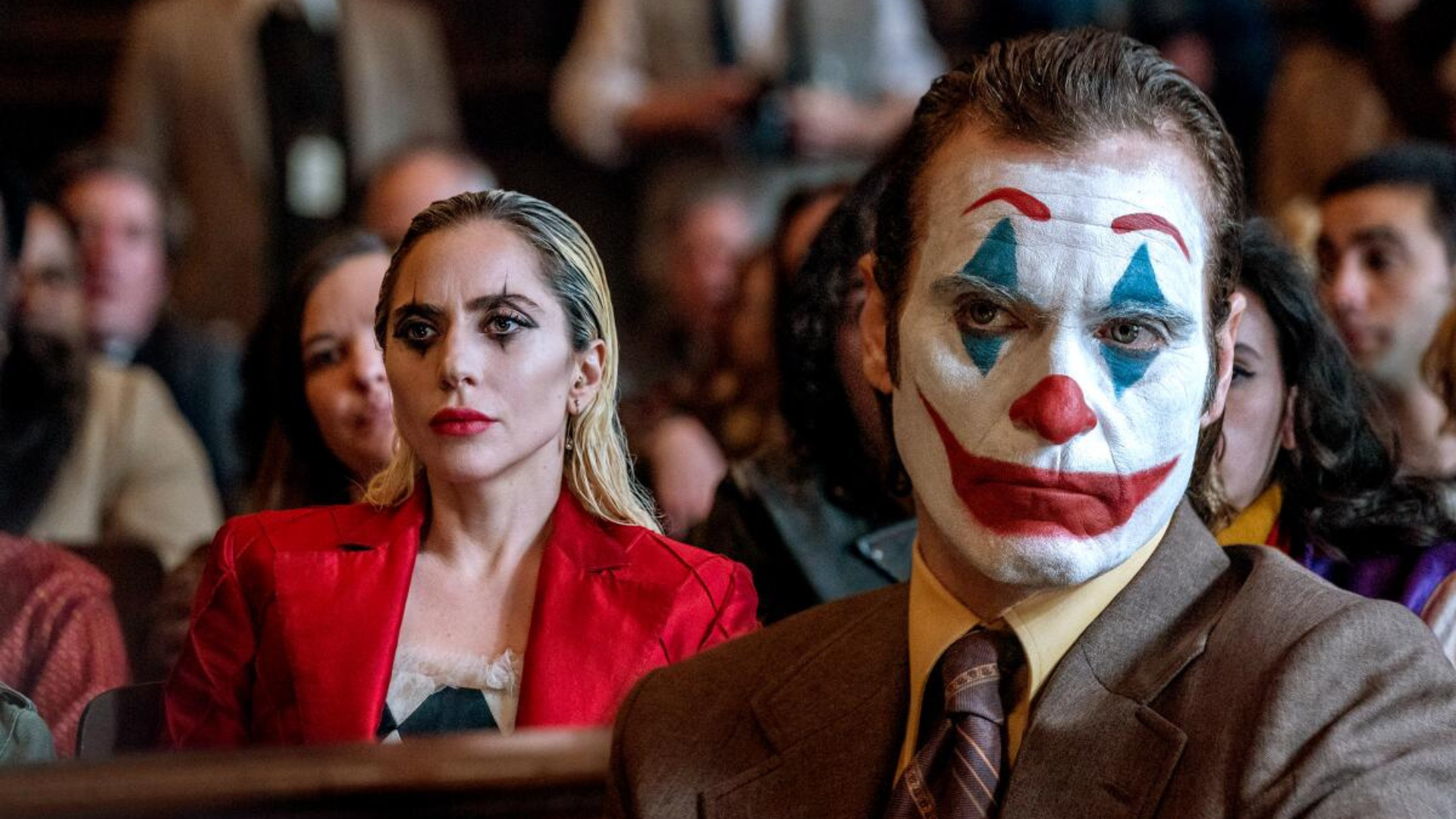
2019’s Joker was a long-awaited cinematic origin story for the most iconic supervillain in comic-book history.
Heavily influenced by Martin Scorsese and inspired by contemporary social issues, the film proved very divisive but extremely popular, with a worldwide gross of over a billion dollars and its lead star Joaquin Phoenix walking away with an Academy Award for Best Actor. There was no such luck for its sequel, Joker: Folie à Deux, which released five years later to a bewildered response from critics and fans and a lacklustre showing at the box-office.
It’s well-known that Joker was never supposed to have a sequel, with neither Todd Phillips nor Joaquin Phoenix interested in returning until Warner Bros managed to convince them back (perhaps the massive box-office returns played a part). So what happened when DC gave Phillips a massively-increased budget and full creative control? We got a sequel that alienated its audience, went against fan expectations and desires, and served as a self-aware commentary about the first film’s success and impact that absolutely no-one seemed to want.
In the year since its release, many people have discussed how Joker: Folie à Deux failed to make an impression. The film’s curious identity as a musical, its lack of connection to the wider world of Batman, and its confusing marketing didn’t do it any favors. It was swept under the rug relatively quickly, and Todd Phillips has barely talked about the film since its release and ruled out working with DC in the future.
However, it’s worth noting that, much like the first film, Joker 2 has its fair share of fans, and some people do respect it as a brave and unique sequel that deconstructs its iconic predecessor and puts a fresh spin on the Joker mythology.
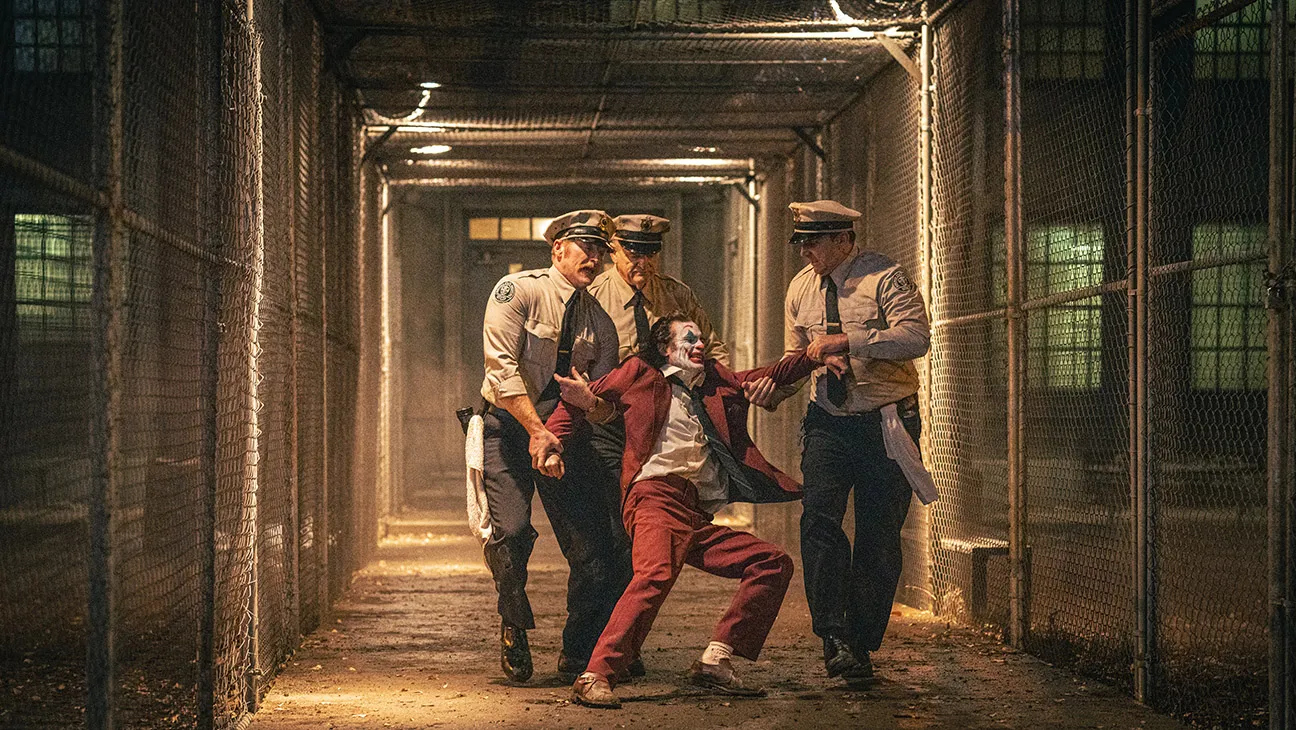
For me it’s complicated. When I saw Joker: Folie à Deux in the cinema, I knew two things: I wasn’t particularly a fan but I wanted to watch it again once the dust had settled. There was definitely something that pulled me into the film and kept me intrigued about where it would go. Whether that was the rich cinematography, Phoenix’s more resigned and nuanced performance, or the dreamlike musical numbers, the film certainly has something going for it.
Upon rewatching it, I came to appreciate the slow build of the first half and the hefty dose of dark humor . In many ways the first half of Joker: Folie à Deux plays like a tragicomedy of two mental asylum patients falling in love, and there’s certainly potential for a great film there. Once it leaves that conceit behind, the issues start to come into play.
Folie à Deux’s biggest problem is that it is severely lacking a developed story. That’s always going to be a problem for any film but, at 138 minutes, the pacing of Folie à Deux grinds to a halt once we get to the middle. It’s like Phillips didn’t have many other ideas for a main plot beyond Arthur’s trial, and so opted to pad out the film with musical numbers. They certainly give the film a unique flair, but they don’t really do anything to progress the story forward. Once you’ve seen one you understand the purpose they serve for Arthur’s character. By the sixth, you’ve learned nothing else. The main anchor of the film should really be the relationship between Arthur Fleck and Lee Quinzel, but Lady Gaga doesn’t get nearly enough scenes as the latter to make the romance feel substantial.
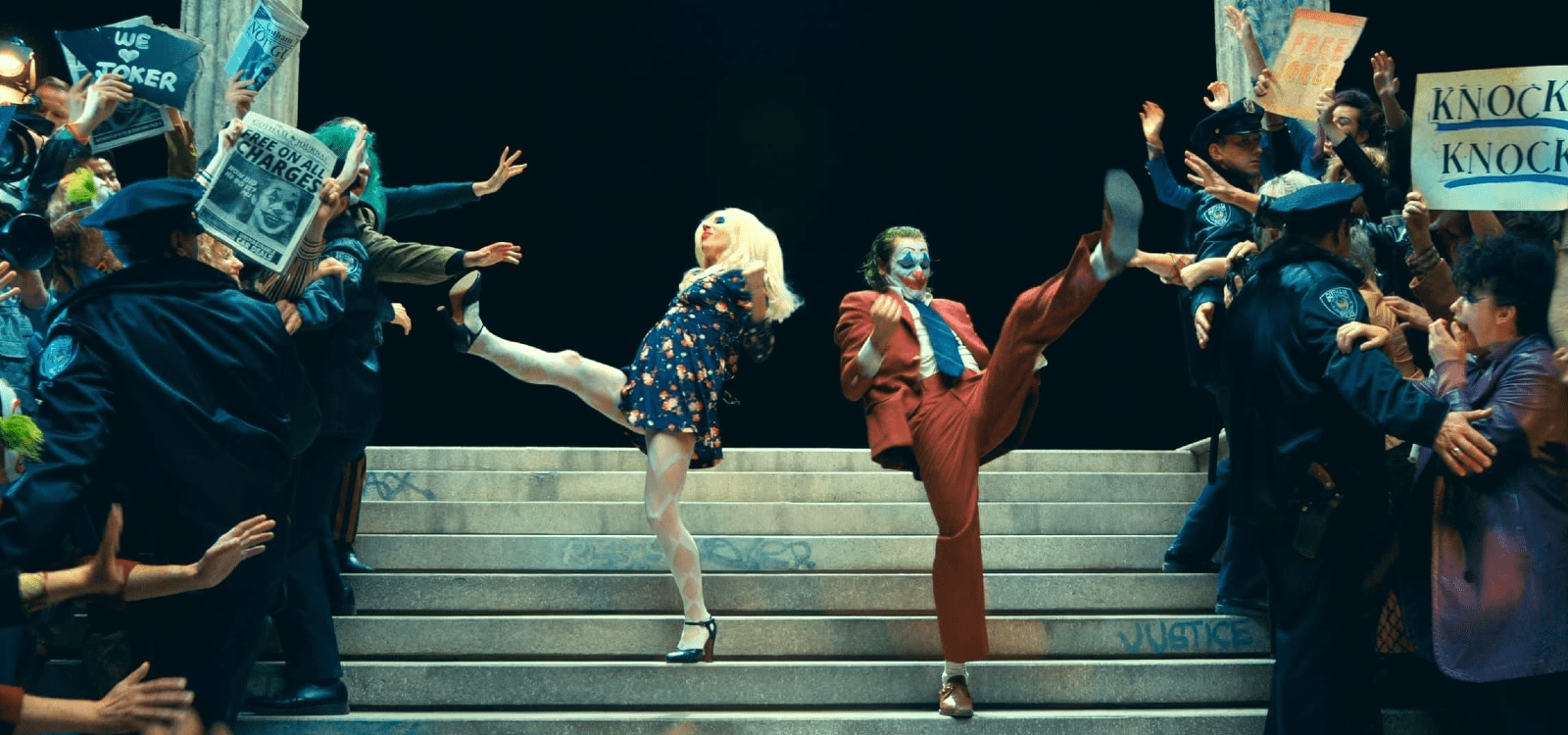
The last third has proved to be the most controversial part of the film, but I have to say this is probably my favourite stretch of it. There’s a brilliant continuous shot that lasts for a good few minutes, and a brave and ballsy ending that deconstructs the character of the Joker, separating the person from the persona. It’s just a pity that the rest of the piece moves at such a glacial pace, and has an uncompromisingly bleak tone, that many viewers had lost patience by this point.
I came out of my rewatch with more and less admiration for the ill-fated second Joker instalment. Its sheer existence is something to behold: a star-studded sequel to an immensely lucrative film that dares to confront its predecessor and actively annoy comic-book fans and the general public. As a statement, Joker: Folie à Deux is remarkable. As a film, it’s underwhelmingly thin, bloated and disorganised. I certainly respect its presence in the pantheon of comic book cinema, but if you’re going to do something this daring, the film itself needs to be stronger.
Words by Alex Paine
Support the Indiependent
We’re trying to raise £200 a month to help cover our operational costs. This includes our ‘Writer of the Month’ awards, where we recognise the amazing work produced by our contributor team. If you’ve enjoyed reading our site, we’d really appreciate it if you could donate to The Indiependent. Whether you can give £1 or £10, you’d be making a huge difference to our small team.