
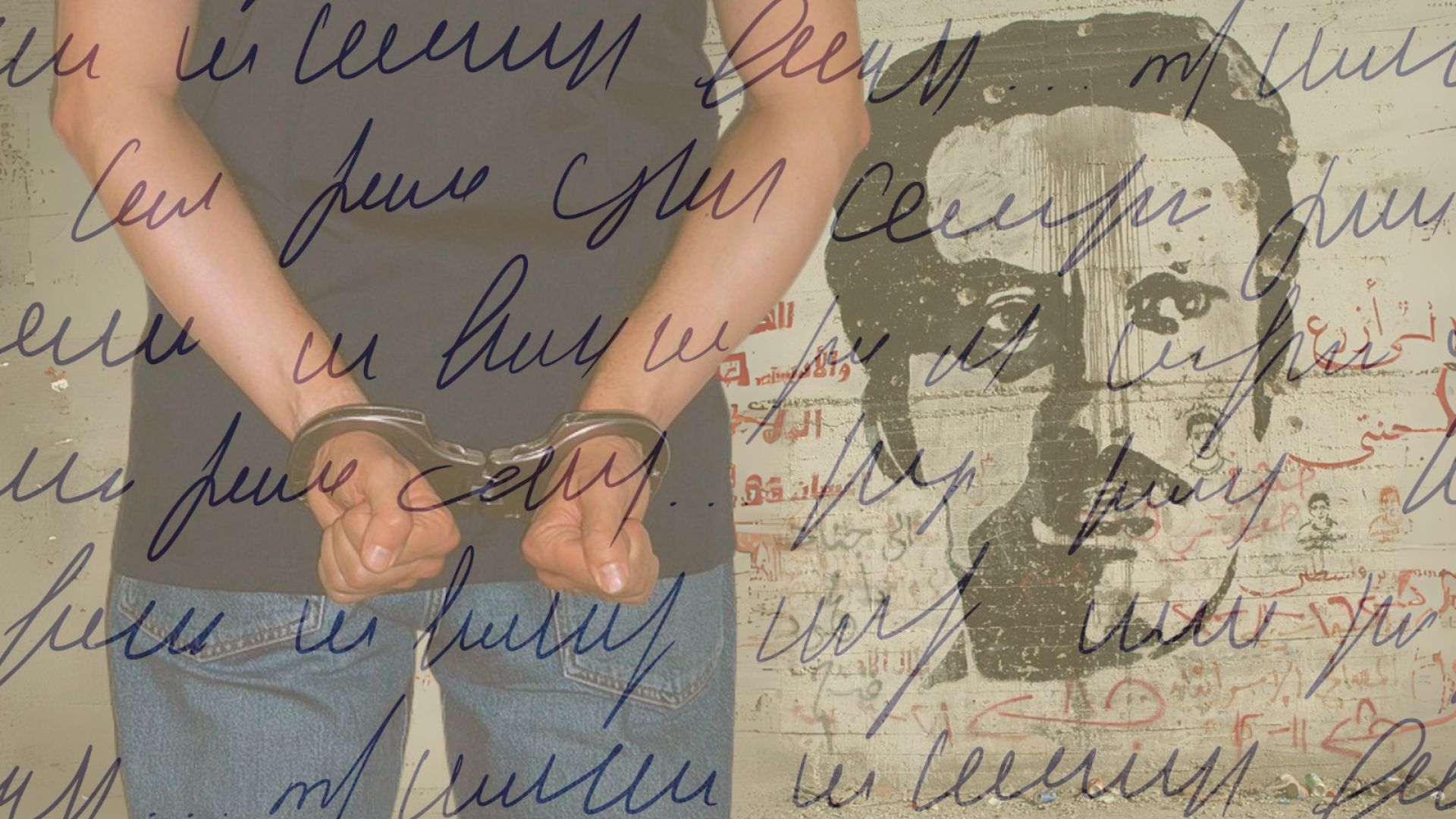
Imagine this: a public square in London is packed full of placards and peaceful chants. Police officers move in violently, and arrest seniors and students alongside longtime activists. Among them, Alice Oswald, one of Britain’s most celebrated poets and former Oxford Professor of Poetry, is led away in handcuffs for joining a protest against the UK’s ban on Palestine Action.
Across the Irish sea, best-selling novelist Sally Rooney pledges to funnel her royalties into Palestine Action, even after the UK government warned her that such support could carry terrorism charges. The government’s warning to her is unprecedented: a novelist cautioned by a foreign state that now insists its laws can govern the choices of writers abroad. Coming from the UK, with its long history of exerting authority over Ireland, the message carries an added weight.
In the past few months, over 1200 people have been arrested at demonstrations against the ban on Palestine Action. Experts warn that the Terrorism Act is being used less to protect public safety than to police dissent. Meanwhile, Rooney has doubled down, declaring bluntly, “if this makes me a “supporter of terror” under UK law so be it.” Oswald chose to face handcuffs in a public square rather than stay silent.
The timing is crucial. Last month, the International Association of Genocide Scholars declared that the illegal Israeli occupation’s actions in Gaza meet the legal definition of genocide under Article II of the 1948 UN Convention. In this context, poets and authors stepping forward are not simply ‘taking sides’ in a distant conflict, they’re responding to what the world’s top scholars define as genocide, using their voices and their bodies to insist that silence is not an option.
Both of these moments have caused controversy and outrage, but they also pose deeper questions: what does it mean when authors and poets willingly risk arrest for political reasons? And has poetry ever really been separate from politics?
Poetry is often seen as a private art reserved for deep personal reflections and self expression. Yet for many groups, poetry has long been a matter of survival. Miklós Radnóti, a renowned Hungarian poet murdered during a forced march to a Nazi death camp, captured the courage demanded of poets under oppression: “I write, what else can I do? A poem is dangerous, / and if you only knew how one whimsical, delicate line, / even that takes courage…”
This is especially clear when considering the rich history of Palestinian poetry. From the Nakba of 1948 onward, poems have carried histories and hopes that illegal military occupation has tried to erase. For decades, Palestinian poets have been harassed, imprisoned, and even assassinated for their words.
Ghassan Kanafani, the famous novelist and poet assassinated by Israeli agents in 1972, is one of the most striking examples. His murder was not only an attempt to silence a single author, but an effort to dismantle a culture of resistance and erase Palestinian voices from the global stage.
This crackdown on Palestinian poets has been consistent across generations. Mahmoud Darwish, often described as the national poet of Palestine, lived most of his life in exile, his work banned and censored by Israeli occupation authorities. Samih al-Qasim, imprisoned multiple times for his resistance poetry, wrote that he will resist “to the last pulse in [his] veins.”
Contemporary Palestinian poet Marwan Makhoul captured this reality in his famous lines:
In order for me to write poetry that isn’t political
I must listen to the birds
and in order to hear the birds
the warplanes must be silent.
The pattern is clear: Palestinian poetry is treated as a threat precisely because it asserts presence, memory, and belonging to the homeland under illegal occupation. The suppression of these voices is about controlling narratives around history, identity, and the possibility of imagining a different future.
The reality is that Palestinian poets, and many others around the world, don’t have the luxury of being ‘apolitical’ when daily life is defined by occupation, surveillance, siege, and bombardment. Writing poetry in and of itself becomes a form of testimony, self-determination, and a way of preserving a national identity that is constantly under attack. And for that very reason, it has been criminalized, censored, and met with violence.
This same dynamic can be seen in Irish poetry during the struggle for independence. The Easter Rising of 1916 made clear that poets were not just observers of history but participants in it—and targets because of it. Patrick Pearse, whose poems such as The Rebel and The Wayfarer exalted sacrifice and national renewal, was executed by firing squad after the uprising. Thomas MacDonagh, a poet and critic whose work blended romantic lyricism with calls for cultural independence, met the same fate. Their executions were not just military punishment but an attempt to silence the cultural voices that nourished Irish nationalism.
Later generations of Irish poets continued to feel this pressure, if in less terminal forms. Seamus Heaney, writing during the Troubles, was constantly scrutinized for how his poetry navigated violence, identity, and colonial legacies. His choice of words, and even his silences, became politically charged. The act of writing poetry became a negotiation with censorship, expectation, and surveillance, showing that even in the late 20th century the poet in Ireland could not stand outside the storm.
The repression of poets is not confined to Palestine or Ireland. From Osip Mandelstam, whose life ended in Stalin’s labour camps, to Nazim Hikmet, repeatedly imprisoned and exiled from Turkey, the pattern is unmistakable: regimes have long feared the ability of poetry to articulate dissent and inspire resistance.
This is the tradition that Oswald and Rooney are placing themselves in solidarity with. Their choices do not represent a turn away from art into activism, but an extension of what literature already does: witness, resist, refuse the status quo… When poets raise their voices against injustice, the state responds by trying to brand them as criminals or terrorists. But the fact that governments are still afraid of poets says something profound about poetry’s enduring force.
So, to ask whether poetry is political is to miss the point. Poetry is political precisely because it cannot be anything else when lives, cultures, and futures are at stake. The question is why governments—from Israel’s illegal occupation to the UK—continue to fear it so much. The answer may lie in what poetry offers: memory where there is erasure, and a refusal to be silent where silence is demanded.
Words by Dana Elrufaei
Want more Books content from The Indiependent? Click here
Support The Indiependent
We’re trying to raise £200 a month to help cover our operational costs. This includes our ‘Writer of the Month’ awards, where we recognise the amazing work produced by our contributor team. If you’ve enjoyed reading our site, we’d really appreciate it if you could donate to The Indiependent. Whether you can give £1 or £10, you’d be making a huge difference to our small team.