
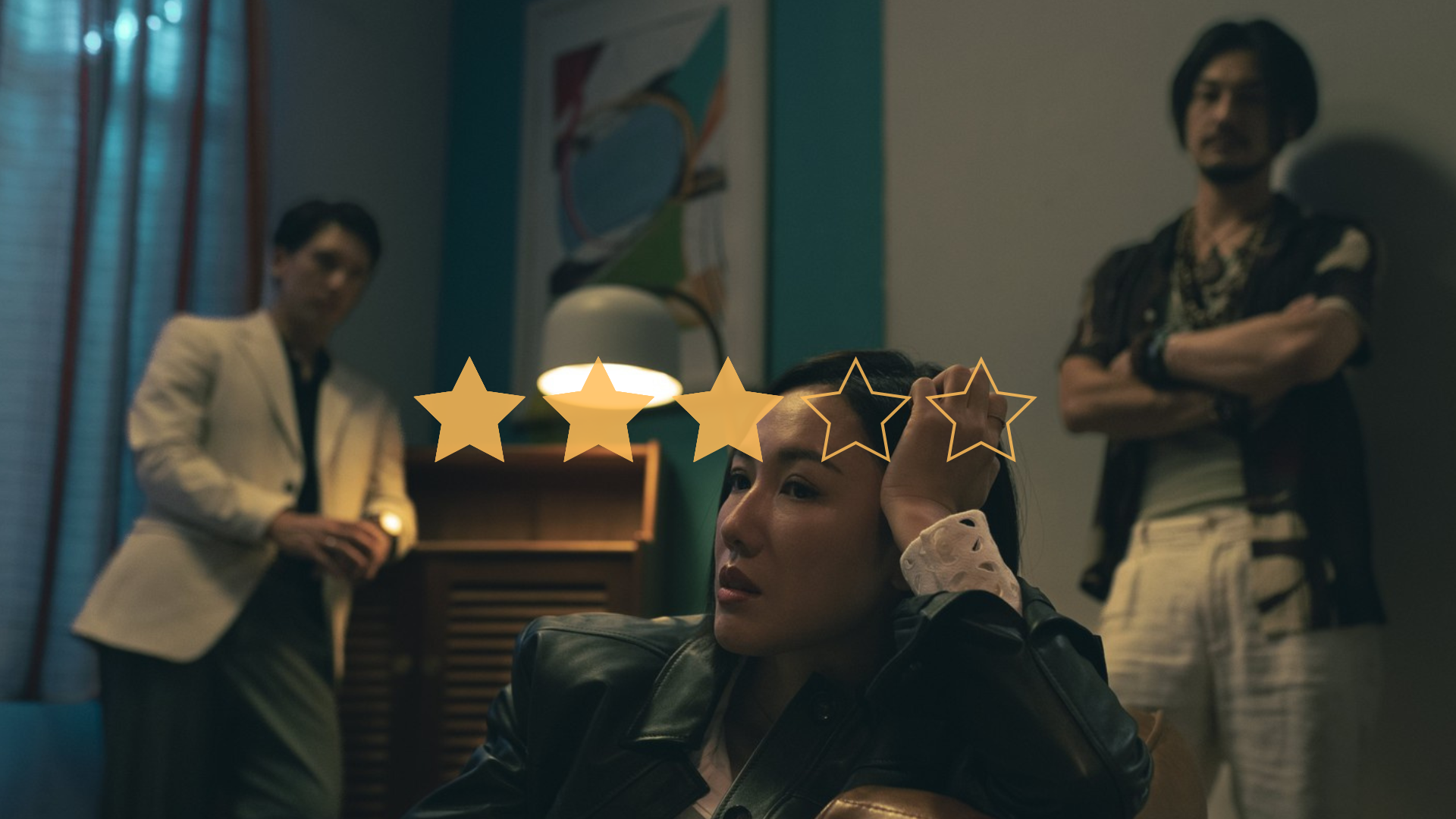
Hong Kong proves a fascinating cultural context to explore themes of toxic masculinity, power and memory in this fresh adaptation of Stephen Belber’s play
★★★☆☆
Adapting a play is always tricky work. Adapting a play that has previously been made into film by a big-name director like Richard Linklater seems even harder. And yet, by placing Stephen Belber’s 2001 play in a new cultural context, Bizhan M. Tong’s Tape renders its story through fresh eyes and reveals its relevance over twenty years later.
Tape follows high school best friends Wing (Adam Pak) and Jon (Kenny Kwan) reuniting in an AirBnB the night before Jon’s film debuts at a Hong Kong international film festival. The pair’s lives have gone in entirely different directions: Jon dons fancy suits and an Anglicised name, Wing volunteers as a lifeguard while mainly making his money dealing weed to teenagers. This night seems like a chance for the old friends to reflect on these different paths, but unbeknownst to Jon, Wing has other plans. Having rigged the apartment with hidden cameras, Wing is determined to uncover the events of a night 15 years ago involving their other classmate (and Wing’s ex-girlfriend) Amy (Selena Lee). As Wing pushes Jon to confess to sexual transgressions, the night’s tension is ramped up even further when Amy enters the scene.
The events of the film take place nearly entirely in one singular location. The audience is trapped in this claustrophobia alongside the characters as they reckon with the secrets that have haunted and shaped their adult lives. The camerawork is mostly observant in nature, often letting things play out in unbroken takes, rather than leaning into stylistic experimentation. The exception to this is when we see scenes through the hidden cameras that Wing has placed around the apartment.
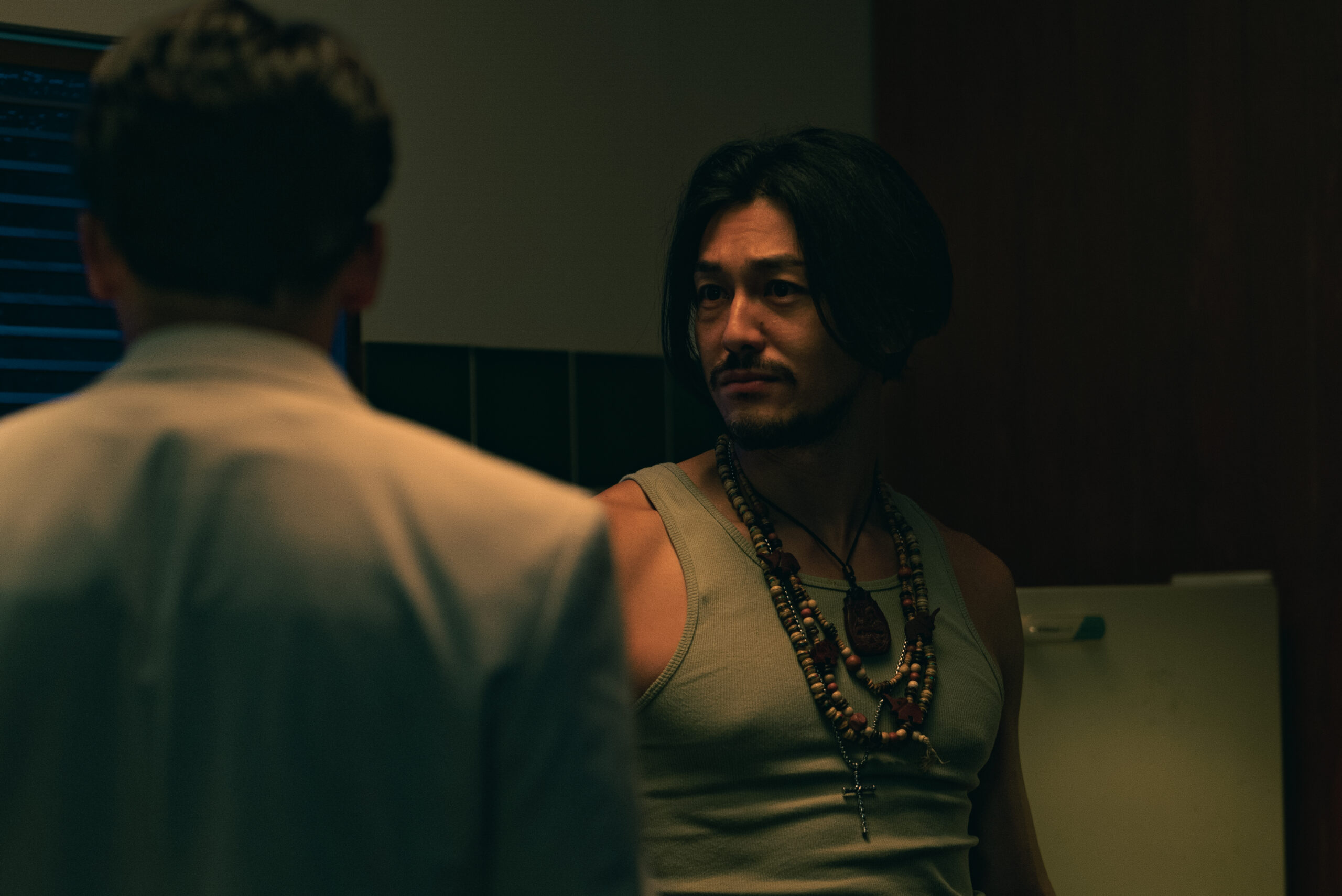
While this choice allows viewers to come to their own conclusions without being influenced by editing and music, it’s also a reminder of the story’s theatrical origins. This isn’t necessarily a bad thing, but it can lead to a sense of remove from events. You can’t help but feel that the tension would be much more tangible if you were more literally in the room, watching it on a stage.
However, where Tong’s Tape underperforms in that regard, it is absolved by the power of its central lead performances, who commit to these character studies with great care and nuance. Much like Linklater’s iteration, the film starts out as being a commentary on toxic masculinity and seeks to subvert our understanding of ‘good men’. Pak plays Wing as all over the place and on the edge, while Kwan’s Jon is the put-together one. However, as we spend more time with these men, their true natures bleed out, and Kwan in particular shows a great restraint as he allows those elements to bubble to the surface.
When Lee enters as Amy, the dynamic shifts, as does the story’s core focus. No longer fixated on the immorality of Jon’s initial act, the narrative reflects on the nature of perception and memory, and how that in itself is a subversion of power. Amy is given an agency that controls the narrative of the night, regardless of the truth. Lee’s input into the script, particularly in Amy’s dialogue, provides a female influence that’s lacking in the American original. Another notable addition in Tong’s remake is the inclusion of video footage of the trio on the beach the night of the incident. While things are still left ambiguous, the final scene is all the more chilling. As we hear a young Amy detail her dreams for her life, as the camera drunkenly roams her body, it’s a stark reminder of the fully lived-in identities of women who are often reduced to a headline and a statistic. It’s utterly haunting because of it.

While Tape is still very much about the horrors men commit and get away with, this Hong Kong remake is also about how victims choose to frame themselves in order to live their lives. It is a powerful shift, one that highlights the specificity of the culture in which it’s set. Hong Kong, like many Eastern cultures, operates under a shame-honour system, and as such rape is still a massive taboo. Amy’s refusal to name what happened to her that night aligns with what Tong refers to as a “pervasive culture of silence” which continues in the culture beyond the #MeToo movement. More so than Uma Thurman’s iteration in Linklater’s film, Lee is an active participant in the conversation between these men, and it is her voice and perspective that lingers long after the film ends.
The Verdict
Three authentic and honest central performances allow this remake to feel fresh and new, decades after Linklater’s original. The shift in setting and the expansion of Amy’s character make it an enlightening look at a culture that deals with these issues in ways different from our own.
Words by Rehana Nurmahi
Tape is in UK Cinemas from 19th September
Support The Indiependent
We’re trying to raise £200 a month to help cover our operational costs. This includes our ‘Writer of the Month’ awards, where we recognise the amazing work produced by our contributor team. If you’ve enjoyed reading our site, we’d really appreciate it if you could donate to The Indiependent. Whether you can give £1 or £10, you’d be making a huge difference to our small team.