
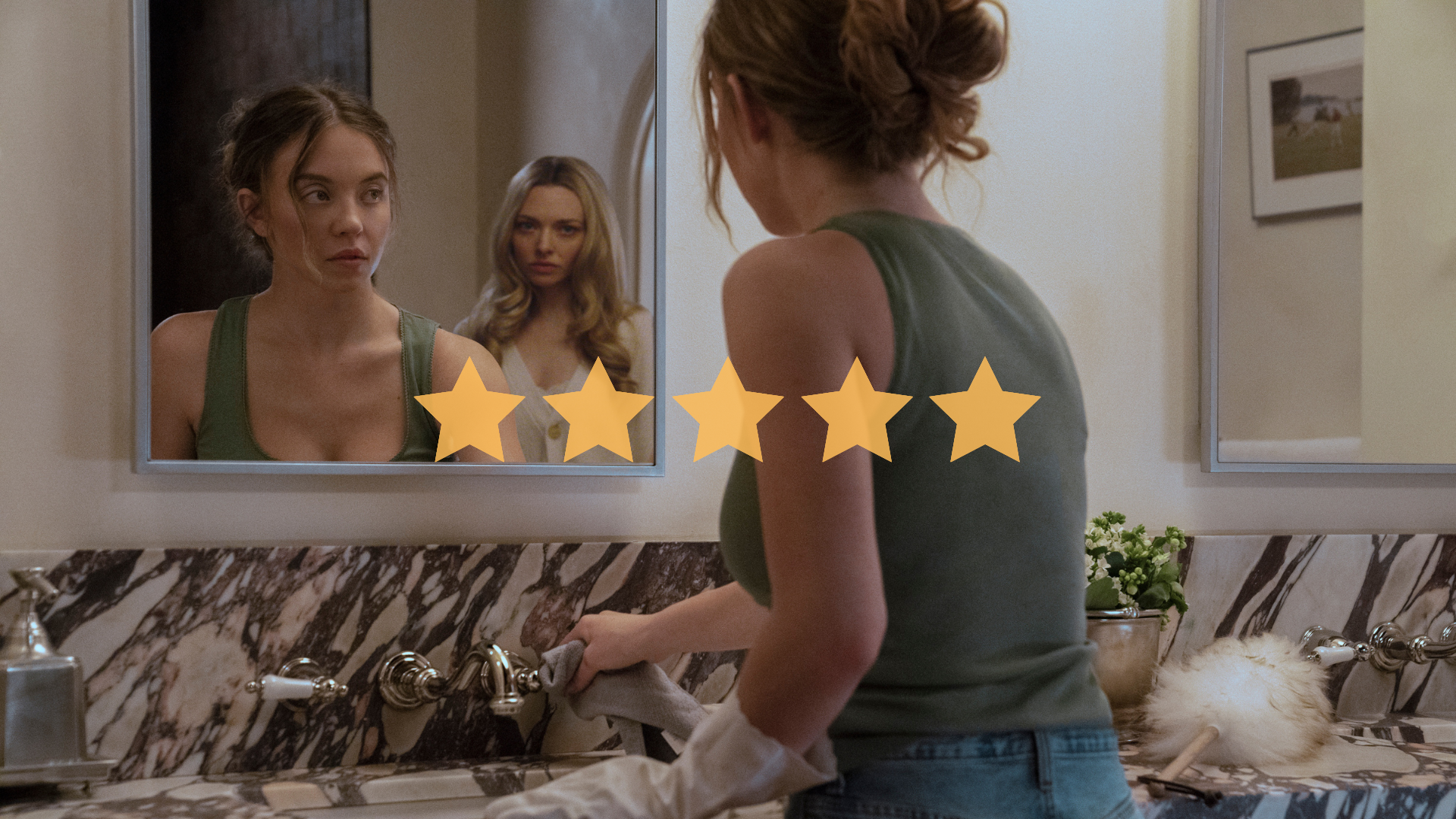
The Housemaid is a gorgeously venomous film that slips a brutal social commentary into the polished skin of a domestic thriller. The film does not just tell a story about abuse; it anatomises the scripts that teach us whom to fear and whom to forgive.
★★★★★
The emblematic image here is not a scream or a bruise—scenes only occasionally shown on camera—but a woman with a cloth in her hand. Millie (Sydney Sweeney) stands in the Winchester kitchen, wiping an already-clean countertop as Nina’s voice lashes the air like a whip. The surfaces around her gleam with a cruel intensity, as if the house itself demands perpetual purification. In this moment, the film announces itself as a study of domestic labour as penitence, and, as we come to see later, more broadly as a dissection of the misogynistic narratives we consume all too readily.
Strip the plot to its skeleton and it seems banal: an ex-convict maid, a volatile wife, a charming husband, an affair, an exit. But the film is not interested in novelty; it is interested in the choreography of perception. The narrative functions like a magic trick performed in slow motion. First, it assembles its props—the ‘crazy’ rich woman, the long-suffering husband, the grateful maid—and invites us to settle into the familiar comfort of the trope. Then, almost imperceptibly, it begins to rotate the stage, until the trick is revealed not as a single revelation but a disconcerting awareness that we have been complicit spectators all along.
The structure is quietly ingenious. Act one is humiliation-as-worldbuilding: Nina’s cruelties towards Millie are not just scenes, but further evidence of female unreason. Each outburst adds a verse to the liturgy of ‘difficult wives’ that popular culture has been singing for decades. Act two is seduction — fluttering heartbeats and simmering romances. Andrew’s gentleness, his charm, his confessional intimacy with Millie, seduce the audience as effectively as they seduce her. He is addictive: the man everyone wants to believe in because his goodness keeps the world’s logic intact. Act three, then, is less of a complete blindsider than a punch we see coming—anticipated, yet painful nonetheless. We realise the house has been rearranged around us; the villainy we comfortably hung in Nina’s wardrobe actually belongs in Andrew’s impeccably tailored closet.
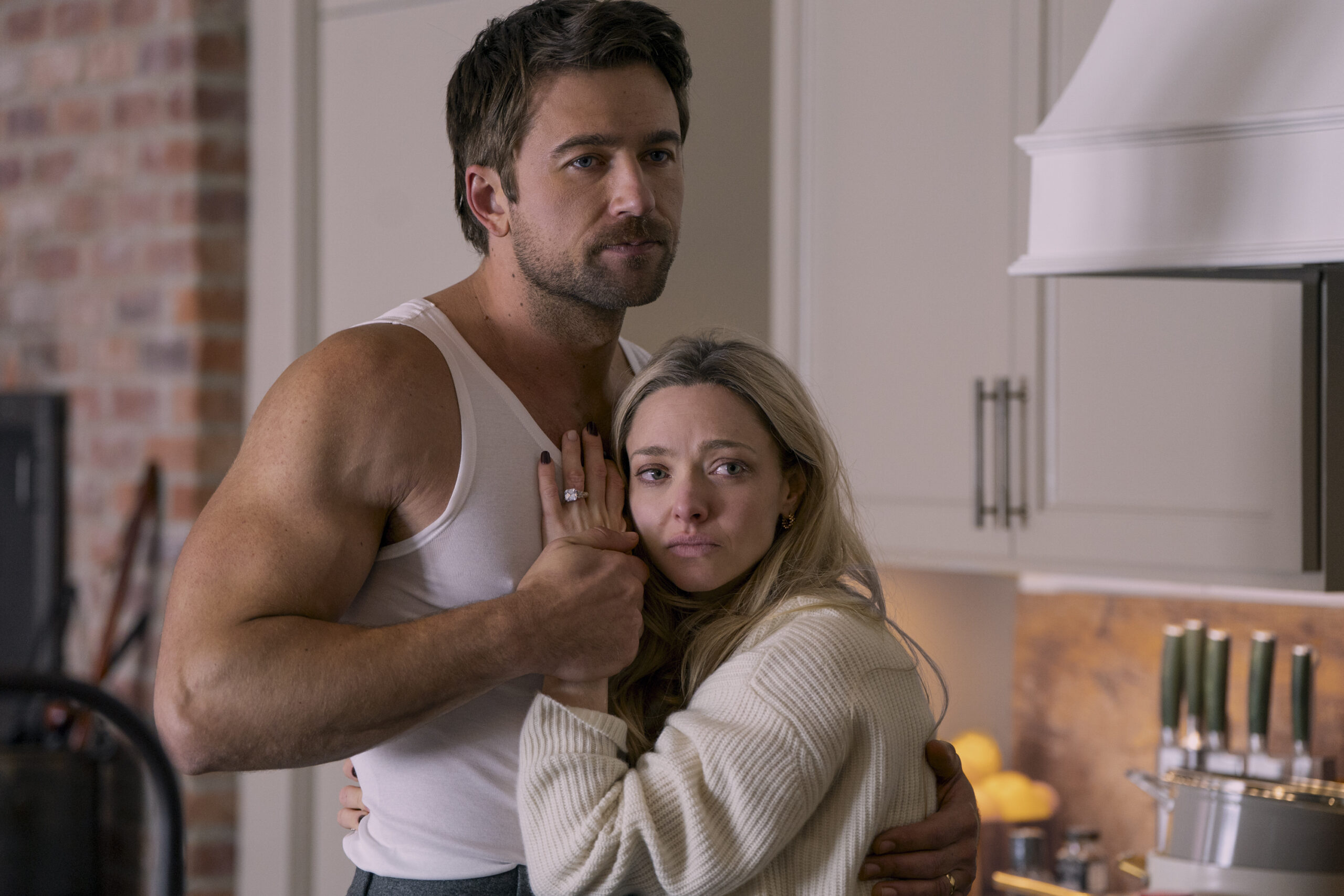
The screenplay’s most vicious move is its refusal to signal its politics didactically. Rather than denounce misogyny openly, it leaves us to confront our own readiness to accept it. Nina’s early dialogue is written in a key we recognise immediately: shrill imperatives, cutting jabs, extravagant inconsistency. Andrew, by contrast, speaks in the soft register of reasonable masculinity; he comforts, he contextualises, he sighs. The film understands that patriarchy is not sustained by overt pronouncements, but by tonal management—the way a man’s calm retroactively reframes a woman’s distress as overreaction. When the narrative finally discloses Nina’s strategic clarity and Andrew’s calculated sadism, it is less a smug inversion than a display of how we are taught to misread them.
Visually, the film turns the Winchester home into a diagram of gendered power. The open-plan living area becomes the arena in which Andrew’s respectability is staged—for the family, for guests, and, by extension, for us. Nina is most visible here, her volatility grotesque against such tasteful décor—a stain on minimalist perfection.
Daylight is harsh, over-exposed, equalising, rendering Nina’s outbursts unforgivable because everything around her is so pristine. Under that merciless brightness, she appears as an aberration. Night, however, is more complex. In these warmer, shadowed scenes, Andrew’s charm blooms, and Millie’s loneliness becomes tactile. This way, the film traces not just the passage of time, but the way patriarchy shifts costume: in the day, respectability; in the evening, intimacy. Both are disguises.
The character arcs thread this thematic latticework with unnerving precision. Nina is not perfect; the film has the courage to keep her real and raw. Rather than exonerating her by retrofitting her into the ‘good victim’ archetype, the film remembers her cruelty, yet still demands that she is deserving of escape. Andrew, meanwhile, is a reminder that villains don’t always reveal themselves immediately as a snarling monster, but instead move through the world with a relaxed confidence that reads, at first, as decency. His most chilling quality is not his anger, but his plausibility.
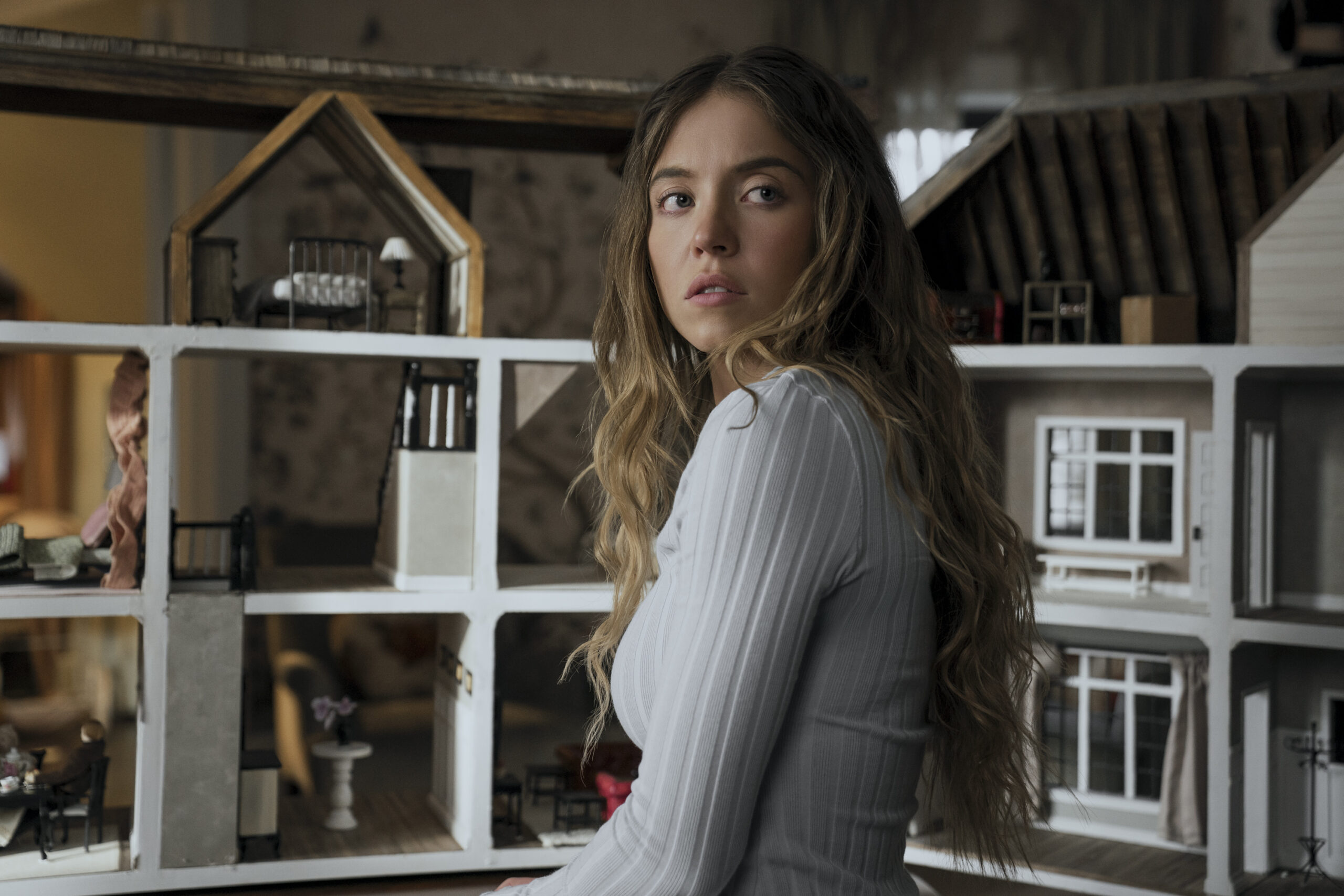
Millie’s arc is one of the film’s most uncomfortable achievements. She is the traumatised victim, and yet a critic may question her acceptance of patriarchal narratives—the way she happily lives inside the story of the ‘crazy’ wife driving her poor husband into someone else’s arms. Neither Millie nor Nina are saints—and this honest, unfiltered depiction allows The Housemaid to retain its credibility.
But what cements this film as a five-star movie is that the craft works as ruthlessly as the script and plot. The Housemaid is a film that trusts silence and stillness, and that confidence is unnerving. The direction keeps a suffocating restraint: scenes unfold in long, unbroken takes, forcing us to sit with every flinch, every swallow, every suppressed outburst. The editing is meticulous, cutting not for cheap jump-scares but for implication—holding just a fraction too long on a doorway, a reflection, the space between two bodies, so that when the story finally turns, we realise it has been preparing us from the start. The sound design and score stay mostly under the surface, which makes the few musical swells land with added impact. This refusal to overplay—on the part of the director, the editor and the cast—makes The Housemaid feel like a beautifully constructed trap, sprung with absolute precision.
The Verdict
The Housemaid is a devastatingly elegant exploration of how misogyny is laundered through tasteful interiors and plausible men. It masquerades as a familiar domestic thriller, only to expose how deeply we have internalised the patriarchy’s narrative for who gets to be trusted and who gets to be called mad.
Words by Sophia McHardy
Support the Indiependent
We’re trying to raise £200 a month to help cover our operational costs. This includes our ‘Writer of the Month’ awards, where we recognise the amazing work produced by our contributor team. If you’ve enjoyed reading our site, we’d really appreciate it if you could donate to The Indiependent. Whether you can give £1 or £10, you’d be making a huge difference to our small team.