

With its Paris-versus-Paris twist, Netflix’s new rom-com promises wit and warmth but settles for safe territory. The Wrong Paris is pleasant in moments, though more predictable than memorable.
★★☆☆☆
Netflix’s newest rom-com has a setup that sounds irresistible on paper: a small-town artist with dreams of studying in Paris, France, who instead finds herself swept into a reality dating show in Paris, Texas. It is a neat bait-and-switch, the kind of format that could have played either as a sharp parody or heartfelt comedy. At times, The Wrong Paris gestures in both directions, but never fully commits to either. Instead, it plays within the genre’s most familiar patterns, resulting in a film that’s ultimately as forgettable as it is predictable.
The story follows Dawn (Miranda Cosgrove), a young woman who auditions for reality dating show The Honeypot as a quick way to fund her dream of art school in Paris—or at the very least, secure a free ticket to the city. She expects only a brief glimpse of glamour before returning to her ambitions. Instead, she finds herself under the Texas sun, surrounded by cowboy boots and rival contestants, competing for the attention of bachelor Trey (Pierson Fodé). The structure is clear from the start: banter will turn into attraction, misunderstandings will threaten it, and the romance will settle into place with more inevitability than surprise.
The film does initially offer glimpses of something more. In the opening act, when Dawn is sketching and reflecting on how distant her dream feels, it gives her a likability that makes it easy to root for her. Those quieter moments suggest a film rich in ambition and self-discovery. However, the narrative soon shifts its focus away from Dawn’s dreams and instead focuses on the familiar elements of a love story that never truly sparks. Trey is a likeable character, but the film rarely explores him beyond the requirements of his role as a love interest. Their romance follows the familiar patterns of the genre—pleasant to watch, but never truly captivating.
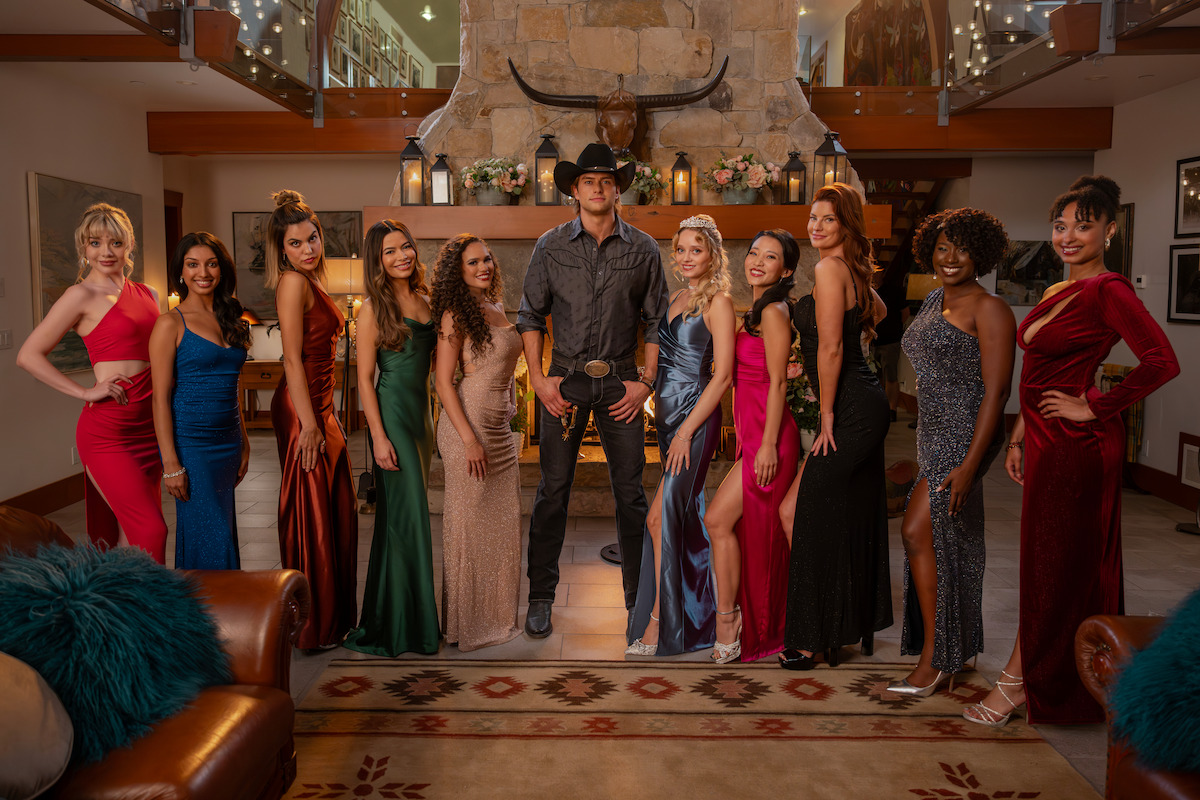
What makes this especially frustrating is that the concept itself holds so much potential. Reality dating shows are promising grounds for satire, full of staged rivalries, manufactured intimacy, and unconvincing drama. The Wrong Paris hints at this, dropping in a few references to the artificiality of reality TV, but it consistently pulls back before following through. Rather than leaning into parody, it retreats into safer territory: gentle humour, familiar misunderstandings, and an inevitable grand gesture. What could have been a playful twist on the rom-com ends up conventional, reluctant to risk being too bold.
Technically, the film captures the glossy look typical of Netflix productions: bright, polished, and easy on the eye. But all that surface shine comes at the cost of depth; the editing is uneven, with some moments stretched too long while others, particularly emotional arcs, are rushed past.
The film struggles to bring its supporting world to life. Contestants on The Honeypot lack dimension, the producers function purely as narrative tools, and even the Paris, Texas setting feels like a backdrop rather than a lived-in place. The wide skies and warm colours of Texas are captured nicely, but instead of shaping the romance, the environment merely frames it, losing an opportunity to deepen the story.

That being said, it would be unfair to dismiss The Wrong Paris entirely. Every so often, it finds the lightness it is searching for. A glimpse of sincerity, a stray joke about the indulgences of reality television, or a small expression of warmth between characters, is endearing. It is not a film that asks much of its audience, and sometimes that can be enough. For viewers in search of easy comfort, it provides exactly that.
The Verdict
Comfort alone cannot disguise the sense of a missed opportunity. With a sharper script or greater willingness to embrace the absurdity of its premise, The Wrong Paris could have stood out in Netflix’s endless catalogue of rom-coms. Instead, it settles for being watchable but disposable, the kind of film that fills an evening without leaving much behind.
Words by Lara Sayess
Support The Indiependent
We’re trying to raise £200 a month to help cover our operational costs. This includes our ‘Writer of the Month’ awards, where we recognise the amazing work produced by our contributor team. If you’ve enjoyed reading our site, we’d really appreciate it if you could donate to The Indiependent. Whether you can give £1 or £10, you’d be making a huge difference to our small team.