

And Just Like That… the divisive sequel to Sex and the City has come to a close, with the third season finale dissipating with a bit more of a fizz than a bang. To truly dissect the carcass of one Miss Carrie Bradshaw, I have had to leak many spoilers throughout this review, so tip-toe lightly in those Manolos if you’re looking to avoid plot details.
★★☆☆☆
With Carrie’s 27-year fairytale finally coming to an end, I must admit that even I, a steadfast supporter of all things Sex and the City, have run out of steam. When the first season of And Just Like That… was released in 2021, I was simply elated to see Carrie (Sarah Jessica Parker), Charlotte (Kristen Davis) and Miranda (Cynthia Nixon) back on-screen again—even if Samantha was long gone, only to be replaced with hideous side-characters and nonsensical plotting. I didn’t care. I could’ve watched Carrie do her laundry and I would have been thrilled. When the second season premiered in 2023, there were genuine signs of improvement regarding the tone and execution, but by the end of the season we had all grown tired of Aiden (John Corbett) and his bizarre manipulations of Carrie. It became clear that the writers, and specifically showrunner Michael Patrick King, had absolutely no idea what to do with these characters.
Whilst Sex and the City succeeded on every level when it came to representing single New York women in their 30s and 40s, it would seem as though the writers of And Just Like That… have never met a middle-aged woman, nor a human-being for that matter. With the premiere of season three, I surrendered all logic and expectation, but even then, I found myself suffering a fate worse than death: boredom.
Alongside each episode’s premiere, Michael Patrick King and other writers hosted the much derided ‘And Just Like That… The Writer’s Room’ podcast, sharing their bizarre delusions and thought processes with the world. It was here that King sang of Carrie’s supposed new-found maturity in the third season, citing her behaviour throughout her ups and downs with Aiden as an example. I would like to use this opportunity to counter this: it’s much easier to hate on something with vitriol and fire than it is to speak of something with joy and passion, but I’m not being dramatic when I say that Carrie Bradshaw has devolved from the relatable, amusing, strong-willed and appropriately flawed individual we saw in SATC into a seemingly lobotomised doormat, with little more to do than online bid for a hideous table and write poorly researched historical fiction. Whilst there are semblances of Carrie on the surface (think her unique style, puns-a-plenty and a penchant for wondering), the new Carrie is not mature, she is simply sanitised—a descriptor that epitomises the third season of And Just Like That… in general, even if we do see more human faeces on-screen than preferred.

I do believe AJLT’s biggest failure lies not in the impulses of the writers in regards to plot points and character development, but instead in the pacing and execution. In defense of Carrie’s docile demeanour, it makes sense that a sort-of-single woman heading into her 60s would have found an element of softness in her worldview and settled with the idea that she may very well not find another great love in her life. I, along with the fan base, am more than happy for this single status to be the note Carrie lands on, as finding peace without romantic love is both mature and somewhat profound. But it simply shouldn’t take 12 episodes and a rehash of the Aiden love affair to convey this. In summarising Carrie’s plotline, it unfurls as follows: Carrie continues her unclear relationship with Aiden whilst venturing into fiction writing with a period drama about an unnamed individual, simply named ‘The Woman’. She soon develops a working flirtationship with her downstairs neighbour Duncan (Jonathan Cake) as Aiden continues to put Carrie in increasingly stranger situations in which she continually underreacts. Carrie eventually snaps out of her haze, dumps Aiden and never really discusses him again. She then proceeds to sleep with the aforementioned downstairs neighbour, he leaves, and in the end Carrie is left single or, as the final line of the series puts it, she “…realised she was not alone—she was on her own”.
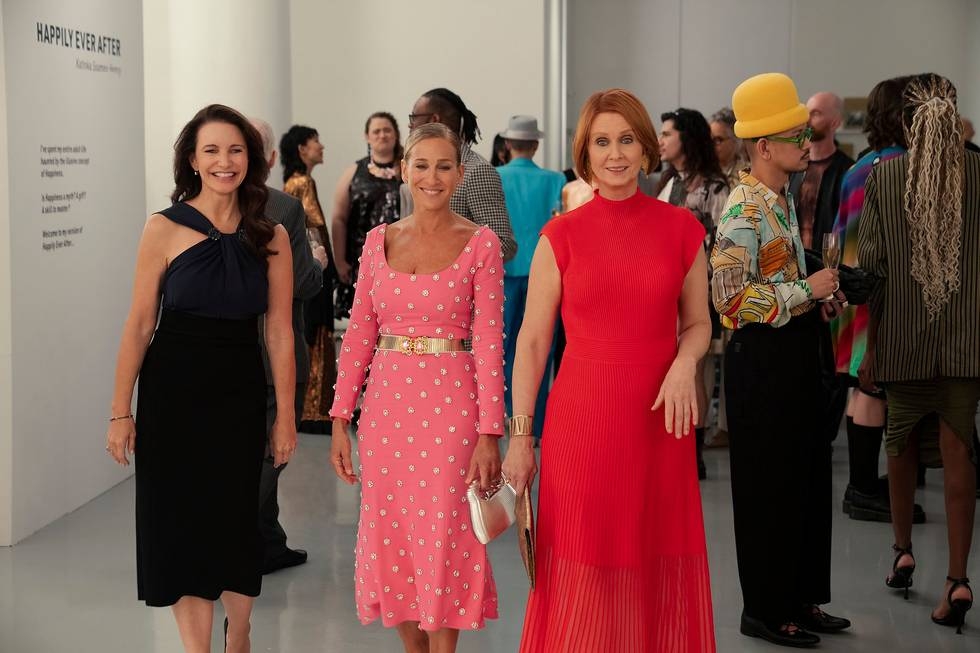
Now all of this is well and good, but how did it take an entire season to do what Sex and the City would’ve tied together in no more than a few 20 minute episodes? The same easily applies to the storylines of Charlotte and Miranda. For the former, she starts a new relationship with the frighteningly British BBC Producer Joy (Dolly Wells), buys an overpriced apartment, moves around a bit, and later finds out her son Brady is going to be a father. In Charlotte’s case, the first half of the season finds her trapped with mundane tales of her dog getting cancelled and her wanting to party, whereas the second finds her ‘dealing’ with Harry’s cancer diagnosis. In classic AJLT style, nothing really changes and there are no real stakes, despite such plot points providing rich opportunities to see these women truly grapple with their changing realities. Instead, Michael Patrick King devotes countless hours to plot points that are never truly tied together, leaving the viewer not just unsatisfied, but oftentimes confused.
Despite these deficiencies, there is no denying that AJLT can in equal parts be an absolute blast, whether intentional or not. I enjoyed Charlotte’s birthday party from hell, as well as Carrie’s terrifying trip to Virginia where she nearly gets murdered by Aiden’s psychotic son. And Just Like That… is at its best when it leans into the surreal, giving audiences something shocking to hold on to or something salacious to recall over the watercooler. The production design and costume continue to stand out as truly impressive, albeit gauche, and season three found itself packed with vintage Sex and the City references for fans and media outlets alike to dissect.
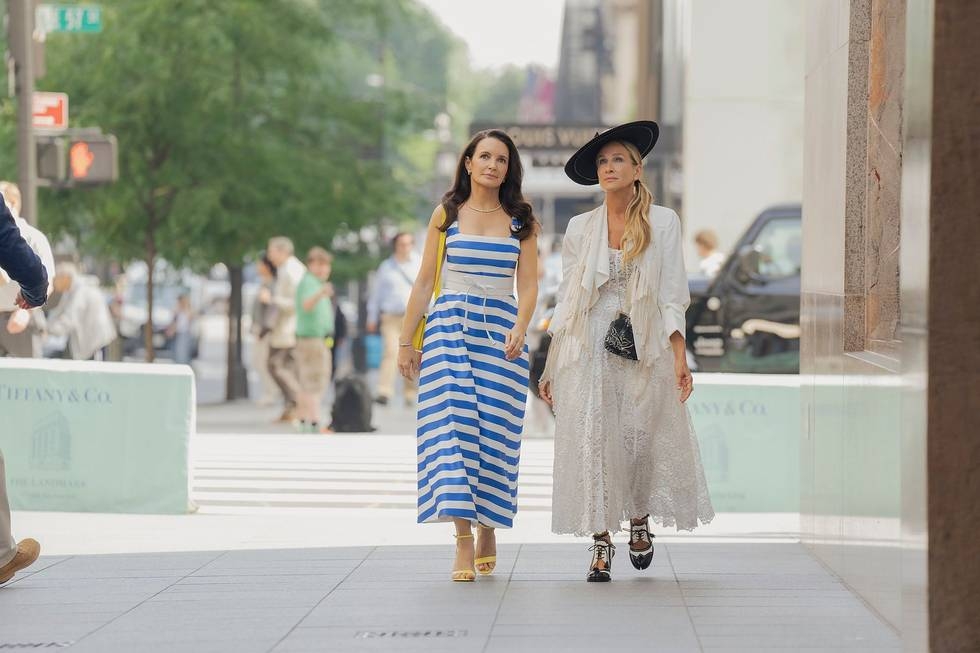
It may seem odd since I’ve sat here and torn And Just Like That… to pieces (I couldn’t even begin to go into Lisa Todd Wexley’s father dying TWICE), but I mean it when I say that I will truly miss this bonkers project. When it was announced that the series would end just a few weeks prior to the finale, I felt as though we, as a fanbase and a culture, were putting down a sick pet: it’s the right thing to do, but that doesn’t mean it feels good. It’s clear from this third season that the writers have lost any understanding of pacing and character development, forcing our leading ladies into tedious, albeit sometimes hilarious, dead-end situations. Regardless of this ending, the Sex and the City universe remains a lucrative asset in HBOs catalogue and the original series continues to resonate with new generations. I truly feel that despite Sarah Jessica Parker’s rousing farewell to Carrie on her Instagram, we haven’t seen the last of Carrie Bradshaw yet, and best believe I’ll be the first one watching any future iterations, even if it is through splayed fingers.
Words by Ben Carpenter
Support The Indiependent
We’re trying to raise £200 a month to help cover our operational costs. This includes our ‘Writer of the Month’ awards, where we recognise the amazing work produced by our contributor team. If you’ve enjoyed reading our site, we’d really appreciate it if you could donate to The Indiependent. Whether you can give £1 or £10, you’d be making a huge difference to our small team.