
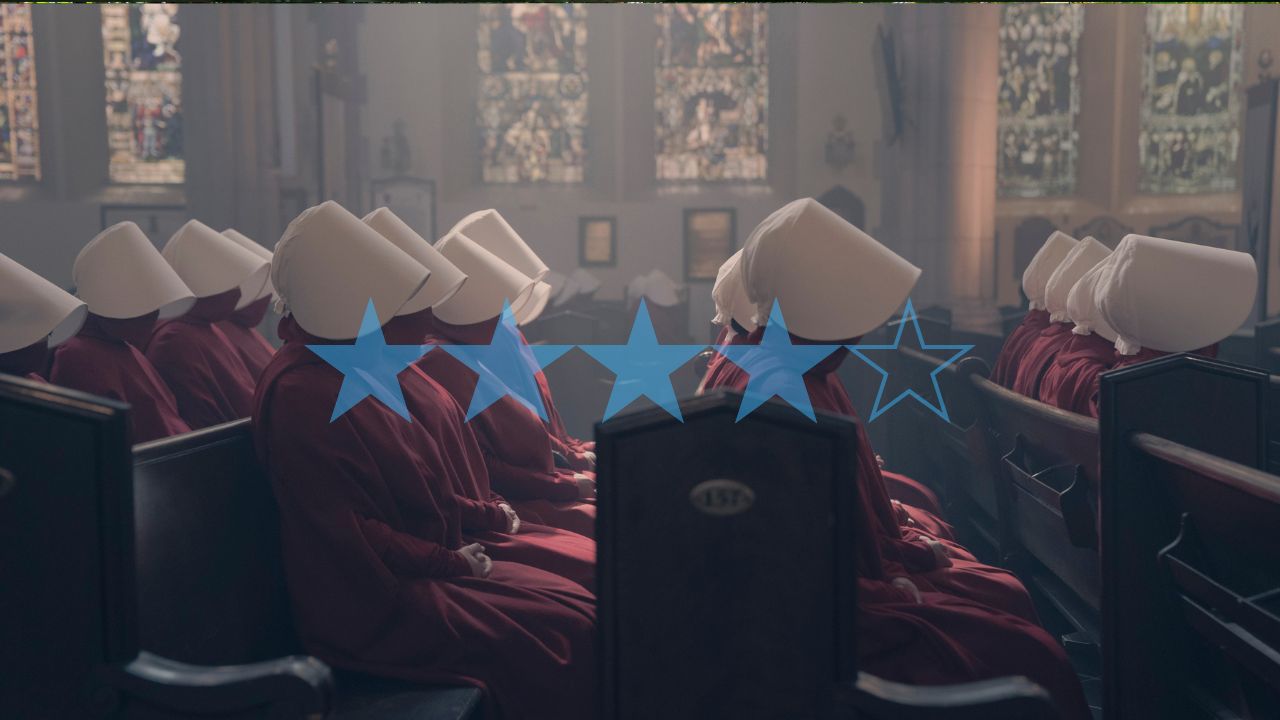
HULU’s series adaptation of The Handmaid’s Tale has come to an end with its sixth and final season and it seems that many fans have mixed feelings about its finale.
★★★★☆
Beware, there are some spoilers ahead.
The main source of frustration comes from the fate of some major characters and its supposed underwhelming and anticlimactic close. But isn’t that the point of the show? I found that while the ending was less intense than its usual atmosphere, feeling more reflective in tone, it worked in giving power back to June as she reclaims her agency and voice from Gilead’s oppressive structures which begin to break down.
This season saw the revolution of Gilead, beginning in what we know as Boston, where the series was focused. We see June (Elizabeth Moss) continuing to fight for justice for the women who have been wronged by Gilead’s Commanders. Serena Joy (Yvonne Strahovski) seeks redemption, Nick’s (Max Minghella) loyalty is fractured and Commander Lawrence (Bradley Whitford) hopes to reform Gilead as he foregrounds the idea of New Bethlehem, all while Gilead begins to loosen its grip on authority.
The Handmaid’s Tale novel, which the series is adapted from, is noted for being speculative fiction, as every unjustifiable event that happens in the book also occurs and has occurred in some form in real life. It was Margaret Atwood’s policy to write only the truth. This emphasises both the novel and the series’ uncanny pertinence to contemporary political matters. Recently, many people have attended protests dressed as handmaids, due to the novel’s relevance to issues of bodily autonomy, like the overturning of Roe V Wade in the U.S. in 2022. The comparative nature of the series to real life matters succeeds in leaving a lasting and enduring emotional impact on those who watched it.
This season was filled with emotional resonance, bringing some closure to major plotlines, including the redemption, transformation and return of some important characters. However, some fans were left disappointed. Former Commander’s Wife, Serena Joy was given a redemption arc, despite the gravity of her involvement with the foundation of Gilead. She gains long awaited forgiveness from June, a decision that divided fans. This particular scene was a moving performance by Strahovski and Moss, as it is clear the door has closed on their complicated relationship. I felt that while it is difficult to judge whether this was the right thing for her to do, June was ready to heal the part of herself that was tied to Gilead and forgiving Serena was a step in the process to gaining her identity back. As much as it may be uncomfortable for viewers to accept, it seems June chose to forgive her, underscoring her new found autonomy.

Minghella’s character Nick appears to turn to cowardice (a statement Elizabeth Moss endorses) as he interrupts a Mayday mission. A focal point of the season, this changes the trajectory of his storyline. The emotional impact Nick had on fans, especially in this season is a testament to Minghella’s acting, capturing the moral ambiguity of his character. This ambiguity made for a gripping and captivating watch.
Many feel that episode nine was the true ending and episode ten is merely an epilogue (fair warning, if you haven’t watched episode nine yet, you are in for an emotional rollercoaster), as it was the former which elicits the biggest reaction out of viewers. Many turned to social media to vent their despair and frustration.
The outcome of this episode sealed the fate of certain fan-favourite characters, signalling that not everyone can get a happy ending, even if they are not inherently evil. Perhaps the most exhilarating part of the season was the execution scene, where June screams, “Rise up, fight for your freedom, don’t let the bastards grind you down”, in a powerfully moving moment.
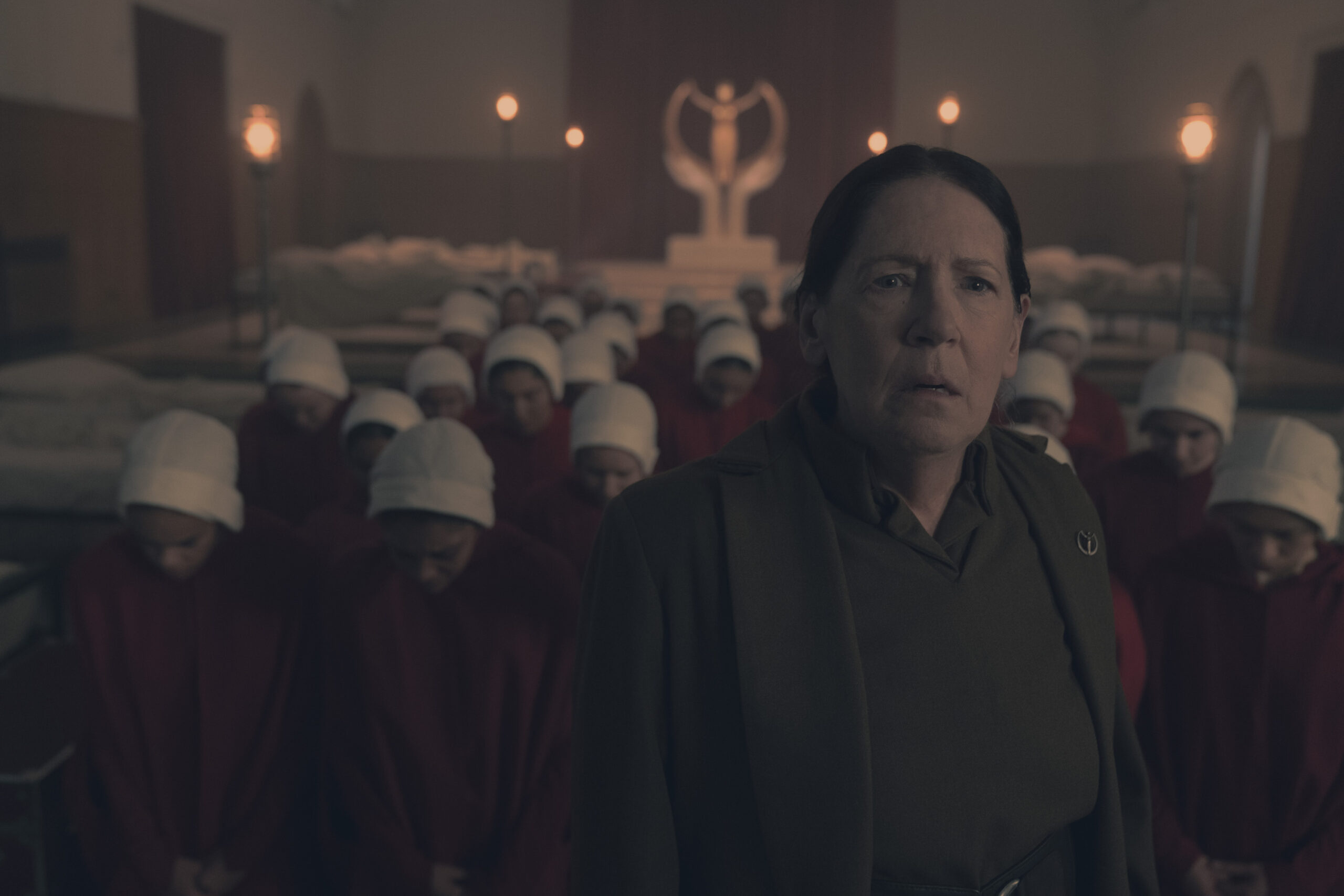
Episode ten, in contrast, acts as a final goodbye to the characters. It is slower-paced and mellow, showing a glimpse at where each character is headed. The final scene, however, lingered with me in the way it brought power back to a once powerless handmaid, June. It mirrored the start of the show in season one and the novel, as she begins to tell her story. She sits on the window sill as her Gileadean self did, in the dishevelled former home of the Waterfords. This scene succeeded in empowering June as she gained her voice, freedom and autonomy back after years of being silenced and oppressed by evil. It is one of hope within a hopeless series.
Many watched season six in the hopes that all plotlines would be rectified, but were left ‘unsatisfied’ and ‘underwhelmed’ after the dramatic twists and turns of the show’s entirety. However, would it be the essence of The Handmaid’s Tale if it ended that way? It is first and foremost, a dystopia, a warning of what the world could be if certain governmental policies are left unchecked. Would it be naive to expect a happy or hopeful ending? The true essence of the series and indeed the novel, offers a vision of a world that seems too eerily possible in the near future, rather than a creepy horror show that you can simply switch off. That is why the ending could not be joyful. It wouldn’t be true to the show’s ethos.
That being said, I feel as though the ending may have made more of an impact on viewers if it had mirrored the last chapter of the original novel, ‘Historical notes’, which is often overlooked in dialogue surrounding the novel. It is set in 2195 in a conference led by the Gileadean Research Association. Two male professors have academically reframed the history of a now non-existent Gilead in which they downplay the relentless surveillance and restrictions imposed by Gilead, invalidating Offred’s truth. The professors’ use of humour and the tone of neutrality could be a foreshadowing of a future Gilead 2.0 in their lifetime. Incorporating this into the final episode of the series would reinforce the show’s message: Gilead can happen at any time, made possible by subtle shifts in societal attitudes which can eventually lead to the complete eradication of autonomy for the marginalised. Nonetheless, fans will just have to watch the upcoming spin-off series, The Testaments, to find out what happens to Gilead post-season six of The Handmaid’s Tale. I am sure if it is anything like its predecessor, it will not be short of intense and gruelling moments.
The Verdict
If you are hoping for an ending that is wrapped in a neatly resolved bow, you may be disappointed. The Handmaid’s Tale finale delivered a reflective and meaningful, yet unresolved ending. However, it is more realistic and conducive in the way it underscores the real fact that the fight against authoritarianism still goes on, even beyond the show.
As The Handmaid’s Tale draws to a close, one thing is certain: June is not done fighting, as justice is not truly served until all justice is served.
Nolite te bastardes carborundorum.
Words by Emma Mahon
Support The Indiependent
We’re trying to raise £200 a month to help cover our operational costs. This includes our ‘Writer of the Month’ awards, where we recognise the amazing work produced by our contributor team. If you’ve enjoyed reading our site, we’d really appreciate it if you could donate to The Indiependent. Whether you can give £1 or £10, you’d be making a huge difference to our small team.