
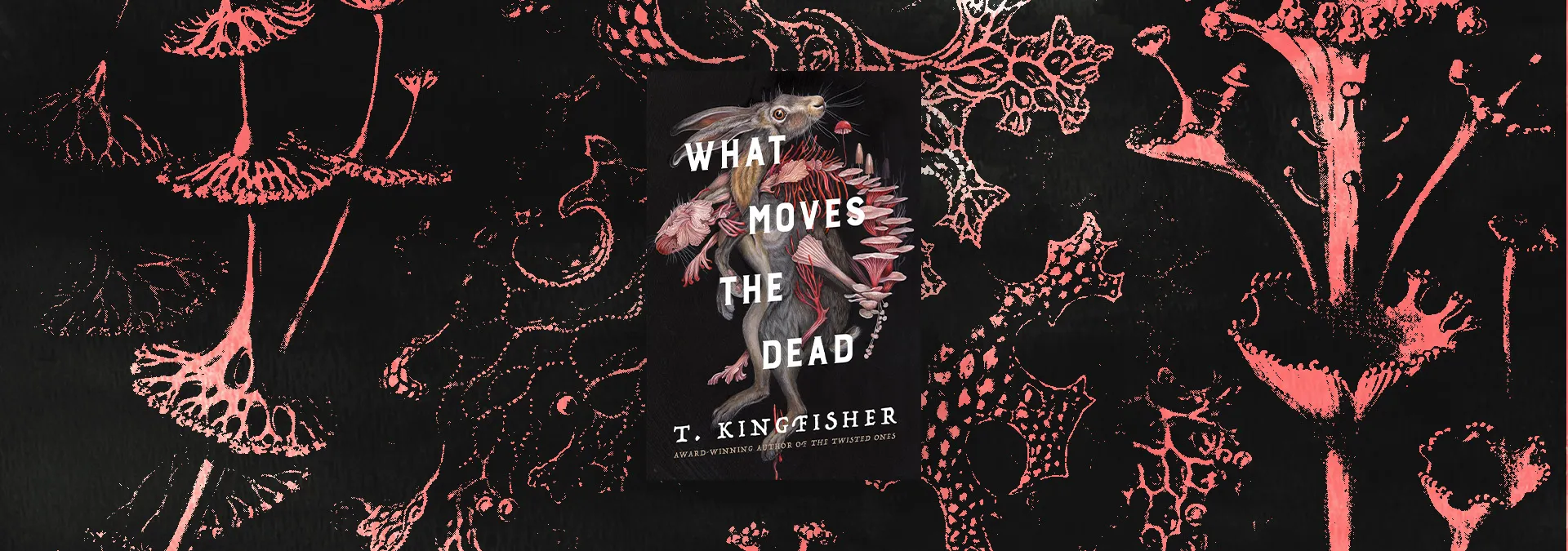
In a gripping re-imagination of Edgar Allan Poe’s ‘Fall of the House of Usher’, Ursula Vernon (under her pen name T Kingfisher) crafts a delightfully gothic setting elevated by memorable characters that go beyond the usual tropes.
At the centre is Alex Easton, a grounded ex-soldier from the fictional country Gallacia, who rushes to the ancestral home of the Ushers after hearing word their childhood friend, Madeleine Usher, is dying. The shared military past between Roderick Usher, Madeleine’s brother, and Easton adds another layer of mystery.
When Easton arrives, they are greeted by a host of horrors. The dark lake within the Usher’s grounds is pulsing with strange light, the wildlife moves as if possessed, and an emaciated Madeleine sleepwalks and speaks in strange voices. Even Roderick seems to be afflicted by a nervous disposition, hesitant to welcome Easton upon their unexpected arrival. Accompanied by Ms Potter, an enigmatic British mycologist, and Denton, a bewildered American doctor, Easton seeks to find the root cause of all these oddities.
Kingfisher weaves these relationships carefully to offer temporary moments of relief from the escalating atmosphere of suspense that surrounds the Usher’s home. A highlight is the relationship between Easton and the reliable Angus, who offers continuous comedic commentary on the absurdity of unfolding events. Her development of these characters and relationships adds to the original plot, making it a truly original work.
The novel also manages a subtle analysis of social issues, juxtaposing the progressive culture of Easton’s Gallacia, with its set of seven pronouns and embracing of ambiguous gender identities, with the rigid standards of the Royal Mycology Society which refuses to admit Ms Potter due to her gender. Frequent comments on Madeleine’s hysteria and dismissal of her highly-strung personality also echo the medical misogyny of the time. The commentary adds to the relevance of the novel, and never seems tacked-on or excessive.
Overall, What Moves The Dead is a glorious gothic horror reimagining of a well-loved classic, complete with modern social commentary and a cast of fully-realised, likeable characters. It is an enthralling and well-paced read that delivers the perfect treat for lovers of the gothic genre, and is best enjoyed with the lights kept on.
Words by Gemma Gradwell
Support The Indiependent
We’re trying to raise £200 a month to help cover our operational costs. This includes our ‘Writer of the Month’ awards, where we recognise the amazing work produced by our contributor team. If you’ve enjoyed reading our site, we’d really appreciate it if you could donate to The Indiependent. Whether you can give £1 or £10, you’d be making a huge difference to our small team.