
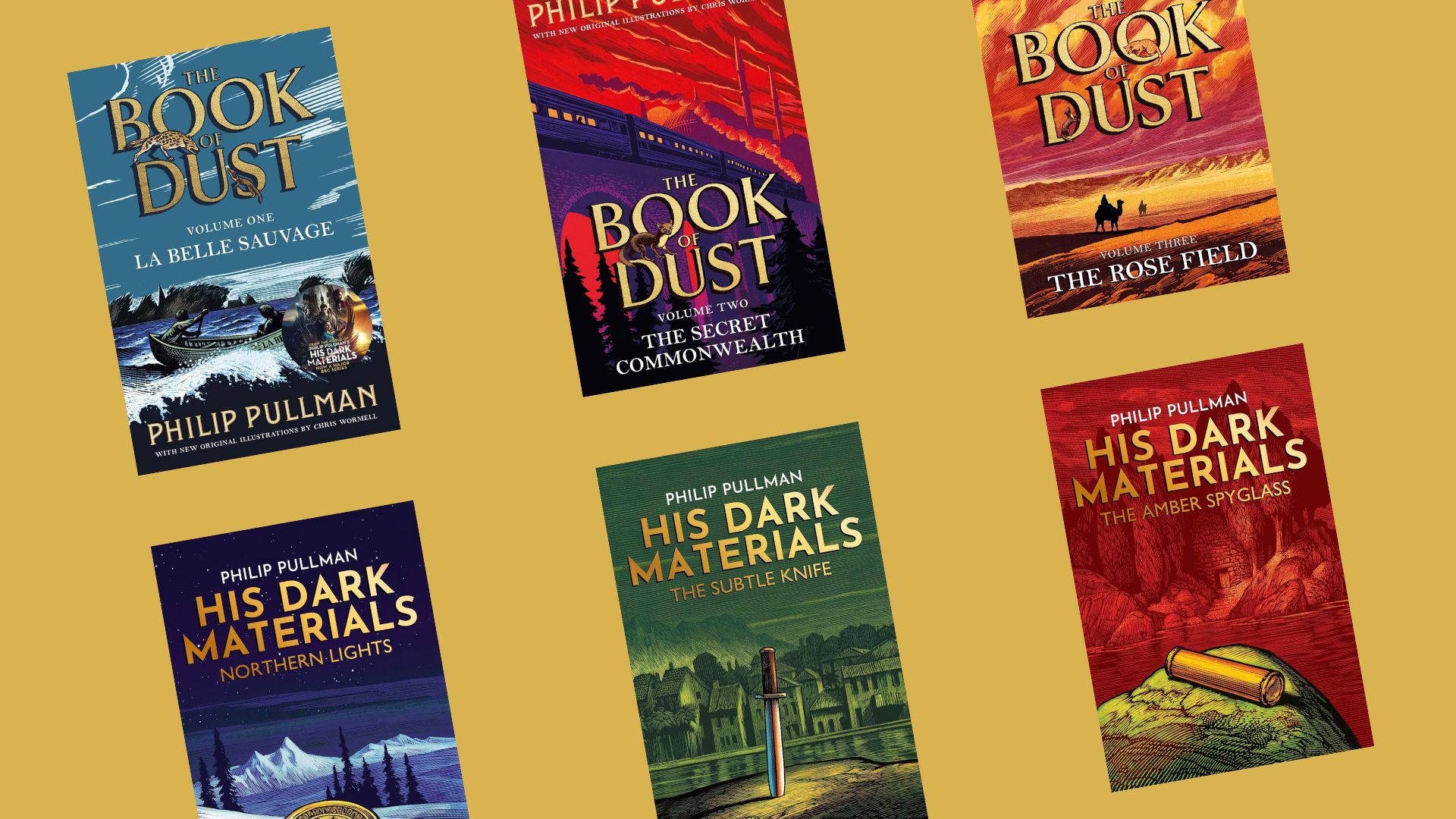
In 1995 when Northern Lights was first published, few could have imagined the impact it would have on the literary world. From our first encounter with Lyra and her daemon Pantalaimon as they hid in a wardrobe at Jordan College, it was clear this was a character and universe unlike anything readers, young and old, had encountered before. As Philip Pullman says goodbye to his beloved universe (again) with the final instalment, The Rose Field, in his second epic trilogy, The Book of Dust, we ponder what has captivated readers about this universe and will do for decades to come.
This has become a literary phenomenon to rival the likes of The Lord of the Rings and The Chronicles of Narnia, among others. The series has been adapted for both big and small screens and acclaimed stage adaptations. There is of course, potential for a further TV adaptation of The Book of Dust, now that the series has reached its conclusion, with the BBC’s adaptation of the other books proving a huge hit.
For starters, the attention to detail in each entry is second to none. Lyra’s Oxford feels rich, complex, and vastly different from our own, despite the obvious similarities. Daemons themselves, extensions of the human soul in animal form, are a genius contraption for expressing the shift from youth to adulthood. When they reach a certain age, daemons fix in one animal that expresses the person’s personality.
The concept of daemons helps to juxtapose Lyra’s world with others encountered throughout the initial trilogy; Will’s world and others don’t have them. Lyra’s world also feels far more steampunk and influenced by the Industrial Revolution; it is a dangerous place for a young person to be. On her travels to the frozen north, she meets a melange of wonderful characters from witches to travelling boat communities, Gyptians, and of course, the enigmatic Lee Scoresby and his friend the armoured Polar Bear Iorek Byrnison.
Each world readers visit feels unique from the spectres of Cittàgazze to the world of the mulefa; there is so much creativity and imagination on display. Lyra’s world is captivating enough to carry a series on its own, as has been proven in The Book of Dust but Pullman never loses his readers with multiple worlds, finding balance amidst chaos and putting the characters of Lyra, Pan and Will at the core of the story. So while there is plenty of action and magic, it is never at the expense of telling a compelling story that has proven a huge hit with both young adults and older readers.
Revisiting the world could have backfired spectacularly for Pullman, few series have an ending as beloved and heartbreaking as Lyra and Will’s. Cleverly La Belle Sauvage, the first entry in The Book of Dust, showed a completely different side to the Oxford of Northern Lights, as we follow Malcolm Polstead. There are still religious allegories but it feels like a natural extension of Lyra’s world, avoiding many pitfalls usually associated with prequels. Malcolm is another fascinating protagonist, and the novel dabbles far more in espionage fiction than the previous trilogy. The new characters are fully fleshed out in this novel and across the trilogy, while familiar faces are given new meaning that does not detract from how they will come to be later.
Following Lyra as a young adult, close to ten years after the events of The Amber Spyglass, is a smart move, allowing her to age up along with the readers. The young girl beloved the world over is still there, razor sharp but more complex. Especially different is her relationship with Pan, a crucial theme in sending her on another adventure to the other side of the globe, in search of both answers about herself and the nature of dust.
The Book of Dust has the beautiful prose of its predecessors with an added maturity. It feels like a natural extension of His Dark Materials, never treading on the toes of its beloved predecessor and just like that series has so much re-readability value. The second series will only increase the love for the overall universe, and in doubling down on Lyra’s own world, we do not lose any of the magic and wonder that has been cultivated over 30 years.
The world of His Dark Materials and The Book of Dust is unlike anything else, and even supplementary materials like Once Upon a Time in the North, Lyra’s Oxford and Serpentine serve to flesh it out and fill in the blanks. Far from disposable, they are worthy extensions of Pullman’s imagination and various corners of this franchise. While some literary series lose momentum over time, this universe has never not had a receptive readership. Even without The Book of Dust, it continued to be a huge hit, the second series further cementing it as one of the finest achievements in contemporary literature. Even knowing we have reached the end yet again, Lyra, Pan, Will, Malcolm, et al will continue to be beloved for generations to come.
Words by Chris Connor
Want more Books content from The Indiependent? Click here
Support The Indiependent
We’re trying to raise £200 a month to help cover our operational costs. This includes our ‘Writer of the Month’ awards, where we recognise the amazing work produced by our contributor team. If you’ve enjoyed reading our site, we’d really appreciate it if you could donate to The Indiependent. Whether you can give £1 or £10, you’d be making a huge difference to our small team.