
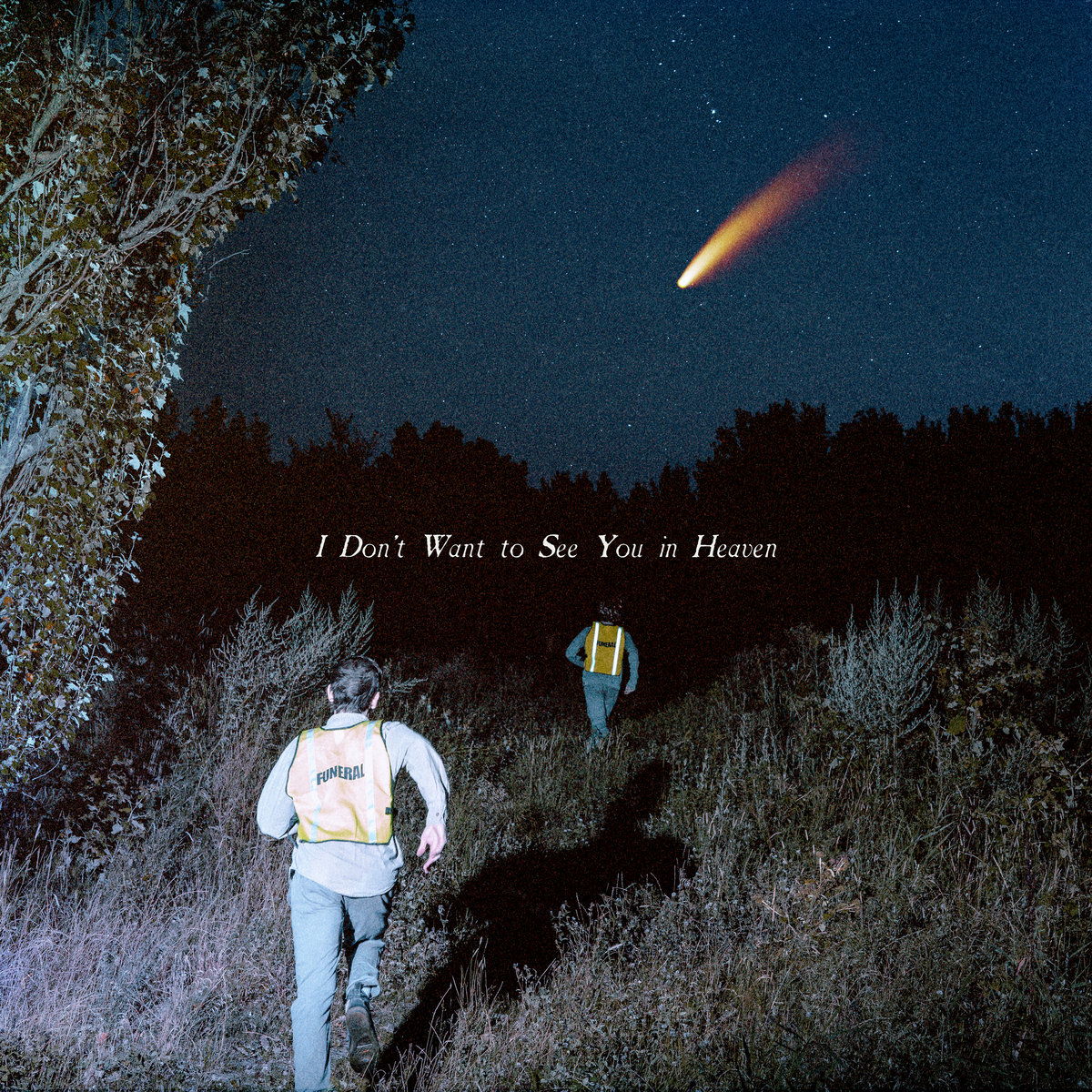
As you eagerly press play on Atlanta sextet The Callous Daoboys‘ fourth full-length album, I Don’t Want To See You in Heaven, a curious parallel might strike you: the album’s title also lends its name to a collection of exhibits housed within the band’s imagined “Museum of Failure”. Unlike its real-world Swedish counterpart, which thoughtfully curates displays of unsuccessful products and services, this “Museum of Failure” exists solely within the band’s creative vision. Envisioned as a fictional museum in the distant future and serving as the thematic heart of their new album, I Don’t Want To See You in Heaven acts as a visceral scrapbook of every raw emotion and sobering thought vocalist Carson Pace has grappled with since 2021. As introduced on ‘1. Collection of Forgotten Dreams’, the songs—or rather “artifacts”—that comprise this museum’s collection weren’t “just created by man” but forged in the crucible of “heartbreak, anguish, frustration, infidelity, lust, addiction, divorce, and suffering”.
Just as physical museums today are innovating with interactive displays, augmented reality experiences, and concise yet impactful storytelling on their labels, this fictional “Museum of Failure” would likely necessitate its own futuristic equivalents. Metaphorically speaking, these equivalents would have to be the band’s efforts in finding even more compelling ways to elevate their signature punishing mathcore, building on previous releases that have consistently and effortlessly demonstrated how much they have filled the void left by the disbandment of legendary bands such as The Chariot and The Dillinger Escape Plan. But with the initial rollout of singles such as ‘Lemon’, it’s unclear if the band will follow the trend of mathcore artists fully embracing a more melodic metalcore/alt-metal sound, similar to what outfits like The Armed have done on 2023’s Perfect Saviours. After all, wouldn’t it be better that way to appeal to a wider pool of listeners?
No doubt, the band has pursued a softer, more listener-friendly sound before and has seemed to continue doing so with this album. ‘Distracted by The Mona Lisa’ sees the band possessed by the ghosts of 2000s Easycore, complete with those anthemic, Coldplay-esque “oh-woah-ohs” that practically guarantee enthusiastic singalongs during their upcoming “Heaven Across North America” tour. Depending on your nostalgia levels for that era, you’re either going to be reeling in secondhand embarrassment so hard your toes curl, or your heart will skip a beat, transported back to the days of headbanging to Hopesfall and Dead by Divine through a haze of rose-tinted memories.
Lyrically, the song appears to serve as a heartfelt plea from Pace to his beloved, urging them to “hear (his) vows tonight / While everybody else is distracted by the Mona Lisa”. This can be interpreted as a declaration of love amidst external scrutiny or judgment. However, the reality seems to be that the single functions as a love letter to the current and enduring members of The Callous Daoboys. Pace has navigated numerous lineup changes since their debut, My Dixie Wrecked, through 2019’s Die On Mars, witnessing the departure of close friends and long-time collaborators pursuing different paths. Despite these shifts, Pace has explained that this song represents his unwavering commitment to his passion, regardless of the challenges; it’s less a rebellious act and more a profound expression of devotion to his band.
In another unexpected yet intriguing move, The Callous Daoboys collaborated with 1ST VOWS, the solo project of the talented Los Angeles-based Ryan Hunter, known for his potent vocals and introspective songwriting, to craft the blues-infused ‘Body Horror for Birds’. Amidst the likely polarised reactions from both longtime devotees and newer listeners, as a result for the band being known solely for their abrasive and adrenaline pumping pursuits, this particular track serves as a powerful thesis statement, not only for the album but seemingly for Pace himself. It provides a crucial lens through which to understand the album’s title, which, at first glance, could easily be considered one of the most scathing and confrontational album titles of the year—a phrase seemingly ripped from the vernacular of the working class, a defiant cry against those in power or those who have willingly inflicted pain.
However, the lyrical prose of ‘Body Horror for Birds’, shaped by both Pace and Hunter, adopts a more sombre and reflective tone, subverting the initial aggression of the title. The lyrics delve into the challenging journey of self-improvement and the often difficult reality of regaining trust. Lines like “I can’t wait to show you the 1% better I got / I think they run seminars about my relapse” poignantly illustrate the struggle to demonstrate progress, especially when past transgressions continue to cast a long shadow. The stark declaration, “The words are written on the back of my eyelids, ‘You make me uncomfortable / And I don’t wanna see you in Heaven’”, encapsulates the lingering impact of past hurt and the understandable guardedness of those who have been affected. The song astutely acknowledges that this wariness isn’t necessarily a fault; like any fractured relationship, rebuilding trust requires significant time and effort.
Building on their reputation for unpredictability and a no-holds-barred creative approach, while the band might lean into more conventional melodic structures with verse-chorus-verse songwriting, it would be a mistake to assume they’ve simply adopted a formula. Instead, they seize these familiar frameworks only to twist and contort them in ways that feel most impactful to their artistic vision. Take ‘Idiot Temptation Force’, for instance. You’re hit with those Cookie Monster guttural vocals—almost reminiscent of early 2000s MySpace Deathcore scenes dominated by Waking the Cadaver and Carnifex—and then suddenly, this elaborate brass arrangement sweeps in. It’s a stark contrast, to say the least, as out of nowhere, you’re plunged into this polished pop chorus that sounds like it could be straight off a track by The 1975, with Pace musing about exchanging vows at a hotel and simply wanting to be loved in return. It’s this abrupt pivot from brutal intensity to heartfelt vulnerability, and back again with the chaotic “Ugga-ugga-boo / ugga-boo-boo-ugga” refrain battling against the desperate “Why can’t you show me love, baby?” that really captures the tumultuous emotional rollercoaster of heartbreak, swinging wildly between anger and bargaining.
However, for longtime listeners who were initially drawn to the band’s relentless pummel of blast beats and muscular guitar work, rest assured that The Callous Daoboys haven’t chickened out completely. In fact, it contains some of the heaviest material they’ve ever conceived, proving that their exploration of melody and more conventional structures hasn’t come at the expense of the sonic intensity that defined their earlier work. While earlier teasers, ‘Two-Headed Trout’ and ‘The Demon of Unreality Limping Like a Dog’, are as much of a testament to that as ‘Fake Dinosaur Bones’ was as the first single to Die On Mars, ‘Tears on Lambo Leather’ is the best example of such existing ferocity. There’s a visceral, almost mechanical energy to the track—perhaps stemming from the Wes Borland-esque guitar tones that evoke the unholy roar of several Lamborghinis, all revving their engines in chaotic harmony. This frenzied maelstrom is further amplified by the guest appearance of Adam Easterling from Orthodox; for many within the core scene, Easterling embodies the terrifying vocal presence of a demonic successor to Mitch Lucker, lending a truly satanic, theatrical edge to the track.
Despite Pace’s self-professed aversion to concept albums, as he mentioned in his Kerrang! interview, The Callous Daoboys have remarkably crafted a cohesive and compelling narrative thread throughout I Don’t Want To See You in Heaven. The album unfolds like a guided museum tour—albeit one that’s anything but dull. You’re equipped with an aural “earphone” that leads you through various “exhibits”—from visceral outbursts of raw emotion, channelled through the screams of Pace and bassist Jackie Buckalew, to soaring vocal cleans where Pace proclaims his devotion to the band. Interspersed within this emotional landscape are recorded samples, like snippets of lectures by Philip K. Dick and occasional “museum announcements”, offering nuggets of wisdom and adding layers to the overall experience. Unlike the often-stodgy atmosphere of a physical museum, however, I Don’t Want To See You in Heaven stands out as an exceptionally charismatic and ravishingly invigorating metal record, likely to be one of the most captivating metal records of 2025.
Words by Mishael Lee
Support The Indiependent
We’re trying to raise £200 a month to help cover our operational costs. This includes our ‘Writer of the Month’ awards, where we recognise the amazing work produced by our contributor team. If you’ve enjoyed reading our site, we’d really appreciate it if you could donate to The Indiependent. Whether you can give £1 or £10, you’d be making a huge difference to our small team.