
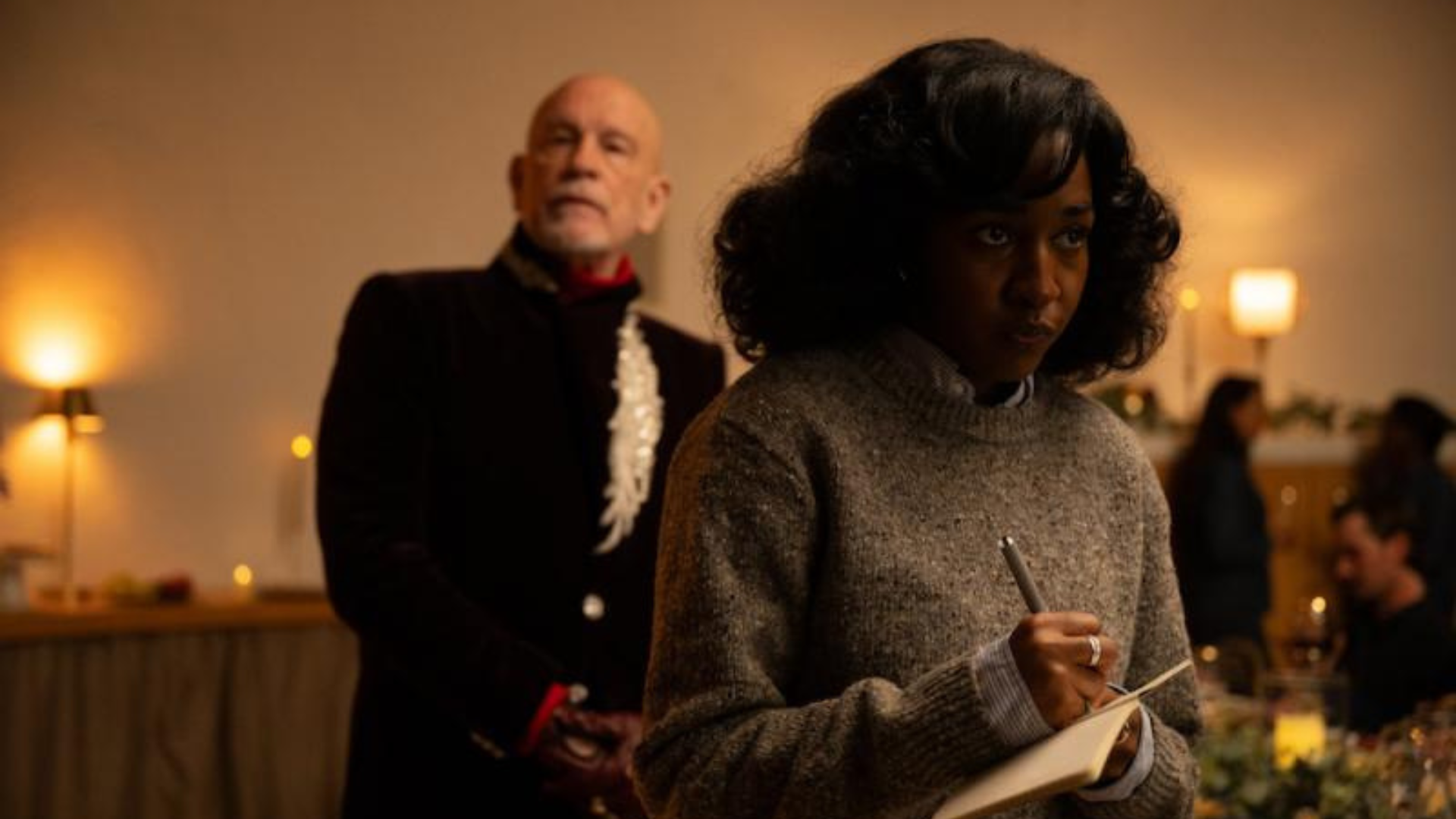
I really wanted Opus to become a new personal favourite for me. It had all the ingredients for cult status: a thriller debut from a fresh new filmmaker, produced by A24, starring the internet’s darling Ayo Edebiri and film legend John Malkovich. I went into Opus ready to be taken on an Us-like journey of wonder, fear and delight. Unfortunately, while Opus does have pockets of amusement, they are not enough to make a memorable addition to the thriller/horror canon.
Before its Sundance Film Festival debut, I was excited by the buzz around the film. The trailer appeared to be well received. In addition to Edebiri, it also features The White Lotus’ Murray Bartlett, Arrested Development’s Tony Hale, Juliette Lewis and many more worthwhile performers. The iconic Nile Rogers created the music for the film! Its script is ripe for a juicy film: Opus tells the story about an unassuming journalist who gets selected by a megalomaniac celebrity to be involved in his twisted schemes. It is a psychological thriller commenting on celebrity worship, careerism and the blurring of lines of consent. It makes points about race, gender and fame. How could it not be compelling? How could it not generate weeks of discourse? And yet, after the initial attention I did see around its release at Sundance, the buzz kind of fizzled out. I didn’t see many reviews or responses from the media I typically consume. I didn’t even realise when Opus was released on streaming services.
Opus should be subversive, but as many people have pointed out, it appears to be repeatedly referencing similar films that precede it to an almost shocking level. There were several moments watching Opus where I wondered: is this not a shot for short remake of Midsommar? At this point, there is a signature A24 vibe and sound that films like Hereditary, Everything Everywhere All at Once and Midsommar share. That stylistic consistency can be an asset, but it can also quickly turn into a monotony that could become a wider issue for A24 going forward.
The performances in Opus can’t decide if they want to be bizarre and weird or not, and the different actors decidedly do not match each other’s energy. Edebiri and Bartlett are very capable actors who know how to take you on a ride, but these abilities was not utilised here. John Malkovich’s over-the-top performance is so ludicrous that it sort of works, but he’s not matched by his castmates. His character Moretti switches from performing maniacal displays in Daft-Punk-esque get-ups to unflappably watching as violence erupts around him. In my opinion, he and Juliette Lewis are the only two people who inject Opus with the level of craziness that it needed for it to be worth its runtime. Unfortunately, Ayo Edebiri is just a bit too normal in her performance as Ariel. Ariel is supposed to be a wallflower, but more intentional direction could have brought out more colour in the performance of such a stoic character. Unfortunately, that didn’t happen here.
Opus is not a totally unimpressive debut. The film’s production value is unimpeachable, and it features world-class costuming throughout. It does have a clear visual point of view, but it doesn’t have a singular point of view, and that’s the problem. I enjoyed the film’s twist, but the level of exposition at the end was alarming.
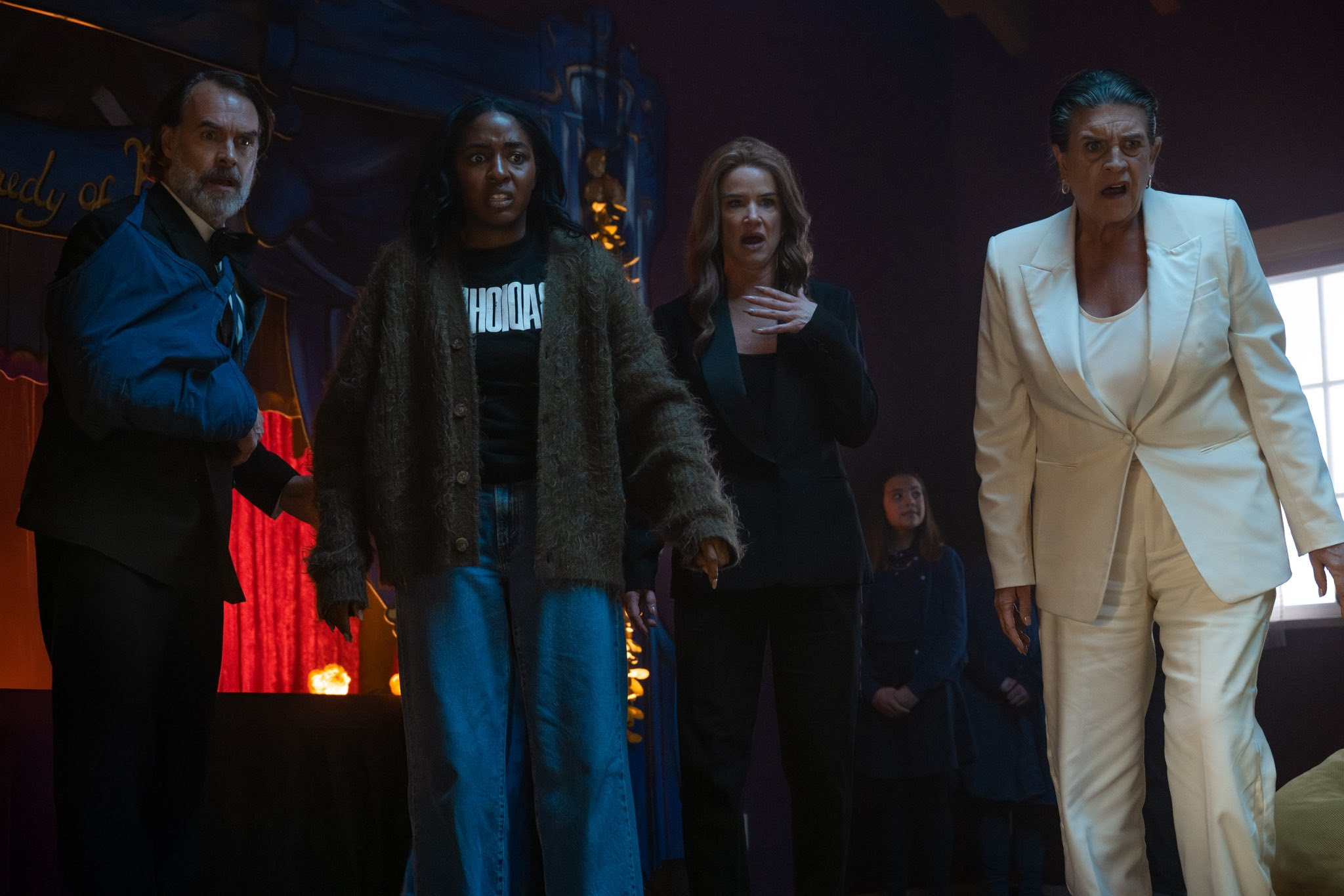
After the success of Sinners, black cinephiles like me are more excited than ever to root for auteur work from black filmmakers—especially ones led by women. Except from Lupita N’Yongo’s lead performance in Us, I don’t really have another example of a recent major horror film led by a black woman. I really wanted this film to use the terror of a black woman stuck in an unhinged Jared Leto-esque commune to uniquely say something profound about the state of the world. Unfortunately, despite how few of black women-led movies there are, Opus still somehow manages to feel formulaic. At a time where Hollywood is terrified that all their movies need to be either extremely small-budget horror movies or and large superhero swings—many of which aren’t even that profitable anymore—the major studios seem to still be trying to figure out how to get people to pay to watch medium-sized films. The fact that Opus ultimately got the tepid reception it did, both commercially and in terms of online discourse after its release, is a sign that this is not a formula they have perfected yet.
Words by Desola Kazeem
Support The Indiependent
We’re trying to raise £200 a month to help cover our operational costs. This includes our ‘Writer of the Month’ awards, where we recognise the amazing work produced by our contributor team. If you’ve enjoyed reading our site, we’d really appreciate it if you could donate to The Indiependent. Whether you can give £1 or £10, you’d be making a huge difference to our small team.