
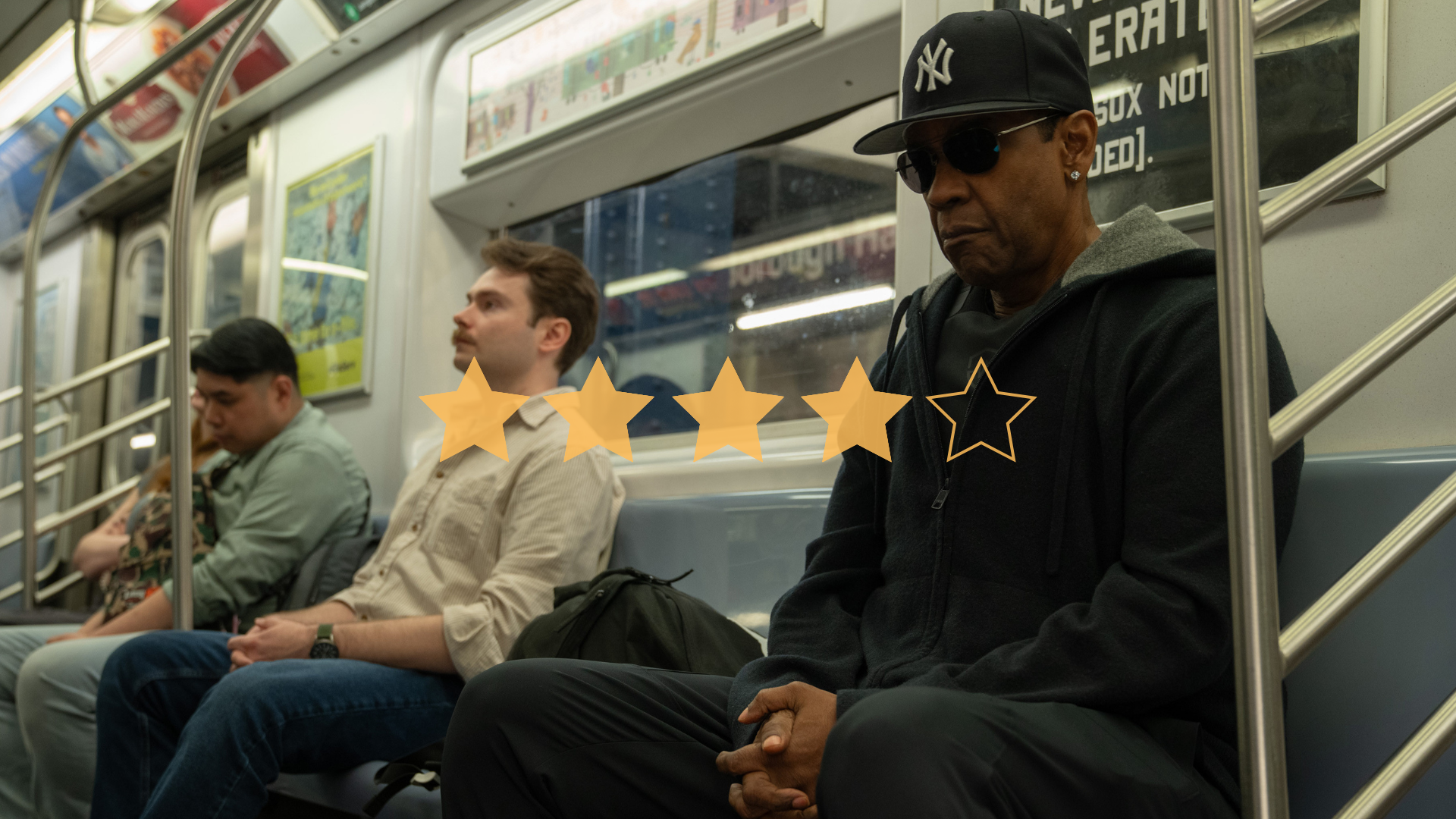
On typically energetic form, Spike Lee’s latest restages a classic in his beloved New York, with thrillingly personal results.
★★★★☆
Spike is back. His last narrative feature, Da 5 Bloods, was an interesting Netflix release back in 2020. He has since found funding from Apple for Highest 2 Lowest: essentially, given the paucity of UK cinema showings, a straight-to-streaming remake of Akira Kurosawa’s minor-key masterpiece High and Low (1963). Lee’s talent is demonstrated in the sheer bravado it must have taken to tackle such a project.
Teaming up with Lee for the fifth time, Denzel Washington commands the screen as music producer David King. He is often filmed symbolically on the balcony of his penthouse; the cheeky title prefigures David’s progression down to street-level action. Having had chart success in the early 2000s, his Stackin’ Hits label is now in danger of a buyout, by a company happy to use all manner of technology—even, whisper it, AI—to engineer bland success. David must arrange personal and business dealings to gather a controlling interest, at a high price.
On the eve of the deal, he gets a call: his son Trey (Aubrey Joseph) has been kidnapped, and he must stump up $17.5 million to save him from execution. This event was darker in Kurosawa’s version, with the hard-edged mogul genuinely weighing his son’s life against control of his company, but Washington is more emotionally legible than his Japanese counterpart. We read the decision on his face before he even realises it.
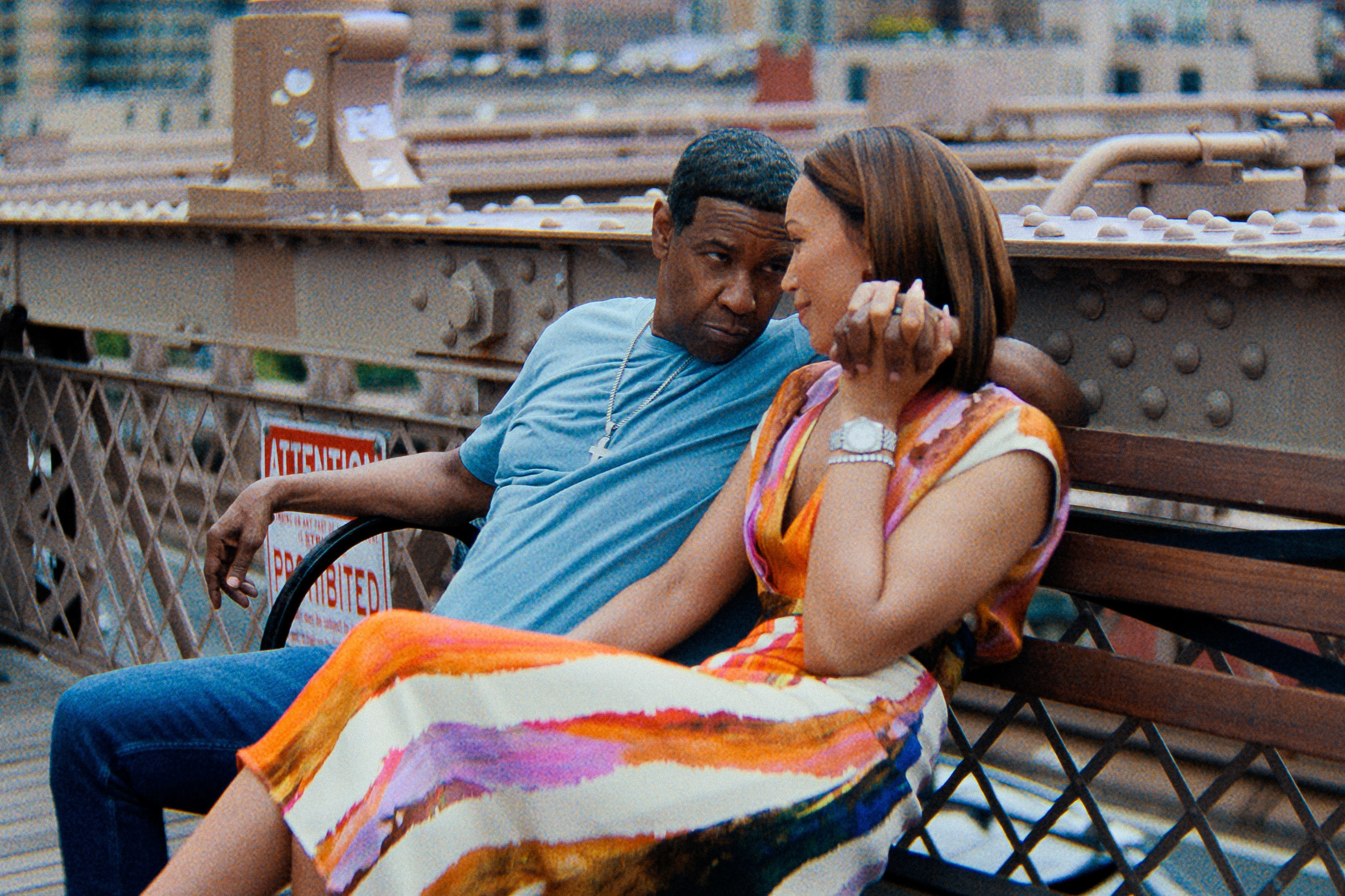
Then, inevitably, it all goes wrong. Trey appears at home, and it is revealed that the kidnapper has taken the son of David’s driver and friend Paul (Jeffrey Wright) by mistake. Despite this glimmer of hope, the kidnapper sticks to his guns, promising to make good on his threat if the money isn’t paid. These events all match the original pretty closely, but Lee plays games with familiar viewers from the beginning. The opening half hour is a simmering stew of cultural commentary and references: the director is on home turf, and feels no need to rush into the crime plot.
Interestingly, Kurosawa’s film was very much a procedural, following a team of detectives in minute detail as they work through city maps and phone trackers to deduce the kidnapper’s location. Here, Lee and writer Alan Fox are less interested in process; the police are more of a hindering force, especially in their open suspicion of Paul. By relocating to New York, however, Highest 2 Lowest is updated with a real urban grit.
The handover on a subway train at the film’s midpoint is carried off with panache. Switching self-consciously to 16mm film stock, this sequence is full of frantic energy, revving the film into a new gear; and the eventual confrontation with the kidnapper only continues this propulsion. After a choice clue—which, of course, needs David’s honed ear to be deciphered—it is all destination and no journey. A surprise appearance from A$AP Rocky more than matches Denzel’s fireworks, leading to a rap battle spun from thin air: genius.
As always with Lee, his latest film is in constant conversation with music as well as cinema. The title gestures towards ideas of high and low culture, which are heard in the soundtrack’s progression from a Broadway number into disco and rap. While these choices often serve to underscore the action in meaningful ways, the same isn’t always true of the score; in the leisurely first scenes where David’s professional and family networks are laid out, the stabs of soap-opera strings can be distracting.

That said, Highest 2 Lowest manages to have something to say about snobbery. David projects the idea that new music and undiscovered artists fire him up, and yet he’s reluctant to follow Trey’s lead on young talent. As a key character points out, this is privilege from its highest point. David looks down on the quick buck (especially when it comes to social media, in a slightly tired moment of grandstanding) but choosing talent over money is easy for a millionaire like him.
There is something bravely self-reflexive in the way this argument emerges over the film’s final act. David is blinded by his own connoisseurship of a history of Black music, with posters in his office of many artists (Stevie Wonder, Marvin Gaye etc) who have memorably supported moments across Lee’s filmography. The knowing jabs at David’s reluctance to modernise become their own subtle meta-commentary; and with this fresh reimagining of a classic film, the director absolutely acknowledges the irony.
The Verdict
Spike Lee is a director with undeniable vision: his reach exceeds his grasp, with films that are often uneven but always worthwhile. With wry humour, Highest 2 Lowest starts slowly and makes good on its promise of a thoughtful movie about artistic value and the intersection of culture and class. First and foremost though, it is a thriller, and one that lets rip with two or three spectacular showdowns while riffing magnificently on Kurosawa’s melody.
Words by Max King
Highest 2 Lowest is in selected cinemas and on Apple TV+ now
Support The Indiependent
We’re trying to raise £200 a month to help cover our operational costs. This includes our ‘Writer of the Month’ awards, where we recognise the amazing work produced by our contributor team. If you’ve enjoyed reading our site, we’d really appreciate it if you could donate to The Indiependent. Whether you can give £1 or £10, you’d be making a huge difference to our small team.