
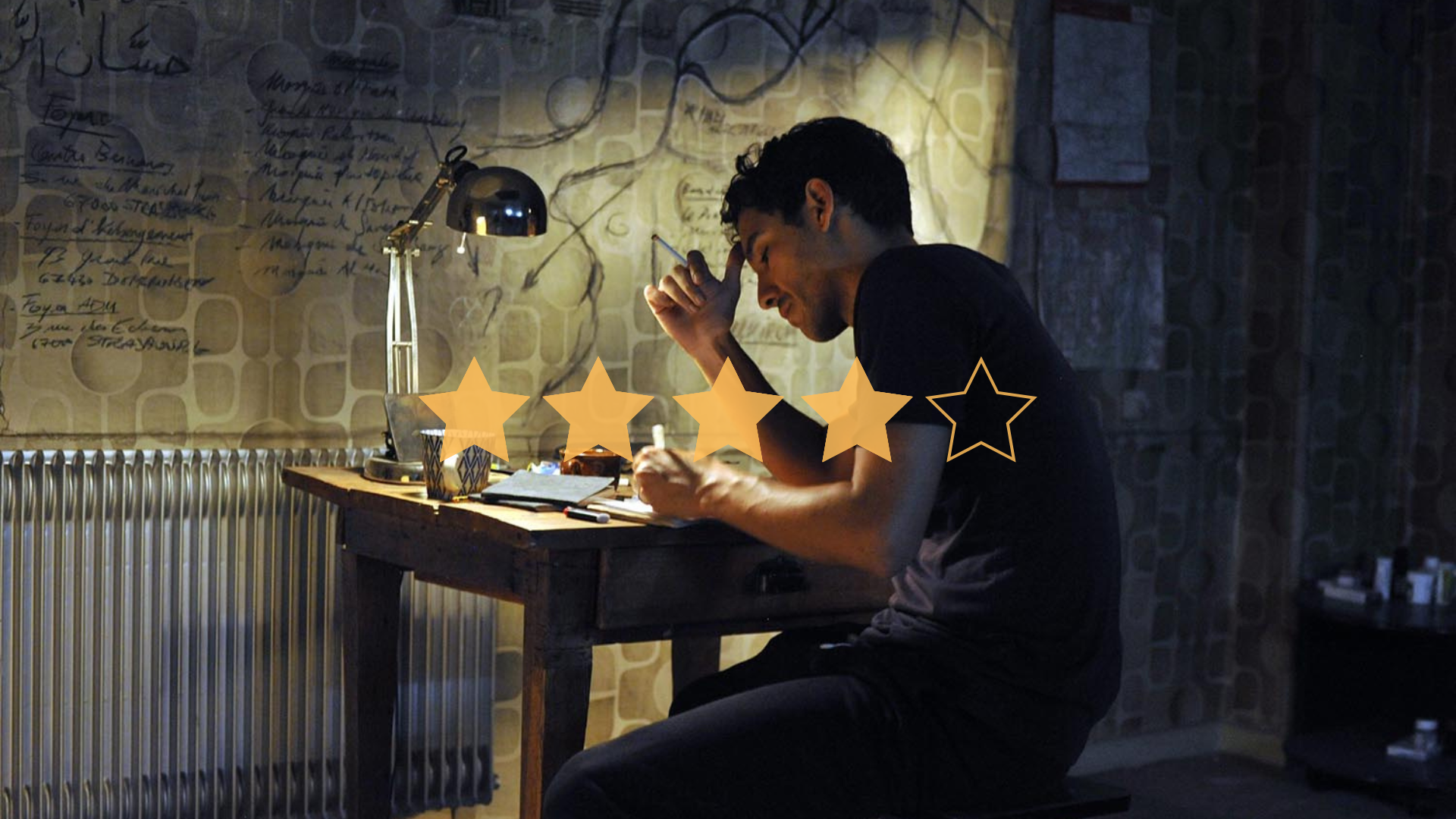
Inspired by true events, Ghost Trail is the gripping story of a Syrian refugee on a quest to find his former torturer. The cat-and-mouse spy thriller offers a compelling insight into the lives of those traumatised by war and imprisonment.
★★★★☆
Ghost Trail begins in March 2014, with frightened prisoners crammed in the dark back of a truck. After the truck has come to a standstill, soldiers release a group of bruised and haggard-looking men into the middle of a desert in the region of Sednaya, Syria. The soldiers fire their guns and tell the men to get lost as they stumble into daylight. Amongst the group is former literature professor Hamid Yakat (Adam Bessa), who has been a prisoner in the notorious Sednaya prison. Two years later, he is part of an undercover self-organised group in Europe, desperately trying to track down Syrian war criminals and bring them to justice.
Hamid’s search for a man called Harfaz, who brutalised him and many others in unimaginable ways during their incarceration, leads him to Strasbourg, France. He suspects Syrian chemist Hassan Al Rammah (Tawfeek Barhom), whom he encounters on the university campus, to be his sadistic torturer. However, having been continuously blindfolded during his time in prison, he can only recognise the man by the sound of his voice, the way he walks, and his scent. Hamid starts shadowing Hassan while going through other victims’ statements and searching for a way to prove his gut feeling—but the process might be more than he can emotionally take on.
The film is not a regular spy thriller, and in some ways the realistic cinematography and lack of action make it feel like a documentary. It is not surprising, given that this was the initial intention of the film’s director, Jonathan Millet. As preparations progressed, however, he realised switching to fiction would enable him to speak about reality in a more fulfilling way, arguably reaching audiences more easily.
While having left war-torn Syria behind, Hamid’s life is still consumed by devastating memories and inner turmoil. He is rather silent and withdrawn throughout the film, only occasional panic attacks and a constantly grave expression giving away his torment. Ironically, he mostly communicates with his fellow spies over the voice chat of a somewhat violent multiplayer video game, set in a warzone. The only exception to this is Nina (Julia Franz Richter), who also has personal reasons for attempting to track down Harfaz.

Ghost Trail highlights issues that might be less apparent to those who do not live in the Middle East. Sednaya prison (liberated by rebel forces in 2024) is located to the north of Damascus, and has been dubbed a ‘human slaughterhouse’ by Amnesty International. The organisation has estimated that between 5,000 and 13,000 people were extrajudicially executed at Sednaya between 2011 and 2015, and many more were probably victims of torture. However, even without knowing all these details, Ghost Trail is not hard to follow.
The little information Hamid reveals about himself to people around him isn’t always accurate, as he frequently changes his name to avoid leaving traces. Even during the weekly video calls with his benign and caring mother, who is living in a refugee camp in Beirut, he is not entirely truthful. In a rented shirt and jacket, he pretends to be building a new life, making her believe he is safely established in Berlin.
His interactions with fellow Syrian refugee Yara (Hala Rajab) only emphasize how far the concept of a normal life is removed from him. His indifference to everything around him is heart-wrenching. Having lost both his wife and daughter in a bombing while he was detained, his bereavement and psychological scars are overwhelmingly present throughout the film. Apart from locating Harfaz, there is not much he seems to be living for.
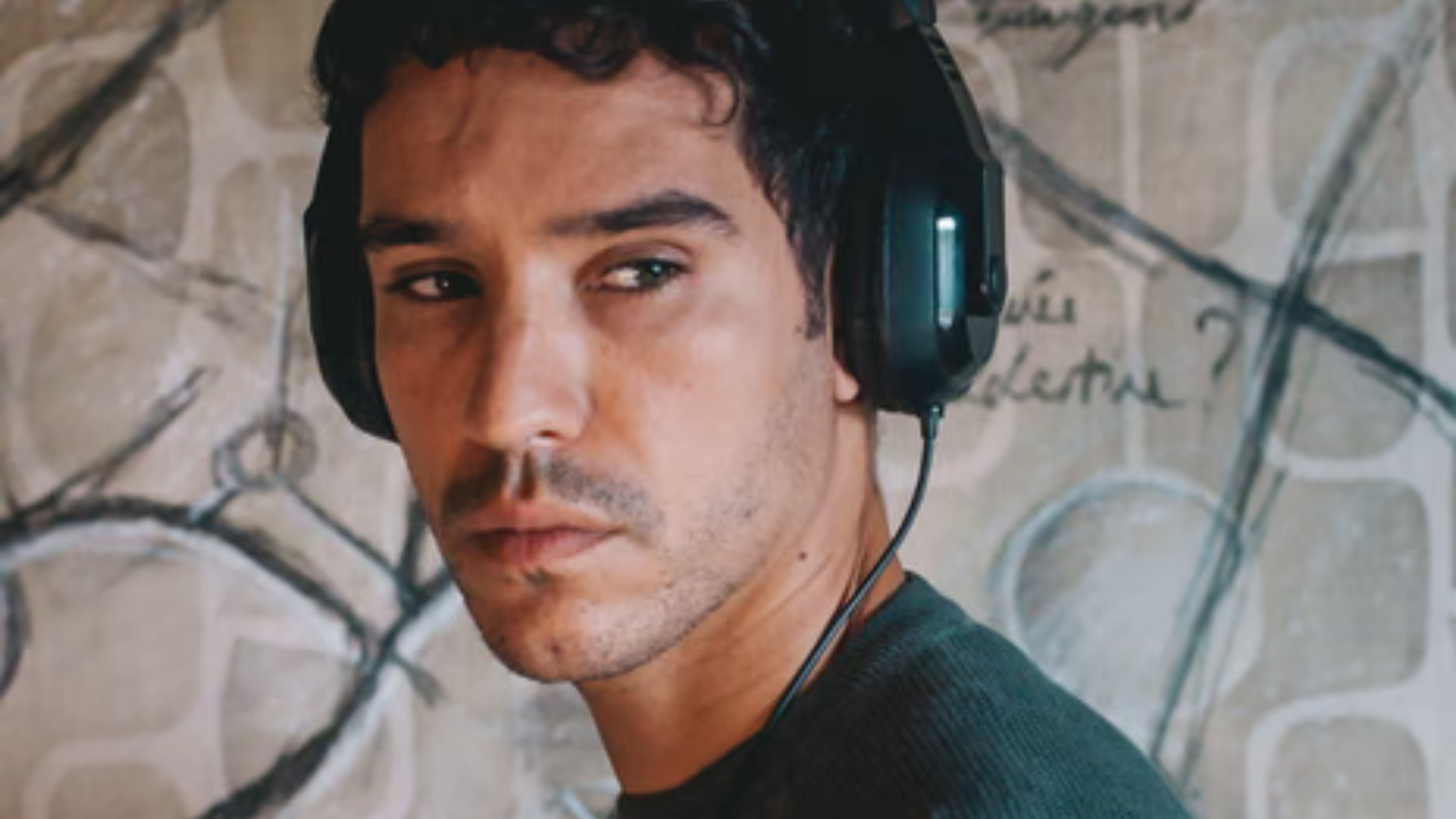
Hamid’s somewhat inscrutable character could have easily made this film an unappealing case study, yet Bessa’s remarkable performance and the incredible sound design keeps you at the edge of your seat. If anything, the film is a great example of the fundamental ‘show, don’t tell’ principle executed correctly. Dialogue and exposition are scarce; in many scenes it is the silence that speaks volumes. In one particular scene, Hassan offers Hamid a free seat at his table in a crowded restaurant. He keeps talking to Hamid, even though the latter barely responds. Both are trying to identify each other’s past and political beliefs, creating an incredible tension on screen.
The Verdict
War criminals fleeing to another country and starting a new life is a perennial theme, both in reality and the film world, and Ghost Trail brings the issue to the present day. Real Syrian war criminals such as the fictional Harfaz are living in countries like Germany and France now. At the same time, the film also successfully delves into the psychological scars caused by war and places like Sednaya prison, without resorting to scenes full of violence and gore. Using his own experiences of living in Syria before the war and consulting with those who have lived through the country’s tumult, Millet is able to effectively and impactfully reflect reality in a fiction.
Words by Mila Curlin
Support The Indiependent
We’re trying to raise £200 a month to help cover our operational costs. This includes our ‘Writer of the Month’ awards, where we recognise the amazing work produced by our contributor team. If you’ve enjoyed reading our site, we’d really appreciate it if you could donate to The Indiependent. Whether you can give £1 or £10, you’d be making a huge difference to our small team.